
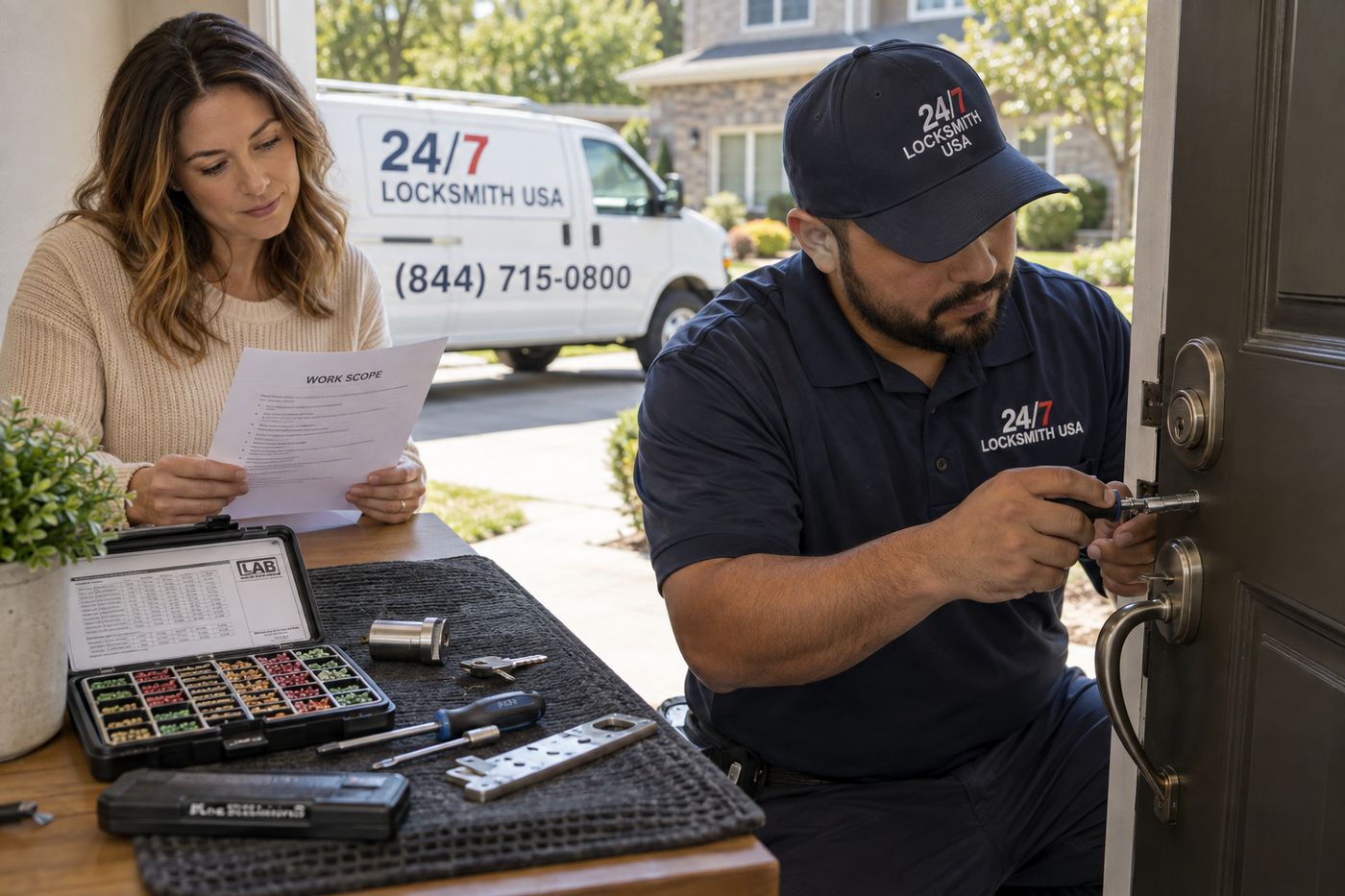
Describing a key or lock problem in plain terms
When something goes wrong with a key or lock, the way you describe it shapes everything that follows. Instead of guessing at a cause, say what you saw, heard and felt. Did the key turn partway, refuse to enter, spin freely, or snap? Did a fob make a clicking sound, flash a light, or do nothing at all? Did a door lock work from inside but not outside? Plain, specific descriptions point toward the real cause faster than a theory that may turn out to be wrong, and they save both of you time on the phone.
It also helps to note when the problem began and what changed around that time. A new battery, a car wash, a cold snap, a recently fitted part or a stranger who borrowed the car can all be relevant. If the trouble comes and goes, say so, and say whether it behaves differently in the morning than at night. Intermittent faults are some of the hardest to pin down, and a short timeline gives a technician something solid to work from when the issue is not showing itself.
Finally, mention what you have already tried, including anything that might have made the situation worse, such as forcing a key, spraying a lubricant or pulling on a stuck handle. Honest detail is never a problem. Use the pages in this section for the topic closest to yours, then call us to confirm availability in your area. The scope and any quote are explained before work begins, so you can decide with the full picture in front of you. Keep the item itself in a safe, dry place until the matter is settled so it does not suffer further wear.
Sorting problems by what you can safely check yourself
Some problems have a small, safe first step, and others are best left alone. Checking a spare key, looking at a fob battery, confirming a door is not simply stuck on weatherstripping or making sure a car is in park are all reasonable things to try. They carry little risk and sometimes solve the matter outright. A sensible rule is to try only what you can undo. If a step involves force, prying, drilling or taking apart a lock, it is not an owner task. Honest, specific information is far more valuable than a confident guess about what the cause might be.
Pay attention to how the problem feels as you test it. A key that sticks should be eased out gently, not wrestled. A lock that resists should not be hammered. If you feel metal grinding, hear something break or notice the key bending, stop at once. The damage from a forced attempt often costs more to untangle than the original fault. When in doubt, do less and take notes on what you have seen so far, rather than pushing for a quick fix. If anything about the plan feels unclear, say so and ask for it to be explained again in simpler terms.
Safety comes first in any situation involving children, pets, a running engine or a busy road. If someone is in danger, call emergency services before anything else. For everything else, review the specific page for your situation, gather the vehicle or door details, and call us to confirm availability. A technician can explain what the work involves and what could go wrong, and nothing starts until the scope and any quote have been explained and agreed. A few minutes of preparation usually saves a good deal of back and forth once the conversation starts.
Why a problem that keeps coming back deserves a closer look
A fault that appears once and disappears may have been a fluke, but one that keeps returning usually has a cause that has not been found. A key that works on the third try each morning, a fob that fails on damp days or a door lock that sticks in cold weather each point to something specific, such as wear, moisture or alignment. Living with the habit may feel easier than fixing it, but the habit tends to grow, and the day it finally fails is rarely a convenient one.
Repeat problems are also a clue about timing. If a lock acts up only after rain, only at a particular door, or only when the key has been on a heavy ring, you are already narrowing it down. Keep a short log with dates and conditions. When you eventually describe the pattern, a technician can often skip several guesses and move toward the likely cause. Patterns also separate a worn key from a worn lock, which have very different remedies. Write down the main points as you go so you can compare them against what you are told.
Do not assume that a quick fix, like a fresh battery or a spray of lubricant, has solved a recurring issue until it stays solved. Lubricant in particular can attract dirt and make things worse in some locks. If the same trouble returns, call us to confirm availability and talk through what you have noticed. The scope and any quote are explained before work begins, and you can ask about options and tradeoffs before choosing a repair or a replacement. It also helps to keep your phone charged and your questions written down before you speak with anyone.
How car problems and home problems differ
Car and home lock trouble can sound alike on the phone yet involve very different systems. A car key often carries electronics, a chip that talks to the vehicle, and sometimes a remote or smart function. A home key is usually a purely mechanical piece in a cylinder, although keypads and smart locks add their own electronics. Because of this, a car problem often hinges on programming, batteries and compatibility, while a home problem often hinges on alignment, wear, and the condition of the door itself.
The stakes differ as well. A locked-out car may sit in a parking lot with the weather as the main concern, while a locked-out home can involve children, pets, a stove or a family member inside. A lost car key can mean a vehicle that cannot move, and a lost house key can raise the question of who else may now have access. Think about which concern is more pressing in your case, because it affects how you plan the next step. Small details that seem unimportant, such as a recent repair or a change in routine, are often the useful ones.
When you describe your situation, say plainly whether it involves a vehicle, a home, a business or something else. Give the make and model for a car or the door and lock type for a building. That lets us explain what the work generally involves. Call us to confirm availability in your area. We will explain the scope and any quote before work begins, and you are welcome to ask what could go wrong before you decide. Taking a slower, more careful approach tends to protect both the item and your own peace of mind.
Keeping a simple problem log that helps later
A small notebook or a phone note can be surprisingly useful when something keeps failing. Write the date, the item, what happened and what the weather and conditions were. Add what you tried and what the result was. This takes less than a minute per entry, and after a few weeks it can show a pattern that memory alone would miss. For a fob, you might record battery changes. For a door, you might note when it sticks. For a key, you might note which lock it struggles in.
The log also protects you from repeating yourself. If you tried a new battery last Tuesday and a different spare key the day after, you will not forget. When you call, you can read off exactly what you did and in what order. This helps a technician avoid retracing steps and focus on what has not been checked. It also helps if more than one person in the household uses the vehicle or door, since everyone can add their observations. Where more than one reasonable option exists, you should hear the tradeoffs of each before choosing.
Keep the record somewhere you can find it quickly, and avoid putting sensitive details like key codes or alarm codes in it. A short list of makes, models and dates is enough. When the time comes to call us, bring the log to the conversation. Call us to confirm availability in your area, and expect the scope and any quote to be explained before any work begins. A good record makes that conversation shorter and clearer for everyone. Remember that you are never obliged to rush, and a good explanation should leave you feeling informed.
What waiting can change, and what it cannot
Some problems are happy to wait, and others quietly get worse. A fob that works but feels sluggish can usually be handled at your convenience. A key that is visibly bending, cracking or wearing smooth is a different matter, since it can break inside a lock or ignition and turn a simple copy into a removal job. A door that barely latches may be fine today and refuse to close in a damp week. It helps to ask yourself whether the item is stable, slowly declining or already failing.
Waiting also has indirect costs. If you rely on a single key, any loss leaves you stranded. If a lock is loose in its housing, repeated use can enlarge the damage. If a door cannot be secured, the concern is not only inconvenience but also the safety of what is inside. On the other hand, rushing into a decision without understanding the options is not wise either. Gather the facts, weigh them, and ask questions about the tradeoffs before agreeing to any work. Share anything you have already tried, since that tells the technician what has and has not been ruled out.
If you are unsure which category your problem falls into, describe it and let a technician help you judge it. Call us to confirm availability, and expect to hear the scope and any quote explained before work begins. You stay in charge of the decision throughout. Where safety is at stake, such as a person or animal trapped or a break-in in progress, contact emergency services first, and then reach out to us once everyone is safe. If other people in the household use the same key or door, let them know what is happening as well.