
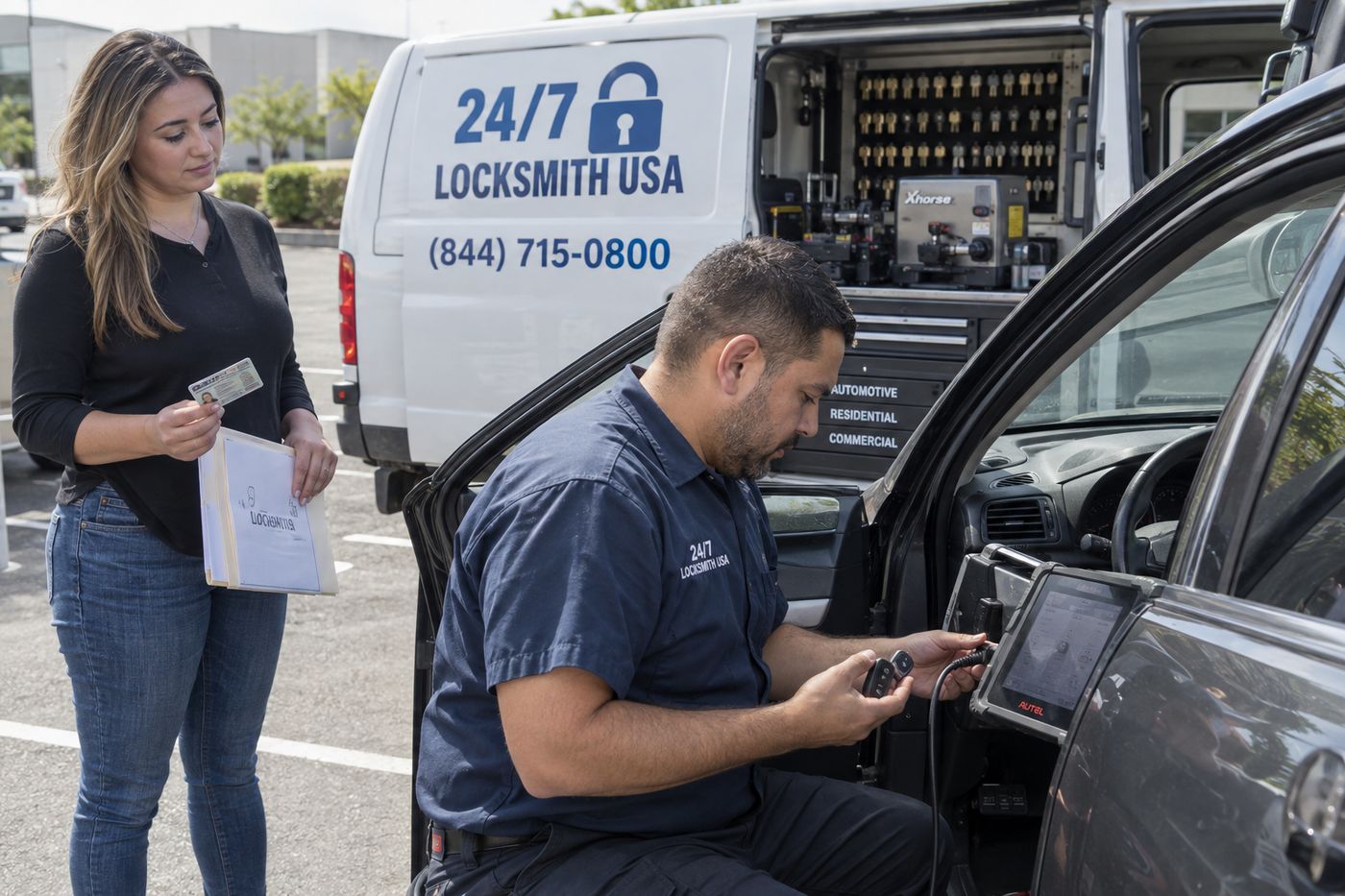
What we handle in Clermont.
One mobile team across Clermont, residential, automotive and commercial.
Marine & Dock Hardware
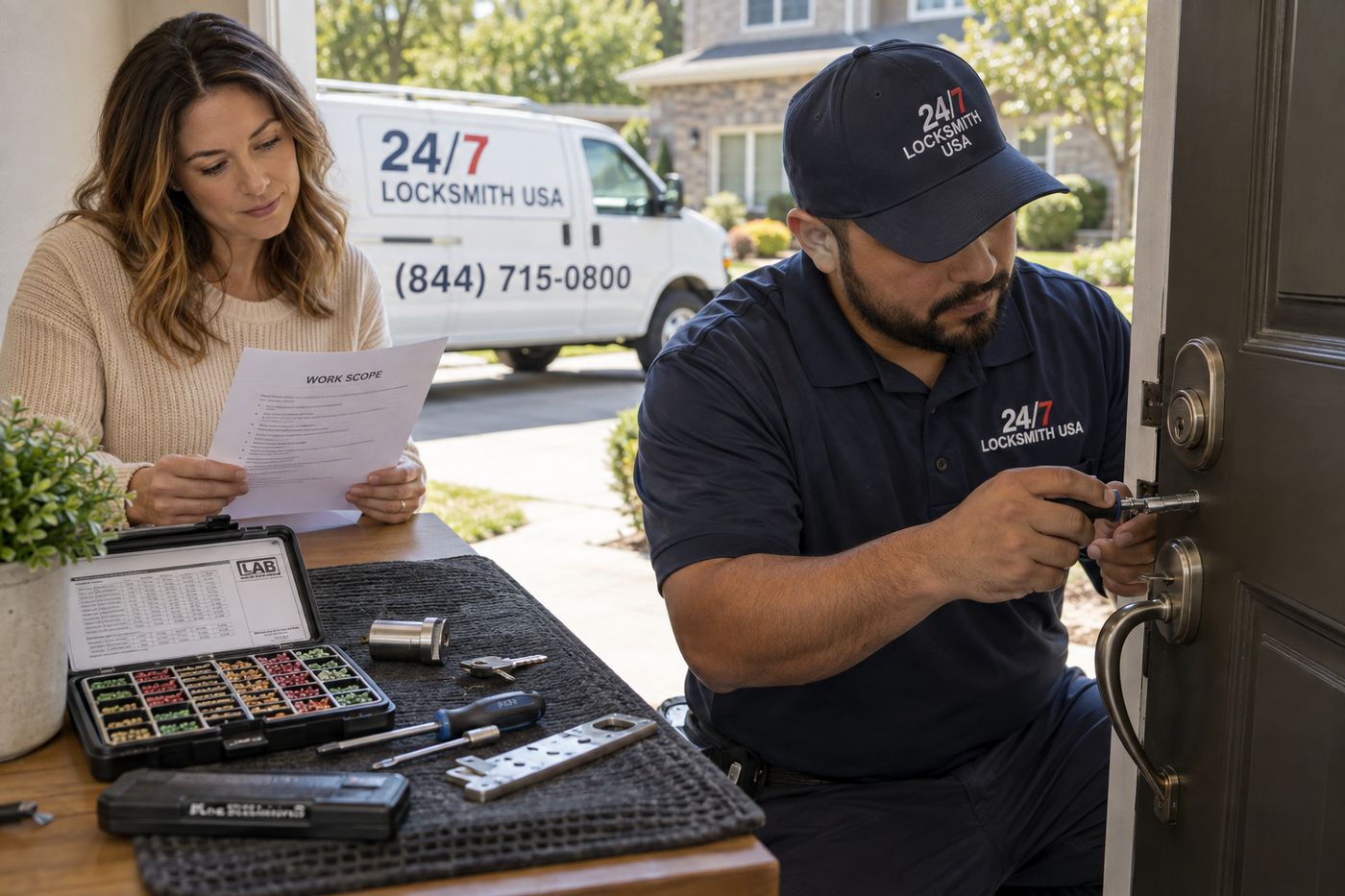
Corrosion-resistant cylinders and padlocks for boats, dock boxes and waterfront storage.
Historic & Period Hardware
Mortise locks and original hardware serviced rather than ripped out of a period door.
Impact Door & Storm Hardware
Multipoint locks and hardware on impact-rated doors adjusted, repaired or replaced.
Commercial Door Hardware
Storefront locks, exit devices, closers and mortise cylinders serviced or replaced.
High-Security Cylinders
Medeco and Mul-T-Lock cylinders for doors that need genuine key control rather than hardware-store pins.
Safe Opening & Servicing
Locked-out safes opened, and re-combinated where the model allows it.
Locks in Clermont: what actually goes wrong.
Clermont's population grew more than 250% between 2000 and 2020, so most of the housing stock is 2000s-2020s construction on sloped, hilly lots along the Lake Wales Ridge, concentrated in subdivisions like Kings Ridge and Sawgrass Bay south and west of downtown. That grading means door frames rack out of true faster than on flat lots, which shows up as sticking deadbolts and misaligned strike plates within a few years of a house being built. Downtown around the Historic Village and Montrose Street runs older, smaller-scale storefronts near the Townsend House, where original hardware is more common. Waterfront Park on Lake Minneola and the roughly 40-mile regional trail system that connects to it bring a steady run of gate and rear-access hardware calls from businesses backing onto the water.
What a locksmith call usually starts with
Most people who phone a locksmith are already having a bad hour. The key is on the kitchen counter, the fob went through the wash, or a deadbolt that worked yesterday now refuses to turn. Before you dial, take half a minute to gather the facts a dispatcher will ask for. It makes the call shorter and the quote more accurate.
Be ready to say what is locked, where you are standing, and what you have already tried. If it is a car, know the make, model and approximate year. If it is a door, know whether it is a front door, a back door, a garage entry door or a gate. Mention whether anyone, including a child or a pet, is stuck inside, because that changes how the call is handled.
This page is general guidance for people in Clermont and nearby central Florida communities. It does not describe any particular street, subdivision or building, and it makes no claim about past work in the area. Treat it as a calm checklist you can read on your phone while you wait.
Locked out of your home after dark
A home lockout at night feels more urgent than the same problem at noon, mostly because everything else about the evening is going wrong too. The first rule is to stay safe. Stand where you can be seen, keep your phone charged, and do not try to climb onto a roof or push against a window. Injuries from improvised entry attempts are far more expensive than a service call.
Check the simple things first. Walk around and see whether a family member has a spare key, whether a neighbor you trust holds one, or whether a door you forgot about was left unlocked. If none of that works, call a locksmith and describe the lock. Say whether it is a standard deadbolt, a keypad lock or a smart lock, because each is handled differently.
Expect to be asked for proof that you live there before anyone opens the door. That is not an insult. A locksmith who opens a door for a stranger is a risk to every household. A photo ID showing the address, a utility bill or a lease usually settles it. Our guide on locked out of the house covers the details.
Once you are inside, take a moment to ask why the lockout happened. If a key was lost, the lock may need rekeying. If you simply forgot the key, consider hiding a spare with a person you trust or adding a keypad deadbolt, so the next evening goes more smoothly.
- Stay somewhere visible and well lit while you wait.
- Have an identity document and something that shows the address ready to show.
- Tell the dispatcher about children, pets or anything on the stove inside.
- Do not force a window or a door, since repairs usually cost more than the call.
Rekeying after a move, a breakup or a lost key
Keys have a way of multiplying. Previous owners, contractors, a cleaning service, an ex partner, a roommate who moved out: each one may still hold a working copy. Rekeying changes the inside of the lock so the old keys stop working while the lock itself stays on the door. It is usually a smaller job than replacing hardware, and you leave with new keys that fit every lock you had done.
The process is simple to describe. A technician removes the cylinder, replaces the internal pins with a new combination, and cuts keys to match. You can often have every exterior door set to a single key, which is a relief if you are tired of carrying five. Ask to have the garage entry door and any side gates included so nothing gets missed.
New homeowners in Clermont tend to ask whether rekeying or replacing is the better choice. The honest answer depends on the condition of the lock. If it turns smoothly and looks sound, rekey it. If it is worn, loose or an old style that is hard to maintain, a new deadbolt may make more sense. Read our rekey service page and our notes on how often households tend to rekey for a fuller comparison.
One more practical point: keep every new key in a place you will remember. Many repeat lockouts happen because the household has five copies and nobody knows where any of them are. Label a spare, give it to someone dependable, and tell everyone in the home which one is which.
Car lockouts and the heat factor
Central Florida summers are hot, humid and prone to sudden storms, and all three show up in car lock calls. A parked car turns into an oven in the sun, so a locked car with a person or an animal inside is a different kind of emergency than a lockout where nobody is in danger. If a child or a pet is inside the vehicle, say so immediately and consider calling emergency services first. A locksmith can help, but that situation should never wait on a quote.
If nobody is inside, the situation is calmer. Move to shade, put your phone on the charger, and think about where the spare key is. Some people have a second fob at home, and a relative may be able to bring it. If not, a locksmith can open the vehicle without damaging the paint or the door seal, once ownership has been checked.
It is worth reading our car lockout page before you need it. For a trunk that will not release, ask about trunk lockout help when you call. Both explain what information to have ready, which usually means the make, model, year and your location.
Car keys, fobs and what the VIN has to do with it
Modern car keys are small computers. A transponder chip inside the plastic head talks to the car, and if the car does not recognize it, the engine will not start even when the metal blade turns the ignition perfectly. That is why a hardware store copy often opens the door but leaves you stranded at the ignition.
A locksmith who handles car keys can usually cut and program a replacement from the vehicle identification number, along with proof that the car is yours. Registration or title plus a photo ID is the usual combination. If you are not sure where to find the number, our guide on finding your VIN shows the common places.
If you have lost every key to the car, the job is called all keys lost, and it is more involved than making a spare. Read about all keys lost service and think about a spare while you still have a working key. Making a spare now is nearly always easier than replacing everything later.
Ask the locksmith what type of key your car uses before you decide. A basic transponder key, a laser cut key, a flip key and a smart key with push button start all cost different amounts of effort to replace. Our guide to types of car keys helps you describe yours accurately.
Neighborhood access, gates and shared buildings
Many communities around Clermont have gated entrances, shared mailboxes or rules about who may work on a property. This page cannot say what applies where you live, and it does not state any local requirement as fact. If you live in a managed community or rent, your association, landlord or property manager is the right person to ask what is allowed before changing exterior locks.
Renters in particular should check the lease before rekeying. Some leases require the landlord to be told or to keep a copy of the key. Others allow the tenant to change locks if a copy is supplied. Our page on apartment and landlord locksmith work explains how these jobs are usually handled.
If a gate lock or a mailbox lock is the problem, tell the locksmith what kind it is and who owns it. A shared or community fixture may require written permission from whoever manages it. That extra step protects everyone and avoids awkward conversations later.
If you manage a rental yourself, consider keeping a written log of who holds keys and when locks were last changed. A simple notebook entry is enough. When a tenant leaves, rekeying the unit is a clean way to make sure the next occupant is the only person with access.
Small business locks and storefront trouble
Shops, offices and service vans all depend on locks that work every morning. A sticky storefront cylinder, a back door that will not latch, or an employee who left without returning keys can disrupt a working day. Commercial work often involves different hardware than a house, such as panic bars, heavier cylinders, and master key systems that let several people open different doors.
If a business owner calls, expect the locksmith to ask who is authorized to request work. That might be the owner, a manager or the property owner. Proof can be a business document or a lease. It sounds formal, but it keeps a former employee from walking in with a story and an open door.
For a closer look at the options, see commercial locksmith services, and ask about master key setups if different staff need to open different doors.
Think about the daily routine as well. Who opens, who closes, and who keeps the spare? A short written key policy, even half a page, prevents most of the confusion that leads to emergency calls. Replace a lost key promptly, rather than hoping it turns up, because an unaccounted key is a standing risk to inventory and records.
Storm season and keeping locks in working shape
Florida's rainy season and hurricane season are good reminders to look at your locks. Humidity and rain can make a worn cylinder sticky, and a deadbolt that has been dragging against a swollen door frame may eventually stop turning. If a lock feels stiff, treat that as a warning rather than a nuisance.
After a major storm, check your doors and locks before you assume everything is fine. A door that no longer latches cleanly, a deadbolt that does not reach all the way into the frame, or a cracked escutcheon plate are all worth a look. Do not carry out anything that involves high tension parts, and keep people clear of damaged doors until they are inspected.
Our hurricane season lock and key prep guide lists what to gather in advance, such as spare keys in a dry container and copies of ownership papers. It also helps to know where your VIN, registration and key codes are stored. Waterproof pouches are inexpensive peace of mind, and a photo of your documents on your phone can save a long afternoon if the originals are damaged or out of reach.
- Keep a spare house key with someone you trust, not under the mat.
- Store copies of your car title or registration with other important papers.
- Test every exterior deadbolt a few times so you notice stiffness early.
- Replace worn keys that need a jiggle before they snap off in the lock.
Broken keys, stuck ignitions and other lock failures
Not every call is a lockout. A key that snaps in a door or an ignition leaves part of the blade lodged in the cylinder. The right move is to stop pulling and stop twisting, because forcing a broken piece usually pushes it farther in or damages the pins. A technician has extraction tools made for the job.
Ignition trouble can look different, and people often assume the worst. The key might not turn at all, or it might turn but the engine does not start. A worn key, a worn ignition cylinder and a transponder chip that fails to read can each produce the same frustrating result. Describing exactly what happens helps the locksmith decide what to bring.
Related pages explain the most common versions of this problem: broken key extraction and ignition repair. If your key is only showing wear, replace it before it fails completely.
A worn key is easy to spot once you look for it. The edges look rounded, the cuts have lost their sharp corners, and the key may need a wiggle to turn. Those signs mean the metal is wearing both itself and the inside of the lock. Replacing it early costs less than extracting it after it breaks.
Nearby cities and how to choose a locksmith carefully
Central Florida is a patchwork of towns that run together, so it is common to live in one place and work in another. If you are calling from the road, say which direction you are traveling and what the nearest landmark is. Our pages for Kissimmee and Orlando cover neighboring areas with general guidance of their own.
Choosing a locksmith well matters because lockouts attract questionable operators. Ask for the service call charge up front, ask what the quote includes, and be wary of a vague price that grows once someone arrives. Our guide on how to spot a fake locksmith lists warning signs and it pays to have your own short list of questions ready.
When you are ready, call and describe what is happening. A good dispatcher will ask about ownership, explain the service call charge, and give a quote by phone before anyone is sent.
Finally, keep the conversation honest on both sides. Tell the dispatcher what you know and what you do not know. If the lock turns out to be a different type than you described, a good technician will explain the change in plain words, and you can decide whether to continue before any work begins. That kind of open exchange is the easiest way to avoid surprises, and it is the standard you should expect from anyone you let near your locks.
Common questions
What should I tell a locksmith when I call about a lockout?
Say what is locked, where you are, and the make, model and approximate year if it is a car. Mention whether a child or a pet is inside, whether you have a spare key, and what you already tried. Those details let the dispatcher explain the service call charge and give you a useful quote by phone.
Do I need to prove the house or car is mine?
Yes. Ownership or authority is checked before opening, rekeying or programming. A photo ID plus a bill, lease, registration or title is typically enough. If you are a tenant, your lease or permission from the landlord may be needed. This protects you, because the same check keeps strangers from getting into your home.
Is rekeying better than replacing a lock?
If the lock works smoothly and is in sound condition, rekeying is usually the more practical choice because it changes the key while keeping the hardware. Replacement makes sense when the lock is worn, loose, damaged or an old design that is hard to maintain. A technician can tell you which applies when they see it.
Can a locksmith make a car key if I lost all of them?
Often yes. A locksmith who handles car keys can cut and program a replacement from the VIN once ownership has been checked. Bring or have ready your registration or title and a photo ID. The job is more involved than copying a spare, so describing the car carefully on the phone is important.
What should I do if my key broke off in the lock?
Stop pulling and do not twist the broken piece, because that can push it deeper or damage the cylinder. Keep any part of the key you still have, since it helps identify the lock. Call a locksmith and say whether it broke in a door or an ignition so the right extraction tools are brought. Keeping any broken piece of the key also helps, since it shows the cut pattern.
Does this page describe how the company operates in Clermont?
No. This is general guidance for people in Clermont and central Florida, not a statement about past jobs or local arrangements. It does not name streets or neighborhoods. Requirements for rentals, communities and vehicles vary, so ask your landlord, association or the relevant local office when a rule matters.