
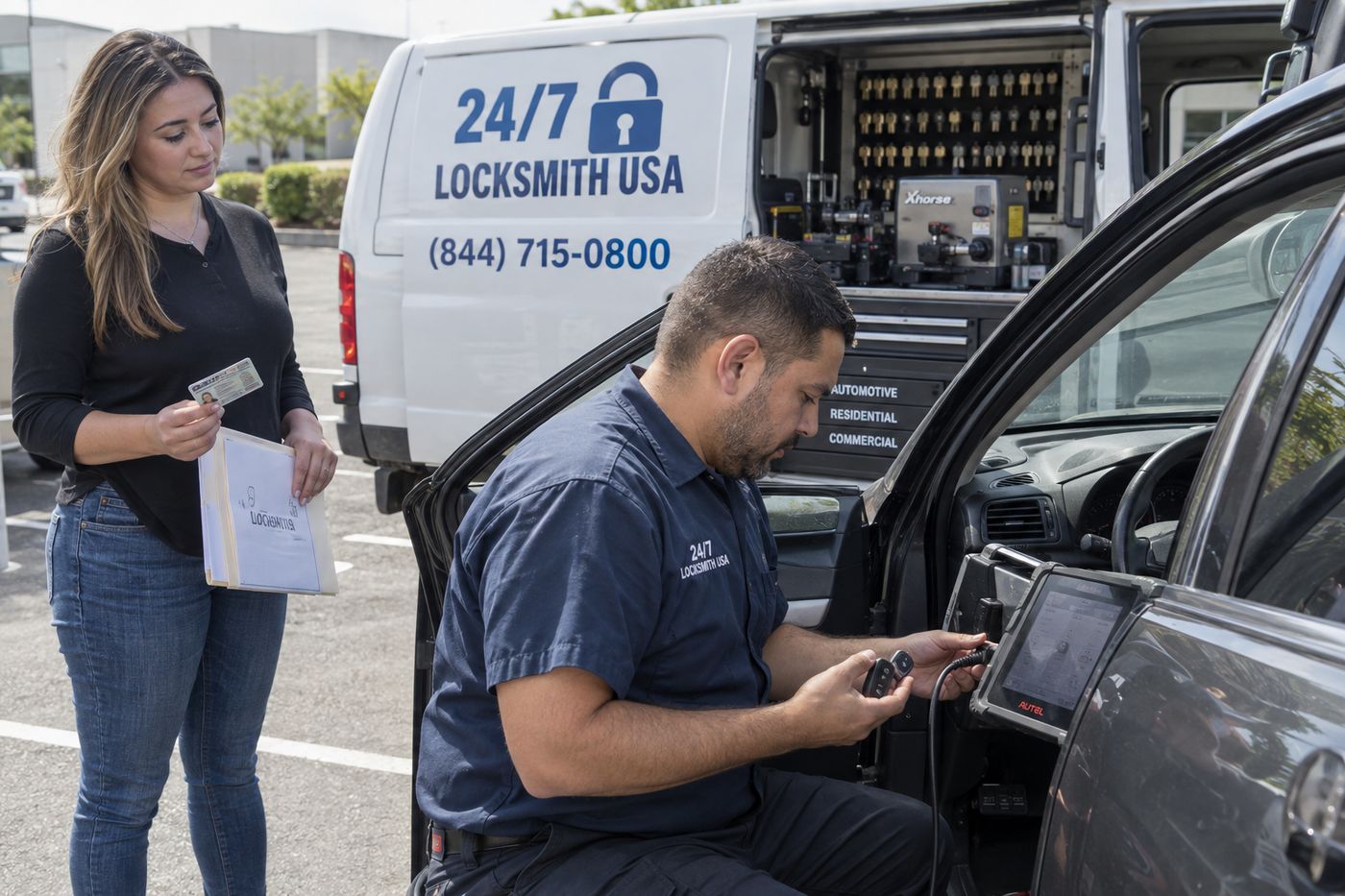
Automotive Key Work in the Old Pueblo
From chipped keys on twenty-year-old sedans to laser cut blades on new trucks, handled at your vehicle.
Lost Key Replacement, No Spare
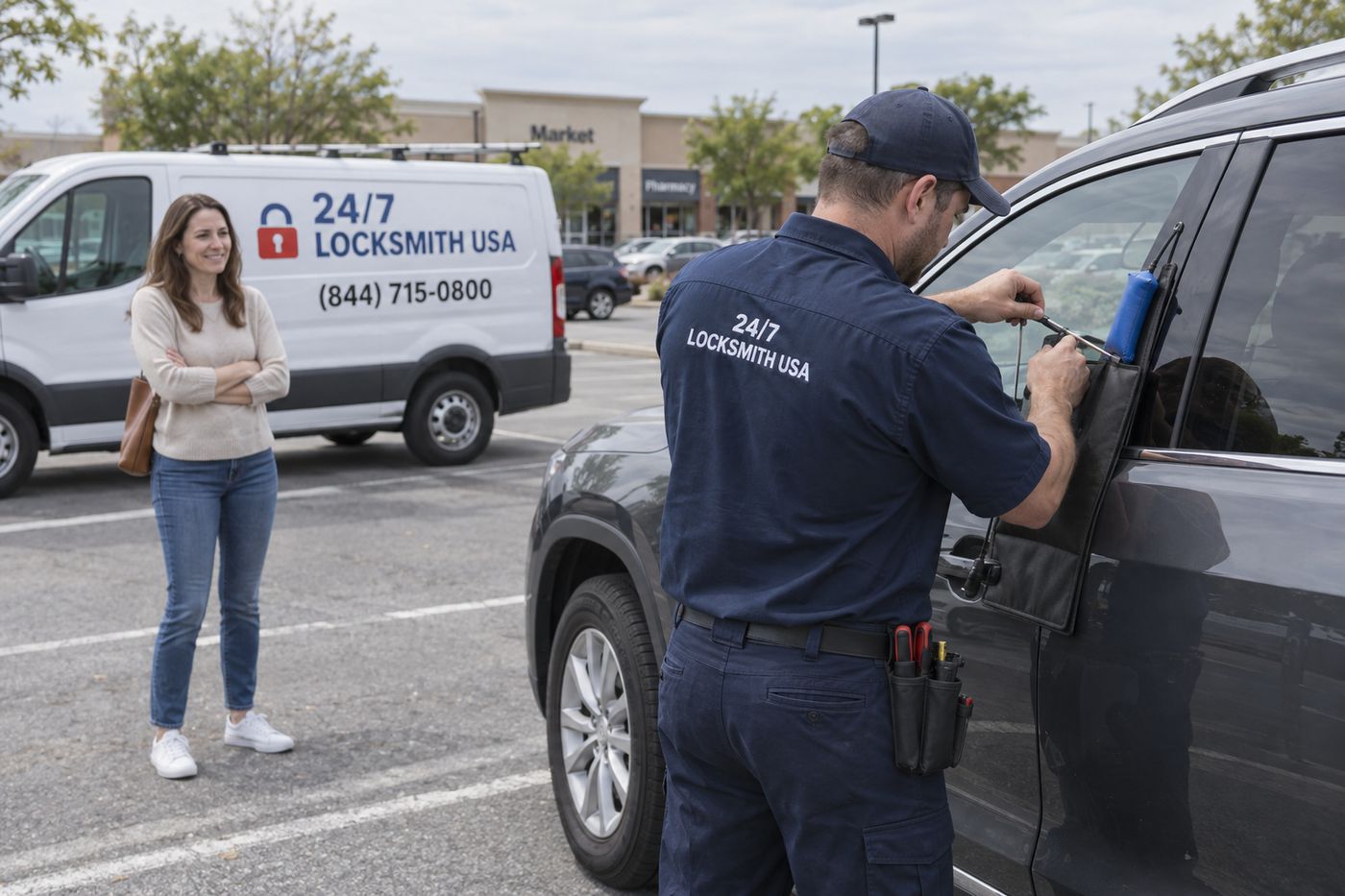
A complete key is originated at the car in a Main Gate garage stall or a Vail cul-de-sac without a tow across town.
Chip Key Rebuild and Reprogramming
Cracked key heads that let the transponder float loose get rebuilt and recoded, the classic failure on a decade-old student car.
Door Lock and Actuator Work
Monsoon water that got past dried weatherstrip and killed a driver's door lock is sorted out rather than blamed on the remote.
Smart Key Pairing
Push-button vehicles in the Foothills and Oro Valley are paired to a new proximity key in the driveway.
High Security Laser Cut Keys
Sidewinder blades for newer trucks around the aerospace and defence employers are milled and coded on site.
Second Key Programming
Households running one key for two drivers get a properly coded backup made before the semester ends.
What Tucson Weather and Traffic Do to Keys
Tucson sits high enough in the Sonoran basin that nights cool off hard, and that daily swing is rough on the plastics and seals in a car door. Weatherstrip dries and splits through the arid spring, then the July monsoon arrives as a wall of water rather than drizzle. The first heavy cell of the season pushes rain past those tired seals into the driver's door, straight down onto the lock actuator, latch wiring and door module. A week later the remote unlock stops answering and the owner assumes the fob died. The university fleet is the other half of the picture. Students arrive with inherited sedans and first cars, largely chipped-key vehicles from the era before proximity systems, parked along Speedway, in the Main Gate garages and up and down the side streets of Sam Hughes. Those keys have been on the same ring as house keys and gym keys for a decade, and the head cracks around the transponder until the chip sits loose and only reads on certain days. Out in Rita Ranch and Vail the drive to any dealer is long enough that the whole point is having the work done in the driveway.
How desert conditions wear on keys and fobs
Arizona sun does not just warm a car, it bakes it. A vehicle parked outside in summer can reach temperatures inside that are well beyond comfortable, and anything left on the dashboard or in a cup holder takes that punishment for hours. Plastic key shells can crack, adhesives that hold a fob together can let go, and button pads can turn sticky or peel.
Batteries suffer too. Small lithium cells inside a fob lose capacity sooner when they are kept hot, and a fob that seems fine one week may go quiet the next. Because the failure is gradual, many drivers do not notice it until the one day the car does not respond, usually when they are in a hurry or carrying bags.
This page is general guidance for people in Tucson. It does not describe any specific neighborhood or claim a history here, and it avoids guessing about local rules. The goal is to help you recognize what is likely going on with your key and what a sensible next step looks like.
Dust, grit and stiff locks
Fine desert dust works its way into everything. Over time it collects inside door lock cylinders and ignition switches, mixing with old lubricant into a gritty paste that makes a key stiff. If your key has started to feel rough going in or you must jiggle it to turn, dirt may be the cause, or the key itself may be wearing down.
Spraying random products into a lock is tempting but often makes things worse, because some oils attract more dust. A technician can clean or replace a cylinder properly and tell you whether the lock or the key is the weak link. If the problem is the key, a fresh copy cut from the vehicle's code is usually better than one copied from a worn original.
Pay attention to the early signs. A key that hesitates in the ignition, a door that sometimes needs a second try, or a steering wheel that binds before the key turns are all warnings. Dealing with them when the car still starts is far easier than waiting for a complete failure in a parking lot.
It is also worth looking at the key itself in good light. Check the edges for rounding, look for cracks near the head and see whether the plastic around the chip is chipped or loose. If the key blade is bent even slightly, do not force it in a lock. A bent blade can snap, and then the problem becomes a broken key in the cylinder instead of a simple copy.
Fob batteries in extreme heat
Replacing a fob battery is one of the simplest jobs on a car, but people put it off because the fob still works most of the time. In hot places the safer habit is to change the battery on a schedule rather than waiting for symptoms. Our page on how long key fob batteries last explains typical patterns, and the walkthrough on changing a key fob battery shows the basic steps.
Some cars warn you with a dashboard message when the fob battery is low. Others say nothing at all. If you notice that you must stand closer to the car for it to respond, or press the button more than once, treat that as a sign the battery is fading. If new batteries keep dying again and again, something else may be draining them, and our page on a key fob battery that keeps dying covers that.
When you open a fob, be gentle. The shells are often snapped together and can be damaged by prying with a screwdriver. Note which way the battery sits before you remove it, and handle the circuit board by its edges. If the case is cracked or the contacts look green or white with corrosion, it may be time for a new fob.
What to do when the car will not open
If your fob stops working and the car stays locked, try the physical key hidden in most fobs. Many push button cars include a thin metal blade that slides out of the fob, and a small cover on the door handle can be removed to reach the keyhole. Check your owner's manual for how your model does it.
If that works, you can get inside and often start the car by holding the fob against a marked spot on the dashboard or steering column. That workaround is built into the car by the maker for exactly this reason. It buys time, though it does not fix the underlying problem, which may be a dead battery or a fob that has lost its pairing.
If none of this helps, or the key is locked inside, you are looking at a lockout call. Our page about car lockout service explains what to expect. The technician will check that you have the right to open the car, then use professional tools designed not to damage the door.
Be ready to explain what happened. Did you shut the door with the key inside, did the fob stop responding, or did the key vanish somewhere on a trip? The more precisely you can describe it, the better the dispatcher can judge what tools are likely to be needed and whether anything else, such as a damaged lock, could be involved.
Heat safety when someone is inside the car
Nothing in this guide is more important than this: a locked car in the desert becomes dangerous within minutes. If a child, a pet or a person who is unwell is inside, do not wait for a locksmith. Call emergency services first and follow their direction. Heat inside a closed vehicle rises far above the outside temperature.
If the situation is only that you are locked out and the car is empty, there is still a reason to act promptly in summer. Standing on hot pavement or sitting in direct sun for a long period is uncomfortable and can be unsafe. Find shade, drink water and keep your phone charged while you arrange help.
Our broader advice in the summer heat and car key safety guide covers keeping keys out of hot places, avoiding leaving valuables on the seats and what to do before a long drive. A few habits, like keeping a spare key at home and storing the fob in the shade, reduce the odds of an emergency.
Another small habit is to park in shade when you can and to use a windshield sunshade, which lowers the heat that builds on the dashboard where electronics and fobs sometimes rest. When you get out of the car, make a point of checking your pockets before you close the door, every single time. It takes a second, and it prevents the most common lockout of all.
Replacing a key when none are left
Losing the last key to a car is a stressful moment, but it is a solvable problem. A technician can create a new key from the vehicle identification number, cut it to match and program it so the car recognizes it. The process works for many makes and models, though some luxury or older vehicles have their own quirks.
You will need to show that the car is yours or that you have authority over it. A photo ID matching the registration or title is the usual way. If the car is leased, owned by a business or registered to a relative, say so at the start. Our guide on what to do when you lose your car key lists the first steps to take.
The VIN is the other key piece of information. It is visible on a small plate at the base of the windshield on the driver's side and printed on your insurance and registration. Photograph it so you can read it out on the phone. Our short guide to finding your VIN helps if you are not sure where to look.
Once the technician has the vehicle details, they can tell you the type of key your car uses, whether it is a basic chip key, a flip key or a smart fob. Ask what you will end up with and whether it includes the remote buttons you are used to, so there are no surprises when the work is done.
Why a spare key matters more than people think
The easiest key to make is the second one. When a working key exists, a technician can copy it and program the copy, which involves fewer steps than starting from nothing. Waiting until the last key is gone turns a small errand into a bigger repair and usually a more stressful day.
The service called spare car key programming exists for exactly this reason. It is also the moment to ask about a physical emergency blade, a valet style key or a simple chip key that can live in your wallet. Some owners keep a basic key without remote buttons as a backup, since it is less costly to replace if lost.
Do not stash the spare in a magnetic box on the bumper. Thieves know the trick, and heat or road vibration can shake the box loose. A better plan is to leave it with a trusted friend or relative, or in a secure spot at home. Test the spare once in a while to make sure it still starts the car.
If your household has several drivers, think about whether each person needs their own key or whether sharing one spare is enough. More keys mean more chances for one to go missing, but they also mean less pressure on any single key. A balanced plan is usually two working keys in regular use and one stored safely away.
Fobs, chips and programming explained simply
A modern key has two jobs. The metal blade turns the lock mechanically, and the chip inside tells the car that this particular key is allowed to start the engine. Without the right chip, even a perfectly cut blade will turn in the ignition and still refuse to run the engine.
The remote part of the fob, with its lock and unlock buttons, is separate again. It sends a radio signal that the car has to recognize. When a fob is replaced, the technician programs both parts so that they work together. Our page on key fob programming describes the service in more detail.
A common pitfall is buying a bargain bin fob from an unknown seller and hoping it will work. Some are locked to another vehicle, some use the wrong frequency and some have poor parts that fail within weeks. If you already have one, mention it when you call and the technician can tell you honestly whether it is worth attempting.
Monsoon storms, flooded lots and wet keys
Heavy summer storms can bring sudden rain, and sudden rain can mean wet pockets and wet keys. A fob that gets soaked should be opened, dried and left in a dry place before you try it again. Do not use heat to hurry the process, because that may damage the circuit board.
Washes and flooded streets also make water damage a risk for cars. If the vehicle was in standing water, do not try to start it, and tell the technician about the exposure. Electronics in the dashboard may have been affected, and the key system depends on them.
Keep a spare key somewhere dry and away from the car. If storms are in the forecast, make sure your phone is charged and your documents are easy to reach. These small steps save time if something goes wrong during bad weather.
Dealership or locksmith for a replacement key
You can get a replacement key from a dealership or from a locksmith. A dealership works from a service department and may need the car brought in, which can be awkward if the car has no working key. A mobile technician can sometimes work where the car is parked, which avoids the cost and trouble of a tow.
Your choice may depend on the car, your schedule and what the dispatcher says over the phone. Some very new or specialized models may need dealership equipment, and an honest locksmith will tell you so rather than promise something they cannot do. Ask directly whether your vehicle falls into that category.
Whatever route you pick, ask for a clear explanation of the quote and the service call charge before agreeing. Our page comparing dealership and locksmith keys sets out the main differences in plain terms.
Other Arizona cities and the state overview
Tucson drivers often travel north to the Phoenix area for work or errands. If you run into trouble in Phoenix or Mesa, the advice in those pages applies in much the same way, since the problems and the process are similar.
To see how service is organized across the state, read the Arizona overview. Rules about vehicles, registration and towing vary, so ask the proper office or your insurer about anything specific to your situation rather than relying on a general page.
If you live in one of the surrounding towns, the same advice holds. Distances in this part of the state can be long, so mention clearly where your car is, in what kind of lot or road, and whether you can safely wait there. Good directions are as helpful as any tool the technician carries.
When you are ready to call, have the make, model and year, the exact location and your ID close at hand. Describe what happened, ask for a quote and make sure the service call charge is explained before anyone is dispatched.
Common questions
Can a locksmith program a new key in Tucson if I lost every key?
Usually yes. A technician can cut and program a key from the vehicle identification number when no spare exists. You must show proof of ownership, normally a photo ID that matches the registration or title. Ask on the phone whether the work can be done where the car is parked.
Does desert heat really damage key fobs?
It can. Heat shortens battery life, warps plastic shells and weakens the glue and rubber on button pads. Avoid leaving a fob on the dashboard or in direct sun. If it already behaves oddly, replace the battery first and check the case for cracks before assuming the electronics have failed.
What if my fob dies and the car will not unlock?
Most fobs hide a small metal key. Slide it out and use the keyhole, which may be under a cover on the door handle. Then hold the fob against the spot your manual shows to start the car. If none of that works, a locksmith can help with the lockout or reprogram the fob.
Is it safe to wait for help if someone is in a hot car?
No. If a child, pet or unwell person is inside a locked vehicle, call emergency services right away and follow their instructions. A locksmith can help with an empty locked car, but a person in danger needs an emergency response first. Never leave anyone alone in a parked car in the heat.
What information do I need ready before calling?
Have the make, model, year and color of the car, its exact location and a photo ID ready. If you can, find the vehicle identification number on the dashboard plate or your registration. Describe what happened. The dispatcher will give a quote by phone and explain the service call charge.
Should I buy a replacement fob online first?
Be careful. Some online fobs are locked to another vehicle or use the wrong signal and cannot be programmed to your car. If you already bought one, tell the dispatcher the brand and what you know about it. An honest technician will say whether it is worth trying or whether a different fob is wiser.