
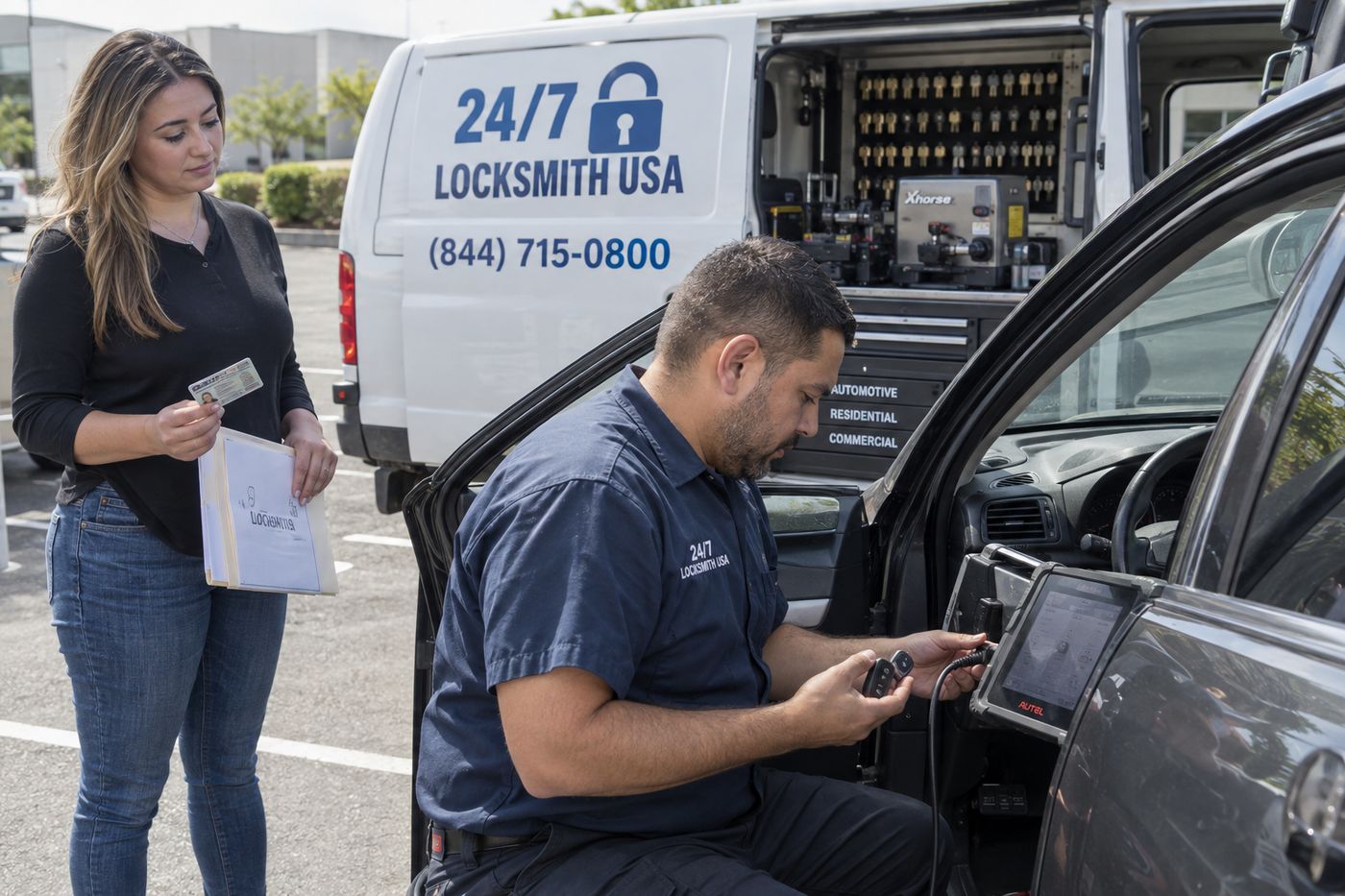
What we build at your vehicle.
The cutting and programming equipment rides with the technician, so the work happens on the row where you parked.
All Keys Lost Origination
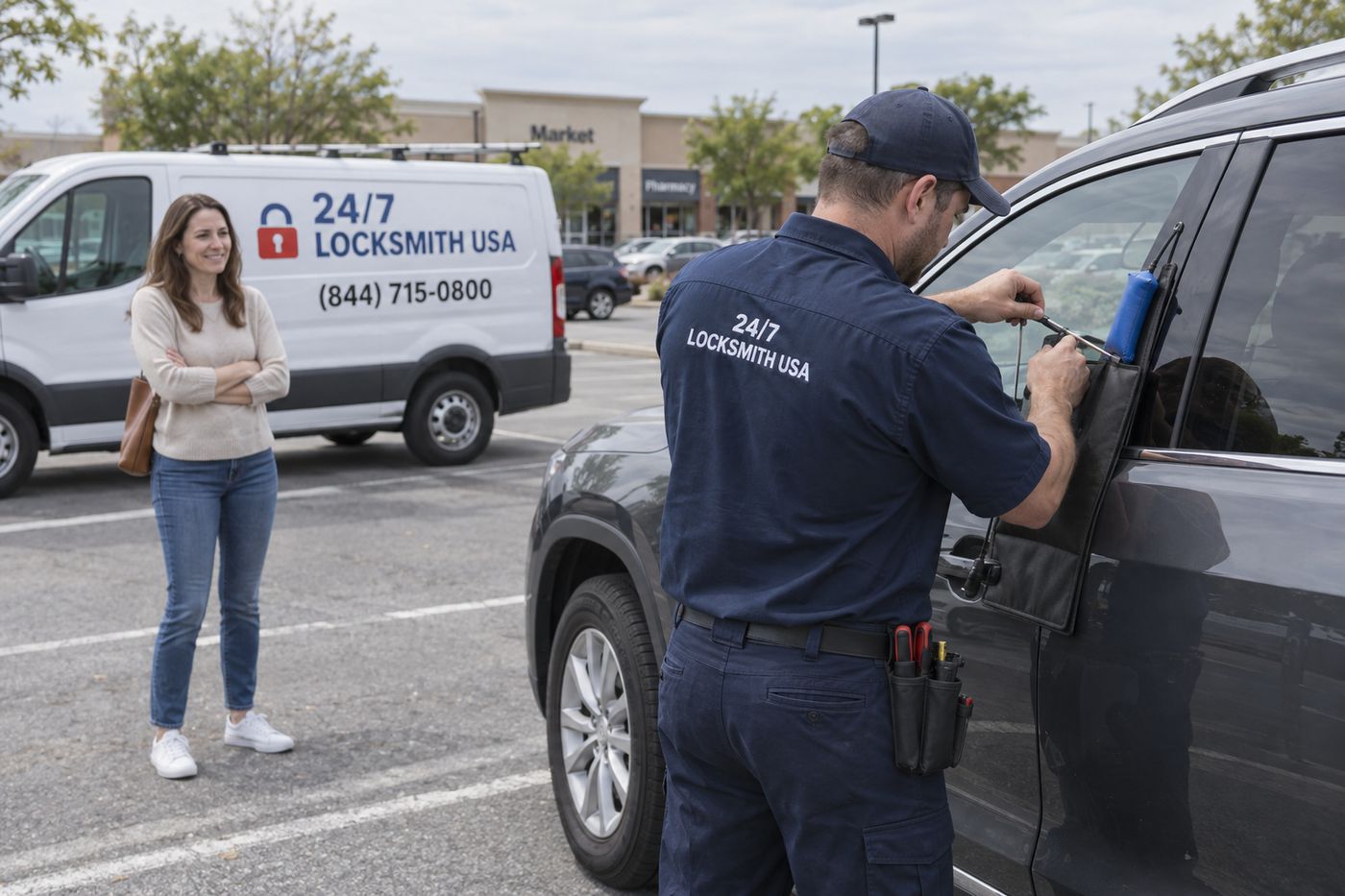
Nothing left after a trip? We build and program a key from scratch at the vehicle once ownership checks out.
Push-to-Start Smart Keys
Proximity keys for late-model vehicles, paired on the level of the deck where you parked.
Remote Fob Programming
Lock, unlock and trunk release coded to your car in a Midtown surface lot or a Buckhead garage.
Ignition Cylinder Repair
Long metro commutes wear cylinders until the key stops catching; we rebuild or replace on site.
Broken Key Extraction
Snapped a blade in a door or ignition downtown? We pull the fragment and cut a fresh key to spec.
Vehicle Lockout Entry
Keys sitting on the seat in a stadium deck get reached without a mark on the paint or the frame.
Why Atlanta drivers lose keys.
The single largest source of all-keys-lost calls in this city is the airport. Hartsfield-Jackson's economy and long-term lots hold vehicles for a week at a stretch, and keys go missing three time zones away in a hotel room, a rental car or a bag that ended up in the wrong state. The owner lands late, rides the shuttle out to a numbered row, and there is nothing to do but have a key built on the asphalt. Event nights are the second wave: Mercedes-Benz Stadium and State Farm Arena empty a full house into decks and surface lots at once, and a fob that leaves a jacket pocket in that crush is not coming back. Beyond those, Atlanta's spring pollen packs door and trunk seals with yellow grit that works its way into keyways, and the top deck of an uncovered parking structure in August is far hotter than the circuit board in a proximity fob was designed to endure. A large share of drivers here are transplants whose vehicle was bought and titled somewhere else entirely, which makes the original selling dealer irrelevant to the problem in front of them.
A big metro area changes how key trouble feels
Atlanta is a place where people drive. Commutes are long, errands spread across wide distances, and a single day can take a car through several parts of the metro area. When a key fails, the problem is rarely at your front door. It is at a distant parking lot, a deck at the office or a roadside spot you reached after a long drive.
This page is general guidance for people in Atlanta. It does not describe particular streets, buildings or neighborhoods, and it makes no claims about local facts. What it offers is a practical way to think about lost keys, dead fobs and lockouts in a large, car dependent region with hot, humid summers and sudden storms.
Distance matters because it changes your options. You cannot just walk home for the spare. That is why this page spends time on preparation, such as knowing what information to give on the phone, which documents to carry and how to stay safe while you wait. A well prepared driver turns a stressful event into a manageable one.
It also helps to separate what you can control from what you cannot. You cannot control traffic, weather or the hour you discover the problem. You can control whether your phone is charged, whether you know your plate and VIN, and whether you have someone who can sit with you or pick you up. Even a short message to a friend or family member, saying where you are and what is happening, adds a layer of safety that costs nothing and takes a minute.
Starting the call with the right details
The first call goes smoothly when you can describe three things: where you are, what you are driving and what has happened. Where you are means a landmark, a business name, a deck level or an exit, whatever helps someone find you. What you are driving means make, model, year and, if you can read it, the VIN on the dashboard plate. What has happened means whether the key is lost, broken, locked inside or simply not responding.
If you are not sure of your exact location, say what you can see. Ask a nearby business for the address if you can safely do so. A confident description helps the dispatcher understand the setting and decide how to plan the visit. Honest uncertainty is fine. Guessing is not, because a wrong guess wastes everyone's time.
Ownership or authority is checked before a technician opens the car or programs a key. The guide on how to find your VIN shows where the number lives, and it is a good idea to take a photo of it now so you have it when you need it.
Parking decks, garages and lockouts
Anyone who works or shops in a large city ends up leaving a car on the third or fourth level of a deck. Locking your keys inside there brings its own questions. Is there room for a technician to work? Can the vehicle be reached from the level you are on? Does the deck have a height limit, a gate or an attendant?
Read our page about a car locked with keys inside a parking garage for the general approach. The practical message is to tell the dispatcher everything you know about the structure, including the level, any nearby sign and whether the deck requires a ticket or pass for entry. Such details help a technician plan, and they avoid a delay at the gate.
While you wait, stand where you are visible and safe, and keep your phone with you. Do not leave bags or valuables in view inside the car if you can avoid it. If you are alone and it is late, consider waiting in a lobby or near an attendant. Take a moment to confirm who arrives before you hand over any documents.
Some decks have a rule that vehicles may not be worked on inside the structure, and others allow it freely. Rules like this vary from place to place, so do not assume. Ask the operator or an attendant if there is one, and pass on what they say. If the car has to be moved or the work done outside, it is much better to know that before a technician makes the trip.
Heat and the closed car
Summer in Atlanta brings heat and humidity that make a closed car dangerous in a short time. A car parked in the sun can become unbearably hot inside, and the situation turns urgent if a person or pet is trapped. If a child or an animal is inside a locked car, say so immediately on the call, and contact emergency services first if anyone appears to be in distress. The service page for a child or pet locked in a car explains how these calls are treated.
Heat harms keys and fobs too. Leaving a fob on a dashboard in direct sun can shorten the life of its battery and warp its case. The guide to summer heat and car key safety explains simple habits, such as keeping keys in the shade or in a bag. These habits cost nothing, and they reduce the odds of a dead fob on a hot afternoon.
Humidity affects locks as well. Moisture and grit can make a lock feel rough, and an older key that has been turning with effort may eventually give out. If a door or ignition has been getting stiff, mention it. A technician can often tell from the feel whether it is the key, the lock or both.
Think too about the interior. Dashboards in strong sun reach high temperatures, and anything stored there, from sunglasses to a spare fob, suffers. If you keep a spare key in the glove box, remember that the glove box gets hot as well, and it is also the first place a thief would look. A small pouch in a bag or a drawer at home is the safer, cooler choice.
Thunderstorms, wet keys and electronics
Sudden downpours are part of life in the region. A fob dropped in a puddle, a key left in a wet jacket or a car door that sat open during a storm can all lead to trouble. Water is hard on the small electronics inside a key. It can corrode contacts, drain the battery and make the fob act unpredictably, even after it dries.
If a fob gets wet, remove the battery if you can do so without damage, dry the case and let it rest. Avoid heat sources, because they can warp the plastic and harm the circuit. If it still does not work, the fob may need repair or replacement. The service for key fob programming covers what happens when a new fob has to be paired with the car.
Power outages and storm damage can also complicate things. If a storm has knocked out power at home, a locked garage or an electronic gate may stop working. Keep a mechanical backup, and know where the physical key for any smart lock or electronic entry is kept.
Hazards on the road are part of the picture. Heavy rain reduces visibility, and a roadside lockout in poor weather is a dangerous place to wait. If you are on a shoulder, stay away from traffic, prefer to be outside the vehicle only when it is safe to do so, and make sure you can be seen. Tell the dispatcher about the conditions, since they may affect how and where the work can be done.
How replacement keys are made for modern cars
Most vehicles on Atlanta roads were built with some form of electronic key security. A transponder key has a chip that the car must recognize. A smart key lets you start the car with a push button while the fob stays in a pocket. Others use a laser cut blade with a separate remote. Each requires its own procedure to replace.
The page on transponder key programming explains the chip and the programming step. For a plain explanation of the whole process, see how car key programming works. In general, a key is cut if there is a blade, the chip or fob is paired with the car, and the result is tested.
You may wonder whether to go to a dealer or to a locksmith. The guide on dealership versus locksmith keys lays out the tradeoffs, including where the work is done and how you get the car there. When the car will not move, a mobile visit can make the difference.
One more point is worth stating plainly. Key programming is not magic, and it is more than pressing one button. It involves identifying the correct key type, preparing the blank, connecting diagnostic equipment and confirming that the car accepts the key. That is why details matter at the start of the call, and why a thorough technician will ask for the VIN instead of guessing from the model name alone.
Lost keys at night and far from home
Losing a key after dark is a different experience. The parking lot is quiet, the area may feel unfamiliar and your options feel narrower. The guide on lost car keys at night covers the main points. Safety first: choose a lit, populated spot, and tell someone where you are.
Before you call, retrace your steps briefly. Check bags, pockets, the ground around the car and the last place you sat down. Ask the business you just left whether anyone turned in a key. Keys turn up more often than people expect, and finding one saves a good deal of effort.
If the key is truly gone, a new one can be made from the VIN once ownership is shown. Have your identification and paperwork ready, or know where to retrieve them. If your documents are inside the locked car, say so, because there are other ways to confirm who you are and what you own.
Buying a used car and getting a spare
Many Atlanta drivers buy used vehicles, and a used car often comes with only one key, or with keys of uncertain history. It is wise to think about a spare right away, and also to consider whether a key you do not know could still start the car in someone else's hands. A new programmed key, with the old ones removed from the system where possible, restores confidence.
A spare key is easiest to make while you still have a working one. The car can learn the new key from the old, and the whole process tends to be simpler. If you wait until all keys are lost, the job gets longer. Ask during your call whether it is possible to remove lost or unknown keys from the vehicle memory when the new key is programmed.
For a household with several drivers, plan a key for each person who needs one, and keep a backup in a safe place at home. Treat the backup as something you test now and then, because a spare with a dead battery is not a spare.
- Photograph the VIN plate and your registration so the details are always on your phone.
- Keep a spare key at home, never on the vehicle.
- Replace fob batteries on a schedule instead of waiting for them to die.
- Carry a form of identification that matches your ownership paperwork.
- Ask whether lost keys can be removed from the vehicle memory after a new one is programmed.
Nearby cities and other pages that help
If your trouble happens on a trip, the same advice applies elsewhere in the state. Pages for Augusta and Savannah follow a similar approach, while the Georgia state page gives a broader view. You will find the same process in each: describe the situation, show ownership and get a quote by phone.
Travelers sometimes lose keys while away from home, which adds a layer of difficulty. You may not have your usual paperwork with you, and the car may be registered elsewhere. Be honest on the call and ask what is acceptable. A clear conversation sorts out most of the obstacles before anyone is dispatched. If you are renting or sharing a car, bring the rental agreement or ask the owner to be reachable by phone, since the party that controls the vehicle may need to approve a new key or an opening, and having them available saves a long delay.
Finally, remember that the guidance here is general. Conditions on any given day, in any given spot, can differ from what you read. Treat this page as preparation rather than a promise, and let the facts on the ground, which you can describe on the phone, shape the plan.
If you travel for work, a short habit can save you a great deal of trouble: before a long drive, check that the fob battery is healthy, that the spare is somewhere other than the car, and that you know the VIN. Three small checks, repeated every few months, turn the worst case into an ordinary delay. Share the same list with family members who borrow the car, so everyone is working from the same plan.
Quotes, charges and what to expect on arrival
Quotes are given by phone, and the service call charge is explained before a technician is dispatched. The quote depends on the vehicle, the type of key and the situation. A basic lockout is a different job from programming a smart key, and both differ from an all keys lost call.
On arrival, expect a check of identification and ownership, a look at the vehicle and a confirmation of the work and charge you were told about. The technician should explain what they are doing and test the result with you. Ask to try every function before you accept the work as finished.
If something does not match what you were told, pause and ask. A reputable service welcomes questions. Our guide on the service call charge can help you understand why the visit itself is a separate part of the quote.
Common questions
What if I lose my key far from home in Atlanta?
Stay in a safe, visible place and call with your location, vehicle details and what happened. Ownership is checked before a new key is made, so gather identification and any proof of ownership you can reach. If your documents are in the locked car, tell the dispatcher so alternatives can be discussed.
Can a lockout be handled on a parking deck level?
Often yes, but tell the dispatcher the deck level, any entry requirement and any height or gate limits. Those details help plan the visit. Requirements at a given structure can vary, so ask the deck operator if you are unsure about access rules for service vehicles.
Is it urgent if a pet is locked in my car?
Yes. Heat can make a closed car dangerous in a short time. Say so at the start of the call, and contact emergency services first if the animal or person appears to be in distress. A locksmith call should follow, not replace, a call for urgent help.
Does humidity or rain really affect a key fob?
It can. Moisture may corrode contacts and drain the battery, and a fob that has been soaked can behave oddly even after drying. Dry it gently without heat, and if it does not recover, ask about repair or replacement rather than pressing buttons repeatedly.
Should I get a spare key for a used car?
It is a wise step. A spare is simpler to create while a working key exists, and a new programmed key can give you confidence about who else holds one. Ask whether unknown or lost keys can be removed from the vehicle memory during programming.
How do I know what the visit will cost?
A quote is given by phone based on what you describe, and the service call charge is explained before dispatch. The vehicle, key type and situation all matter. If the terms change on arrival, ask the technician to explain the reason before you agree to proceed.