
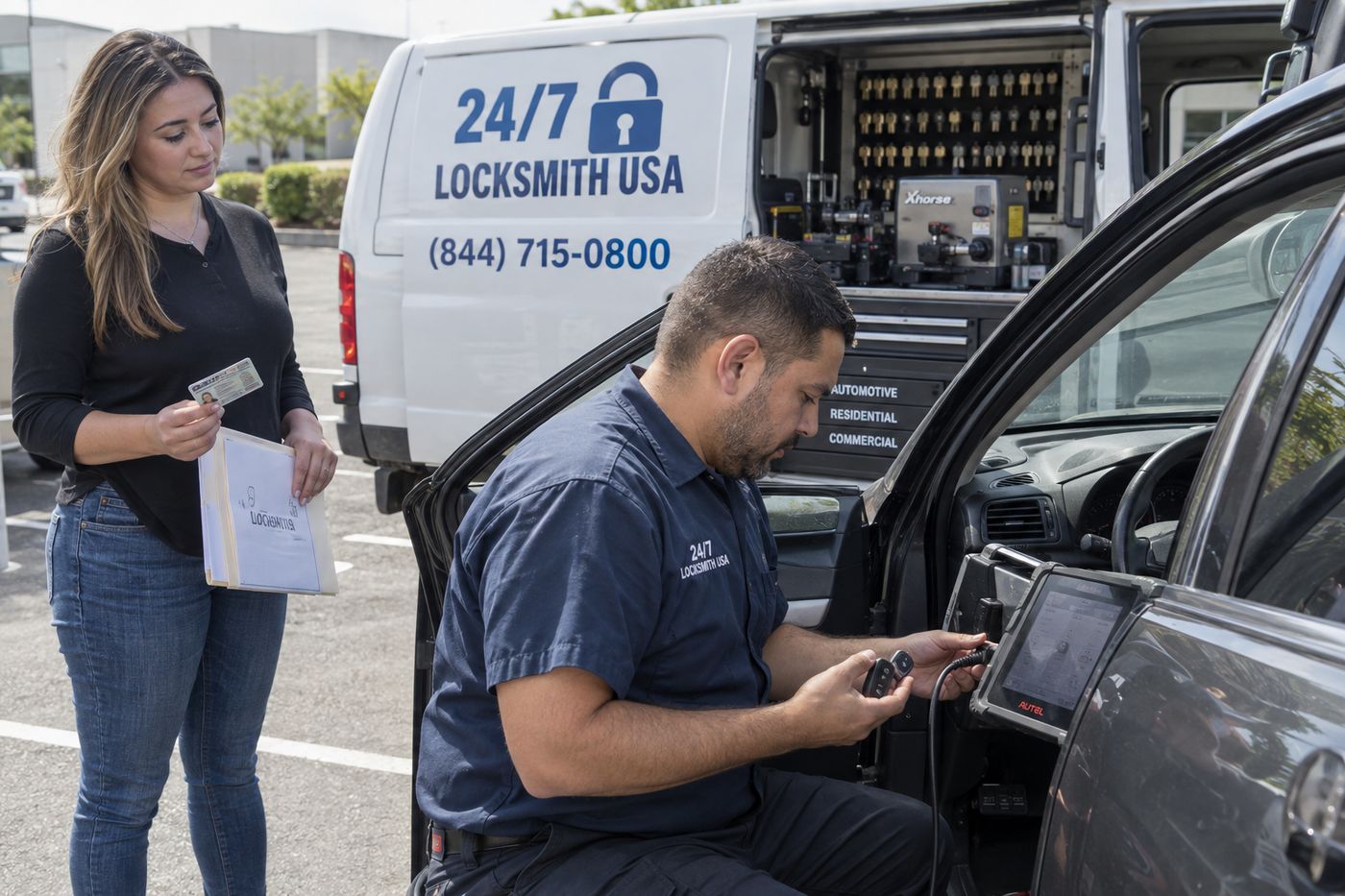
Built for Aurora's commute.
Smart keys, transponder blades and work-truck keys handled in the parking lot instead of at a service department.
Lost Key Origination
Both keys gone somewhere between the Southlands lot and home? We generate a fresh one from the vehicle.
Proximity and Push-Button Start Keys
The SUV and truck mix out here runs on smart keys, and we pair them in the garage where you parked.
Remote and Fob Replacement
Twelve-hour shifts in a cold parking structure end plenty of fobs; we supply and program a new one.
Truck and Work Van Keys
Fleet and contractor vehicles along the I-225 corridor get replacement keys without leaving the job site.
Ignition and Lock Cylinder Service
Plains grit packs into a cylinder until the key drags, so we clean, rebuild or replace it outright.
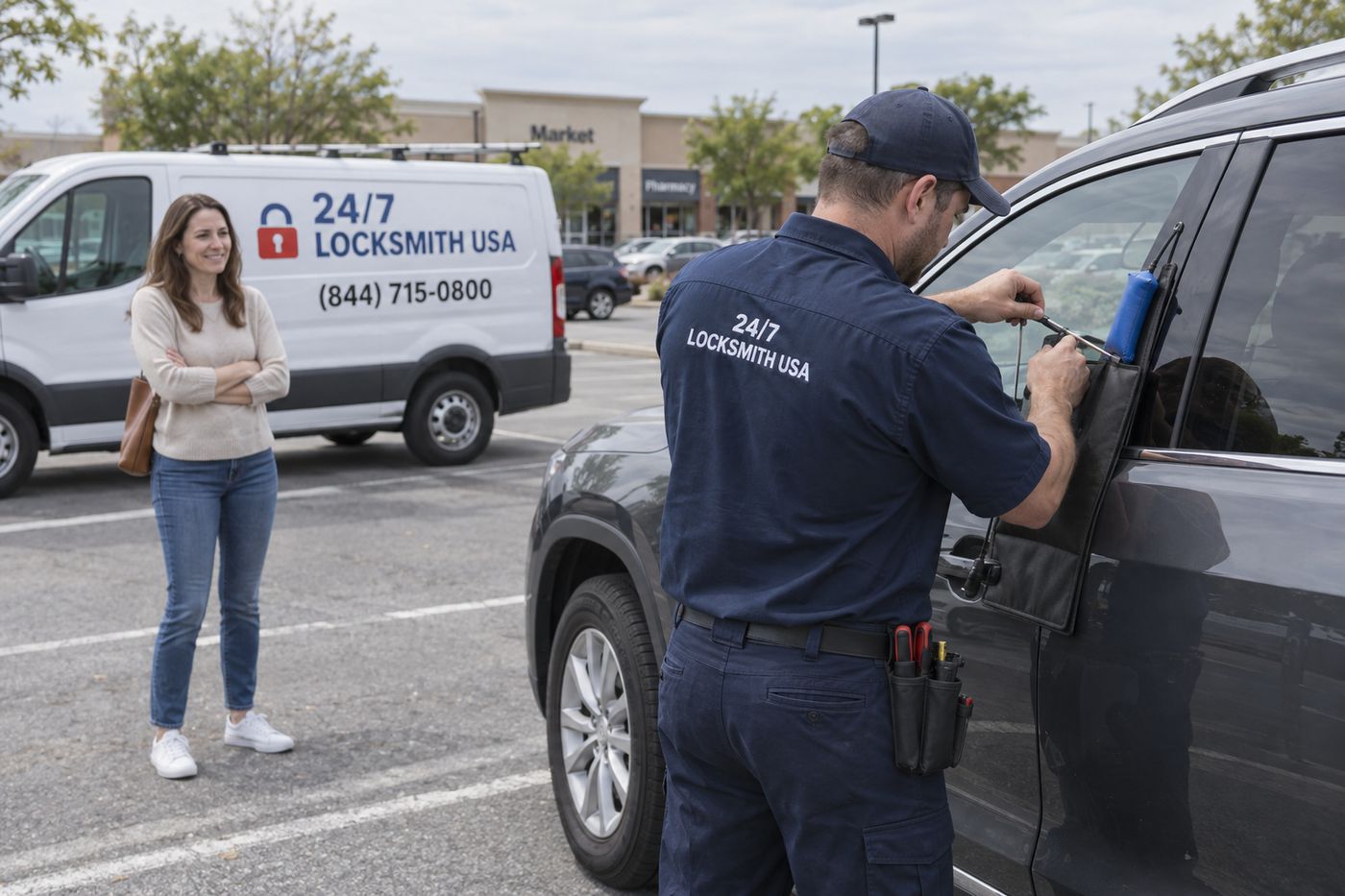
Car Lockout Assistance
Keys sitting on the seat at a Havana Street lot come back to you without a scratch on the door.
What Aurora does to your car keys.
Aurora sprawls east until the subdivisions simply stop and the prairie starts, and that exposure shapes the calls we get. Nothing breaks the wind coming off the plains, so grit gets driven into door seals and lock faces all year, and summer storms roll through with hail that puts vehicles under repair long enough for a spare key to get misplaced. The Anschutz Medical Campus creates a rhythm of its own: nurses and techs working long shifts leave cars sitting in cold garages for twelve hours at a stretch, and a fob that spent the whole night in a locker at fifteen degrees often refuses to talk to the car at shift change. Buckley Space Force Base adds vehicles that sit for weeks between assignments. Out east along Tower Road the airport is close enough that people park here and shuttle over, and E-470 traffic means a stall in the wrong spot is genuinely unsafe. The vehicle mix leans heavily toward big SUVs and pickups with proximity keys and encrypted blades, which is exactly the work our vans are built for.
Weather swings that test keys and batteries
Colorado weather likes to change its mind. A bright, warm afternoon can give way to a hard freeze by morning, and a city on the high plains feels those swings sharply. Small batteries lose strength in cold. Plastic key heads grow brittle. Rubber door seals stiffen, and moisture that melted during the day can freeze in a keyhole overnight.
This page is general guidance for people in Aurora. It does not describe particular streets, lots or neighborhoods, and it makes no claims about any local detail. What it does is explain, in plain terms, how the usual problems with car keys show up in a climate of strong sun, dry air, sudden cold and the occasional storm.
The practical lesson is that key trouble clusters at the edges of the day and the season. First cold morning of autumn, first heavy snow, first scorching afternoon of summer: those are the moments a tired battery or a worn key gives up. A little attention beforehand turns a surprise into a routine errand.
Dry air matters as well. Static electricity, dust and the fine grit that blows across open ground work their way into locks and into the buttons of fobs. A lock that feels scratchy may be carrying more dirt than you think. A fob with sticky buttons may have collected grime beneath the rubber. Neither problem is dramatic on its own, but each is a hint that the part is nearing the end of its useful life.
Trailheads, ski days and keys that go missing outdoors
Many people in the area spend weekends outside, and that lifestyle creates its own pattern of key loss. A key slips out of a jacket pocket on a trail. A fob goes into a snowbank while you load gear. You return to the car after hours outdoors, tired and cold, and find that the key you remember carrying is gone.
If this happens, take a breath before anything else. Retrace your steps if it is safe and light enough to do so. Check the gear bag, the pockets of every layer you wore and the ground around the car. Ask your companions whether anyone picked it up. Keys often turn up in a place that seems obvious in hindsight.
If the key is truly gone, you may be in a parking area far from services, with limited signal and fading light. Tell the dispatcher where you are as precisely as you can, including any road name, trailhead sign or landmark. Be honest about conditions such as snow, mud or a steep access road, since they affect how and whether a visit can be planned. Stay warm, stay with your vehicle if it is safe and keep your phone charged.
Before heading out, a few small steps lower the risk. Zip the key into an inner pocket instead of a loose outer one. Clip it to a lanyard or a carabiner on your pack. Leave a spare with a person who is not on the trip, and tell someone your plan and your expected return. None of this is complicated, and all of it matters when daylight is short and a long drive home depends on a small piece of metal and plastic.
Remote start and the cold morning routine
Remote start is popular in places where winter mornings are harsh, and it is easy to see why. You press a button, the engine starts and the cabin begins to warm while you finish your coffee. The convenience comes with technology that depends on the key or a separate module, and it can fail in ways that confuse people.
Sometimes the fob stops sending the remote start signal because its battery is weak. Sometimes the car stops accepting the signal because the system has lost its programming. Sometimes the vehicle shuts off on its own as a safety feature after a set period. The service page for remote start key programming explains how these systems are set up and what a new fob needs.
If your remote start has become unreliable, begin with the simplest check: replace the fob battery. If that does not help, describe exactly what happens when you press the button. Does a light flash? Does the engine crank and then stop? Does nothing happen? These clues help a technician decide whether the fob, the car or an add on module is to blame.
Another point worth knowing is that aftermarket remote start kits are installed separately from the factory key system. When such a kit is added, it often has its own remote and its own programming, which means a lost remote may need to be replaced through the installer of that kit as well as through the car's key programming. Mention if your system was added after purchase, since that changes the plan.
Fobs, smart keys and the cold
Smart keys let you unlock and start a vehicle without taking the fob out of your pocket. They rely on a small battery inside the fob and a short range radio link. Cold weather weakens the battery and can shorten the range, so the car may recognize you less reliably in the first deep freeze.
Many vehicles have a backup method. A hidden blade can open the door, and a marked spot on the dash or console lets the car read the fob at very close range even if the battery is flat. Learn where yours is before you need it. The owner's manual shows it, and a few minutes of reading on a warm day can spare you a cold one.
If the fob is physically damaged, cracked or soaked, a new battery may not rescue it. The service for key fob battery and repair describes what can be done, and sometimes replacement is the sensible answer. The guide to winter lockout prevention covers habits that reduce the odds of a winter call.
If your fob has a tendency to work only when you hold it right against the door handle, treat that as an early warning rather than a quirk. Try a fresh battery, make sure the contacts inside are clean, and keep the fob away from other electronics such as magnets or a crowded key ring of metal. If these steps do not help, have a technician examine it before it fails entirely.
When every key is gone
Losing the only key to a modern car is stressful but not hopeless. The situation is called all keys lost, and it is a standard job. A technician can make a new key from the VIN once ownership is shown, cutting a blade if the key has one and programming the electronics so the car accepts it.
Because there is no working key to learn from, the process takes more steps than adding a spare. It also helps to be ready with the vehicle details and your documents. The page on all keys lost car service walks through what happens and what to prepare.
Work can often be done where the car is parked, which matters if the vehicle is stuck on a gravel pull off, in a snowy lot or in a driveway that has not been cleared. Say plainly what the surroundings look like. A technician who knows about snow, slope or a tight space can plan to arrive ready to work without surprises.
Trucks, SUVs and larger vehicles
Trucks and SUVs are common across the region, and their keys can be more varied than those of small cars. Some have simple blades with a separate remote. Some have high security keys with milled cuts. Some models built for work use older systems, and some work vehicles are shared between drivers, which increases the number of keys in circulation.
The page about truck and van keys describes how these vehicles are handled. The key point is to provide the make, model, year and, if possible, the VIN, so the right blank and equipment come along. A key for a half ton pickup is not the same as a key for a compact crossover, even if both come from the same maker.
If the vehicle belongs to an employer, contact them early. Fleet vehicles may require an authorization from a manager or a record of who holds each key. Providing that information at the start prevents delays when ownership or authority is checked.
Towing and trailer setups add a final wrinkle. If a truck is hitched to a trailer or loaded with gear, say so, because the technician may need clear access to the doors and the area near the ignition. A vehicle blocked in by equipment or parked on a narrow shoulder may need to be repositioned first, and it is better to learn that on the phone than after arrival.
Cold, kids and the locked car
A lockout in cold weather is more than an inconvenience. If the engine is running and the keys are inside, you are outdoors without a coat or a way to get warm. If a child is in the car seat, the stakes are higher. Say so immediately on the call, and contact emergency services first if anyone appears to be in distress.
The service page for a child or pet locked in a car explains how these situations are treated. The important thing is not to delay. A locksmith call is a way to resolve an ordinary lockout, but it should follow, not replace, a call for urgent help when safety is at risk.
In a less urgent lockout, think about warmth while you wait. Step into a nearby business, sit in a friend's car or ask someone to bring you a coat. The technician needs the vehicle, not you standing in the wind, and you can stay in contact by phone. Details such as the parking spot, the color of the car and the nearest door make it easy to meet.
Building a sensible spare key habit
Anyone who spends time outdoors benefits from a spare. A key that lives in a drawer at home is no use on a mountain road, but it saves a long wait if the original is lost and someone can bring it to you. Consider also a secondary key that stays with a trusted friend or family member, if your situation makes that practical.
A programmed spare is easiest to create when a working key exists. The page on spare car key programming explains the process. If you have a smart key, consider whether a second fob and a plain mechanical backup would both make sense.
Never hide a key on the car itself. Magnetic boxes under the bumper or behind a wheel are well known, and they are the first places a thief checks. Keep the spare off the vehicle, and make sure you will remember where it is when you are tired, cold and in a hurry.
- Keep a programmed spare at home in a drawer you can reach in the dark.
- Give a second key to a trusted person if your routine takes you far from home.
- Replace fob batteries before winter instead of after the first failure.
- Keep a photo of the VIN and registration on your phone.
- Know where your car's hidden blade or backup start spot is located.
Leased cars, financed cars and shared ownership
Many drivers lease or finance their vehicles, and that raises a question about who must approve a new key. The lender or lessor may hold title or have rules about key replacement. This does not usually block the work, but it can add a phone call to the plan.
The guide on leased and financed car keys explains the situation. Bring your contract if you have it handy, and tell the dispatcher at the start that the car is not fully yours. Requirements vary, so ask the lender or lessor what they need.
The same goes for cars shared between spouses, roommates or business partners. Be clear about who owns the vehicle, whose name is on the registration and who is asking for the key. Honest detail speeds up the ownership check and keeps the job simple.
If you are buying a used car from a private seller, ask for every key that exists and for a record of any that have gone missing. A seller who says there was once a second key somewhere is telling you something. Consider having a new key programmed and the old unknown ones removed from the vehicle memory, so you alone control who can start the car.
Nearby cities, quotes and what to expect
If your travels take you through the Denver area or south toward the Springs, the same guidance applies. Pages for Denver and Colorado Springs follow a similar approach, and the Colorado state page adds a wider view.
On the first call, you describe your location, the vehicle and what happened. Ownership is checked before opening, cutting or programming. The quote is given by phone, and the service call charge is explained before dispatch. If you would like to understand that charge first, read the guide on the locksmith service call charge.
When the technician arrives, expect a short identification check and a confirmation of the work. Test every function of the new key before you accept the job as finished. If something differs from what you were told, ask about it politely and clearly.
Keep in mind that this page is general guidance, and conditions change from day to day. Roads close, weather turns and parking areas fill up. Your description of the real situation, given by phone, always outweighs any general note. Ask what is possible today, listen to the answer and make your plan from that, not from what you assumed beforehand. Calm, specific communication solves most problems before the first tool comes out of the bag.
Before you hang up, write down what was agreed, including the quote, the service call charge and what happens next. Having it on paper or in your phone's notes gives you something to compare against when the technician arrives, and it keeps everyone honest without any need for confrontation.
Common questions
What should I do if I lose my key at a trailhead?
Stay warm and safe, retrace your steps if conditions allow, and check every pocket and bag. If the key is gone, call with the most precise location you can give, including road names or signs. Ownership is checked before a new key is made, so have identification and paperwork ready.
Why does my remote start stop working in winter?
Cold weakens small fob batteries, which can limit the signal. The car may also have lost its programming or shut the engine off as a safety feature. Replace the fob battery first, then describe what happens when you press the button so a technician can narrow down the cause.
Can a smart key work with a dead battery?
Often yes, in a limited way. Many have a hidden blade to open the door and a marked spot on the dash or console where the car can read the fob at very close range. Check your owner's manual to learn where yours is before you need it.
Can a new key be made where my car is stuck?
Many jobs are done at the vehicle, including in lots or driveways with snow. Describe the surroundings so the technician can plan for room to work. Access conditions can limit what is possible on a given day, so ask directly when you call.
Do I need lender approval for a key on a financed car?
Possibly. A lender or lessor may have rules about key replacement. Ask them what they require, and tell the dispatcher at the start that the vehicle is financed or leased. Requirements vary, so confirm before dispatch to avoid delays when ownership is checked.
How is the price explained?
A quote is given by phone based on the vehicle, the type of key and the situation, and the service call charge is explained before a technician is dispatched. If the terms change on arrival, ask the reason before agreeing, and keep a record of what you were told.