
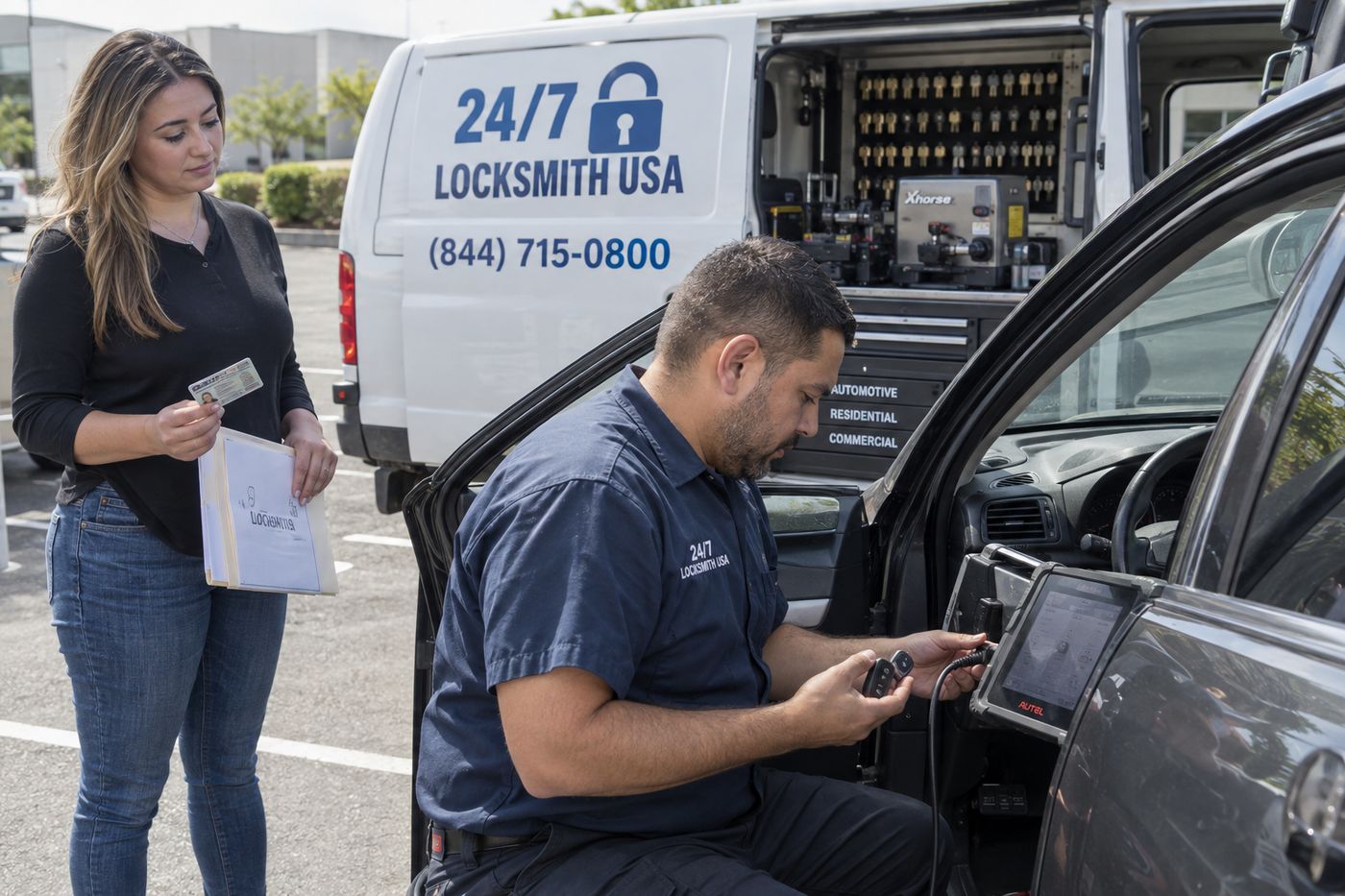
Chandler Key and Fob Capabilities
Modern keyless systems handled properly, from module enrolment to the emergency blade hidden inside the fob.
Proximity Smart Key Enrolment
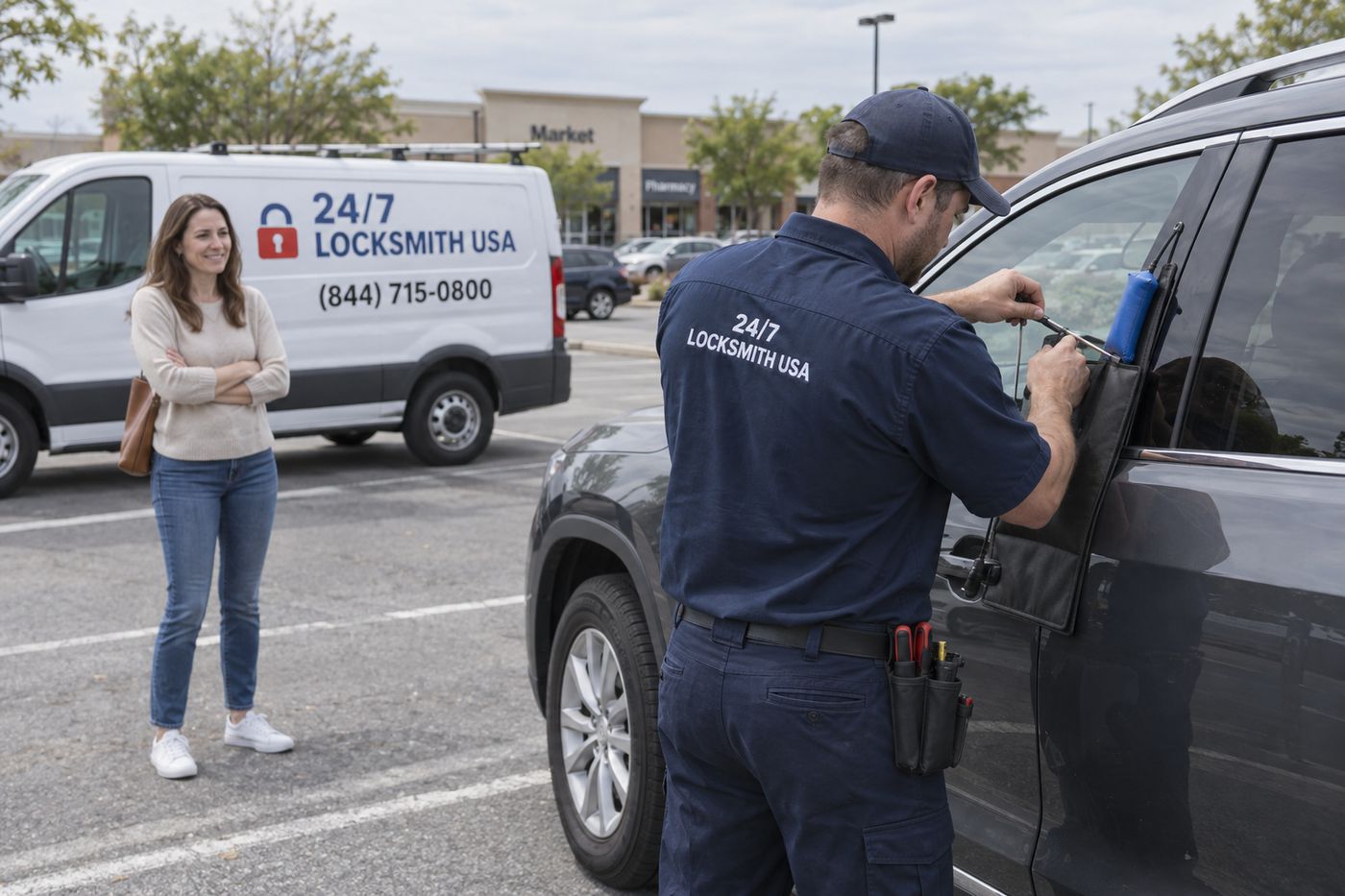
Keyless-start SUVs across Chandler's newer subdivisions are enrolled with a fresh smart key at the driveway.
All Credentials Wiped Recovery
When a module has dropped every key, all of the ones you want kept get re-enrolled together in a single session.
Keyless Entry Pad and Remote Sync
Entry codes and remote start functions get verified alongside the new key so nothing is left half working.
Employee Lot Callouts
Shift workers stranded at Price Corridor campuses get the vehicle sorted where it is parked, not after a tow.
Laser Cut Emergency Blade
The hidden mechanical blade inside a smart key is milled correctly so the door still opens when the fob is asleep.
Family Second Key Setup
Households sharing one key between two drivers get a properly coded backup made before it becomes an emergency.
Chandler Vehicles and Why They Fail
The vehicle mix is what makes Chandler distinct. Subdivisions off Ocotillo, Fulton Ranch and the Price Corridor were built new and bought new, so the fleet parked in them skews heavily toward push-button crossovers and three-row SUVs with proximity keys, keyless entry pads and remote start. Those systems fail in software ways, not mechanical ones. A key stops being recognised because the module lost sync, because an aftermarket remote start was spliced in badly, or because all the credentials were wiped and every fob in the house needs to be re-enrolled together. That last point catches people out: on many of these vehicles, programming a replacement means presenting every key you still want to work in the same session. The second Chandler pattern is the shift schedule. The semiconductor plants and tech campuses along the Price Corridor run around the clock, and a worker who comes off a twelve-hour shift to a car that will not recognise its key is stuck in an employee lot with no useful hours to spare. Garages here also tend to be full of household storage, so the daily driver lives outside on the driveway where we can reach it directly.
Why heat is the main enemy of keys here
In the desert Southwest, the sun does not just warm a car, it bakes it. A vehicle parked in an open lot can turn into an oven, and anything inside it, from a phone to a fob to a bottle of water, absorbs that heat. Small electronic parts and tiny batteries were not designed for that kind of treatment, and they often show it by failing early.
This page is general guidance for people in Chandler. It does not describe particular streets, shopping centers or neighborhoods, and it makes no claims about local facts. What it offers is a practical look at how extreme heat, dust and sudden storms affect keys and locks, and what to do when something goes wrong.
The theme running through everything here is prevention through small habits. Where you put your keys, how you park and how often you replace batteries all influence whether a key problem ever happens. When it does happen, a calm and well informed phone call turns a bad afternoon into a manageable one.
A further point about heat is that people make worse decisions when they are hot and tired. They snap a key in a lock, press a fob again and again or try to force a door. Build in a pause. Move to shade, drink some water and then think about what to do. The few minutes you spend cooling down will usually save you more time than they cost.
What heat does to fobs and batteries
Most key fobs are built around a coin cell battery, a small circuit board and a plastic shell. Heat shortens the life of the battery, can warp the shell and can loosen the tiny contacts that connect the pieces. A fob left on a sunlit dashboard day after day will often fail sooner than one that rides in a cool bag.
Symptoms tend to creep up. The buttons need a firmer press. The range shrinks until you have to stand right next to the car. A warning appears on the dash. Sometimes the fob works in the morning and quits in the afternoon, which suggests that heat is involved. If you notice any of this, replace the battery before it dies completely.
The service for key fob battery and repair explains what can be done when the fob has been damaged. A warped case or a cracked circuit board may mean replacement is the sensible answer, and it is better to hear that on a calm afternoon than to learn it when the fob quits in a parking lot.
Rubber buttons are another weak point. Heat softens them, and constant pressing wears away the printed symbols and the conductive pads beneath. A fob whose lock button has become mushy may still send a signal on some presses and not on others, which makes it seem unpredictable. Replacing the shell or the entire fob restores the reliable click you expect.
The hot car and the locked door
A lockout in extreme heat is a different matter from a lockout on a mild day. A car interior can become dangerous in a short time, and any person or animal trapped inside is at risk. If a child or a pet is in the locked car, say so at the very start of the call, and contact emergency services first if they seem to be in distress.
The service page on a child or pet locked in a car explains how these calls are treated. The plain message is never to wait and see. Heat does not forgive hesitation. For ordinary lockouts with only belongings inside, the usual steps apply: describe your location, state the vehicle, prepare your identification and wait in the shade.
While waiting, find shade and water for yourself. Stand inside a store, sit in a shaded bench area or wait in a friend's car. Heat illness is a real risk, and it is easy to underestimate when you are focused on getting into your car. Tell the dispatcher where you are, so they can find you, and take care of yourself first.
Hot surfaces are a hazard too. Door handles, seat belt buckles and steering wheels can become painful to touch. If you manage to get into a car that has been baking, give it a moment to vent before you climb in, and be careful with metal parts. Anyone who has ever gripped a scorching wheel knows how much a small thing can hurt.
Dashboards, glove boxes and cupholders are poor storage
People often leave things in the car because it is convenient, and with keys that habit has a cost. A spare fob in the glove box bakes in the heat. A key tossed in a cupholder gets sun and dust. A magnetic box under the bumper gets hot enough to weaken its magnet and is the first place a thief looks.
The guide to summer heat and car key safety explains how to protect your keys, from simple shade habits to better places to store a spare. A cool drawer at home beats any spot inside the vehicle. A small pouch in a bag you carry is better than a hiding place on the car.
Also think about the steering wheel and the metal key blade. A key left in direct sun can become hot enough to burn a finger. It sounds trivial, but it makes the difference between a calm start and a fumbling one. A small sunshade, a covered parking spot or a cloth over the wheel helps.
Keep in mind that bags and pockets are not always cooler. A key left in a back pocket on a hot day absorbs body heat, and a phone sitting beside it can run warm as well. If you can, keep your keys in a small pouch inside a bag, away from direct sun and away from other electronics. It is a modest habit, and it adds up over a season.
Dust, monsoon storms and wet fobs
Desert weather has a second side. Seasonal storms can bring sudden wind, blowing dust and heavy rain in a short span. A fob dropped in a puddle, a key caught in a downpour or a door left open during a storm can all lead to trouble. Water is hard on small electronics, and it can corrode contacts and drain batteries in a way that is not obvious at first.
If a fob gets wet, remove the battery if you can do so safely, dry the case gently and let it rest away from heat. Do not use a hair dryer or leave it in the sun, because heat can warp the plastic and damage the circuit. If the fob still misbehaves after it is dry, it may need repair or replacement.
Dust also works into locks and ignition cylinders. A cylinder packed with fine grit can feel rough, and a key that once turned easily may start to catch. If you notice this, mention it to the technician. A worn or dirty cylinder can break the next key just as it broke the last, so the lock deserves a look as well.
Keep a clean routine for the lock itself. Avoid spraying household oil, which can attract dust and turn gummy in the heat. A technician can recommend something suitable for the type of lock, and can service the cylinder if grit has done real damage. If a lock has been giving you trouble for months, do not wait for a storm to make it worse.
Newer vehicles and smart keys
Chandler is a place with many newer vehicles, and many of them use smart keys. These let you unlock and start the car without taking the fob out of your pocket. They are convenient, and they are also more complex to replace. A new smart key must be matched to the car, and that takes specialized equipment.
The service page on smart key replacement explains how it works. In general, the technician identifies the vehicle by its VIN, checks ownership and prepares a new key that the car will accept. For a plain explanation of the underlying process, read how car key programming works.
One practical tip is to learn your car's backup methods before you need them. A hidden blade can open the door, and a marked spot on the dash or console reads the fob at close range even if the battery is flat. Your owner's manual shows where these are. A few minutes of reading on a cool day can spare you a hot one.
Smart keys also raise a security point. Because they communicate by radio, they can in principle be affected by interference or by relay tricks used by thieves. A simple precaution is to keep the fob out of sight and away from the front door at home, and to ask a technician about any settings your car offers to turn off the fob when you are not using it. These steps are optional, but they cost little.
Lost keys in parking lots and on errands
Large parking lots and busy errands are classic places to lose a key. You put the fob in a cart, set it down at a counter or drop it while loading groceries, and you realize later that it is gone. The first step is to retrace your steps calmly. Check the cart, the counter and the ground around the car. Ask nearby businesses whether anyone turned in a key.
If the key does not turn up, a replacement can be made from the VIN once ownership is shown. Tell the dispatcher exactly where the car is, including the lot and any nearby sign, and be ready with your identification and paperwork. In heat, find shade to wait in and keep your phone with you.
If you lose your key while someone else is in your car, such as a child or a passenger, treat that as part of the call. Mention it right away. If anyone inside the vehicle is vulnerable to heat, safety comes first, and the usual steps for an emergency apply.
Shopping trips are the usual setting for these losses, so a little structure helps. Keep the key in a dedicated pocket, never loose in a cart basket. Before leaving a store, touch the pocket. Before closing the trunk, check that the fob is not inside with the groceries. Small rituals feel silly until the day one of them saves you a long, hot wait.
Rentals, visitors and cars that are not yours
People travel to the region for work and leisure, and a rental car is a common part of that. A rental lockout adds a party to the story: the rental company. They may have rules about who can authorize work on their vehicles, and they may have a roadside program that handles lockouts.
The guide on rental car lockout explains the usual steps. Contact the rental company first, ask what they require and tell the dispatcher that the car is rented. This saves time when ownership or authority is checked.
If you are driving a friend's car or a company vehicle, the same principle applies. The person who has authority over the vehicle may need to approve the work, and being honest about the situation keeps things straightforward.
Seasonal visitors and people who split their time between homes have a related challenge. A car left sitting for weeks in the heat may wake up with a dead car battery and a tired fob, which can look like a lock failure. Before you leave a vehicle for a long stretch, replace the fob battery, leave a spare with someone you trust and note where the paperwork is stored.
Spares, safe habits and a cooler routine
A spare key is one of the most sensible protections you can have against a hot day gone wrong. Store it at home, in a drawer, away from heat and away from the vehicle. If your household has more than one driver, plan for a key for each. The page on spare car key programming describes how a spare is added to the car.
Build a small routine around the key. Put it in the same spot every time. Replace the fob battery on a schedule, not after it dies. Park in shade when you can, and keep the fob out of direct sun. These habits reduce the chances of trouble.
The list below gathers the basics. Each item is small, and together they can save a hot, stressful wait.
- Keep a programmed spare at home in a cool, dry place.
- Replace fob batteries before the hottest months begin.
- Keep keys out of direct sun, off the dashboard and out of the glove box.
- Photograph your VIN and registration so details are always on your phone.
- Learn your car's backup entry and start method for a dead fob.
Nearby cities, quotes and what to expect
If your travels take you through the Valley, the same guidance applies elsewhere. Pages for Mesa and Phoenix follow a similar approach, and the Arizona state page adds a wider view.
On the first call you describe where you are, what you drive and what happened. Ownership or authority is checked before any opening, cutting or programming. Quotes are given by phone, and the service call charge is explained before a technician is dispatched.
On arrival, expect a short identification check and a confirmation of the work and charge you were told about. Test every function of any new key before the technician leaves, and ask about anything that differs from what you heard.
Keep a note of the visit for your records, including what was done and what you were quoted. If you later notice that a function of the key is not working, you will have something to refer to. This page is general guidance, so let your real situation, which you describe on the phone, drive the plan.
Common questions
Can heat really ruin a key fob?
Yes. Heat shortens battery life, can warp the plastic case and may loosen internal contacts. A fob left on a sunlit dashboard often fails sooner than one kept in a cool bag. If buttons feel weak or range shrinks, replace the battery early and avoid leaving the fob in direct sun.
What should I do if a child is locked in a hot car?
Treat it as an emergency. Contact emergency services first, and then say so at the start of any locksmith call. Do not wait and see. Heat can make a closed car dangerous in a short time, and safety always comes before a key or a door.
Is it safe to leave a spare key in the car?
It is better not to. The vehicle interior gets very hot, which harms fobs, and a hidden key can be found by anyone. Keep the spare at home in a cool, dry drawer, or with a trusted person, so you can reach it without the car.
What if my fob got wet in a storm?
Open it if you safely can, remove the battery, dry the case gently and let it rest away from heat. If it still acts strangely, it may need repair or replacement. Avoid hair dryers and direct sun, which can warp the plastic and harm the circuit.
How do I replace a lost smart key?
A new smart key is matched to the car using specialized equipment, based on the VIN once ownership is shown. Describe the vehicle and your situation by phone, have your identification and paperwork ready, and ask for a quote and an explanation of the service call charge.
What if the car is a rental?
Contact the rental company first, because they may have their own rules or a roadside program. Tell the dispatcher that the vehicle is rented. Ownership or authority is checked, and the company may need to approve the work, so ask what they require.