
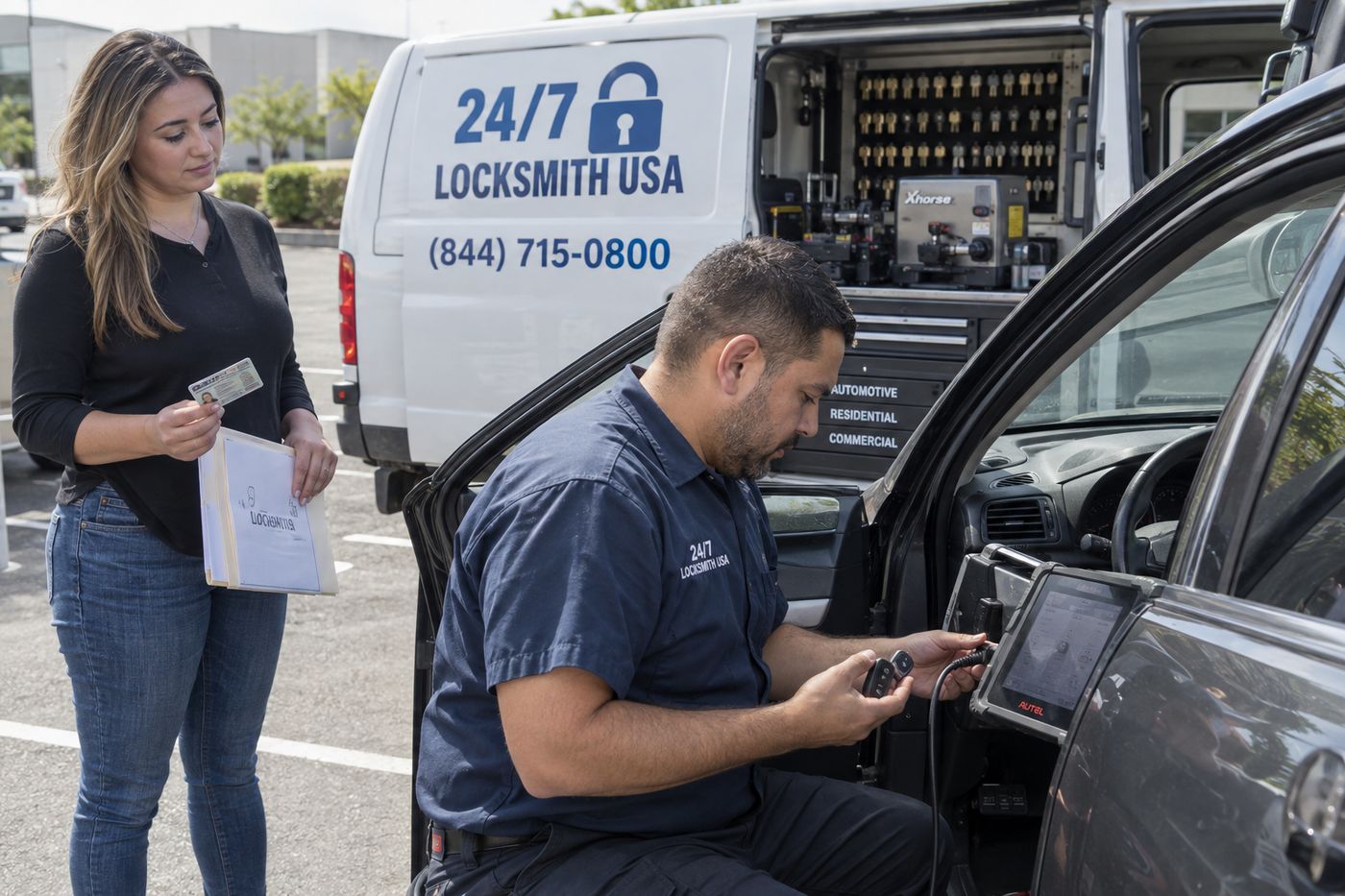
Keys for a city that keeps moving.
From base-adjacent apartment lots to Broadmoor driveways, we bring the same equipment a dealer uses to your vehicle.
All Keys Lost Origination
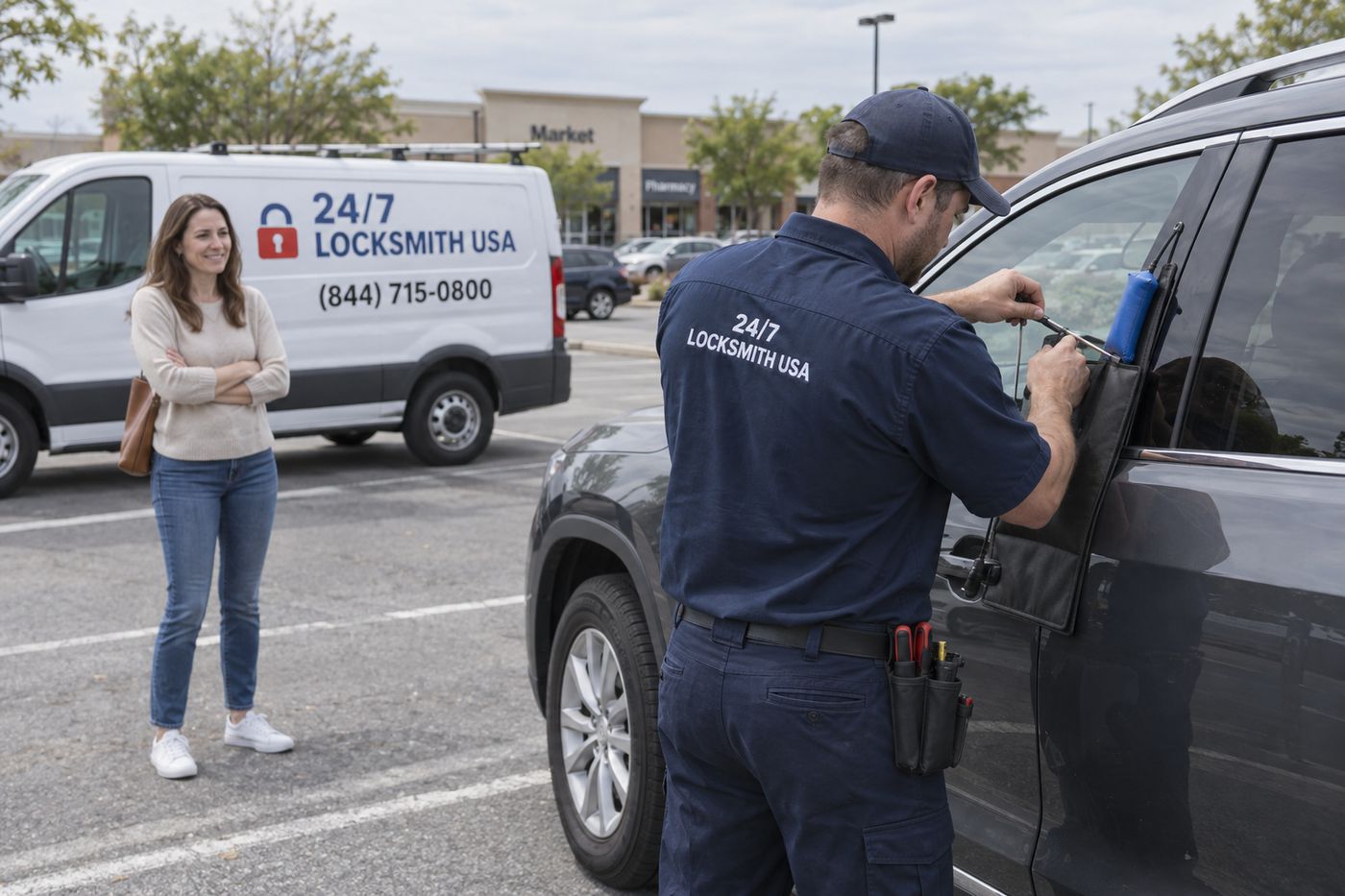
No spare anywhere in the house after a move? We build the first key from the vehicle itself, no old key needed.
Smart Key and Proximity Fob Programming
Push-button trucks and SUVs on the Powers corridor get their proximity keys paired in the parking lot.
Stored and Deployed Vehicle Key Service
Cars that sat through a rotation often need the key rematched to the immobilizer once power comes back.
Transponder Key Cutting
Chipped keys for the older sedans and pickups that fill Old Colorado City, cut and coded to your vehicle.
Ignition Switch Replacement
Grit off unpaved lots near Cheyenne Mountain wears a cylinder down until it stops reading the key properly.
Roadside Vehicle Lockout
Shut out on a trail lot below Pikes Peak, we open the door without prying the frame or damaging the glass.
What kills car keys in Colorado Springs.
The Springs runs on military time. Between the Air Force Academy on the north end, Fort Carson on the south and Peterson out east, thousands of vehicles here sit untouched for a deployment or a training rotation, and a car that has not turned over in five months usually greets its owner with a flat battery and a fob the immobilizer no longer answers. Elevation adds its own tax: at roughly six thousand feet the air is dry enough to hold a static charge, and downslope chinook winds can lift a January morning from twelve degrees to sixty by lunch, which stresses every seal and gasket on a door. This is also hail country, and a fob left on a dashboard through a Palmer Divide storm cooks under glass one hour and freezes the next. Add the climb up Ute Pass toward Woodland Park and the gravel lots at Garden of the Gods, and lost keys here rarely happen anywhere convenient. We meet the vehicle where it is parked and originate, cut and program the key on the spot.
When a key problem meets mountain weather
A lost key is an annoyance anywhere, but in a high, dry, cold part of the country it can turn into something more serious than inconvenience. Colorado Springs sits near the foot of the Rockies, and the weather can change a lot between morning and evening. A driver who is stranded in a parking lot with snow starting needs a plan, not a lecture. This page is meant to be that plan, written as general guidance rather than a claim about any particular street or neighborhood.
The first rule is simple: stay safe before you worry about the key. If you are standing outside a locked car in cold wind, move somewhere warm, such as a store entrance or the lobby of a nearby building, and make your phone call from there. If a child, a pet or a person who needs medicine is inside the vehicle, treat it as an emergency and contact emergency services first. A locksmith can help with many situations, but a life at risk comes before everything else.
Once you are safe, gather a few facts before you call. Know where the vehicle is, what make, model and year it is, and whether you have any key at all, even a broken one. Know whether the car has a push button start or a metal key that goes into an ignition. Those details shape what kind of help you need, and the person on the phone will ask for them. Having them ready keeps the call short and the quote accurate.
Where the car is changes the plan
Think about the location before anything else. A car in your own driveway is an easy job to reach, while a car at a remote pullout or a trailhead lot is a different problem. Tell the person on the phone the type of place, such as a driveway, a shopping center, an apartment garage or a gravel lot, and how to find the vehicle once someone arrives. Do not guess at details you cannot see; say what you know.
If the vehicle is on private property that is not yours, such as an apartment complex or a workplace, the owner or manager may have rules about who can work on a car there. Requirements vary, so ask the property office what they allow. In most cases a short conversation with a manager or security desk solves it, and it is better to do that before a technician arrives than to discover a problem on the spot.
If the car is blocking a lane or sitting in a place that is unsafe, say so at the start. Hazard lights, a safe place to stand and a clear description of where you are all help. If you can, wait with a friend or in a lit area, especially after dark. The goal is for the person helping you to find you easily and for you to be comfortable while you wait.
What a locksmith has to see before opening or programming
Every legitimate car key job starts with a question: is this vehicle yours, or are you authorized to deal with it? The honest answer matters because a key opens a very valuable machine. Expect to be asked for photo identification and for something that ties you to the car, such as a registration or title document, or a lease or rental agreement in your name. The details of what is accepted can vary, so ask when you call.
Our guide to proof of ownership walks through the usual documents and what to do if the paperwork is in the car you are locked out of. It is also worth knowing how much information a locksmith needs before you call, because people are often surprised by how routine the questions feel once they understand the reason.
Do not take offense when you are asked to prove ownership. It is the same check that protects you if someone else ever tried to make a key for your vehicle. A technician who skips it is not saving you time; they are creating a risk. If a caller refuses to explain why they cannot verify who you are, treat that as a warning sign and keep looking.
Finding the vehicle identification number
Many replacement keys are cut and programmed from the vehicle identification number, usually called the VIN. It is a seventeen character code unique to your car. The key code and the transponder data for many models can be looked up from that number, which is why a locksmith will ask for it early in the call.
You can usually find the VIN on a plate at the base of the windshield on the driver side, on a sticker inside the driver door frame, and on your registration, title and insurance card. If you are locked out and cannot reach the plate, a photo of your registration on your phone may be enough. The guide to finding your VIN shows the common spots in more detail.
Write the number down carefully and read it back, because letters and digits are easy to confuse. A single wrong character produces a code for the wrong vehicle. If you are reading from a worn registration or a photo, say the characters one at a time and spell out letters if the person asks. A careful minute here prevents a long delay later.
Understanding the key you are holding
Car keys are not all the same kind of object. An older key may be a plain piece of metal that only needs to be cut. A newer one has a chip inside the head that talks to the car, and the engine will not start unless the chip matches. Some keys have a thick shank with a wavy groove in the middle, which is a different cut from the edges of a traditional key. Push button start vehicles use a smart key or fob that stays in your pocket.
Knowing which you have changes the work involved. A plain key is a cutting job. A chip key needs cutting plus transponder key programming. A fob with buttons for lock and unlock may need separate remote programming, and a smart key may need a different procedure again. A short explainer on car key types can help you describe what you have.
If you are unsure, do not worry. Describe what you see: is there a metal blade, are there buttons, is there a logo on the plastic, is the edge cut or is the groove in the middle. The year and model of the car will fill in the rest. A good technician would rather hear a plain description than a guess at a technical term.
All keys lost is a different job from a spare
Many people assume a spare key is just a copy, and sometimes it is. When you still have one working key, a duplicate can be cut and programmed using the existing key as a reference, and that is usually the simpler path. When every key is gone, the work starts from nothing, using the VIN and proof of ownership. You can read more about that situation on the page about all keys lost.
This is why the right moment to make a spare is before you need one. If you are reading this and you still have one key, consider adding a second while things are calm. A spare kept at home, away from the car, is far more useful than one hidden in a magnet box under the bumper.
If you have lost your only key and the car is at home, you may be able to arrange for a technician to come to you rather than towing the vehicle anywhere. If the car cannot be reached, towing may be the only route, and the decision between towing to a dealer and having a locksmith come to the car is worth discussing on the phone. The guide on dealership versus locksmith keys lays out the tradeoffs.
Trailheads, ski days and the places keys go missing
People in this region spend a lot of time outdoors, and outdoor activities are exactly when keys get lost. A key slips from a jacket pocket during a hike, falls into a snowbank, or is left on a rock at a viewpoint. A fob gets soaked during a river crossing. If you have been somewhere that involved layers, gloves and bags, retrace your steps mentally and check every pocket before assuming the key is gone.
If you suspect the key fell out near the car, look carefully around the area, including under the vehicle and in the snow beside the door. Do not scatter your belongings in a parking lot where they might get lost too. If you have a spare at home and a friend who can bring it, that can be the simplest fix. Otherwise, a replacement key can be arranged using the process described above.
If your key was dropped in water, see the page about a car key that fell in water. Do not press buttons repeatedly or try to dry a fob with heat. Let it sit and tell the technician what happened so they can judge whether it can be saved. Water damage sometimes looks minor and still stops a fob from working.
Batteries, cold and the key fob that stops responding
Cold weather is hard on small batteries. A fob that worked fine in autumn may seem to lose range or stop responding on a frozen morning. Before assuming the fob is broken, think about whether it has been weak for a while: do you have to stand right next to the car, or press the button more than once? Those are classic signs of a tired battery.
Replacing the battery is a small job on many fobs, and the owner's manual usually shows how to open the case. If the fob still does nothing after a fresh battery, the remote may need to be reprogrammed or the unit may be damaged. The page on key fob programming explains how that works.
Keep your fob out of extreme cold where you can, and do not leave it in a car overnight if you have a spare way to enter. If the battery dies while you are away from home, many vehicles have a backup way to unlock or start. Your owner's manual explains it, and it is worth reading once before you need it, because the steps differ from one model to another.
Lockouts at home and the case for rekeying
Lost keys are not only about cars. If your house key was in the same bag as your car key, you may be thinking about both. A lost house key raises a security question: whoever finds it may know where it fits. For that reason, many people choose to rekey the locks rather than just copy a new key. Rekeying changes the internal pins so the old key stops working.
This page does not give instructions for opening locks, and a legitimate technician will want to confirm you live at the property before working on it. If you are locked out of your house, the page on a home lockout explains what to have ready and what to expect on the call.
For people who rent, the landlord may have rules about changing locks, so ask before you do anything. A rented apartment often has a master key held by the property, and tampering with it can create trouble.
Comparing options and understanding the quote
When you call, you should be able to get a clear explanation of what the service call includes and what the work itself costs before anyone is dispatched. Quotes are given by phone, and the service call charge is explained up front. If the person on the line is vague, or the number changes dramatically once someone arrives, that is a reason to pause. Our guide to the service call charge describes how it normally works.
Ask what the quote covers: cutting, programming, any parts and the trip itself. Ask whether the price is for one key or two. Ask what happens if the job turns out to be different from what you described. These are ordinary questions, and a professional expects them.
Compare the locksmith route with the dealer route honestly. A dealer may need the car brought to them and may need an appointment, while a mobile service comes to your location. On the other hand, some unusual or very new models can only be handled in certain ways. Describe the vehicle and let the person tell you what is realistic rather than assuming one route always wins.
Habits that make the next emergency smaller
After you have solved this problem, spend a few minutes on prevention. Make a second key and keep it somewhere safe, not in the car. Take a photo of your registration and VIN and keep it in your phone. Put a small tag or a spare fob battery in a drawer at home. These small steps turn a stressful day into a minor one.
Check what your insurance policy or roadside plan covers, because some include help with lockouts or key replacement. The guide on insurance and roadside assistance for lockouts explains what to look for, and it is worth knowing before you need it. Coverage varies, so read your own policy instead of assuming.
If you also travel to other parts of the state or neighboring cities, you may find the pages for Denver and Aurora useful, and the Colorado overview pulls the general guidance together. Whatever you do, keep your calm and remember that most key problems have a clear solution once the facts are on the table.
Common questions
What should I have ready before I call about a lost car key?
Have the make, model and year of the vehicle, its exact location, and the VIN if you can reach it. Be ready to say whether you have any key at all, and whether the car uses a metal key or a push button start. You will also need photo identification and something that connects you to the car, such as a registration or a lease agreement.
Can a replacement key be made if I have no key at all?
Yes, in many cases. When every key is lost, a replacement can often be cut and programmed using the vehicle identification number, after ownership has been confirmed. Some models are more complicated than others, so describe the exact vehicle on the phone and ask what is realistic for it before anyone is dispatched.
Why does the locksmith ask for proof that the car is mine?
A car key lets someone drive away with a valuable machine, so a responsible technician checks who is asking. The check protects you as well, because it stops a stranger from getting a key made for your vehicle. If you cannot reach your paperwork, ask what other documents might work, because options vary.
Will the quote change after the technician arrives?
A quote is given by phone and the service call charge is explained before dispatch, so you should know the main numbers early. A change is possible only if the job turns out to be different from what was described, for example a different key type. Ask the person to explain any change before work begins, and you can decline.
Is it better to rekey my house locks if I lost my keys?
If the lost keys could be traced to your address, rekeying is a sensible choice because it makes the old keys useless without replacing the hardware. Copying a key only adds another one that fits. If you rent, ask your landlord or property manager first, since lock changes may be restricted.
How can I avoid being stranded again?
Have a spare key made while you still have a working one, and keep it away from the car. Save a photo of your registration and VIN in your phone, and replace weak fob batteries early. Check what your insurance or roadside plan covers, so you know your options before the next problem.