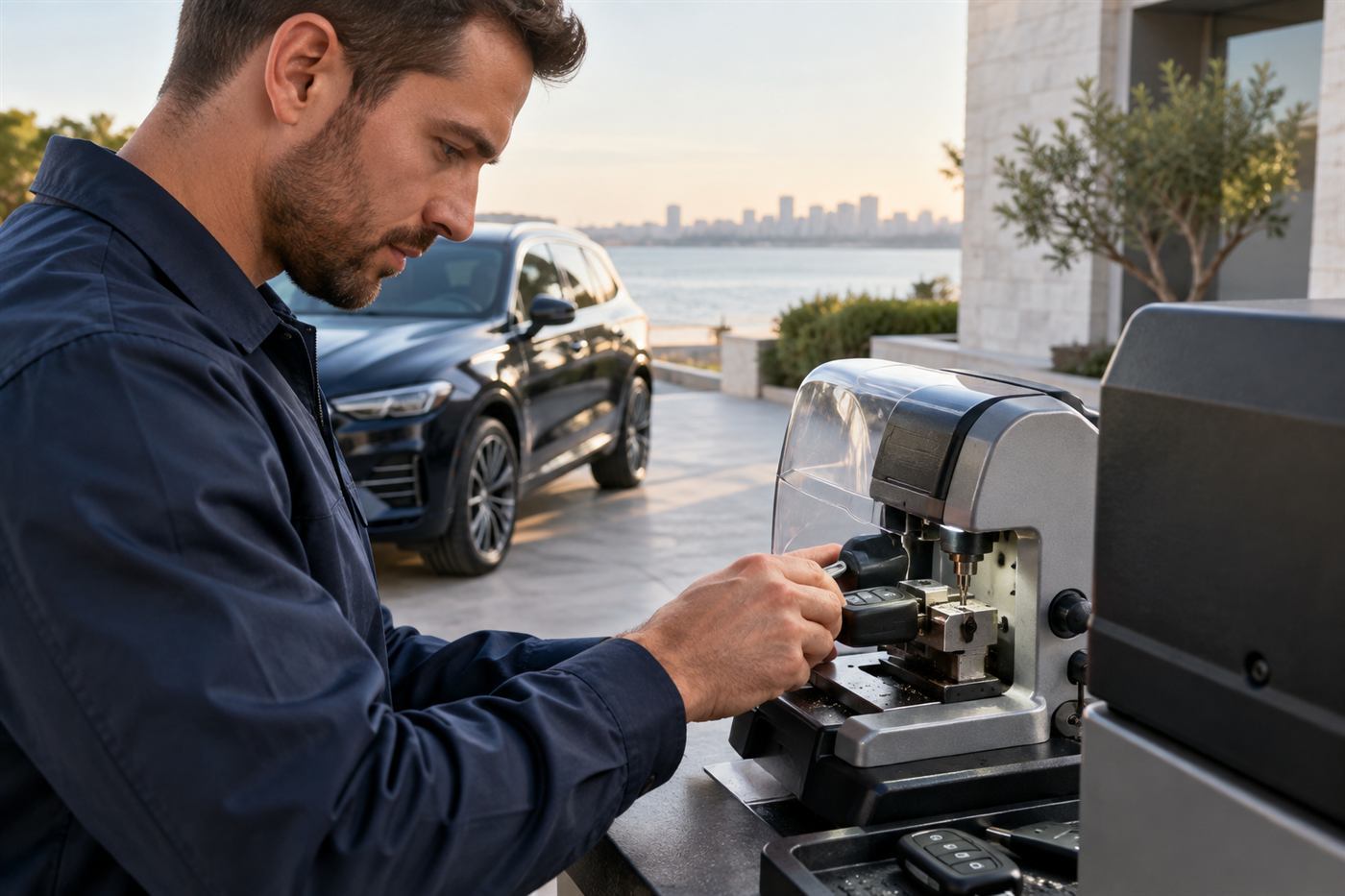
A city that lives in its vehicles
Oklahoma City covers a very large area, and most residents drive for nearly everything. A commute can cross many miles, errands often mean several stops and the vehicle is as much a part of the day as the house. When something goes wrong with a key, the effect is immediate: no way to get to work, no way to pick up a child, no way to get home.
That shapes the kinds of calls that come in. Many are ordinary: a key locked in the cab at a gas station, a fob that stops responding in a big-box parking lot, a spare that was never made. Others are more urgent, such as a lost key at a trailhead, a worn key that finally snaps in an ignition or a vehicle that will not start because the security system will not recognize the key.
Distance matters too. A technician traveling across a large metro to reach you needs accurate directions, and the dispatcher will ask for a clear location. In an area with wide roads and few landmarks, a business name, a cross street or a mile marker helps more than a general description.
This page explains the typical call, the most common causes of key and lock trouble, and what to do before and after a storm. It is written for someone standing beside a vehicle, wondering what comes next. It cannot replace the questions a dispatcher asks, but it helps you answer them quickly.
How the call works
A dispatcher asks where the vehicle is, what it is, what happened and whether anyone is in danger. The vehicle details matter because they decide the key type and tools. The dispatcher will also ask whether you still have a working key, since a spare makes the job simpler than starting from nothing.
Quotes are given only by phone. There is no posted price list because the right number depends on the vehicle and the situation. After the details are clear you hear the figure. The service call charge for sending a technician is explained on the phone before anyone is dispatched. If the vehicle or the problem turns out to be different on site, the technician explains what changed and you decide whether to continue.
Complicated jobs may need an on-site visit before a final price is possible. A vehicle with every key lost and a modern security system is the most common example. No one honest can promise an arrival time without knowing distance, traffic and weather, so none is promised here. You will be told honestly what to expect and kept informed.
In summer heat, wait somewhere cool. In winter cold, wait somewhere warm. If you are on an open road or a rural shoulder, stay safe and tell the dispatcher exactly where you are.
- Get to a safe spot with shade or shelter.
- Have the vehicle year, make and model ready.
- Say which keys or fobs you still have.
- Listen to the quote and the service call charge.
- Confirm a precise location and a callback number.
Trucks, SUVs and work vehicles
Trucks and large SUVs are everywhere in Oklahoma City, and they bring their own key issues. Many have keys that are expensive to replace at a dealer and keys that carry transponder chips or remote functions. Work trucks often have several drivers, which means keys get passed around, misplaced and copied. A key that has been cloned or copied many times may stop working.
If you manage a business with several vehicles, the service page on truck and van keys describes what is involved and fleet service explains how to keep a set of keys under control. For a general guide, business key control basics covers how to keep track of who holds what.
Trailers, RVs and campers are common too, and their locks are not the same as car locks. See RV and trailer locks for what a technician can do. Motorcycles and ATVs are also part of the local picture, and motorcycle key replacement explains how those keys differ.
When you call about a truck, mention anything unusual: a bed cover with its own lock, a toolbox with a separate key, an aftermarket remote start. These details help the dispatcher plan the right equipment and give a more accurate quote.
- Say whether the truck has a camper shell or bed cover lock
- Mention aftermarket remote start or alarm systems
- Tell the dispatcher how many keys exist for the vehicle
- Note if the vehicle is a company vehicle with several drivers
- Keep registration and ID handy
Storm season, tornado watches and hail damage
Spring storm season is part of life in Oklahoma, and it affects locks and keys in ways people do not always expect. During a severe weather warning, people run for shelter and leave in a hurry. Keys end up in a bag, in a pocket on the wrong side of a closed door, or locked in a vehicle in a parking lot. Safety comes first: if a tornado warning is in effect, take shelter and do not worry about the car.
After a storm, hail often leaves damage. Vehicles hit by hail may have dented panels, cracked windows and damaged door seals. Broken glass can make a car vulnerable, and a damaged door may not latch properly. If your car has been hit, take photos for your insurance claim before moving anything, and contact your insurer about next steps. Do not use a car with a broken window or latch for unsecured storage of valuables.
Water is another risk. Heavy rain can seep into a fob or into a door lock. A fob that has been soaked can behave strangely. Read water-damaged fob before you try to dry it with heat or press the buttons repeatedly.
Power outages also matter. An electronic home lock or garage opener may not work without power or batteries. Smart lock failing and garage entry door problems describe common issues. Know how to use a physical key as a backup, and keep a spare somewhere you can reach.
Car key replacement and programming
Most vehicles on Oklahoma City roads have electronic keys. Transponder keys have a chip, laser-cut keys have a milled groove, and smart keys allow a push-button start. A mobile technician identifies which type you have, cuts the blade if there is one and programs the electronics so the vehicle accepts the key. The work happens where your vehicle is parked, so you do not have to arrange a tow.
The most important question is whether you still have a working key. If you do, adding a spare is generally simpler. If you have none, the job is called all keys lost and is more involved. All keys lost explains it plainly. Spare car key programming describes the easier case.
A legitimate technician will verify that the vehicle is yours. Expect to show photo ID that matches the registration or title, and to give the VIN. The guide on how to find your VIN lists the usual locations. Leased and financed vehicles add a step, which leased and financed car keys explains.
Whether to use a dealer or a locksmith depends on circumstances. Locksmith or dealer gives an honest comparison. When the vehicle cannot be moved or the dealer is far away, mobile service has a clear advantage.
Long commutes and what a stranded driver should do
A long commute raises the stakes of a key problem. A driver may be stranded far from home, with a long walk to the nearest shelter. In rural stretches on the edge of the metro, cell coverage can be weak and services are further apart.
If you are stranded, put safety first. Move to a safe spot if you can, away from traffic and out of the elements. Keep your phone charged and let someone know where you are. In summer heat, avoid staying in a closed car without air movement. In winter cold, do not run an engine in an enclosed space.
Describe the location carefully. Use mile markers, cross streets, exit numbers and nearby businesses. If a vehicle is on a highway shoulder, remember that tools and a working technician are at risk near traffic, and a safer location may be needed. Tell the dispatcher if the vehicle can be moved.
If you have roadside assistance through insurance, a credit card or an auto club, check what it covers. Insurance and roadside coverage explains what to ask. Some plans cover a lockout but not a key replacement. If help from your plan is slow or you are in an unsafe spot, you can choose another route.
Home calls in Oklahoma City neighborhoods
Residential calls come from every part of the metro. Newer subdivisions often have builder-grade deadbolts, and older neighborhoods have homes with original hardware and doors that have shifted with the soil. Oklahoma's clay soil swells and shrinks, which can move door frames slightly and cause latches to stick or misalign.
A home lockout begins with verification that you live at the address. A technician opens the door with minimal damage and, if the lock has failed, can repair or replace it. Locked out of the house explains the first steps. If the problem is a door that will not latch because the frame has shifted, door will not latch covers likely causes.
If you have just moved in, moving day lock and key checklist walks through what to do. Rekeying makes old keys useless, and new homeowner checklist adds other security basics.
After a break-in or storm damage, see after a break-in. Document damage with photos, contact the right authorities, and ask a locksmith to secure the door while permanent repairs are arranged.
Avoiding scams and bad quotes
Dishonest operators look for people who are stranded or stressed. A driver with a dead fob in a hot parking lot, or a homeowner who just returned from a storm shelter, may agree to almost anything. Common warning signs include a phone price that changes on site, an unmarked vehicle, refusal to name the business and pressure to approve work immediately.
Before you agree to dispatch, ask for the business name, how the quote is built, whether a service call charge applies and whether the price can change after the technician sees the vehicle. A genuine dispatcher answers calmly. See questions to ask before dispatch for the full list.
When the technician arrives, confirm who they are and look for a clear match with the business you called. Locksmith rules differ across places, so readers should check what applies rather than assume. How to verify a locksmith and scam warning signs explain how.
You are never obliged to proceed if something feels wrong. Be aware that a service call charge may still apply once a technician has been dispatched, which is why it is explained in advance.
Calling for service in Oklahoma City
24/7 Locksmith USA takes calls for car keys, lockouts and related lock work in the Oklahoma City area. The name reflects the round-the-clock phone service concept, not a promise that a technician is waiting at every hour and place. What you can count on is a clear conversation, a quote given only by phone and an explanation of the service call charge before dispatch.
For deeper reading, see car key replacement, car lockout and key fob programming. The Oklahoma page offers a state-level overview. How to prepare for a locksmith visit helps you get ready.
If a child or pet is in a closed car, or anyone is in danger, call 911 first. During severe weather, take shelter before anything else. When everyone is safe and a key or lock problem remains, a dispatcher can help.
When you are ready, call the number on this page, say where you are and what happened, and listen to the quote and service call charge explanation.
Questions people ask
Can a locksmith come to me on a highway or rural road?
Often yes, but safety matters. A technician working beside traffic is at risk, so a safer spot may be needed if the vehicle can be moved. Give mile markers, exit numbers and landmarks. No arrival time is promised because distance and conditions vary, but the dispatcher will tell you honestly what to expect.
How are quotes given for truck and SUV keys?
Quotes are given only by phone after the dispatcher learns the vehicle, key type and situation. A service call charge applies to dispatching a technician and is explained before anyone is sent. Complicated jobs, such as a truck with every key lost, may need an on-site visit before a final number.
My fob got soaked in a storm. Is it ruined?
Not necessarily. Do not use heat to dry it and avoid pressing the buttons repeatedly. Remove the battery if you can do so safely and let it dry naturally. If it still does not work, a technician can check whether it needs cleaning, a new battery, reprogramming or replacement.
What should I do after hail damages my car?
Photograph the damage for your insurer before moving things, and contact them about the claim. If a window is broken or a door will not latch, the vehicle is not secure, so avoid leaving valuables inside. A locksmith can help if a lock or latch has failed, but the repair of dents and glass belongs to a body shop.
Do I need to prove I own the truck?
Yes. A legitimate technician asks for photo ID that matches the registration or title and for the VIN. This protects you and prevents keys from being made for vehicles that do not belong to the person asking. Company vehicles may need paperwork showing the business owns the vehicle.
Can clay soil really make my door stop latching?
Yes. Seasonal swelling and shrinking of soil can shift a foundation slightly, which moves door frames and misaligns latches and strike plates. A technician can adjust the strike or the latch in many cases. If the frame has moved significantly, a carpenter may be needed in addition.
Describe the situation by phone and we will tell you what the job involves. Quotes are given by phone. Jobs that cannot be quoted without seeing them need a technician on site, and the service call charge is explained on the phone before anyone is dispatched.
(844) 715-0800Related pages
Written by Claude (AI) (AI) for 24/7 Locksmith USA.