
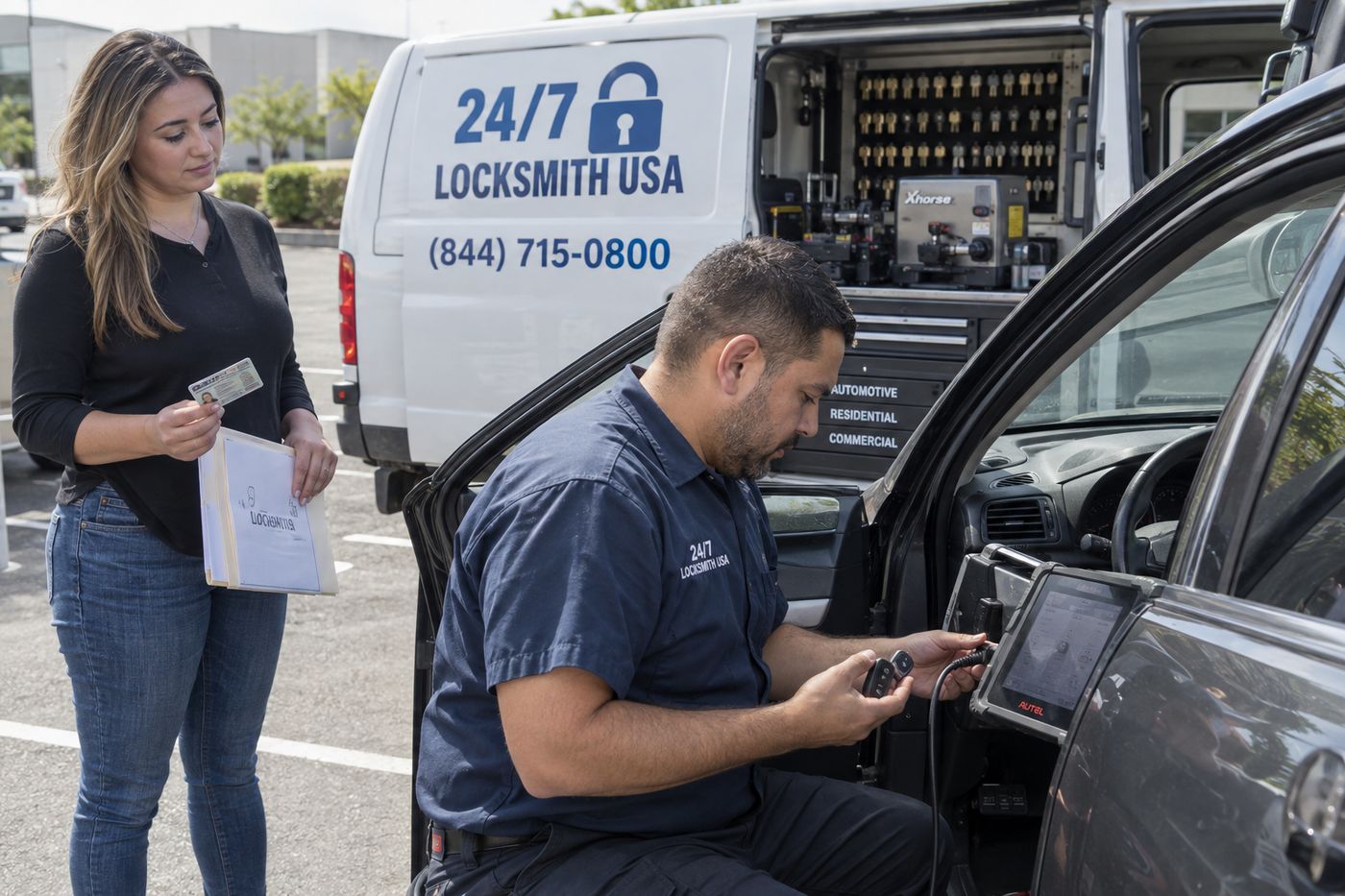
Key work for every car in Knoxville.
From a twenty-year-old campus commuter to a brand-new proximity system, the equipment on the van covers it.
All Keys Lost Service
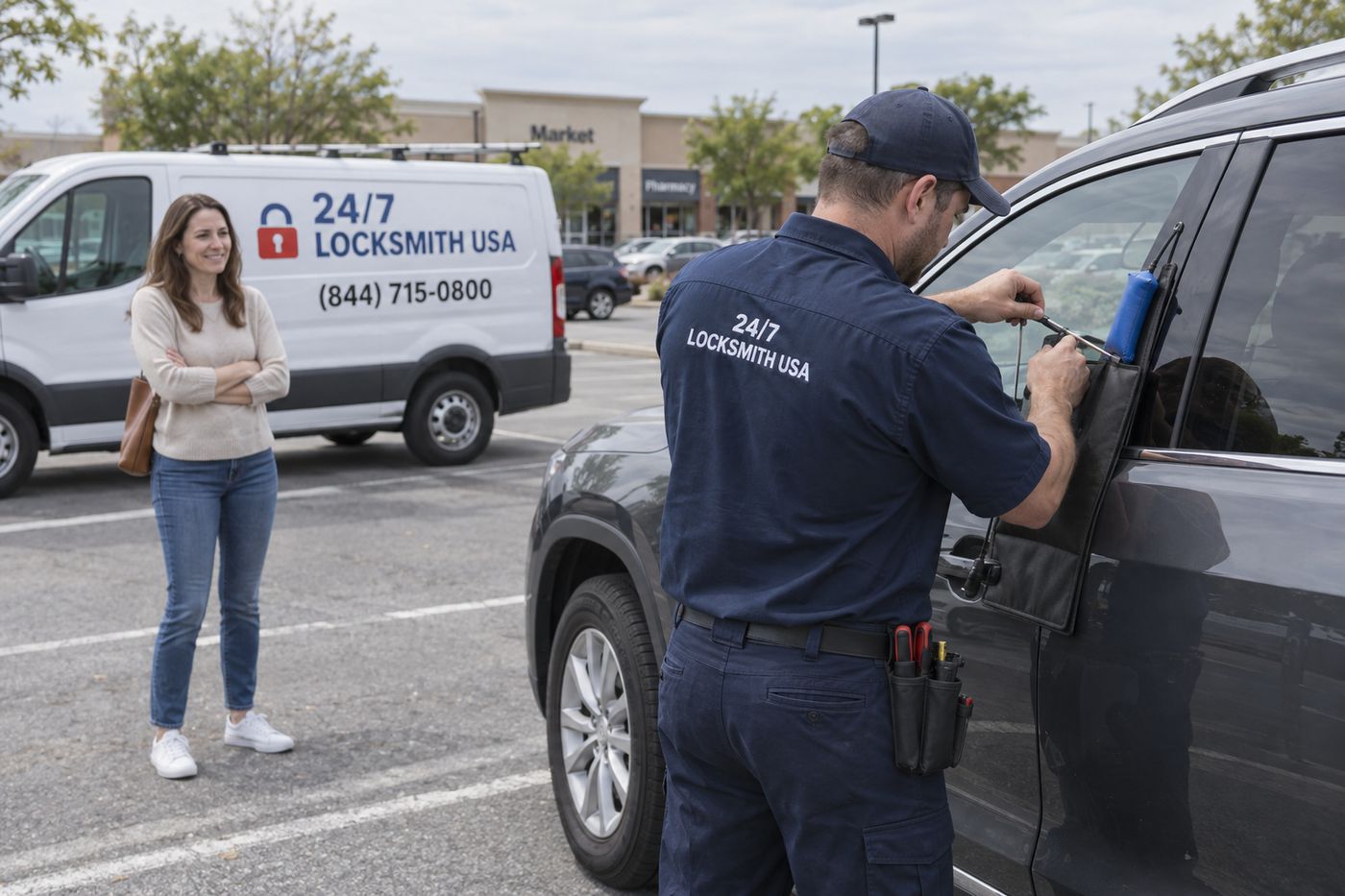
Nothing left to work from after a game-day Saturday? A new key gets originated at the vehicle in the lot.
Water-Damaged Fob Replacement
Keys that went into the Tennessee River off a Vol Navy boat get replaced and programmed on the bank.
Smart Key & Proximity Programming
Push-to-start systems on newer cars around Hardin Valley and Farragut, handled without a service appointment.
Ignition Repair & Replacement
Cylinders seized by freezing rain on the ridges above the valley, opened up and made to turn properly again.
Broken Key Extraction
A blade snapped off in a cold lock on a Fort Sanders side street comes out cleanly, then gets replaced.
Transponder Key Origination
Older campus cars still need the chip matched to the immobilizer before the engine will ever catch.
Knoxville conditions that end a key.
Two patterns account for most car key work in this town. The first is student turnover. A hand-me-down sedan shows up in Fort Sanders carrying exactly one key, that key spends move-in weekend on a lanyard, and by October it is gone with nothing to fall back on except a spare in a parent's kitchen drawer three states away. The second is game day. Cars fill gravel and grass overflow parking along the river, tailgaters stay away from the vehicle for six or seven hours, and Vol Navy keys go into the Tennessee River often enough that water damage is a routine diagnosis rather than a rare one. Terrain compounds both. The streets around campus climb hard and park tight, and once an overflow lot is packed solid a tow truck cannot reach an interior row anyway. Winter in the valley means ice, not snow, freezing rain glazes the ridge roads above town, door locks freeze shut, and drivers twist a cold blade until it shears. Our technician walks into the row your car is in and finishes the key there.
Keys, hills and a lot of weekend driving
People in this part of Tennessee tend to drive out of town for recreation. Lakes, trails, ridge lines and small mountain towns are all within reach for a day trip, and a car key goes along for every one of them. That means keys spend time in damp jackets, daypacks, boat bags and glove compartments, far from a drawer at home. When one goes missing on a trailhead gravel lot, the stakes feel high.
This page is general guidance for people in Knoxville and does not describe any particular road, trail or neighborhood. Its purpose is to give you a calm sequence of steps that works wherever you are standing when you notice the key is gone. The sequence is the same whether you are in a downtown garage or at the far end of a country road: stay safe, gather information, make a call and check the work.
Before anything else, pause and search properly. Empty every pocket, open every bag, check the ground around the car, look under the vehicle and look at the seat if you can see through the window. Many lost keys are sitting on the roof of the car or in a place you already checked in a hurry. A slow second search takes only minutes and has saved many people a service call.
If the search turns up nothing, think about who else could have touched the key. A passenger, a valet, a mechanic, a friend who borrowed the car or a child who found the fob attractive may have moved it. Ask politely and without blame. It also helps to think about whether the key could have been taken, since a stolen key changes the plan and calls for reprogramming so the missing key no longer starts the car.
When the key is inside and the doors are locked
A locked in key is the simplest kind of key emergency, because nothing needs to be replaced. The solution is a careful opening of the door. A trained technician has methods that do not scratch paint, bend the frame or harm the wiring in the door, and they will confirm that the vehicle is yours before starting. You will be asked for identification and for something connecting you to the car.
While you wait, resist the urge to help. Pulling on the handle, prying at the window or pushing a tool into the door seal can damage electronics that are costly to repair. Modern doors carry wiring for windows, speakers, side airbags and sensors. A scratch or a torn seal is a poor trade for saving a few minutes. Keep everyone back from traffic and stay in a safe place.
Read the page on car lockout service for a full description of what happens. If a child or an animal is inside, or if anyone inside is unwell, do not wait for a locksmith. Call emergency services immediately, and say clearly where you are and what is happening. That case is different from every other, because a vehicle can heat up or turn dangerous far sooner than most people expect, and no key job should ever take priority over a life.
What the person on the phone will want to know
A good call begins with a clear description. Give the make, model and year of the vehicle, the color if asked, and your exact location in plain terms: a store lot, a driveway, a roadside pullout, a campground. Say whether the car is on private property and whether anyone else is with you. Say whether you have any key at all and what type it is.
The VIN is the next item. It is a seventeen character code on the dashboard near the windshield, on the driver door frame and on your registration and insurance card. If you can read it, write it down slowly and read it back. A single wrong character produces a lookup for the wrong vehicle. The guide on how to find your VIN shows the usual places.
The person will also explain what they will need from you on arrival. Expect to be asked for photo identification and a document tied to the car. The page on proof of ownership for a car key covers acceptable options. If your documents are inside the locked car, say so, and ask what alternatives exist. Providers deal with that problem often and have reasonable answers.
From lookup to a working key
Once identity and ownership are settled, the technician uses the vehicle number to find the key information for your car. That includes the blade profile, the cut and the type of chip the engine expects. A blank key is selected and cut on equipment designed for it. This step is mechanical and straightforward, and a precise cut is what makes the key turn smoothly.
The next step is electronic. The new key has to be introduced to the car, which keeps a list of approved keys. Using diagnostic equipment connected to the vehicle, the technician adds the new key, and the car will start with it. The longer account is in the guide on how car key programming works, and the service page for car key replacement describes what the visit includes.
Afterward, test everything. Turn the key in the door, start the engine, switch it off and start it again, use the remote buttons and open the trunk. If the vehicle has a second key or fob that you still own, check that it works too, since some programming sessions affect the other keys. Good technicians expect you to test and will wait while you do.
Trail days and lake days: keeping keys safe
Outdoor days call for a simple key strategy. Decide before you leave where the key will ride. A zipped pocket in a jacket is better than a loose pocket. A small carabiner clip on a bag strap is better than a handful of keys thrown in the bottom. If you are going to be on or near water, consider leaving the main key somewhere secure and carrying a basic spare.
If you drive a car with a fob, remember that a wet fob is a risky fob. Water can seep into the case and damage the circuit. Do not press buttons on a wet fob. Let it dry in open air, and mention the exposure if you call for help. The page about a car key that fell in water explains the details and why patience helps.
Another outdoor risk is leaving the key in the car at a trailhead because you want to carry less. This works until the doors lock automatically or the car locks itself when you walk away. Many vehicles are set to lock after a few moments, and a key left inside can lock you out. Make a habit of checking your pocket before every door shut, just as you would check for a wallet.
Rain, humidity and worn keys
The climate in East Tennessee brings real rain and humid summers, and moisture works on metal and electronics alike. Brass blades can become dull, nickel plating can wear, and the contacts inside a fob can corrode. A key that has been in a pocket for years may be carrying more wear than you realize.
A worn key is a key waiting to fail. Signs include a blade that drags in the lock, a key that must be wiggled to turn, rounded edges on the cuts and a head that feels loose. If you see these signs, replace the key before it breaks. Cutting a new key from the vehicle code, not from the worn copy, restores accuracy. A short visit to have the key checked is far less disruptive than a breakdown in a parking lot.
Do not lubricate a lock with whatever is on the garage shelf. Some products attract grit and leave a sticky residue that makes matters worse. If a lock is stiff, a technician can clean or service it properly. And never keep using a key that is bent; forcing it can break it off in the lock or the ignition, which turns a small repair into a bigger one.
Broken pieces and stuck keys
Sometimes the problem is not a missing key but a broken one. A key may snap off in a door lock or in the ignition, leaving a stub that cannot be pulled out by hand. The urge to dig with a pin or a knife is strong, but it often pushes the piece deeper and scratches the inside of the cylinder.
A technician can extract a broken piece using thin tools designed for the job, then cut a replacement key. Depending on the damage, the lock may be fine afterward or may need service. The page about broken key extraction describes the process, including what to expect if the break is in the ignition and not in a door.
If the key is stuck but not broken, do not twist harder. Turn the steering wheel gently in both directions while you try the key, since a steering lock can bind the ignition. If that does not help, stop. Further force can damage the key or the cylinder. Explain what happened when you call, including whether the car was on a slope or the wheels were turned, because both can load the lock.
Young drivers, students and shared houses
Households with young drivers, roommates or students face a particular pattern: keys are shared, borrowed, misplaced and duplicated by people who do not remember doing it. A shared house may have a dozen copies of a front door key floating around. When someone moves out, nobody is sure who still has one.
For a home, the sensible answer is often rekeying. It changes the lock so the old keys stop working, and you issue new ones to current residents. The page on lock rekey service explains it. Renters should ask the landlord first, since leases often limit what a tenant may change.
For cars, a spare key kept by a parent or at a stable address is a good safety net. If a young driver loses the only key, the process described on this page applies, but the owner of the car must be ready to show the papers. Talk through that plan together before an emergency happens, and write down where the registration is kept and who can send a photo of it.
Weighing a mobile visit against a dealership
Many drivers wonder whether to call a mobile provider or go to a dealership. A mobile provider comes to the car and, for many vehicles, can do the work on the spot. A dealership offers factory resources but generally requires that you bring the car in, which may mean a tow if you have no key.
Neither route is always better. Very new models, some luxury brands and a few unusual systems can have restrictions about who may program a key. On the other hand, most common vehicles are handled by mobile technicians every day. Describe your vehicle and ask whether the work can be done where it sits. The factors that matter most are the age of the car, the brand, where it is parked and whether it can be moved.
Whatever route you pick, ask about timing in plain terms without expecting a promise, ask what the quote covers and ask what documents you need. Then decide. If a provider cannot answer clearly, you have learned something useful. There is no reason to accept confusion when a lot of honest businesses are happy to explain.
Spotting trouble before it costs you
A small number of providers rely on confusion. They advertise a very low price, then add charges when they arrive. They avoid giving a business name, or they answer the phone with a generic greeting. They refuse to explain the service call charge. They press you to decide at once. Each of these is a reason to slow down.
Our guide to spotting a fake locksmith lists more signals, and the page on the service call charge shows how an honest explanation sounds. You do not need to be an expert. You only need to ask the questions and listen to whether the answers are clear.
If anything feels wrong when someone arrives, you may decline the work. Do not hand over documents or keys until you are comfortable. A reputable provider will explain, and will not take offense. Stay in a safe place, keep your phone with you and tell someone where you are if it is late. Your comfort matters more than saving a few minutes.
After the work: spares, neighbors and the next trip
When the work is done, treat it as a chance to improve your setup. Have a second key made if you only have one, and keep it at home or with someone you trust. Save a photo of your registration and VIN on your phone. Replace the fob battery before it dies, not after. These small steps shrink the next emergency to a minor errand.
If your travels take you across the state, the pages for Nashville and Chattanooga offer related guidance, and the Tennessee overview collects it in one place. Requirements about documents and rules can vary from place to place, so ask when you call.
Most of all, remember that a lost key is ordinary. People handle it every day with a short list of steps and a steady head. Take those steps, ask your questions and keep your paperwork in order. Soon the key problem will be a story rather than a crisis, and you will be back on the road.
One last practical suggestion: write a small card for your wallet or phone notes listing your vehicle year, make and model, the VIN, the type of key and where your spare lives. It takes five minutes. The next time a key goes missing, you will read the facts straight from the card instead of hunting through a glove box you cannot open, and the call will be shorter, calmer and clearer for everyone involved.
Common questions
What if I lose my only key on a hiking trip outside town?
Stay safe and search the area carefully first. If the key is truly gone, tell the provider the exact kind of place you are in, the vehicle details and whether you can reach the VIN. Plan how you will show identification and ownership. Some remote locations take more planning, so describe them clearly.
Is it safe to try to open my own car if the key is inside?
It is not wise. Modern doors have wiring, sensors and sometimes airbags, and a tool or wedge can damage them. A technician uses methods meant to avoid harm. If anyone, especially a child or a pet, is inside, call emergency services first rather than waiting for a locksmith.
How do I know if my worn key needs replacing?
Warning signs include a key that drags, needs wiggling, has rounded cuts or feels loose in the head. Replace it before it snaps, because a broken key in a lock is a bigger repair. A new key cut from the vehicle code is usually more accurate than a copy of a worn one.
What should I do if my key breaks off in the ignition?
Stop trying to remove it and do not dig with sharp tools. Digging can push the piece deeper and scratch the cylinder. Call a technician, describe what happened and say whether the wheels were turned. The piece can be extracted with thin tools and a replacement key made.
Should students or renters rekey their locks after a lost key?
Rekeying is a sound step for a home when a key is lost, because it makes old keys useless. Renters should ask the landlord or property manager first, since lease rules and master keys can limit what a tenant may change. Ask who should arrange the work.
How do I compare a mobile locksmith with a dealership?
Ask each whether the work can be done where the car sits, what documents are needed, what the quote covers and whether towing would be required. Some very new models have limits on who can program them. Choose the option that answers clearly and fits your situation.