
What We Handle Across the Valley
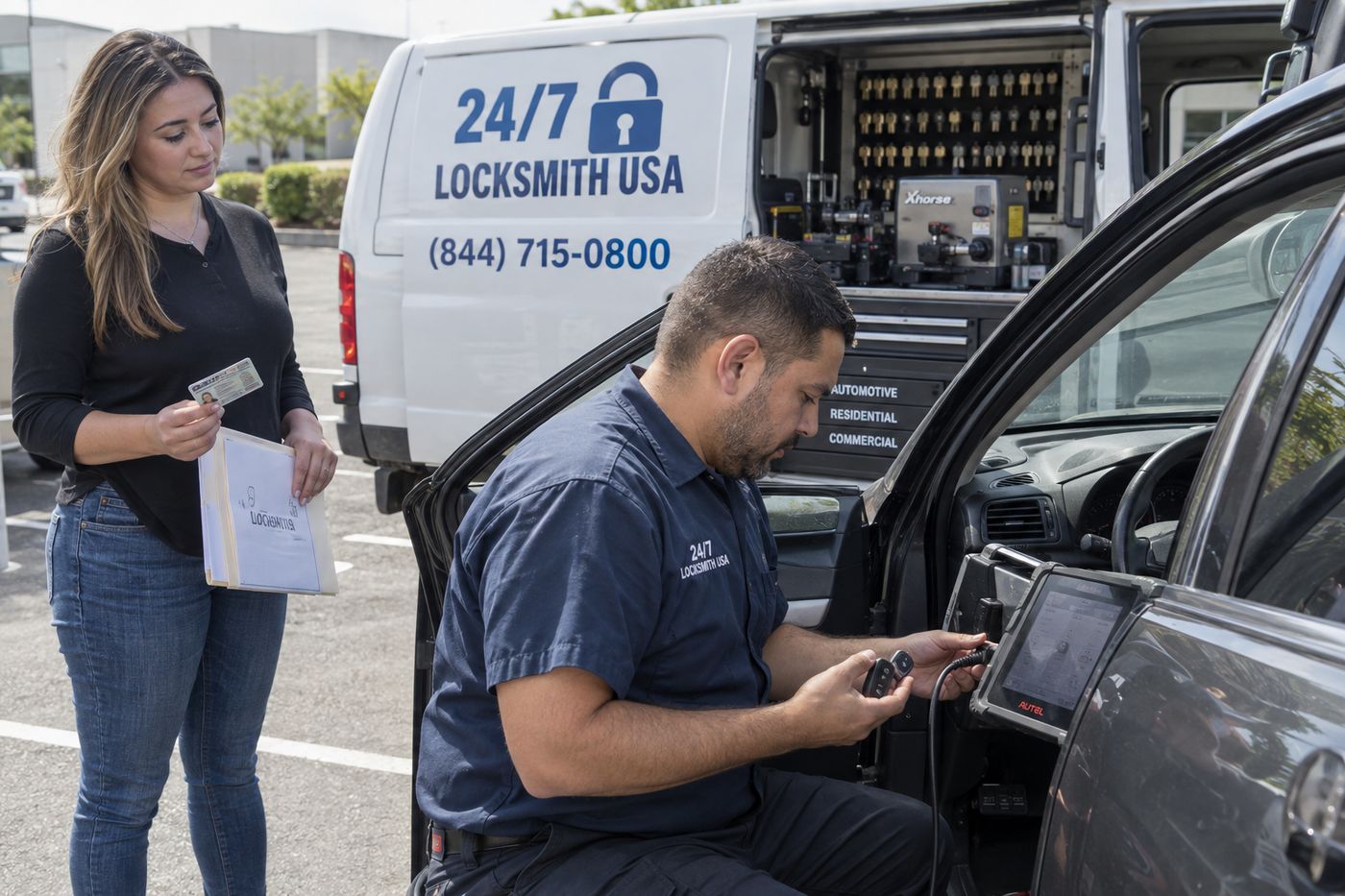
Automotive key work done at the curb, the carport or the parking deck where your Phoenix vehicle is already sitting.
All Keys Lost Origination
With every key gone we build a new one from the vehicle's own data in an airport economy lot or a Maryvale driveway, no flatbed involved.
Push-to-Start Proximity Keys
Smart keys for late-model crossovers get paired on the spot so a Desert Ridge school run is not held hostage by a dealer appointment.
Transponder Keys Cut to Code
Chipped keys for the mid-2000s sedans still working the Grand Avenue corridor are cut to the lock and married to the immobiliser.
Ignition Cylinder Diagnosis and Repair
A cylinder packed with a decade of monsoon grit gets properly diagnosed instead of being papered over with another key.
Broken Blade Extraction
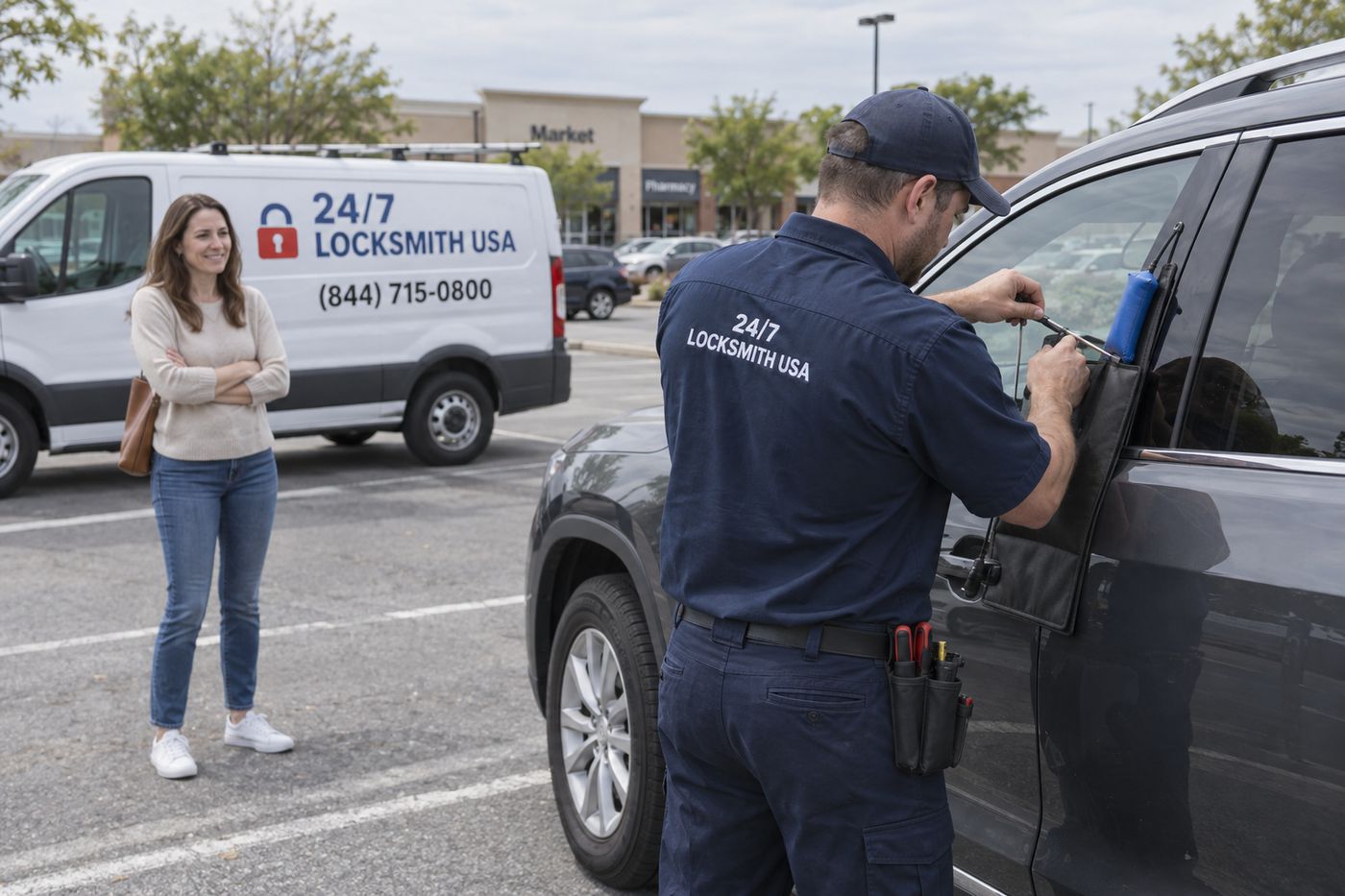
Snapped keys come out of ignitions and door locks without drilling, a routine call on high-mileage work trucks running the Black Canyon.
Contractor and Fleet Vehicle Keys
Pickups and vans staged overnight at Sunnyslope and Deer Valley sites get replacement keys made where they are parked.
Why Phoenix Keys and Ignitions Fail
Phoenix key problems are geography problems first. A key lost at Desert Ridge is a long haul from anywhere useful, and a flatbed across the Loop 101 turns one mistake into a wasted day of work. We send a technician to where the car actually sits: an uncovered deck at Sky Harbor economy parking, a staged pickup at a Deer Valley job site, a carport off Van Buren. Two physical conditions shape what we find. The first is silt. Haboobs push fine caliche dust through every gap in the body, and years of that grit packing a wafer stack means an older ignition cylinder stops accepting a key that is still perfectly good. Drivers blame the key; the lock is the failure. The second is long-stay parking. Cars sit for a week or more at light rail park-and-rides and airport lots with nothing shading them, which is long enough for a marginal 12-volt battery to sag below what the body module needs. When that happens the immobiliser has to be brought back to a known state before any freshly programmed key will crank and run.
Safety comes before the key
In a hot climate, a lockout can turn dangerous long before it turns expensive. A parked car in direct sun can heat up to a level that is unsafe for a child, a pet or even an adult within a short span. If anyone or any animal is inside the vehicle, call emergency services at once. A key can always be replaced, but nobody can be replaced.
If you are the only one affected, move to shade, drink water and stay out of the sun while you work out the next step. Standing beside a hot car with a dead phone is a poor place to make decisions. Find a shaded spot, a building entrance or a shop where you can sit for a moment and make the call in comfort.
This page is general guidance for drivers in Phoenix. It does not describe particular neighborhoods, lots or buildings, and it makes no claim about specific local rules. If you are on private property, ask the property manager whether any rules apply to outside service providers, as policies differ between places.
Keep a few simple supplies in the car through the hot months, such as a bottle of water and a sunshade, and keep a charger for your phone. These are not locksmith items, but they make every key emergency easier to manage. A calm driver in the shade makes better decisions than a stressed one in the sun, and better decisions mean a clearer call, a clearer quote and a smoother visit when the technician arrives.
How desert heat treats keys and fobs
A dashboard in the Arizona sun gets far hotter than the air around it. Fobs, batteries and plastic shells are not built for that, and long exposure leads to cracked cases, warped buttons and batteries that drain early. A fob left in a cup holder through a summer afternoon is being cooked, even if the car still looks fine.
Heat also affects the rubber pads and the thin circuit boards inside remotes. Many drivers notice the buttons becoming unreliable first, then the signal range shrinking, and finally a fob that stops responding. Replacing the battery early helps, and so does keeping keys in a pocket, a bag or a shaded compartment rather than on the dash.
If a fob already shows cracks or loose parts, treat it as a warning. Our guide on summer heat and car key safety goes through simple habits that protect the keys you own, and the same care applies the rest of the year, since a worn key in a cold morning fails just as readily as one in July.
Steering wheels and seat belts bake as well, which sometimes leads people to leave keys in the car so they do not have to carry them in the heat. That habit is risky. A key left inside a hot car is a lockout waiting to happen, and a visible key invites theft. Keep it on you, even if the pocket feels warm, and use a small pouch or lanyard so it does not get lost between the car and the door.
Dust, monsoon storms and sticky locks
Arizona drivers also deal with fine dust and the sudden storms that come with monsoon season. Dust works its way into door locks and ignition cylinders, where it mixes with old lubricant and forms a gritty paste. A lock that once turned smoothly starts to feel rough, and the key begins to wear sooner.
If you notice that a lock needs a wiggle or extra pressure to turn, do not wait for it to fail. Heavy handed lubricants such as thick oils can make things worse by trapping more dust, so ask a professional what suits your lock. Never force a stiff lock, since keys can bend or snap and leave a piece inside.
A sudden downpour followed by heat can also leave moisture inside a fob. If a remote gets wet, remove the battery, let it dry completely in open air and avoid pressing the buttons. Hair dryers and hot dashboards seem helpful but can warp the case and damage the circuit.
Wind can carry grit into a car when a door is open, and that grit ends up in the seat tracks, the door jambs and, eventually, the lock. A soft brush or a gentle puff of air around the keyhole, done occasionally, keeps the worst of it out. Do not poke anything sharp into a lock to clean it. The pins inside are precise, and a careless tool can damage them more than any amount of dust ever would.
Working out what has gone wrong
Most car key problems fall into a handful of patterns. The key is missing. The key is broken or worn. The key turns but the car will not start. The fob does not unlock the doors. The doors are locked with the key inside. Each of these has a different cause and a different fix, and identifying yours before the call makes the conversation far more productive.
If the key turns but the engine stays silent, a technician will think about the transponder chip, the immobilizer and the battery. Our troubleshooting page on a key that turns but the car will not start explains those possibilities in plain words. If the dashboard shows a flashing security light, mention it, as it is a useful clue.
If the fob does not unlock the doors but the car otherwise works, the fob battery is the most likely suspect, followed by loss of pairing. Try the physical key in the door, if the fob has a hidden blade, to confirm whether the lock itself still works. Sorting these out first can save a visit.
Write down what you observe in a few plain sentences. Does the dashboard light up when you turn the key? Do you hear a click or nothing at all? Does the remote light blink? Did anything happen just before the problem, such as a wash, a drop or a jump start? These details cost nothing to collect, and they turn a vague complaint into something a technician can reason about, which in turn leads to a more accurate quote.
What a replacement key requires
To create a working replacement, a technician needs to confirm your right to the vehicle, identify the correct key for your exact car and then cut and program it. That sequence is the same whether you have lost one key or all of them, though the lost everything case involves more work. Proof of ownership and the VIN are the two pieces of information that matter most.
Programming is the step that surprises people. A modern key contains a chip or radio that the car must learn. If the key is cut perfectly but not programmed, it may unlock the door yet fail to start the engine. The service pages on transponder key programming and all keys lost for cars explain how the two cases differ.
Mobile service means the work happens where the car is. That is a real advantage in a large, spread out city where towing a vehicle just to get a key made adds stress and cost. Whether a mobile visit suits your car depends on the make and model, so describe it fully on the phone.
After the key is made, ask the technician to show you each function. Lock and unlock with the remote, open the trunk, start the engine and shut it off again. Ask whether older keys remain active in the car or were removed, because a lost key that still works is a security risk. Keep any paperwork you receive, and store the new key set somewhere cooler and more protected than the dashboard.
Lockouts in heat, and what to do while you wait
If you are locked out and nobody is inside, the situation is inconvenient but not an emergency. Check every door and the trunk. Think about whether a spare is reachable, and whether a family member could bring one. Check whether your insurance or roadside plan covers lockout assistance, since many do and a short call may solve the problem.
While you wait for any service, stay in shade, keep hydrated and let someone know where you are. If you cannot find shade, stand on the side of the car away from the sun and traffic. Do not try to open the door with improvised tools, which can damage paint and wiring and may trigger an alarm.
A locked car with a running engine is a separate situation. The vehicle may be burning fuel in the heat, and the air conditioning may be keeping the cabin cool, which is not a reason to delay. Tell the dispatcher it is running, since it changes how the technician approaches the work. Stay clear of the vehicle, and do not leave it in a place where it could roll or be taken.
The service page on car lockout service explains what to expect, and it is worth checking your insurance card or phone app for a roadside number before deciding whether to call your plan or a locksmith first.
Honest quotes and what the service call charge means
When you call a locksmith, you are buying two things. One is the visit itself, sometimes called the service call charge, which covers the technician traveling to you. The other is the work, such as opening the car or making a key. A clear business explains both before sending anyone.
Ask for the quote by phone and ask whether anything could change on site. Changes can be legitimate, for example if the vehicle turns out to have a different key system than described, but they should be explained honestly and you should have the right to decline. Our guide to the service call charge covers the terminology.
No honest business promises an arrival time before it knows where you are and what the conditions are. Traffic, weather and distance all play a part. Treat exact promises made in the first ten seconds of a call with suspicion, and look for a dispatcher who asks questions before answering them.
Write down the name of the business, the quote and the person you spoke to. If the technician arrives in a vehicle or uniform that does not match the company you called, ask politely about it before any work begins. You are allowed to ask for identification and to check that the business name matches. A professional will not be offended, and that single step weeds out most of the problems people hear about.
Fleet, work trucks and shared vehicles
Phoenix has plenty of people who drive work vehicles, vans and shared company cars. Those introduce extra questions. Who owns the vehicle? Who is authorized to approve a key? Is there a manager who needs to confirm the request? A locksmith will want clear answers, since the person on the scene is not always the owner.
If you manage several vehicles, consider building a simple record of keys, spares and who holds them. That small habit prevents the scramble when a driver loses a key on a Friday afternoon. Our service page on fleet locksmith service describes what is involved when several vehicles and drivers are in play.
Even for a single work van, keeping a spare in a secure place, separate from the van itself, is a worthwhile habit. A lost key in a work setting costs time and income, not just inconvenience.
For shared vehicles, decide in advance who may request a key and who pays. Write that rule down and keep a copy with the vehicle records. When a driver calls from the roadside, the dispatcher will ask for the owner or manager to confirm, and having the right name and number ready saves time. It also protects the business from an employee approving work they were never meant to authorize.
Spare keys and sensible storage
A spare key is one of the simplest forms of protection you can own, and the right time to get one is while you still have a working key. Copying a key you hold is simpler than creating one from nothing. It also gives you a chance to test the copy before you need it.
Where you keep the spare matters in a hot climate. A magnetic box under the bumper looks clever, but heat, dust and moisture can damage the key, and thieves know the trick. Keep the spare with someone you trust or at home in a dry, cool place, and check it now and then.
When you test a spare, do it properly. Lock and unlock every door, open the trunk, start the engine and run it for a moment. If the spare has buttons, try each one. A spare that has never been used may turn out to be a blank that was never programmed, and it is far better to learn that in the driveway than in a parking lot on a hot afternoon with a dead phone.
Adding an extra key to a car that already has one is a calmer job than starting from nothing, and it is worth deciding now whether to do it or wait.
Nearby cities and the state overview
Phoenix drivers often travel across the valley and beyond. The same guidance applies in Scottsdale, Mesa, Chandler and Tucson, each with its own page. The Arizona service page gives the wider picture.
When you are ready, call and describe your situation using the steps above. Have identification, proof of ownership and the VIN close by, and ask for the quote and the service call charge before dispatch.
If you are reading this before any trouble, make a spare, replace a tired fob battery and move your keys out of the sun. A few calm minutes now can save a hot, stressful afternoon later.
Common questions
What should I do first if my child or pet is locked in a hot car in Phoenix?
Call emergency services immediately. Heat inside a closed car in the desert can become dangerous within a short time, and a locksmith call is not the right first step. Once help is on the way and the situation is safe, you can arrange a locksmith to deal with the key or lock afterward.
Why does my key fob stop working in summer?
Heat shortens battery life, warps plastic shells and stresses the small electronics inside. A fob left on a dashboard or in a cup holder suffers most. A fresh battery often brings it back. If the case is cracked or the buttons are loose, the fob may need to be replaced or reprogrammed.
Can dust really damage a car lock?
Yes, fine dust can enter door locks and ignition cylinders and mix with old lubricant to form a gritty residue. The lock then feels rough and wears the key sooner. Avoid forcing a stiff lock, and ask a professional which cleaning or lubricating approach suits your particular lock before using any product.
Will a locksmith need proof of ownership for a lockout?
Usually yes. A responsible technician confirms that the vehicle is yours or that you have authority over it before opening it. Expect to show photo identification and something tied to the car, such as a registration. Requirements vary, so ask on the phone what to have with you.
Is mobile key service available for work vans and trucks?
Many work vehicles can be handled on site, though the details depend on the make, model and key type. Tell the dispatcher it is a commercial or shared vehicle and who owns it. Ownership and authority checks still apply, and a manager may need to approve the work.
How do I avoid being overcharged?
Ask for a quote by phone, ask what the service call charge covers, and ask whether anything could change on site. Choose a business that gives its name and explains plainly. If the terms change when the technician arrives, you can decline politely and call someone else without obligation.