
Car keys, lockouts, ignitions and rekeys across Chicago and the surrounding Illinois metro. Call (844) 926-0400.
24/7 Locksmith USA covers Chicago for automotive, residential and commercial lock work. Lost car keys and fobs, cars and homes opened without damage, broken keys pulled out of ignitions and cylinders, locks rekeyed after a move, and commercial hardware for storefronts and offices. Everything is done at your address. Call (844) 926-0400.
People searching 247 locksmith chicago land here for the same reason everyone does: they want one number, a real technician, and a price agreed before anybody drives out. That is how we run it. You describe the situation on the phone, you get a number, and if what we find on site is different from what was described you hear the revised figure before any work starts.
What We Handle in Chicago
Chicago ZIP codes covered: 60607, 60608, 60610, 60614, 60618, 60622, 60625, 60632, 60640, 60647
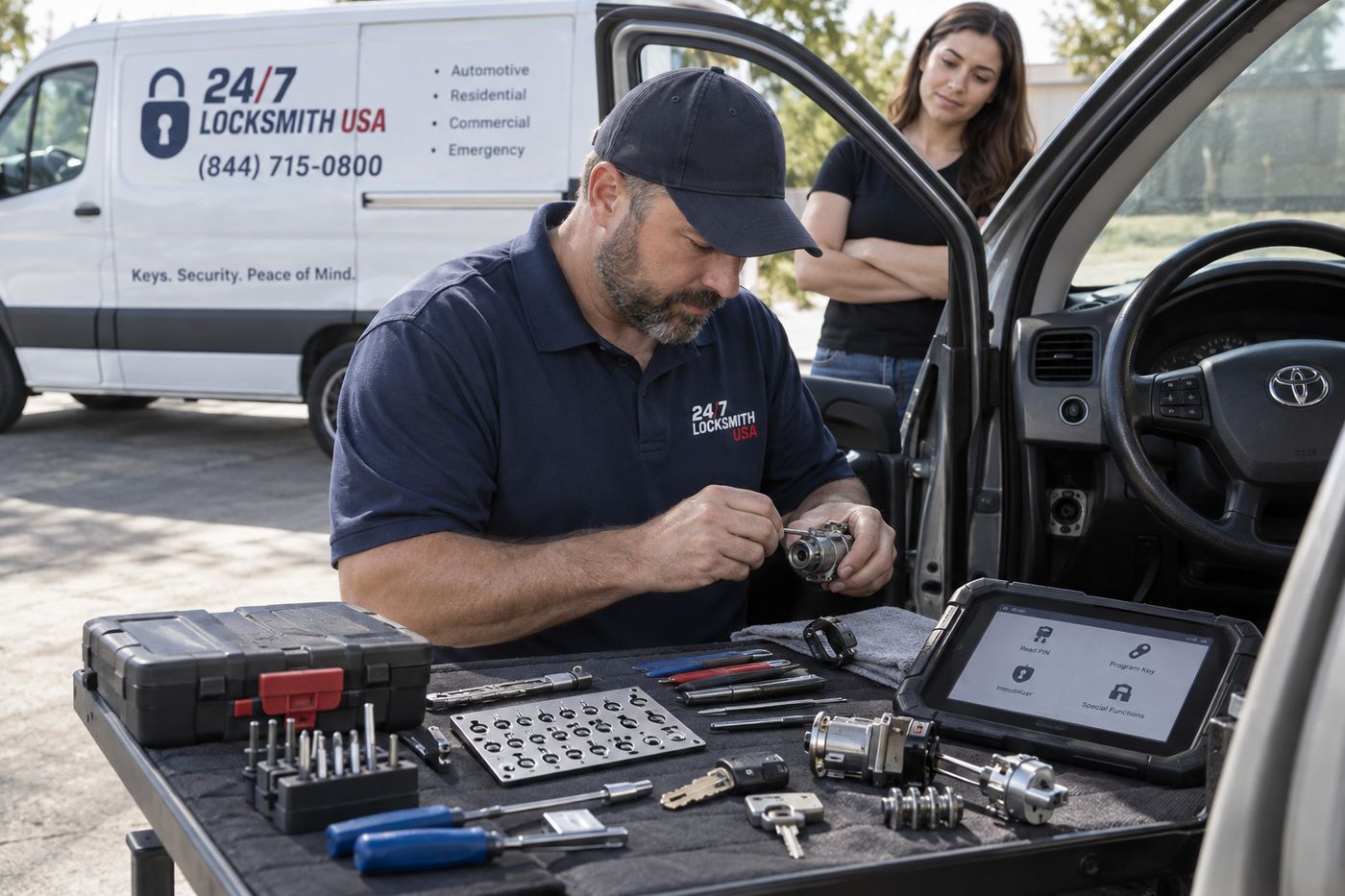
- Car key replacement, cut and programmed on site from the VIN and proof of ownership, including push-to-start systems
- Key fob programming, added to a vehicle that still has a working key, or programmed from scratch when every key is gone
- Car and home lockouts, opened without damage to the door, the seal or the latch
- Broken key extraction, blades snapped in ignitions, door locks and deadbolts
- Ignition repair, keys that will not turn, cylinders that turn but will not start
- Rekeying, after a move, a tenant change, a breakup or a contractor handover
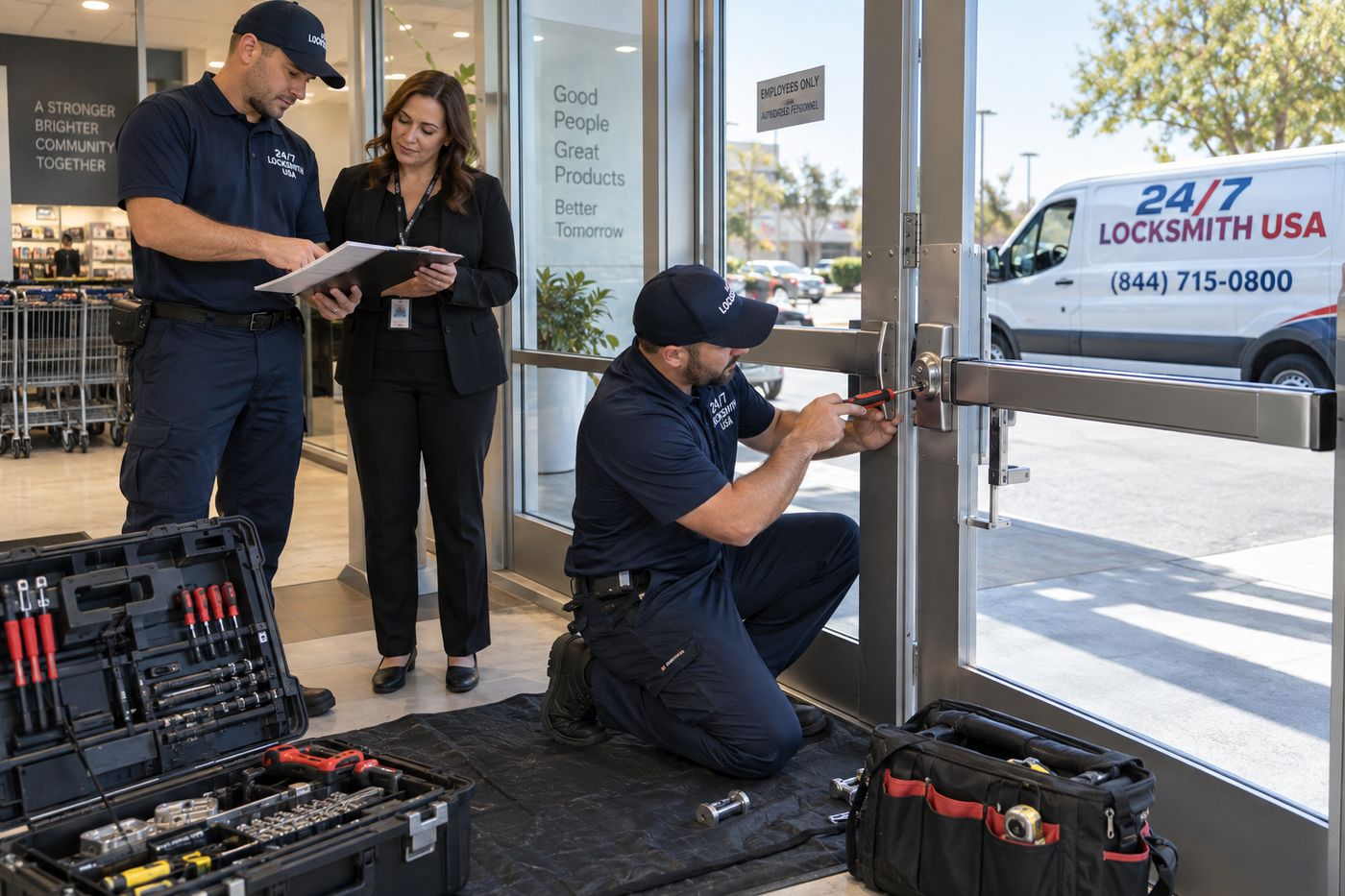
- Commercial hardware, storefronts, offices, mailboxes, file cabinets and master key systems
What Chicago Actually Calls About
Three-flats, courtyard buildings and a lot of shared entry hardware. Apartment lockouts, unit rekeys after a move and frozen or seized locks in winter.
Illinois Conditions
Cold is the variable that separates Illinois from the sunbelt. A marginal ignition cylinder, a worn key or a dying fob battery will run all summer and fail on the first hard freeze, which is why January is the busiest month.
Arrival Time, Honestly
A precise number of minutes before we know your location is not something anyone who actually drives this city can honestly offer. Distance, the time of day and whatever Chicago traffic happens to be doing all factor in. Tell us your address and we will walk you through a realistic window rather than quote a figure meant only to keep you from calling somebody else. If a fast arrival genuinely is not possible, we will say so up front instead of letting you wait on an empty promise.
What to Have Ready
For a vehicle: your driver licence or photo ID and something showing you own the car, registration, insurance card or title. Photograph both now and keep them on your phone; it saves twenty minutes on the roadside. For a home or business: photo ID with the address, or a lease, or another way of showing the property is yours. A legitimate locksmith will always ask. One that does not is a warning sign.
How to Tell a Real Locksmith From a Scam Listing
The pattern is consistent: a listing with no verifiable address, a phone quote of fifteen or nineteen dollars, an unmarked car, and a technician who says the lock has to be drilled. Most residential and automotive locks do not need drilling. Ask for the company name, get an estimate before dispatch, and confirm the technician is insured. Read how to spot a fake locksmith before you call anyone.
Other Cities We Cover
Aurora, ILNaperville, ILJoliet, ILAll of IllinoisFull coverage
A city of many kinds of doors
Chicago is a large city, and the locks in it range from old hardware on historic doors to electronic access systems in modern towers. A person might live in an apartment building with a shared entrance, a house with a private yard, or a unit above a shop. Each setup creates different lock needs, different rules and different ways to get locked out.
That variety is why a clear description matters when you call. Telling a dispatcher that your door is stuck is less useful than saying it is an apartment door with a deadbolt and a knob lock, that the key turns but the bolt does not move, and that you are on a certain floor of a building with a front desk. Details guide the choice of tools and the quote.
It also helps to know what you want out of the call. Do you only need the door open today, or do you also want the lock changed so that the missing key is useless? Saying so at the start lets the dispatcher plan the visit and explain both parts of the quote separately, which avoids confusion at the door.
This page is general guidance for people in Chicago. It does not describe any particular neighborhood or street, and it makes no claim about local history or about a company having worked in a given building. It is meant to help you understand your situation and ask better questions.
Locked out of an apartment
Apartment lockouts are among the most frequent calls in any large city. Your first step should be to find out who else has a key. A roommate, a partner, a building manager or a doorman may be able to let you in, and your lease may spell out who handles lockouts and whether a fee applies.
If nobody can help, a locksmith can often open an apartment door without damage, but only after confirming that you live there. Expect to show a photo ID and something that links you to the unit, such as a lease or a piece of mail. In a managed building, the technician may also need the front desk or management to approve access.
Do not try to climb along a ledge, pry the frame or kick the door. In a building with many floors, a fall is a real danger, and a damaged frame is costly. Our page on apartment and landlord locksmith work explains the usual process, including how landlords and tenants coordinate.
- Ask a roommate, partner, manager or front desk whether they hold a spare.
- Check your lease for who handles lockouts.
- Have a photo ID and proof of residence ready.
- Never climb on ledges or force the frame.
Renters, landlords and who may change a lock
Many Chicago residents rent, and renting raises a question that comes up again and again: can I change my own lock? The answer depends on your lease, your building and local rules, so a general page cannot settle it. Read your lease, then ask the landlord or management company, and keep any approval in writing.
Landlords have their own responsibilities. Changing or rekeying locks between tenants is routine, and it ends the question of who still holds a key. A landlord with several units may want all the locks keyed so that a master key opens each one, which is a separate arrangement from the tenant keys.
If you move into a place and suspect that previous tenants still have keys, ask the landlord to rekey. It is a modest job and a sensible precaution. Our lock rekey service page describes how it works, and the checklist for college students and dorm lock safety is helpful for anyone in shared housing.
Winter weather and stubborn locks
Winters here are cold, windy and often icy, and locks suffer for it. Moisture freezes inside cylinders, door latches stiffen, and wooden doors swell or shrink with humidity. A lock that turned easily in September may demand a firm push in January, and a car door may refuse to open at all after a freezing rain.
Be gentle with frozen locks. Pulling hard on a key can snap it off in the cylinder, which turns a small problem into a larger one. Use a de icer made for locks, or warm the key slightly with your hands, and do not pour hot water on a car door or window, because the temperature shock can crack glass.
Our guide on winter lockout prevention collects habits that help, such as replacing key fob batteries before they fail, drying door seals after washing a car and keeping a spare key somewhere reachable. A few minutes in the fall saves a long wait in the cold.
Pay attention to your front door as well as your car. Cold shrinks metal and can pull a bolt out of line with its strike plate, so a door that locked easily in warm weather may need a firm push to engage. If you notice that, tell a technician, because adjusting the strike is a small job that prevents a night of fighting the door.
Lost or locked car keys on a city street
Cars in a dense city face their own problems. Street parking, tight garages and heavy traffic complicate even a simple lockout. If your keys are locked inside, tell the dispatcher exactly where the car is, which side of the street, whether it is in a garage and on what level. Landmarks you can see right now help more than a vague description.
The technician will check that the car is yours before opening it, typically with a photo ID and a registration or other document. For a new key, the vehicle identification number is also needed. It is on a plate by the windshield on the driver's side and on your insurance and registration cards. Our overview of car lockout service describes the usual approach.
If you have lost every key, the work is a replacement from scratch, covered on the car key replacement page. Do not leave the car unattended for long if you can avoid it, and never leave valuables in plain sight. Ask whether the work can be done where the car is parked so that you can avoid a tow.
Also tell the dispatcher about anything unusual: a damaged door, a window that was left cracked, a steering wheel that is locked, or a key that broke off in the ignition. Surprises on site are what turn a simple quote into a longer visit, so the more complete your description, the more reliable the number you are given.
Parking garages, towing and tight spots
Parking structures create special concerns. Ceilings may be low, access may be limited and attendants may need to approve outside visitors. If your car is locked in a garage, tell the dispatcher what the entry rules are and whether there is a ticket, a gate or a front desk. Ask the attendant what is needed so that the technician is not turned away.
In some cases a car must be moved before it can be worked on, for example if it blocks a lane or is parked in a restricted zone. Do not assume anything about local parking or towing rules. Requirements vary, so ask the garage, the city office or your insurer if you are unsure what applies to your situation.
Keep your own safety in mind. At night, wait in a well lit area, stay near other people if you can and keep your phone charged. If you feel unsafe, move to a secure place such as a store or a building lobby, and give the dispatcher a way to find you.
If a friend or relative can stay on the phone with you, that helps. Share your location with them while you wait. Technicians generally prefer to meet a customer in a visible place, and a calm, well lit spot makes the handoff simple for everyone.
Bring something to sit on or lean against if the wait is long, and dress for the weather. In winter in particular, a cold wait is not just uncomfortable, it can become risky, so go inside a nearby lobby or shop if you can and tell the dispatcher where to find you.
Storefronts, offices and small businesses
A city this size is full of small businesses, and each one depends on locks that work every day. Storefront doors take heavy use, glass doors have their own hardware, and staff turnover means keys drift out of control. A written record of who holds which key is a simple and effective habit.
When an employee leaves or a key goes missing, change or rekey the locks they could open. For offices with many people, a master key system lets each person carry one key that opens only the doors they need. Our page on master key systems explains the idea, and the page on commercial locksmith work lists the wider range of services.
If you are locked out of a shop, the technician will ask for proof that you have the right to the premises, such as a lease, a business document or a landlord's confirmation. See the page on storefront lockout for more. Do not break glass to get in, as repairs cost far more than the lockout.
Business owners should also keep a short list of emergency contacts, including the landlord, the alarm company and someone who can vouch for you. When a lockout happens before opening, having that list on your phone saves time. Store the information somewhere other than inside the locked building.
High rise buildings and electronic access
Tall buildings often have electronic access, such as key cards, fobs or keypads at the lobby and on individual units. These systems are usually managed by the building, and a locksmith can only help with the parts that you or your landlord control. If your key card stops working, start with the front desk.
Inside your unit, you may have a regular mechanical lock, a keypad or a smart lock. Each has pros and cons. A keypad is convenient but needs batteries, and a smart lock depends on an app. Always know how you would get in if the power failed or your phone died, and keep a mechanical key somewhere safe.
Building rules often limit what you may install on your entry door, since fire safety and shared access can be affected. Ask your management before replacing a lock, and keep any approval. A technician can then fit hardware that meets the requirements.
If your building uses a shared key system, for example one key that opens both your unit and the lobby, ask management before altering your unit lock. Changing it might break that arrangement, and you could end up with a second key to carry. It is usually easy to sort out when you ask first.
Rekeying after a breakup, a move or a lost key
Life changes often call for new locks. A breakup, a roommate moving out, a lost wallet with a house key and address inside, or simply moving into a new place are all good reasons to rekey. Rekeying changes the inside of the lock so old keys no longer work, without replacing the whole lock.
Because it is fairly modest work, rekeying is a reasonable response to uncertainty. It does not imply blame. It simply closes the question of who might still have a key. Make sure that every exterior door is included, such as back doors, side entries and any gate or storage unit.
Our residential locksmith page lists related services, such as replacing worn hardware and adding a deadbolt. If you are unsure whether to rekey or replace, describe the lock and ask. A good technician explains the options and lets you decide.
Think also about the keys you hand out. A cleaner, a dog walker, a relative and a contractor may all have copies. Keep a note of who has them, and ask for each one back when the arrangement ends. If a key cannot be recovered, rekeying is a straightforward answer, and it costs far less than the worry of not knowing.
What to expect on the phone and at the door
A good call begins with questions. The dispatcher will ask where you are, what is wrong, what kind of lock or vehicle is involved and whether anyone is in danger. They will tell you how ownership is checked and explain what the service call charge covers before sending anyone.
At the door, the technician will confirm your ID and your connection to the property or vehicle before starting. That is not an insult. It is protection for you. Expect a clear explanation of the work and the quote, and do not hesitate to ask questions. If something about the conversation feels off, you may decline.
Keep notes of what was said, including the quote and the name of the caller. If the price changes on arrival, ask why. Differences can happen when the job proves different from the description, but they should come with an explanation you understand.
Nearby cities and the Illinois overview
Chicago sits at the center of a wide region, and people travel between it and the surrounding cities every day. If you are in Aurora or Naperville, those pages offer similar guidance for local conditions.
For a wider picture, see the Illinois state page. Rules for rentals, buildings, vehicles and permits vary, so ask the right office, your landlord or your insurer about anything specific to your case rather than relying on a general page.
When you are ready to call, have your location, the type of lock or vehicle, and your ID ready. Describe the problem in the order it happened, ask for the quote and the service call charge, and write down what you are told.
Common questions
What do I need to show if I am locked out of my apartment?
A photo ID and something that connects you to the unit, such as a lease, a utility bill or mail, is the usual check. In a managed building the front desk or management may also need to approve access. The aim is to confirm that you live there.
Can I rekey my apartment lock without telling my landlord?
That depends on your lease and the building rules, so read your lease and ask your landlord or management first. Many buildings require a copy of the key on file or specific hardware. Keep any approval in writing, and then a technician can do the work to match the requirement.
What if my car is locked in a garage?
Tell the dispatcher the garage entry rules, the level and the exact spot. Some garages need staff approval for outside visitors. The technician will check ownership before opening the car, so have a photo ID and a registration ready. Wait in a safe, well lit area if it is late.
Why does my lock stick in cold weather?
Moisture freezes in cylinders and latches, and cold metal contracts, so parts bind. Avoid forcing a key, which can snap it. A de icer made for locks helps, and a worn cylinder may need replacement. Do not pour hot water on a car door, because glass can crack.
Can a locksmith help with a storefront lockout?
Yes, in many cases, after confirming that you have authority over the premises. A lease, business paperwork or a landlord's confirmation helps. Tell the dispatcher what kind of door and lock it is. Avoid breaking glass, since repair costs far exceed the cost of a lockout.
How is the price explained?
A quote is given by phone based on the lock or vehicle, the work and the location, and the service call charge is explained before dispatch. Details found on site can change the job, so ask what might affect the number and get that answer before agreeing to proceed.