
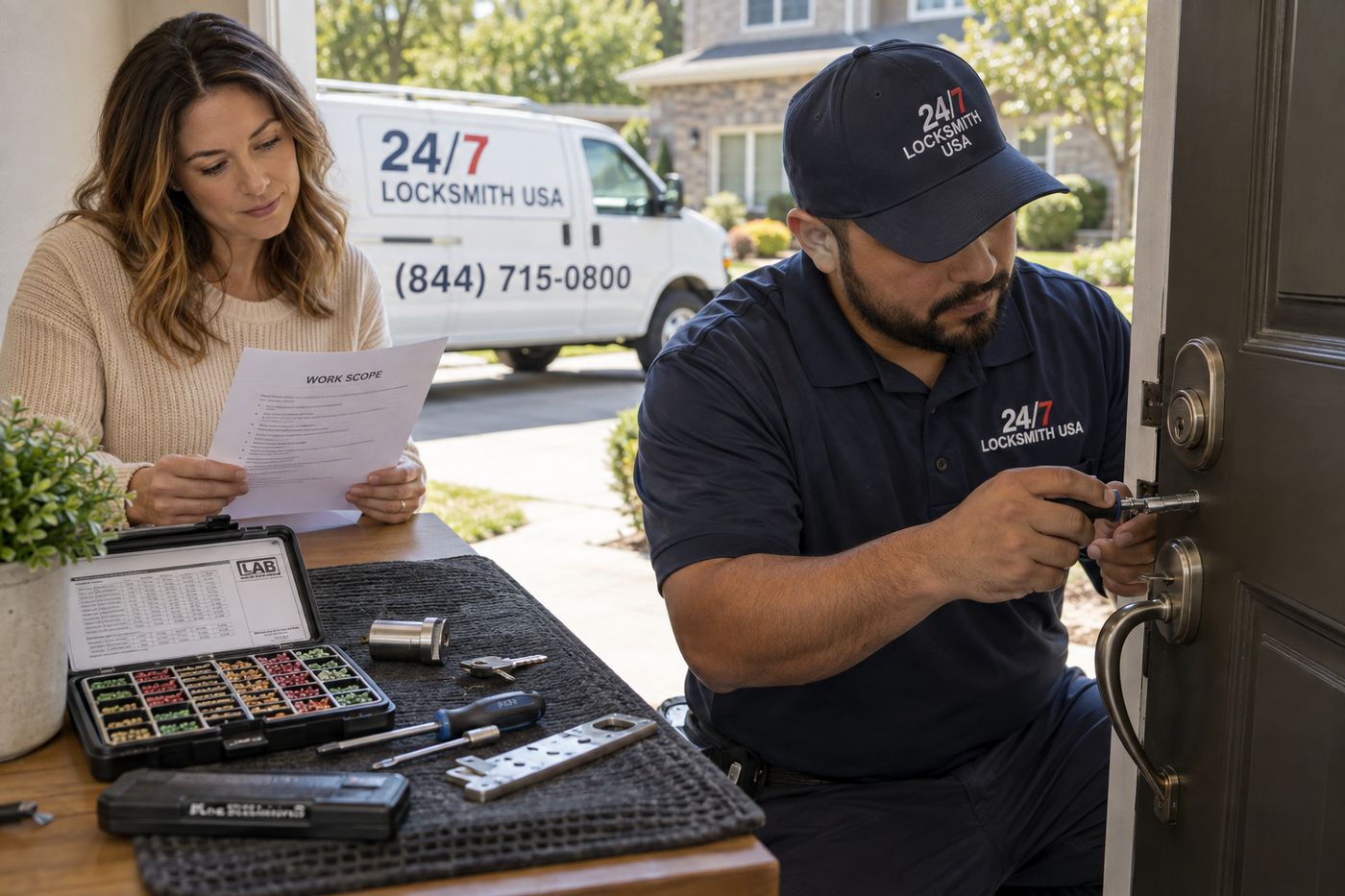
What we handle in Boca Raton.
One mobile team across Boca Raton, residential, automotive and commercial.
Marine & Dock Hardware
Corrosion-resistant cylinders and padlocks for boats, dock boxes and waterfront storage.
Historic & Period Hardware
Mortise locks and original hardware serviced rather than ripped out of a period door.
Impact Door & Storm Hardware
Multipoint locks and hardware on impact-rated doors adjusted, repaired or replaced.
Commercial Door Hardware
Storefront locks, exit devices, closers and mortise cylinders serviced or replaced.
High-Security Cylinders
Medeco and Mul-T-Lock cylinders for doors that need genuine key control rather than hardware-store pins.
Safe Opening & Servicing
Locked-out safes opened, and re-combinated where the model allows it.
Locks in Boca Raton: what actually goes wrong.
Because more than 75% of the housing was built after 1970 and much of it sits in country-club and gated communities (for example Boca West, Woodfield Country Club, Broken Sound, Boca Pointe, Royal Palm Yacht and Country Club), a large share of access work is on association-controlled and multi-family entry points rather than individual street-facing front doors, and the historic exception is a single small district - Old Floresta, 29 Mizner-designed houses from October 1925, designated in 1990 - where original Spanish-style exterior details constrain hardware choices. Adjacent low-voltage and alarm work falls under separate Palm Beach County certificate categories (LOW VOLTAGE, SIGN CONTRACTOR/ELECTRICAL, ELECTRICAL), so electronic-access jobs can cross a licensing line that pure mechanical lock work does not. The city's Housing Element states that "over 75 percent of the City's housing stock was built after 1970," so the dominant hardware context is 1970s-2000s subdivision, condominium and country-club housing rather than pre-war construction. Near the water, standard plated cylinders corrode from the inside out; solid brass or marine-grade hardware lasts several times longer for a small difference in price. Storm exposure is documented (Hurricanes Frances and Jeanne in September 2004, Wilma in October 2005, Irma in September 2017) and the city's structural design wind velocity for Risk Category II buildings is 170 mph, so exterior door assemblies here are engineered openings. The historic layer is small and specific: the Town of Boca Raton was incorporated in May 1925 at the height of the land boom, Addison Mizner was commissioned to plan the resort community, 29 Mizner-designed houses were contracted in October 1925 in what is now Old Floresta (which became the city's first historic district in 1990 and retains Spanish-style architecture), and the Cloister Inn was completed in 1926 before the boom collapsed. Post-war growth followed the 1940 population of 723 and the later corporate expansion of the 1960s onward.
How a coastal climate shapes lock problems
Locks near the ocean live in a tougher environment than locks inland. Salt in the air settles on metal, humidity keeps surfaces damp, and sun beats on exposed hardware for much of the year. Over time the finish wears through, internal parts corrode and a lock that once turned smoothly begins to feel gritty or stiff.
Door hardware on a covered balcony, a gate that faces the weather or a mailbox lock near a walkway often fails first. The key may still go in, but the cylinder resists, or a latch sticks halfway. The usual reaction is to spray something into it, which can help for a day and then attract more dirt. A technician can usually tell whether cleaning will do or whether the part is at the end of its life.
This page is general guidance for people in Boca Raton. It does not describe a particular neighborhood or building, and it makes no claim about local history. It is here to help you understand common situations, prepare for a call and ask good questions about the work.
Living in a condo or a gated community
Many residents here live in condominiums, townhomes or gated communities, and that changes how lock work is arranged. The association or management may control the entrance doors, gates, garages, mailrooms and shared amenities. Your own unit door is usually yours, but rules about what you may install or change can differ from building to building.
Before changing hardware on a front door, read your governing documents or ask the management office what is required. Some buildings insist on a particular finish or brand, or want a copy of the key on file. Do not assume either way, because these rules vary and are not something a general page can settle for you.
If you are locked out of a unit, the management office may hold a key, and calling there first can save a service call. If not, a locksmith can usually open the door after confirming that you live there. Expect to show a photo ID and something linking you to the address. Our page on apartment and landlord locksmith work explains the typical flow.
Locked out: what to do and what to avoid
A lockout is rarely dangerous, but it is frustrating and it tempts people to take risks. Climbing onto a balcony, forcing a sliding door or breaking a pane of glass can cause injuries and costly damage. Humidity and heat make it unpleasant to wait outside, so find shade, keep your phone charged and make the call early rather than late.
Before calling, think about who might hold a spare. A partner, a neighbor you trust, a building manager or a family member may be able to help. If you use a keypad or smart lock, check whether there is a code or an app that can open the door, since that may solve the problem without a visit.
When you speak to the dispatcher, give your address or the name of your building, say which door is locked and describe the lock if you can. The technician will check your connection to the home before opening it. Our overview of residential locksmith service lists the usual work, and the advice is the same for a house or a unit.
- Do not climb, break glass or force a sliding door.
- Ask a partner, neighbor or building office whether they hold a spare.
- Check whether a keypad code or smart lock app can open the door.
- Keep your ID and proof of address ready for the ownership check.
Smart locks and keypads in a humid place
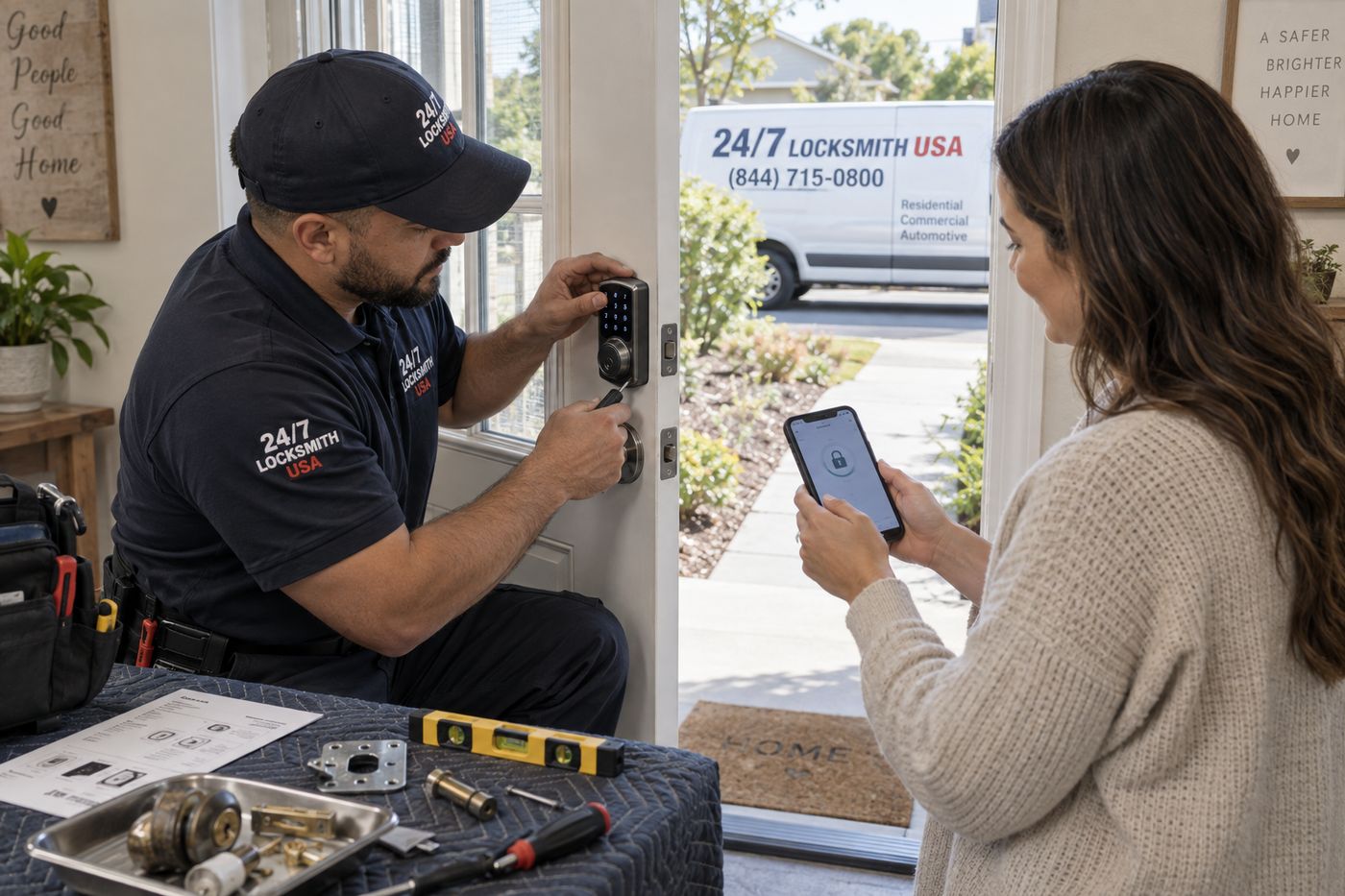
Electronic locks are popular in this area because they remove the need to carry a key. They bring their own issues, though. Batteries run down, circuit boards dislike moisture, and a lock that depends on a phone app may fail when the phone dies or the network is down. Always know how you would get inside if the electronics failed.
A good smart lock includes a mechanical key or an external contact for a spare battery. Keep that key somewhere safe but reachable. Change batteries on a schedule, not just when a warning light appears, and test the lock after storms or long power outages. If a keypad becomes sluggish or the buttons stick, humidity is a likely suspect.
Our page on smart lock installation explains what is involved in fitting one. Choosing a model is a personal decision, and a technician can explain which models suit your door, which are built for outdoor exposure and which need extra care in a damp climate.
Rekeying after a move or a lost key
When you take over a home or condo, you cannot know how many keys are in circulation. Former owners, tenants, cleaners, agents and contractors might all have had one. Rekeying changes the inside of the lock so that older keys stop working, without replacing the entire hardware. It is a common step after a purchase, a breakup, a roommate leaving or a lost key.
Rekeying is often a simpler choice than replacing, especially when the lock is in good condition and you like the look. Our page on lock rekey service describes how it works. Replacement makes sense when the lock is corroded, damaged, loose or not strong enough for the door.
Include every exterior entry in the plan, such as side doors, garage access doors, patio doors and any storage unit or gate you control. If you want one key to operate several locks, ask about keying them alike. Our home security checklist for new homeowners lists other items worth checking after a move.
Stronger locks and why the door matters too
A strong lock is only part of a secure entrance. The door, the frame and the strike plate matter just as much. A solid deadbolt set into a weak frame with short screws can be defeated by a hard kick, while a modest lock in a reinforced frame can be surprisingly tough. A good technician looks at the whole assembly.
Some residents want higher security hardware for a front door or a home office. The page on high security locks explains what that term generally means, such as pick resistance and controlled keys that cannot be copied at a hardware counter. These locks cost more and take longer to arrange, so decide whether the extra protection fits your needs.
Whatever lock you choose, use it. Many break ins in residential areas involve doors left unlocked or windows left open. A lock that is installed correctly but never engaged protects no one. Make locking up part of your routine every time you leave, including short trips.
Car keys and fobs in the heat
Florida sun is hard on car keys. A fob left on the dashboard can overheat, and a key tossed in a wet beach bag can corrode. Battery life shortens in the heat, and moisture gets into seams and contacts. If your fob works only sometimes, change the battery first, and dry the case if it has been wet.
If the key is lost or the car will not accept it, a technician can usually cut and program a new one when you can show ownership and the vehicle identification number. That number is on the dashboard near the windshield on the driver's side and on your registration and insurance. Our page on car key replacement describes the process.
A locked car in the sun is a safety concern. If a child or pet is inside, call emergency services first. For an empty car, see the car lockout page. Park in shade when possible, and keep a spare key somewhere other than the car so that a lockout does not turn into a long wait.
If you share a car with a partner or relative, agree on where the spare lives and who is responsible for it. A key that nobody remembers handing over is a frequent cause of calls. Setting up a simple habit, such as always dropping the key in the same bowl by the door, prevents more lockouts than any gadget.
Preparing for storm season
The annual storm season affects locks and keys in ways people do not always expect. Doors and windows swell in damp conditions, shutters need to be latched and sometimes a garage entry door is left open in a hurry. After a storm, flooded lower levels can ruin electronic locks and leave keys corroded.
Before the season starts, locate every key, test every lock, and put a spare copy of important keys with someone outside your home. Photograph your registration and insurance cards so that the information survives if papers are lost. Our guide on hurricane season lock and key preparation goes through the checklist.
If you evacuate, lock up carefully and note where the car keys are. When you return, check your doors before you go in. If a lock was damaged or forced during the storm, do not assume it is safe. Photograph the damage for your insurer and ask a technician to inspect or replace the hardware.
Remember too that wood and metal doors react differently to moisture. A wood door can swell and bind against its frame, which makes the latch drag and puts strain on the lock. If your door needs a hard push to close after a wet spell, tell the technician, because the lock may be fine and the fix may involve the door or hinges instead.
In the same spirit, check your sliding glass doors. Their latches are often weak, and the track can collect sand and debris that stops the door from closing fully. A bar or a pin lock in the track adds a layer of security without any complicated work, and cleaning the track once in a while keeps the door sliding smoothly.
Shops, offices and rental properties
Business owners in a resort and retail city face special concerns. Shop doors see heavy use, staff turn over, and landlords or tenants may change. Keeping track of who has which key is half the battle. A simple written key log, updated whenever someone leaves, prevents confusion.
For storefronts, consider the quality of the door hardware, how the door closes at night and whether the lock suits the traffic. For offices, think about master key systems or electronic access, which can reduce the number of physical keys in circulation. The page on commercial locksmith services explains the main options.
Property managers and landlords have a related duty to change locks between tenants. This is routine and prudent, and it protects both sides. Check any lease or management agreement for specific requirements, and ask a technician how many doors and keys are involved so you can plan the work.
Seasonal rentals add one more wrinkle. When a unit changes hands several times a year, keys tend to multiply, and codes on keypads can linger long after a guest has left. Resetting a code or rekeying between guests is a modest step that keeps control with the owner. Keep a log of who received which key or code and when it was returned.
Sorting out what a good phone call sounds like
The first conversation sets the tone for everything that follows. A calm, clear dispatcher will ask for your location, the type of lock or vehicle, what has happened and whether anyone is at risk. They will tell you how ownership is checked and explain what the service call charge covers before sending anyone. If you feel hurried or confused, slow down and ask again.
Have a pen ready. Write down the name the caller gives, the quote you were told and what the quote includes. If the number changes when the technician arrives, you will have a record of what was said. Reasonable differences happen when the job turns out to be different from the description, but a sharp jump without explanation deserves a polite question.
It also helps to avoid describing the job in terms of the answer you want. Instead of saying you need a lock replaced, say what the lock is doing. Let the technician decide whether the cure is cleaning, rekeying, adjusting or replacing. You are more likely to get an honest assessment when you describe symptoms, not solutions.
Finally, think about how the technician will reach you. In a gated community or a secured building you may have to leave a name at the entrance. Tell the dispatcher about gate codes, parking limits and any contact person who can let someone in. Small details like these keep the visit smooth.
One more practical point concerns timing. No honest company can promise an exact arrival before knowing where the technician is coming from and what is already scheduled, so be wary of anyone who does. What you can reasonably ask is whether the dispatcher will update you if plans change, and how to reach them if you need to. That small courtesy matters when you are standing outside.
Nearby cities and the Florida overview
Boca Raton sits along a busy stretch of the coast, and many residents travel to nearby cities daily. If you need help in Fort Lauderdale or West Palm Beach, those pages offer similar guidance for local conditions.
For the bigger picture, visit the Florida state page. Rules for condos, rentals, vehicles and permits vary, and you should ask the right office, your association or your insurer about anything specific to your case.
When you are ready to call, have your location or building name, the type of lock or vehicle and your ID at hand. Describe the problem in the order it happened, ask for a quote and make sure the service call charge is explained before anyone is dispatched.
If you are unsure about any rule that applies to your building or vehicle, say so. It is better to admit you do not know than to guess, and a good technician will tell you which questions belong with your association, your landlord, your insurer or a government office, rather than pretending to speak for them.
Common questions
Can I change the lock on my condo door myself?
It depends on your building and your governing documents. Some associations want a particular finish, a copy of the key or approval first. Ask the management office before you change anything. A technician can then rekey or replace the lock to match whatever the rules require.
Why do my locks feel stiff near the coast?
Salt air and humidity corrode metal parts and collect dust inside cylinders. The result is a gritty or stiff feel. Cleaning and the right lubricant may help for a while, but if the lock has worn out or the finish has failed, replacement is usually the lasting answer. A technician can judge which applies.
What if my smart lock stops working?
First check the batteries and whether the keypad or app responds. Then use the mechanical key or emergency battery contact if your model has one. If none of that helps, call for assistance and describe the brand and what happened. Ownership is checked before the door is opened.
What proof do I need for a car key replacement?
You need a photo ID and a registration, title or similar document that ties you to the vehicle. The vehicle identification number is also required, found on the dashboard plate near the windshield or on your insurance card. If the car is leased or belongs to a business, mention that on the phone.
Should I rekey or replace my locks after buying a home?
Rekeying is often enough when the hardware is in good condition, because it makes old keys useless while keeping the same locks. Replacement is better for damaged, weak or outdated hardware. Ask the technician to look at each exterior door and explain which option fits.
How is the price decided and when will I hear it?
A quote is given by phone based on the type of lock or vehicle, the work and the location, and the service call charge is explained before dispatch. Details found on site can change the work, so ask what might alter the number and have the answer before you agree to proceed.