
What we make and program in Orlando.
Every service listed comes to the parking space your car is already in.
All-Keys-Lost Origination
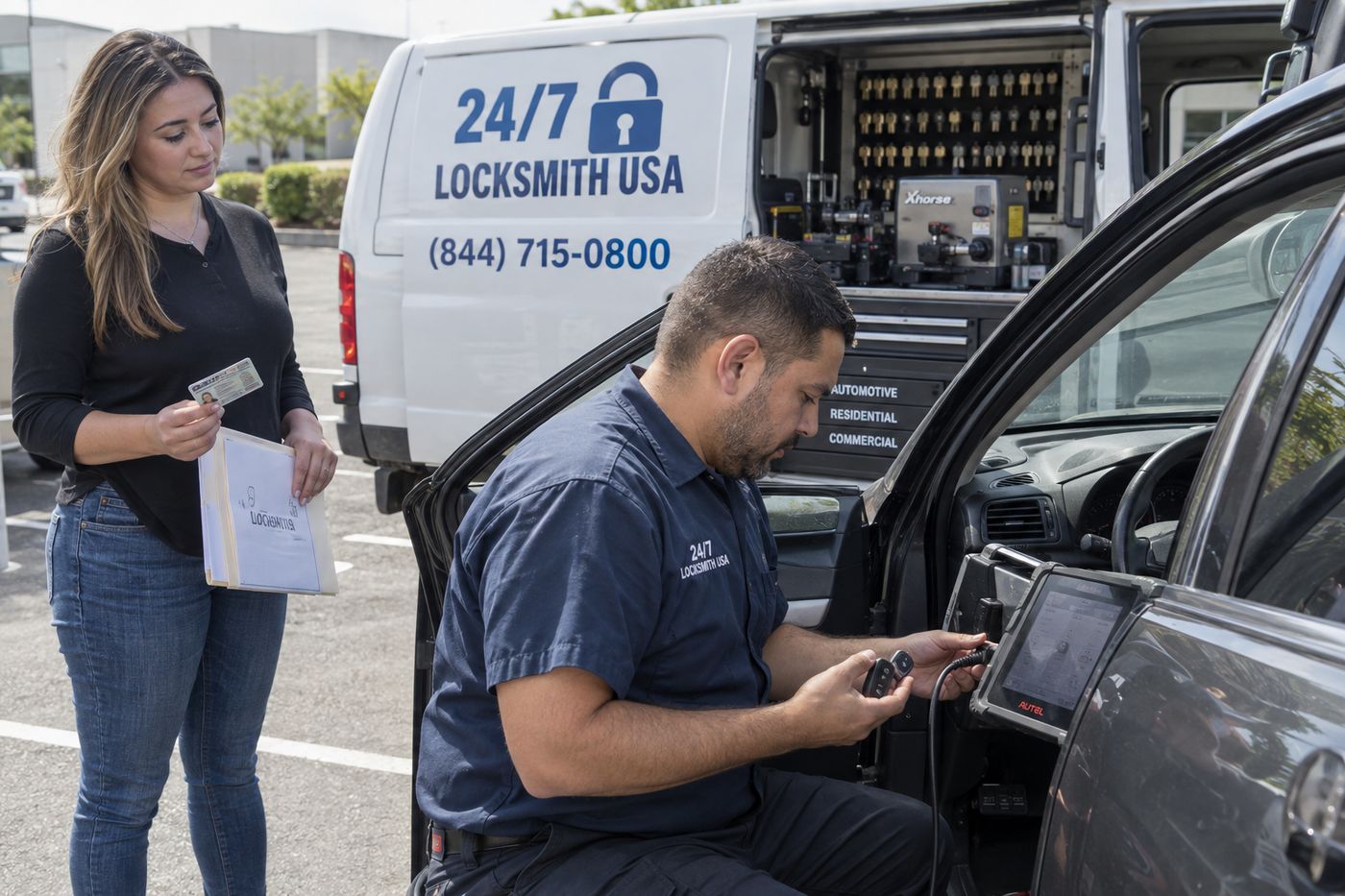
No working key anywhere in the party? We generate one from your VIN in the lot.
Remote & Key Fob Programming
New remotes paired to the car in a resort deck instead of a dealership service lane.
Water-Damaged Fob Replacement
Fob soaked on a flume ride or in a flooded row gets swapped and reprogrammed.
Push-to-Start Key Replacement
Proximity keys for late-model vehicles, handled curbside anywhere in Orange County.
Vehicle Lockout Assistance
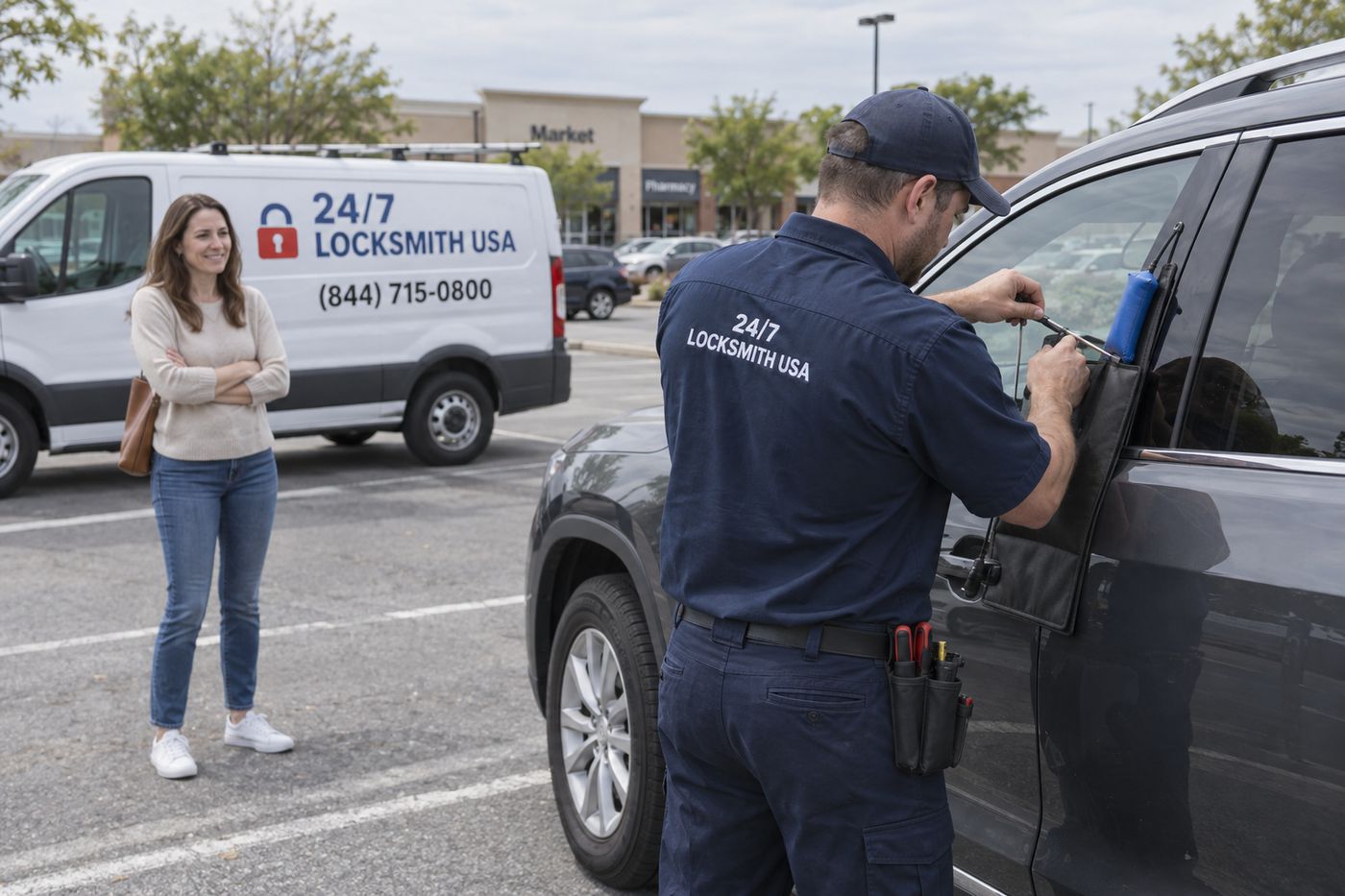
Keys visible on the seat at a park lot, and the door opened without damage.
Ignition Cylinder Service
A key that will turn halfway and stall gets a cylinder fix, not a tow to I-Drive.
Orlando lots and the keys they swallow.
Nobody loses keys the way visitors to Central Florida do. A pocket gets emptied on a water ride, a stroller basket gets unloaded in the wrong row, and by closing time the fob is in a lost-and-found bin at a park that shut two hours ago while the car waits in a numbered section nobody remembers. Tram rows at the Ticket and Transportation Center and the multi-level garages off Universal Boulevard swallow keys year round. Rental fleets out of MCO compound it, because a visiting family is handed exactly one key for a car they will drive for nine days, and the rental desk's answer is a replacement vehicle and a wasted afternoon of their vacation. Local drivers get hit differently: I-4 construction detours, hotel decks along International Drive and long-term staff lots mean cars sit unattended for full shifts. The afternoon storms that roll through every summer day soak a dropped fob in a flooded row before anyone circles back, and the same asphalt heat that softens shoe soles cracks key housings left on a dash. We come to the row you are standing in and make the key there.
Three kinds of drivers, three kinds of key trouble
Orlando has people who live in the area and drive the same car every day, people who commute in from elsewhere, and people who arrive for a short stay and drive something they do not own. Each group runs into key trouble in its own way. Residents tend to lose a single key after years of use. Commuters often leave a key in a jacket or a bag. Visitors are more likely to lock a rental car with the only key inside.
This page is general guidance for people in Orlando. It does not describe particular attractions, hotels, lots or garages, and nothing here means the company has worked at any specific place. The aim is to help you think clearly about your own situation, whichever group you belong to.
Before you phone, decide which group you fit, because it changes the first question. If the vehicle is yours, the process is about proving ownership and getting the right key made. If it is a rental, the rental company usually has to be involved, and a locksmith may be unable to make a new key without its approval. Knowing that in advance saves a frustrating round of calls.
There is also the question of what you are carrying. A visitor often has luggage, a phone with a dying battery, children and an unfamiliar road. Under those conditions a small problem feels huge. Take a moment to charge the phone if you can, move your family somewhere shaded and safe, and write the rental plate number and your location on a piece of paper. That small bit of order makes every later call shorter and clearer, whether you are talking to a rental desk, a roadside line or a locksmith.
If the car is a rental
A rental car belongs to the rental company, not to the person driving it. That has a direct effect on what a locksmith can do. Opening a locked rental is often possible, since a lockout does not change the vehicle's keys. Making a new key is different, because the technician needs authority from the owner of the car.
Start by reading the rental agreement and finding the roadside assistance number on the paperwork or key tag. Many rental contracts include a lockout service or a procedure for lost keys, and following it can protect you from extra charges. Our guide on rental car lockouts goes through the typical steps.
Tell the locksmith up front that the car is a rental and be ready to explain who authorized the work. A professional will ask. If a business is willing to program a key for a rental without any questions, that is not helpful, it is a warning about how they treat security in general.
Even when the rental company approves the work, it may prefer to send its own replacement car or use its own vendor. That can be the simplest outcome for a short trip. Ask what the rental company will cover, what it expects you to pay for, and whether a locksmith visit would complicate the agreement. Keep any receipt or reference number you are given, because disputes about damage or fees are much easier to settle when you have a record from the day it happened.
Heat, storms and the small electronics in your pocket
Central Florida has hot summers, frequent afternoon storms and humid air for much of the year. These conditions are hard on key fobs. A fob left in a hot car or on a sunny dash wears out sooner, rain finds its way into worn shells, and moisture slowly corrodes the battery contacts. The result is a fob that works on some days and not others.
If your fob has started acting up, do not ignore it. Intermittent behavior is the stage when a simple battery change can still solve things. Our page on how long key fob batteries last explains what affects battery life and what warning signs to watch for.
Water damage deserves special mention. If a fob goes through the wash or gets soaked in a downpour, remove the battery if you can, let it dry fully in the open and avoid pressing the buttons. Bring it along even if it seems dead, as the technician can often use it to identify the correct replacement.
Storms add one more habit worth building. When rain starts, people hurry into a building holding bags, umbrellas and phones, and keys slip out of pockets or get shut inside the car. Before you close the door, pat your pocket and look at the seat. It sounds almost too simple, but checking for the key at the moment the door shuts is the single most effective way to avoid a lockout on a wet, busy afternoon, and it costs you nothing but a second of attention.
What replacement actually involves, step by step
A replacement key has two parts to get right. The first is the physical part, meaning the cut of the blade if the key has one, or the correct emergency blade inside a smart key. The second is the electronic part, meaning the chip or radio signal the car must recognize. Either part can fail independently, which is why a key that looks perfect may still refuse to start the car.
The technician starts by confirming your ownership or authority, then uses the VIN to find the right key data for your exact vehicle. Next comes cutting, if needed, followed by programming the new key to the car's computer. The last step is to test everything, including the locks, the remote buttons and the engine start, before you accept the work.
This is not a process with a universal time limit. Some vehicles are straightforward and others need extra steps, so no honest dispatcher will promise a precise duration. The service page on car key replacement describes the full picture, and the guide on how car key programming works gives more of the background.
One detail surprises many people. A new key is not automatically accepted just because it is cut correctly. The car has to be told to trust it, and that introduction is the programming step. Without it, the key may open the door and turn in the ignition yet the engine will not run, because the immobilizer system keeps the fuel or starter disabled. That is a security feature, and it is the reason a hardware store copy of a modern key rarely works on its own.
Why the VIN and proof of ownership matter so much
A car key is more than a piece of metal. It is the thing that lets someone drive away with a vehicle worth many thousands of dollars. That is why professional locksmiths take identity and ownership checks seriously, and why you should be reassured, not annoyed, when you are asked for them.
You will usually be asked for photo identification and a document that ties you to the car, such as a registration or title. The VIN, printed on the dashboard near the windshield and on your paperwork, lets the technician look up the correct key. If you cannot easily reach the VIN, your registration or insurance card typically lists it.
Requirements vary, especially for leased, financed or company vehicles. The guide on leased and financed car keys explains what to expect. When in doubt, ask on the phone what to have ready, and have it in hand before the visit.
If you have recently bought the car, the paperwork may not yet match what the technician expects. A new title might still be in the mail, and a registration might show the previous owner. Bring the bill of sale, the temporary tag paperwork and any documents the seller gave you. Explain the situation plainly on the phone, and let the dispatcher tell you what is acceptable. Honest delays at this stage are far better than any shortcut around verification.
Lockouts in parking structures and crowded lots
Parking structures and busy lots add complications to a lockout. Space is tight, other vehicles move around you, and sometimes the operator has rules about who can work there. Before calling, check whether the structure has an attendant or a help desk, and ask whether there are any requirements for outside service providers.
If you are in a garage level with little signal, step toward an open area or ramp, where it is safe, so the call does not drop. Give your exact level or section in plain words, and mention anything a technician would need to know about reaching the car. Our troubleshooting page on being locked out in a parking garage explains the practical points.
Whatever the setting, keep yourself and your belongings safe. Do not leave a child or pet in a closed car, and do not stand between moving vehicles. If someone is in danger, call emergency services before anything else.
Think about lighting and visibility as well. A technician working in a dim corner of a structure needs space to set up and move around the door, and you may need to move your belongings away from the area. If the car is in a narrow spot, mention it, because it affects how the work is planned. After the door is open, take the key and put it in a pocket you will not forget, not on the roof or the hood where it can slide off.
Smart keys, push buttons and what they change
Many cars on Orlando roads now start with a push button and a key that stays in your pocket. These smart keys communicate with the car wirelessly. They are convenient, but they make replacement more specialized. The correct equipment and software are needed, and the process may include extra security steps depending on the brand.
If you own one, keep in mind that a hidden emergency blade inside the fob is meant for opening the door if the fob battery dies. Knowing where that blade sits and how to release it can save a stressful moment. The service page on smart key replacement covers what these jobs involve.
Smart keys also drain sooner than people expect, as they are constantly listening for the car. Keep a spare battery at home, and replace the battery at the first sign of weak response, not after it has failed completely.
If a smart key dies and you cannot start the car, most vehicles have a backup method, such as holding the fob against a marked spot on the dashboard or steering column. The manual shows where. This is a fallback for getting home, not a long term fix, so plan to replace the battery or the fob soon afterward. If neither helps, a technician can assess whether the fob has failed or needs to be paired again.
Buying time and avoiding bad calls
When you are stressed and standing in the sun, it is tempting to accept the first voice on the phone. Take thirty seconds to ask the right questions instead. Who is the company, what does the quote include, and what does the service call charge cover? Honest businesses answer plainly.
Be wary of a business that quotes an unrealistically low figure and then raises it on arrival, or one that refuses to say its name. The guide on locksmith scam warning signs lists the patterns to watch for, and it is worth a short read if you have never called one before.
You may always decline if the terms change. Walk away calmly, and call someone else. A good provider will not mind questions, and a poor one usually reveals itself in how it handles them.
Pay attention to the first thirty seconds of the call. A professional greets you with the business name, asks about the vehicle and your location, and explains the next step. A poor call tends to skip the name, talk over your questions or push you to decide immediately. You do not owe anyone an answer on the spot. Hang up, take a breath and ring someone else if the conversation feels wrong, because there is almost always another option.
Before you leave the scene
Once the work is finished, do not hurry away. Test every key you were given. Lock and unlock each door with the remote and with the blade if it has one, start the engine, turn it off and start it again, and try the trunk. If the technician made a spare, test that too. Problems found at the curb are simple to correct, while problems found a week later are much harder to explain.
Ask what was done and keep any paperwork. If old keys were erased from the car's memory, make sure you understand which keys still work. Count your keys and decide where each one will live. A spare belongs somewhere safe and dry, away from the main set, and not in the glove box or on a hook near the front door where anyone passing could take it.
Finally, think about what caused the problem and whether a small habit change would prevent a repeat. A key hook by the door, a bright key ring that is hard to miss, a spare given to someone you trust, or a calendar note to replace the fob battery each year are all small and effective. Most key emergencies are quiet failures that were visible for weeks beforehand.
Neighboring cities and the Florida overview
Central Florida drivers often travel between nearby cities, so a key problem might strike far from home. Similar guidance applies in Tampa and Jacksonville, each covered on its own page. For the wider picture, see the Florida service page.
When you are ready, call and describe the vehicle, your location and what happened. Have your identification, proof of ownership and VIN close, or the rental paperwork if it is a rental. Ask for the quote and the service call charge before dispatch.
If you are reading this before any trouble, take a few minutes to check your spare key, replace a weak fob battery and keep your documents somewhere you can reach even if the car is locked. A little preparation turns a bad day into a minor delay.
Common questions
Can a locksmith make a key for a rental car in Orlando?
It depends on authority. The rental company owns the car, so a technician generally needs its approval before making or programming a new key. Opening a locked rental is a separate matter and is often possible. Check your rental agreement for a roadside number first, and tell any locksmith up front that the vehicle is rented.
What information should I give when I call about a lost key?
Give your location in plain words, the make, model and year of the car, and what happened, whether the key is lost, broken or locked inside. Mention if the vehicle has a push button start. Have your identification, proof of ownership and VIN ready so ownership can be checked before any key is made.
My fob works only some of the time. Is it failing?
Intermittent response often means a weakening battery, which heat and humidity make more likely. Try a fresh battery first, since it is simple and inexpensive. If the problem continues, the fob could be damaged or out of sync with the car, which is where programming or a replacement fob enters the picture.
Will a locksmith ask me for ID even for a lockout?
Yes, usually. Opening a car for someone who is not the owner is a real risk, so a responsible technician confirms that the vehicle is yours or that you have authority over it. Expect to be asked for photo identification and some tie to the car. Requirements can vary, so ask what to have ready.
Is programming a key something I can do at home?
Some vehicles have owner procedures described in their manuals, but many require professional equipment that connects to the car's computer. Even where a home procedure exists, it usually needs working keys already. If you have lost every key, you will almost certainly need a technician to create a new one.
How can I tell whether a quote is honest?
Ask what it includes, whether the service call charge is separate, and whether anything could change once the technician sees the car. An honest business explains each part patiently. Be cautious if the figure seems unusually low, if the company name is vague, or if the terms shift when the technician arrives.