
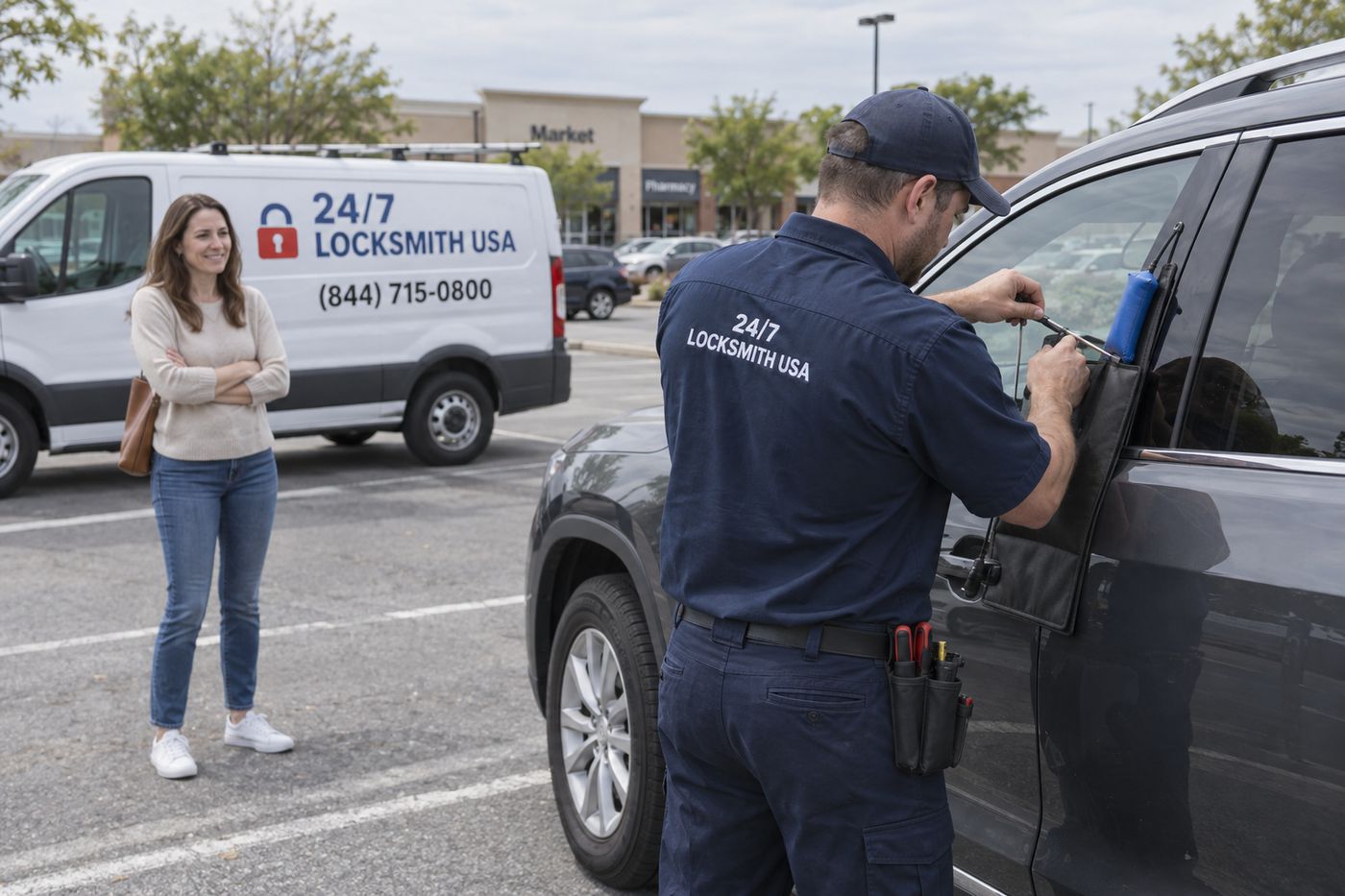
What we handle in Winter Garden.
One mobile team across Winter Garden, residential, automotive and commercial.
Marine & Dock Hardware
Corrosion-resistant cylinders and padlocks for boats, dock boxes and waterfront storage.
Historic & Period Hardware
Mortise locks and original hardware serviced rather than ripped out of a period door.
Impact Door & Storm Hardware
Multipoint locks and hardware on impact-rated doors adjusted, repaired or replaced.
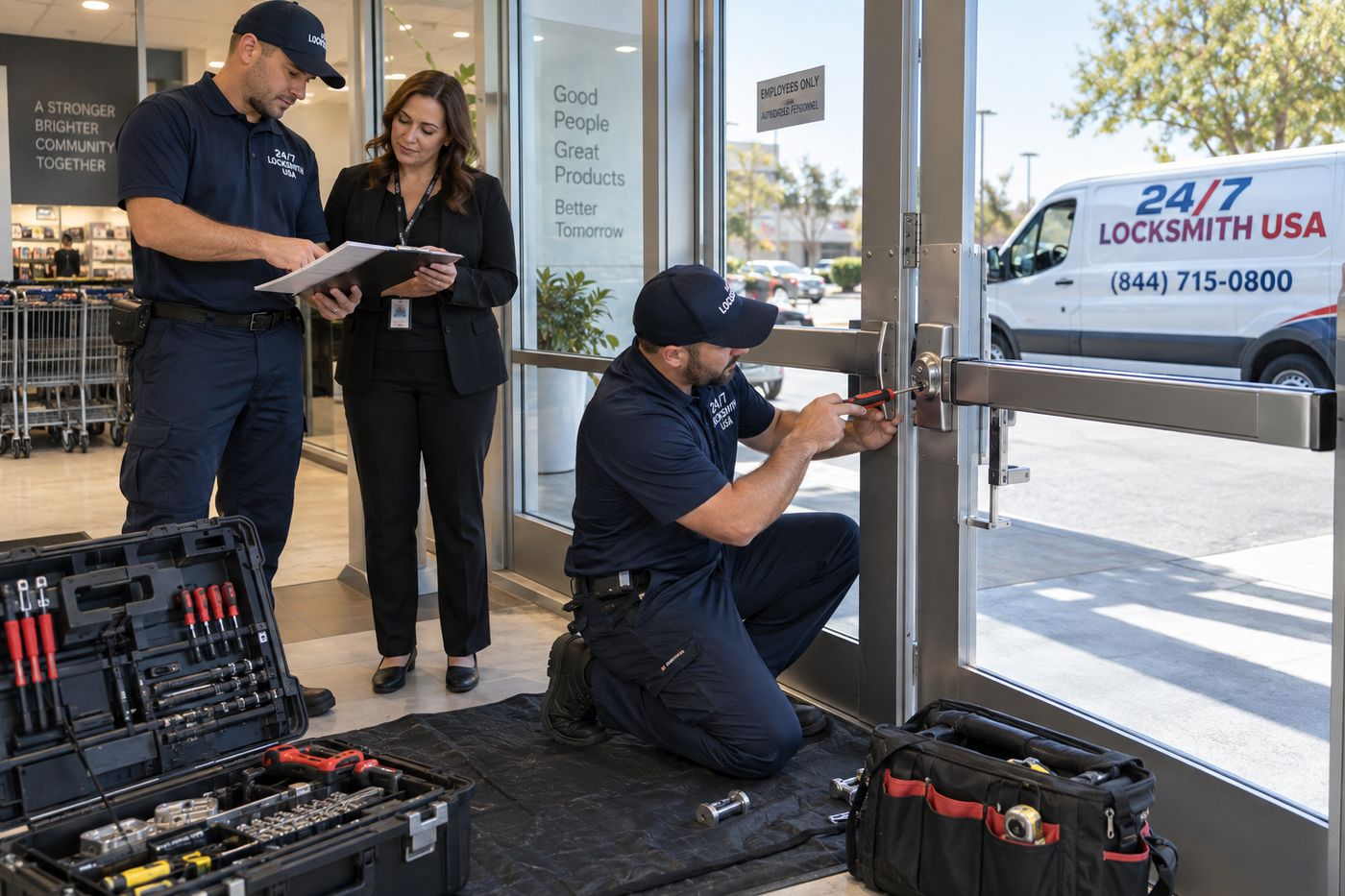
Commercial Door Hardware
Storefront locks, exit devices, closers and mortise cylinders serviced or replaced.
High-Security Cylinders
Medeco and Mul-T-Lock cylinders for doors that need genuine key control rather than hardware-store pins.
Safe Opening & Servicing
Locked-out safes opened, and re-combinated where the model allows it.
Locks in Winter Garden: what actually goes wrong.
Winter Garden splits into two distinct building stocks with two different failure patterns. The Plant Street Historic District downtown holds early-1900s storefronts and bungalows, some still on original mortise hardware, where the Garden Theatre and the Central Florida Railroad Museum anchor a walkable core with narrow original door frames. South of State Road 50 and out toward Hamlin, large master-planned subdivisions built since the 2000s on former citrus groves run mostly on standard builder-grade cylinders and smart-lock retrofits, and those go through more mechanical failures per year simply because there are more of them. West Orange Trail cuts through downtown, and the businesses that back onto it get a steady stream of rear-door and gate hardware calls that storefront-facing shops on Plant Street do not.
A suburban city with its own lock habits
Central Florida cities like Winter Garden tend to be made of single family homes, townhouses, apartments, and small businesses, all sharing the same roads and the same weather. That mix shapes the kinds of lock and key problems people run into. A family with three drivers and a minivan has a very different key situation from a retiree with one car and a deadbolt that has not been touched in years.
This page is general guidance for people in Winter Garden. It is not a record of local history, and it does not claim anything about particular streets, subdivisions, or past service visits. Rules that apply to your neighborhood, such as what an owners association allows on a front door, vary and should be confirmed with the people who set them.
What follows is meant to be read in about the time it takes to wait for a ride or a return call. It covers how to think about a lockout, what a technician needs to hear, how car keys differ, and how to decide between rekeying and replacing. None of it is a promise about price, schedule, or arrival time, because those depend on the job.
Moving into a house that already has keys in the world
When you buy or rent a home, you receive the keys you were handed, but you rarely know how many copies exist. Builders, agents, previous owners, painters, cleaners, and relatives may each have held one. That is not an accusation, it is just arithmetic. A lock that opens for a dozen unknown people gives you a smaller sense of control than you might assume.
The simple fix is to rekey. A technician changes the internal pins of your existing locks so that every old key stops working and a new set takes over. The doors, handles, and deadbolts stay the same, and everyone you actually trust gets a fresh copy. Our lock rekey service page describes the process in plain steps and how it differs from swapping hardware.
If you are in the middle of a move, our moving day lock and key checklist sets out what to do before the truck arrives and after the last box lands. Beyond locks, a new owner can walk the property once at dusk and once in daylight, looking at which doors are visible from the street, which windows have working latches, and whether outdoor lighting covers the entrances. Habits matter as much as hardware: a door that is always closed but never locked offers little, and a spare key hidden in an obvious spot offers less. Small, steady routines make a house harder to ignore without any cost beyond a few minutes each week.
- Count how many keys you received and ask whether other copies exist.
- Rekey exterior locks soon after you take possession.
- Check that garage entry doors and side gates latch fully.
- Give spare keys only to people you trust, and keep a record of who has one.
- Look at door frames and strike plates for cracks or loose screws.
What to say when you call about a lockout
A calm, specific call makes everything smoother. Start with where you are and what is locked: the front door of a house, the driver door of a car, a side gate, or an office. Say whether you can see the keys, whether the engine is running, and whether anyone is waiting inside who cannot get out or needs help. Those details tell the dispatcher how serious the situation is.
Then say what you have for proof. For a house, that may be a lease, a utility bill, or photo identification that matches the address. For a car, it is the registration or title and an identification card. Ownership or authority is checked before a door is opened, and this is a protection for you, since it stops a stranger from asking for access to your home or vehicle.
Finally, ask about the quote and the service call charge. A fair operator gives a figure or a range by phone and explains what the call charge covers before dispatching. If you are told that the price can only be given after arrival with no explanation, pause and ask why. The guide on the service call charge explains the usual meaning of that term.
Cars, keys, and a house full of drivers
Households in suburban areas often run several cars, and every one of them comes with its own key, fob, and quirks. When one key is lost, it is tempting to treat it as a small annoyance, but a lost key to a modern car can be a bigger task than it seems. A transponder key or smart key has to be introduced to the vehicle's computer, and that normally begins with the vehicle identification number and proof that the car is yours.
The paperwork question comes up often, so it helps to know the answer ahead of time. Our short guide, do you need proof of ownership for a car key, explains what is normally asked and why. Having the registration in your glove box is not enough if the keys are locked in that same car, so photograph your documents and keep the images on your phone.
For the basic job, see car key replacement, which sets out how the work generally runs from the call to the finished key. If you still have a working key and want another, spare car key programming is the easier path, and it spares you the harder situation of starting over with no key at all.
Fobs, remotes, and the batteries inside them
A key fob that stops responding is usually a battery question first and a programming question second. Coin cell batteries wear down gradually, and the symptom is often a shorter working range or an occasional failure to unlock. Replace the battery and test the fob while standing beside the car. If the remote still does nothing, the fob may have lost its connection to the vehicle or may be physically damaged.
Heat plays a role in central Florida. Fobs left in a car parked in the sun can suffer, since plastic cases warp and adhesive weakens. A cracked case may let moisture and dust in, which in turn corrodes the small contacts. Keep the fob in a pocket or bag rather than on the dashboard, and consider a plain protective cover if the case already looks worn.
When a fob needs to be introduced to the car again, the process is called programming, and it depends on the vehicle. Some models allow a short owner procedure, while many need a technician's equipment. Read about key fob programming for the usual options, and have your vehicle identification number and ownership paperwork ready so there are no delays.
Smart locks and the problems that come with them
Many new homes now come with an electronic deadbolt or a keypad, and many owners add one later. They are convenient, because you can give a family member a code and cancel it later, and you stop worrying about where the key is. They also bring their own failures: dead batteries, a keypad that stops responding, or a door that no longer lines up with the bolt.
Before you decide a smart lock has failed, check the simple things. Fresh batteries come first, since weak batteries cause the strangest behavior. Then look at whether the door has shifted, because a bolt that scrapes the strike plate makes a motor strain. If the batteries are fresh and the bolt moves freely by hand, the fault may sit in the keypad or motor, and that is the point to stop troubleshooting and ask for help. Do not pry the lock apart, since opening the casing often leaves the lock harder to repair and rarely reveals anything you can fix at the doorstep.
If you are thinking about installing one, remember that the lock is only part of the system. The door, the frame, and a backup way in all matter. Read our overview of smart lock installation to see what a good installation includes, and keep a mechanical key somewhere safe in case the electronics ever fail. Think too about who will use the lock. Children, guests, and house sitters all need a way in, and a code that is easy to share is also easy to forget to cancel, so make a habit of reviewing codes after each visitor leaves.
Weather, humidity, and storm season
Heat and humidity do slow damage to hardware. Hinges squeak, latches stiffen, and keyways collect grit and moisture. A lock that is stiff after a rainy stretch usually needs cleaning or replacement rather than force. Use a dry graphite style lubricant if you use anything at all, and avoid soaking a keyway in thick oil, which attracts dirt and makes the problem return.
Storm season brings a second set of concerns. Wind and water can swell a door, bend a strike plate, or loosen a handle set. After a severe storm, test every exterior door before you assume the house is secure, and be careful with doors that are swollen or jammed. Trying to force one can damage the frame and leave you with a much bigger repair than a single lock. Look and listen first: if a door scrapes on the floor, rubs the frame, or needs a shoulder to close, it is the door that needs attention, and a new lock will not cure it. Keep children and pets clear of any door you are working on, and never stand under something that looks ready to fall.
Before a storm, gather your important documents and spare keys in one place you can carry. Photograph vehicle titles and registrations, and store copies away from the house. If you are not sure what else to prepare, the Florida overview on the Florida page collects general notes that apply across the state.
Rekey, repair, or replace
People often ask whether they should replace a lock or simply have it rekeyed. The honest answer depends on the hardware. A solid deadbolt that turns smoothly and sits tight in a sound door is a good candidate for rekeying. A loose, rusted, or worn lock gains little from a new set of pins, and replacement is the better choice.
Think about what you are protecting against. If the worry is a lost key or an unknown number of copies, rekeying addresses it. If the worry is a forced entry, then the door, the frame, and the strike plate matter more than the cylinder. A technician can look at the whole entry and tell you where the weak point is, which is often not where you expected.
Cost is a fair concern, but it is better to compare it with what the repair prevents. A lock that fails in the middle of the night or a door that cannot be secured after a storm costs more in trouble than a planned repair. Ask for the reasoning behind each recommendation, and do not agree to replace something only because someone told you to. It is also fair to ask whether a repair can wait. Some problems, like a handle that feels slightly loose, can be scheduled calmly, while others, like a door that will not lock at all, deserve attention before nightfall. Knowing which group you are in lets you spend your effort where it counts.
Choosing who to call
Picking a locksmith under stress is risky, because the people who answer search results are not all the same. Warning signs include a business name that changes between ads, a refusal to explain the call charge, and a quote that jumps once someone arrives. The guide on how to spot a fake locksmith describes these signs in plain terms.
Good behavior is easier to describe. The operator listens, asks what lock or car is involved, explains how the quote works, and checks that you are entitled to ask for the work. The technician explains what they are doing before they start, and does not pressure you into a larger job than the problem needs. If any of that is missing, you are allowed to end the call and try again.
Write down the answers you receive, even in a short note on your phone, including the name given, the figure quoted, and what that figure was said to cover. If the person on the doorstep does not match what you were told on the phone, you can pause and ask. Reasonable professionals expect this and respond calmly. It also helps to confirm who will be arriving, so you can recognize them when they do.
Nearby cities and the wider region
Winter Garden sits among many other Florida cities that share the same weather and similar housing. If you also have family or work in the area, our general guidance for Orlando and Clermont follows the same plain approach and may apply to your situation as well.
If you want a bigger picture of every kind of work, the services overview lists each service in one place. It is a useful way to find the right page if you are unsure whether your problem is a lockout, a repair, a rekey, or a car key job.
As a last word, this page is informational only. It does not promise any price, schedule, or outcome, and it does not describe work done in any specific neighborhood. When you are ready, call, describe the situation, and ask for the quote and the call charge before anyone is sent.
Common questions
Should I rekey the locks when I move into a house?
It is a sensible step. You usually cannot know how many copies of the original keys exist, since builders, agents, and former occupants may all have held one. Rekeying changes the internal pins so old keys stop working, and it keeps your existing hardware. A technician can check that the locks are in good enough shape to rekey.
What does a technician need to hear on the phone?
Where you are, what is locked, and whether any person, animal, or running engine is involved. For a car, give the make, model, and year. For a house, expect to be asked how you can show that you live there. Those details let the dispatcher explain the quote and the service call charge before anyone is sent.
Why does a car key need proof of ownership?
Programming a key to a car gives someone full control over starting it, so it must go to the right person. Technicians normally ask for registration or title and identification. This protects you if someone else tries to make a key to your vehicle. Photos of your documents on your phone can help.
My key fob stopped working. Is it the battery?
Often, yes. A weak coin cell battery causes shorter range and intermittent response, so replacing it is the first thing to try. If the fob still does nothing, it may need to be programmed again or may be damaged. Heat and moisture can also shorten a fob's life, so keep it out of hot dashboards.
Can a smart lock fail even with new batteries?
Yes. A door that has shifted can make the bolt drag against the strike plate, which strains the motor and gives false failures. Keypads can also wear or lose their settings. Check alignment, fresh batteries, and the manual first, and keep a mechanical key as a backup in case the electronics stop responding.
How do I avoid being overcharged during a lockout?
Ask for the quote and the service call charge explanation before anyone is dispatched. Be wary of vague answers, a changing business name, or a figure that jumps once someone arrives. Ask the technician to explain any added work before it begins, and do not agree to replace hardware that only needed to be opened.