
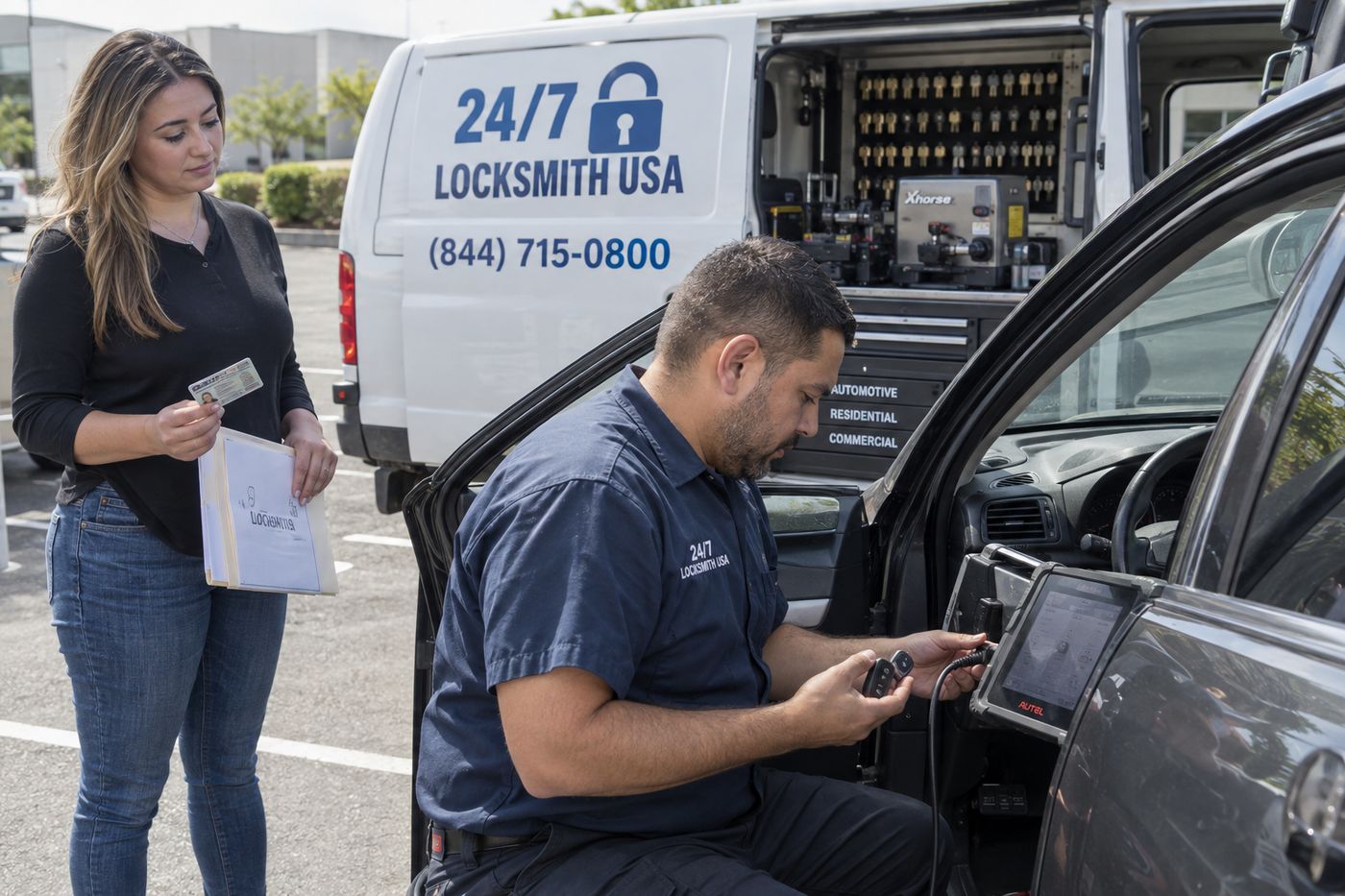
Import and Luxury Key Work
Encrypted proximity systems, collector vehicles and valet losses, all handled where the car is parked.
European Import Key Coding
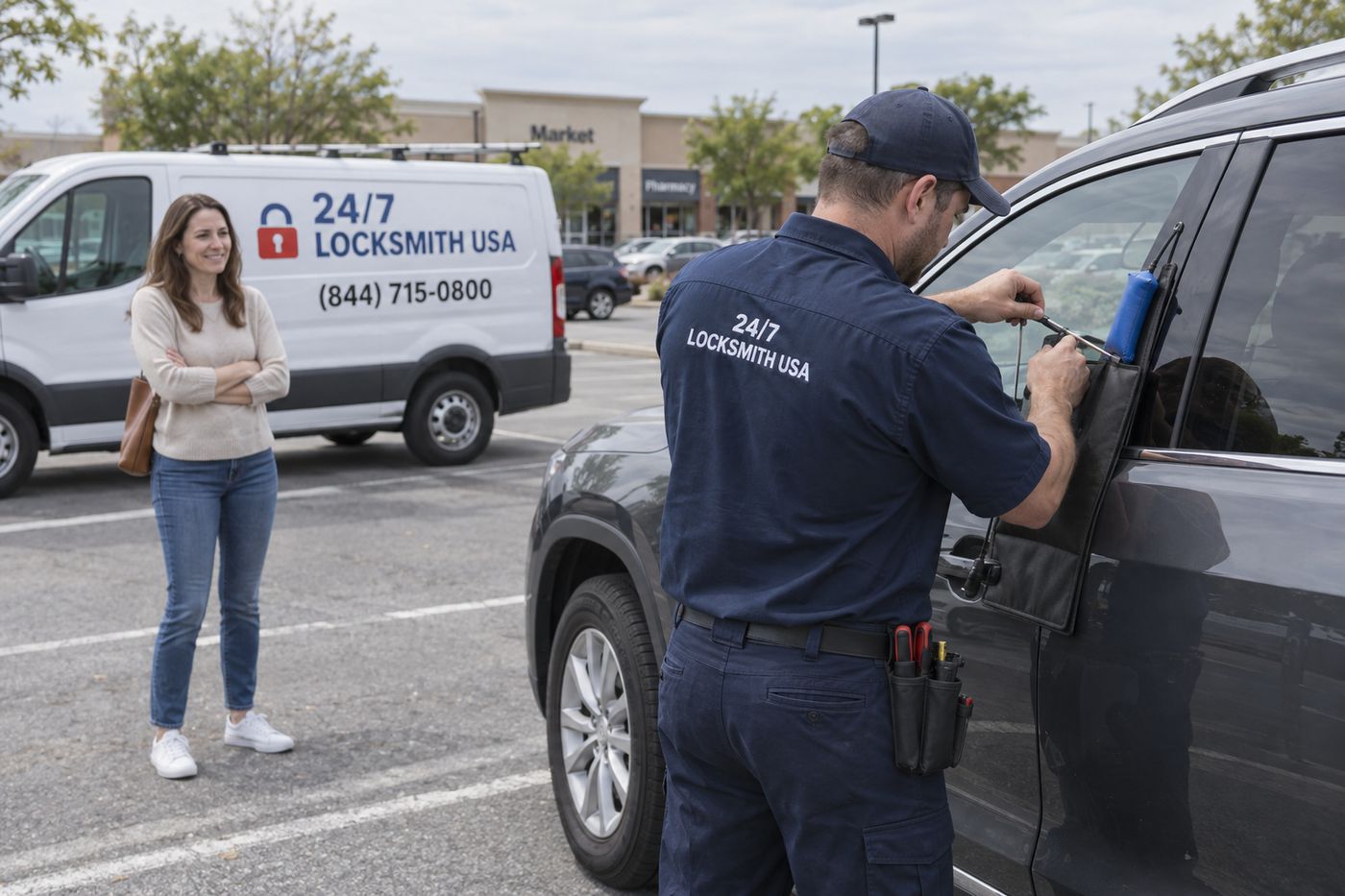
German and British marques with encrypted key systems are handled with equipment that speaks their security protocol.
Valet Stand Recovery Calls
A key that vanished during an Old Town evening is replaced at the podium so the car does not sit there until morning.
Proximity Key Replacement
Keyless-entry sedans and SUVs in Gainey Ranch and McCormick Ranch are paired without leaving the garage.
Low Clearance Garage Service
Vehicles that cannot clear a flatbed or a parking structure height bar get worked on exactly where they sit.
Collector and Classic Vehicle Keys
Older mechanical locks on show cars around WestWorld are keyed without cutting into original hardware.
Corporate Fleet Key Management
Airpark-based fleets that sit between trips get spare keys coded and accounted for before the next departure.
Scottsdale Vehicles, Valets and Garages
Scottsdale is a proximity key city. The garages in DC Ranch, Troon North and Grayhawk hold German and British marques whose keys are cryptographically tied to the car and cannot be handled with generic tooling. When one of those goes missing, the owner is usually told the car has to be transported to a dealer, which is a genuine problem when the vehicle is low-slung, valuable and sitting in a resort garage where a flatbed does not fit under the clearance bar. The other Scottsdale factor is how many hands a key passes through. Old Town restaurants, the golf resorts and the event venues all run valet, so keys move between drivers, podium boards and pockets all evening. Keys get pocketed, dropped in a landscaped bed or driven home by someone else. Auction week around WestWorld multiplies that, with transport crews and collectors moving unfamiliar vehicles through temporary lots. Scottsdale Airpark adds a corporate fleet whose cars sit for days between trips. Across all of it, the practical answer is the same: bring the programming equipment to the car where it is parked, rather than moving an expensive vehicle across the city to sit in a queue.
The key in your pocket is really a small computer
A modern smart key does far more than turn a lock. It holds a coded identity, exchanges signals with the car, and lets you unlock doors and start the engine without pulling it out of your pocket. That convenience depends on a small battery, a radio, a chip and a case that holds them together, and any one of those can fail.
This page is general guidance for drivers in Scottsdale. It does not describe particular streets, resorts, lots or buildings, and it makes no claims about the company's history in the area. It is meant to help you think clearly about your own vehicle and the options in front of you.
When a smart key fails, the pattern often looks strange. The car may unlock but not start. The dashboard may say key not detected while the fob sits on the seat. The remote may work from a distance one day and only when pressed against the door the next. Describing exactly what happens, in plain words, is the most valuable thing you can do before calling.
Try to notice whether the problem is with the fob, the car or both. If a spare fob works normally, the first one is the likely culprit. If neither fob works, the car's receiver, its battery or a software fault may be involved. Even a rough sense of which side the trouble lies on lets a technician choose the right equipment, and it prevents wasted effort on a part that was never the problem.
Desert sun and the electronics around you
Arizona sun is hard on small electronics. A fob left on a dashboard, in a cup holder or in a bag in a hot trunk is exposed to temperatures that cases and batteries were never designed for. Over time the case cracks, buttons stick, and the battery loses strength long before its expected life.
The simplest protection is to keep your keys out of direct sun. A pocket, a shaded console or a purse is far kinder than a dash. If you notice that your fob has started to respond slowly, or that you have to stand closer to the car, replace the battery. Our guide on changing a key fob battery explains the usual steps.
If a fresh battery does not restore normal behavior, the fob may have been damaged or may have lost its pairing with the car. That is where programming comes in, and it is a different job from simply swapping a battery. A technician can check which problem you have and tell you plainly.
Keep an eye on the plastic too. A fob that has been dropped on hard pavement or squeezed in a pocket may have a hairline crack that lets in dust and moisture. Replacement shells exist for some models, and moving the electronics into a new shell can restore a worn fob. Ask the technician whether that is an option for yours. It is not right for every case, but it can be a sensible alternative to replacing the whole unit.
Higher end cars and why they need extra care
Luxury and European vehicles often have more elaborate key systems. They may use encrypted codes, require dealer level software or need special blanks that are not widely stocked. That does not mean a mobile technician cannot help. It means you should describe your car precisely and ask whether your specific model can be handled on site.
Our guide on luxury car key replacement explains why these keys cost more effort and what questions to ask. Some models have waiting periods for parts, or require the vehicle to be present, so it pays to ask at the start instead of discovering a delay later.
Be honest with yourself about what you need. If the car is covered by a manufacturer program or a service plan, check what it includes before you spend money elsewhere. If it is not, a mobile locksmith and a dealership are both reasonable options, and the comparison on dealership versus locksmith keys sets out the tradeoffs.
If you collect or drive an older classic, treat it separately. Older cars may use plain mechanical keys, unusual blanks or ignition designs that are no longer produced, and the work can be more about careful cutting than about programming. Mention the year and model clearly, and ask whether the technician has experience with that type of vehicle before agreeing to a visit. Honesty about what can and cannot be done on site is a mark of a good provider.
Smart key replacement, step by step
Replacing a smart key starts with proving that you are entitled to the vehicle. A technician will ask for photo identification and a document tied to the car, such as a registration or title, along with the VIN. These checks are the same whether the car is modest or extravagant. If anything, the more valuable the vehicle, the more careful a responsible professional should be.
Next the technician identifies the correct key for your exact make, model and year, prepares or supplies it and programs it to the car. Some systems require every existing key to be present, and some allow the car to be told to forget lost keys. The test at the end covers locks, remote buttons, push start and the emergency blade.
The service page on smart key replacement describes the work in more detail, and the guide on types of car keys helps you work out which kind you have.
Ask the technician what happens to the old keys. On some cars a lost key can be removed from the system so it will never start the car again, which matters if it might be in the wrong hands. On others, that is not possible, or it requires every remaining key to be reprogrammed together. Knowing this in advance lets you plan, and it is a fair question to ask before work begins.
Spare keys: the calm option
If you still hold a working key, now is the easiest time to add a spare. Copying from a key the car already knows is simpler than creating one from nothing. It also gives you time to ask questions, compare options and choose a convenient time, without the pressure of a stranded vehicle.
Think about how many keys you actually need. Many households benefit from one spare held at home and one with a trusted person. If several people drive the car, each should know where the spare lives. If you share a vehicle with a partner, agree on who keeps what, and test every key after it is made.
The page on spare car key programming explains how an extra key is added to a car. If you split your year between two places, leave a spare with someone reliable at each, so that a lost key does not become a long distance problem.
Test every key you own once in a while. Lock and unlock all doors, open the trunk, start the engine and shut it off. It takes a few minutes, and it tells you whether the spare still works, whether the battery is healthy and whether the buttons respond properly. A spare that has sat in a drawer for years may have a dead battery or may have lost its pairing, and you want to learn that on a quiet day.
Lockouts and the push button trap
Smart keys create a particular kind of lockout. Because the car senses the key nearby, it is easy to leave the fob in a bag, step out, close the door and walk away, only for the car to lock behind you. Some vehicles warn you with a beep, but the beep is easy to miss. Others lock themselves if a door stays shut for a period of time.
If you are locked out, check every door and the trunk first. Check whether a spare is reachable. Think about whether your insurance or roadside plan includes lockout help. If a child or animal is in the car, call emergency services immediately, because heat builds rapidly in a closed vehicle.
A technician opens the vehicle with specialized tools and without improvised methods. We do not explain techniques here, and we advise against using any tool of your own. The service page on car lockout service explains the process.
While you wait, stay in the shade and away from traffic, and keep your documents and phone with you. If you are in a lot with a gate or an attendant, tell them what is happening, since they may need to let a technician in. Give the dispatcher a landmark that is easy to describe in plain words, such as a nearby sign or a level number, rather than an address you are guessing at.
When the car says no key detected
One of the most frustrating messages is the one telling you that the key cannot be found when the fob is in your hand. Common causes include a weak battery, interference from another electronic device, a damaged fob or a problem in the car's own receiver.
Try the simple fixes. Move other electronic items, such as phones, away from the fob. Try holding the fob against the start button or the spot your manual describes. Replace the battery. If the car still refuses, mention the message to the technician, since it points in a specific direction.
Do not keep trying to start a car repeatedly if it will not respond, as repeated attempts do not help and can drain the vehicle battery. Our troubleshooting page on a flashing immobilizer light explains what the warning lights mean.
If the fob battery is the suspect, remember that many smart keys include a spot where the car can read a nearly dead fob. It is often a marked area on the console, the steering column or beside the start button. Your manual shows where. Using that backup is meant to get you home, not to replace a repair, so arrange a new battery or a replacement soon afterward, before the fob stops working entirely.
Commercial and shared vehicles
Scottsdale has businesses of every size, and many run vehicles that several employees drive. When a key goes missing in that setting, the person on the scene is often not the owner. A locksmith will want confirmation from someone with authority, and that is a good thing, because it protects the business.
Keeping a short record of who holds which key helps. So does keeping spares in a secure place that a manager can reach. Our service page on fleet locksmith service describes what is involved when several vehicles are in play.
For a single vehicle, the same habits apply on a smaller scale. A labeled spare in a safe place, and a clear rule about who may request a replacement, avoids confusion on a busy day.
Vehicles such as vans, trucks, trailers and recreational units often carry keys of several different kinds, from ordinary chip keys to older mechanical ones. Keep a list of what each vehicle uses and where the spares are stored. When something goes wrong, the dispatcher can ask the right questions at once, and the technician arrives prepared. That kind of simple organization saves hours of lost work.
Honest quotes and the service call charge
Ask for a quote by phone. Ask what the service call charge covers. Ask whether anything could change on site. A reputable business answers plainly. If the answers are vague, or the figure shifts when the technician arrives, you have every right to decline and call another provider.
No honest dispatcher promises an exact arrival time before knowing where you are and what the conditions are. Treat precise promises made in the first seconds of a call with caution. Our guide to the service call charge covers the terminology.
Keep a note of the business name, what you were told and who you spoke to. If the technician arrives in a vehicle or uniform that does not match the business you called, ask politely before any work begins.
When the work is done, ask for a plain explanation of what was done and what was changed. If keys were added or removed from the car's memory, make sure you know which ones still work. Test everything before the technician leaves, and keep any paperwork you are given. A professional is glad to walk through this with you, since it avoids misunderstandings and builds confidence in the result.
Nearby cities and the Arizona overview
Valley drivers cross city lines constantly. The same general guidance appears on the pages for Phoenix and Mesa, and the Arizona service page gives the wider view.
When you are ready, call and describe the vehicle, your location and what happened. Have identification, proof of ownership and the VIN ready, and ask for the quote and the service call charge before dispatch.
If you are reading ahead of time, make a spare, test it, replace a weak fob battery and keep your keys out of the sun. A few calm minutes now can save a frustrating afternoon.
Keep photos of your registration, insurance card and the VIN on your phone, and share them with a trusted person. If a key problem strikes while your phone is locked inside the car, that person can read the details to a dispatcher for you. It is a small bit of preparation that turns a stranded afternoon into a manageable errand, and it costs nothing but a few minutes.
Finally, treat early symptoms as useful information. A fob that responds slowly, a start button that sometimes needs two presses or a door that occasionally refuses to unlock is telling you something. Acting on those signs, while the key still works, almost always means a calmer and simpler visit than waiting for a complete failure.
Common questions
Can a mobile locksmith replace a smart key for a luxury car?
Often yes, though it depends on the make, model and year. Some systems need special equipment or parts that take time to source. Describe your vehicle fully when you call and ask whether your model can be handled on site. Proof of ownership and the VIN are required either way.
Why does my car say the key is not detected?
Common causes are a weak fob battery, interference from another device, a damaged fob or a fault in the car's receiver. Try a fresh battery and hold the fob against the start button or the spot your manual shows. If the message persists, mention it to the technician.
Is it better to add a spare now or wait until I lose a key?
Adding a spare while you still have a working key is simpler, calmer and easier to schedule. The car already knows the original, so the process starts from a position of strength. Waiting until every key is lost makes the job longer and more involved.
How do I avoid locking a smart key inside the car?
Make it a habit to check for the fob before you shut the door, and keep it in a pocket rather than a bag. Do not rely on a beep as a warning. If your car locks itself after a period, learn how that feature behaves so it does not surprise you.
Will the locksmith ask for proof even for an expensive car?
Yes, and the more valuable the vehicle, the more carefully a responsible professional should check. Expect to show photo identification and a document tied to the car, along with the VIN. Requirements vary in some cases, so ask on the phone what to have ready.
What should I do if the quote changes on arrival?
You may decline politely and call another provider. Before dispatch, ask what the quote includes, what the service call charge covers and whether anything could change. Keep a note of the business name and what you were told, so that you can point to it if needed.