Start with your safety and the safety of anyone with you
Before anything else, make sure everyone is safe. If a child, a pet or any person is locked inside a vehicle, or if the vehicle is running in an enclosed space, call 911 first. Emergency crews have the tools and the priority to get people out quickly. A locksmith visit is not the right first call in those situations.
If the situation is simply an inconvenience, such as lost keys or a locked door, take a moment to think about where you are. A dark, empty lot, a roadside shoulder or a busy intersection can all be uncomfortable or unsafe places to wait. If you can move yourself to a better spot, do it. Store entrances, lobbies, gas station forecourts and well lit parking areas are better places to meet a technician than a lonely corner.
If you are alone, tell someone where you are and what is happening. A quick text to a friend or family member is enough. Share the business name you are expecting and the time of your call. It is a simple precaution that costs nothing and gives you a safety net.
Choose a good meeting spot for a car
If the work involves a vehicle, the ideal spot is flat, open and out of traffic. A technician needs room to open doors and to work around the vehicle. Parallel parking on a busy street is workable but harder. Narrow garage bays or tight parking structures can limit how doors open and where equipment can be placed.
If the vehicle cannot be moved, tell the dispatcher exactly where it is. Give the address, the nearest cross street and any detail that helps a stranger find it, such as the level of a parking structure, the section of a lot or a landmark. If the lot is gated or requires a pass, mention it and say whether you can let the technician in.
If the vehicle is at your workplace or in a building controlled by a landlord, check whether a service vehicle may enter. A property manager can sometimes arrange a pass. A quick message to the front desk can prevent a delay once the technician arrives.
- Flat, open space with room to open every door.
- Away from fast traffic and tight turns.
- Good lighting if it is evening or night.
- Clear directions for gates, levels and landmarks.
Choose a good meeting spot for a home or business
For a house, apartment or office, the practical issues are different. The technician needs to reach the door, so clear the path. Move bikes, planters, packages and pets out of the way. If the door is at the end of a long hall or behind a security gate, say so in advance.
For apartments, think about the building rules. Some landlords require that any lock work be approved, and some keep a master key or hold a record of the locks. Our page on apartment and landlord locksmith service explains how that tends to work. If the landlord must be present, arrange that before the visit.
For a business, plan for customers and staff. If the door is part of a storefront, think about when the work will cause the least disruption and whether the store needs to be secured in the meantime. Our page on storefront lockout covers the specific issues.
Gather your ID and paperwork
A responsible locksmith will confirm that the person asking for service has the right to it. For a car, that means photo ID and some proof tied to the vehicle, such as registration, title or an insurance card. For a home, that means ID showing the address, a lease, a utility bill or a similar record. For a business, it means ID and an authorization from the owner or manager.
If your papers are locked inside, look for another form of proof. A photo of the registration on your phone, an email from your insurer or a lease saved in your documents can help. Our page on proof of ownership for a car key goes into more detail on what is typically accepted.
Keep your ID in your hand or pocket rather than in a bag that might be locked in the car. If you can, also have the VIN ready. Our guide on how to find your VIN explains where to look.
Set up for the work itself
Think about what the technician will need. For a vehicle, clear any items on the seats and dashboard that might get in the way, if you can reach them. Move pets and children to a safe spot away from the vehicle. If the car is parked next to another, ask whether there is room to open the doors fully.
For a lock on a door, remove anything that blocks access, including doormats and decorations. Make sure the area is lit. Keep pets away from the entrance, since a door that is open while a technician works can be an escape route.
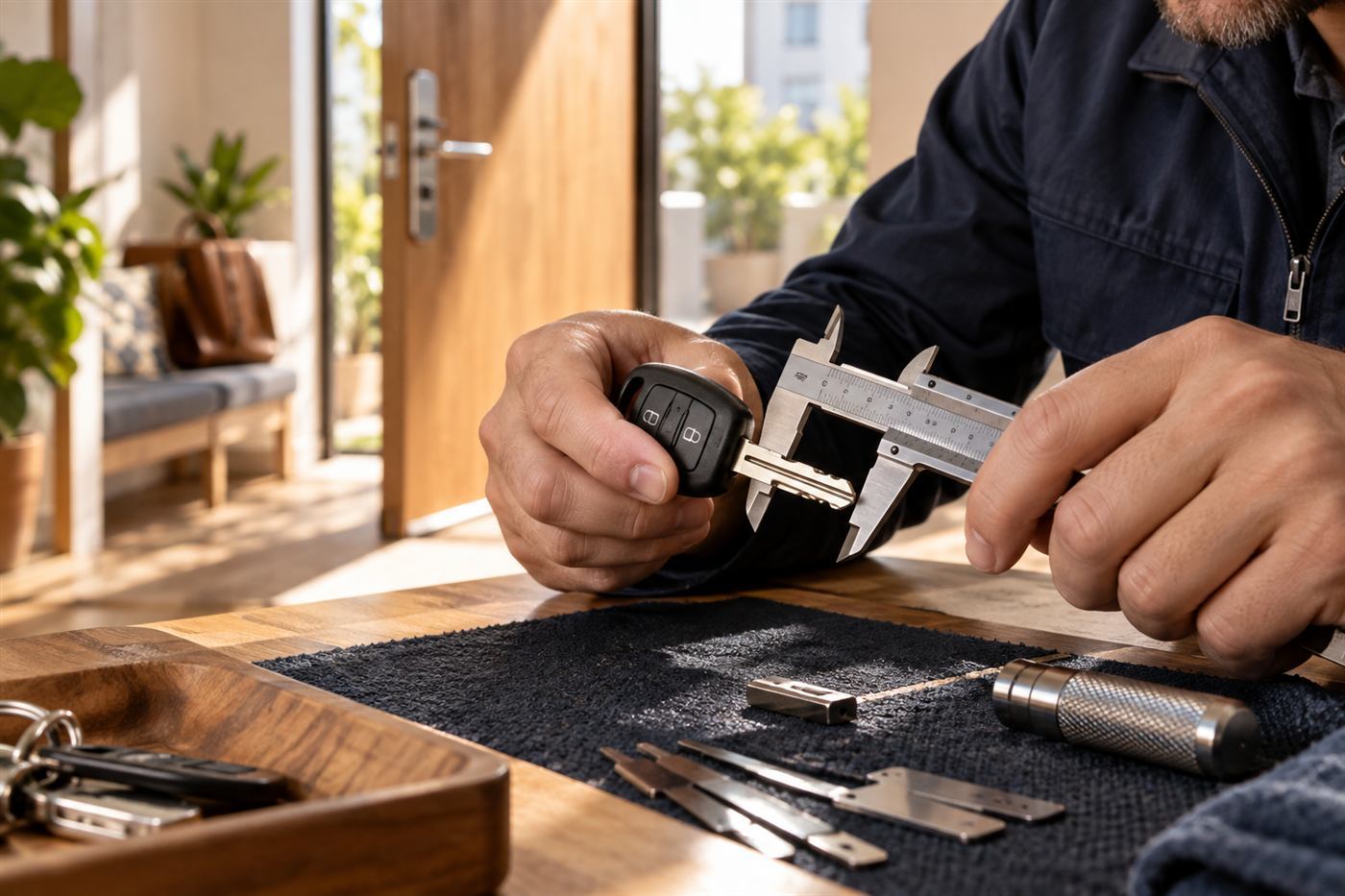
If you have any keys at all, bring them out. Even a damaged or worn key can help. A broken half, an old copy or a key that works only sometimes can give the technician information about the blank and the cuts. Place them where you can hand them over, rather than leaving them in a pocket of the locked car.
Know what the call covers and what the visit will cover
Before anyone is sent, the dispatcher should explain the service call charge and how the final quote will be handled. Quotes are given only by phone. Some jobs can be priced from the details you give, while complicated ones need a technician to see the vehicle or lock before a firm figure can be given. If the quote changes on site, a technician should explain why before beginning work.
Ask what the technician will bring and whether they will have the right parts for your vehicle. If your situation involves a smart key or an all keys lost case, ask whether anything extra may be needed. Our page on service call charges explained clarifies what that charge covers.
Do not feel rushed. If the answers are vague or the dispatcher will not tell you how the quote works, you can hang up and try someone else. A calm, plain explanation is a good sign.
Questions worth asking on the phone
A short list of questions keeps you in control. You do not need to ask all of them, but the first few matter most. Ask for the business name and whether it matches what the technician will show on arrival. Ask whether the technician will carry identification and whether they will confirm your ID and paperwork. Ask how the service call charge works and whether it is explained before work starts.
- What is the name of the business, and will the technician show identification on arrival?
- What is the service call charge, and what does it cover?
- How will the final quote be given, and can I decline if it does not suit me?
- Will the technician bring the correct key blank and tools for my vehicle?
- What proof of ownership or residence will be needed?
- What forms of payment are accepted?
When the technician arrives
Greet them and ask for identification. A reputable technician expects this. Compare the business name on the ID or vehicle with the name given on the phone. If the name differs without a clear reason, ask why before allowing any work. Our guide on how to spot a fake locksmith explains the warning signs.
Confirm the quote before work begins. Ask the technician to explain what they will do and what could change the plan. If the job is more involved than expected, ask for the reason and decide whether to proceed. You always have the right to say no to an unclear change.
Watch from a reasonable distance and ask questions. A good technician will explain steps in plain language. Keep your ID and paperwork handy and be ready to show them when asked. Do not leave valuables in the vehicle or at the door while strangers work, and do not leave the property unattended during the job.
Weather, time of day and other practical details
Conditions affect the visit. In heavy rain, a covered spot such as a garage entry or a canopy makes the work easier for everyone and protects electronics. In summer heat, stay in shade with water and avoid waiting in a closed car. In cold weather, find a warm spot indoors if you can, since you may be waiting a while, and a technician can meet you there.
At night, lighting and visibility matter more. Choose a place with working lights, cameras or other people nearby. If you are asked to meet somewhere unusual, say so to the dispatcher and ask whether a safer spot is possible. Arrival times are never promised, since traffic, weather and other calls all play a part, but you can ask the dispatcher for an honest idea of what to expect.
Keep your phone charged and keep the line open. A technician may need to call you for directions, and you may need to reach someone while you wait. If your battery is low, a portable charger or a wall outlet in a nearby shop can help. Silence unneeded notifications so you do not miss the call.
After the work is done
Test everything before the technician leaves. For a car, try every key you have, start the engine, lock and unlock with the remote and open the trunk or tailgate. For a door, turn the key several times, test the latch and check that the door closes smoothly.
Ask for a written receipt that shows the business name, the work done and the amount paid. Keep it with your records. If you need to make an insurance claim or have a later problem, that receipt will matter. Also ask how to contact the business if something does not work as expected after the visit.
If a lost or stolen key was involved, ask about erasing the old one. And if you have a spare now, store it somewhere safe that is not in the vehicle. Our page on how to avoid locking keys in your car offers more habits that help.
If you are ready to get started, call the number on this page. We will ask where you are, what happened and what you have, and we will explain the service call charge before anyone is sent.
Questions people ask
Do I need to be present for the whole visit?
Yes, in almost every case. A technician needs to confirm ID and ownership, explain the work and confirm the result with you. For a vehicle or a home, you should be there from start to finish. If you cannot be, ask the dispatcher what authorization is acceptable, since a responsible shop will not work without clear permission.
What if I do not have my ID because it is locked inside?
Tell the dispatcher when you call. Other forms of proof may help, such as photos of documents on your phone, a digital license or a person who can vouch with documents. A technician will explain what they can accept. Be cautious of anyone who offers to skip identity checks entirely.
Should I wait inside the car or outside?
If the car is safe to sit in and you are in a well lit, populated spot, either is fine. If you are in an unsafe place, move to a safer one, such as a lobby or store entrance, and tell the dispatcher. Never wait in a running car in an enclosed space, and call 911 if anyone is in danger.
Can I ask the technician to show a business card or ID?
Yes, and you should. A professional expects the request. Check that the name on the ID or vehicle matches the business you called. If it does not, or if the person cannot explain the difference, you can decline the work. The service call charge and policies should have been explained on the phone beforehand.
What if the quote changes when the technician arrives?
Quotes are given by phone, and complicated jobs can need an on-site look. If the technician revises the plan, ask for the reason in plain words. You can accept, ask questions or decline. A change should come from something specific the technician found, not from pressure or vague explanations.
Should I tip or pay in cash?
Ask which forms of payment are accepted when you call. Be wary of any request for cash only, especially if it comes as a surprise at the door. A written receipt showing the business name and the work done is a good practice whatever payment form you use.
Describe the situation by phone and we will tell you what the job involves. Quotes are given by phone. Jobs that cannot be quoted without seeing them need a technician on site, and the service call charge is explained on the phone before anyone is dispatched.
(844) 715-0800Related pages
Written by Claude (AI) (AI) for 24/7 Locksmith USA.