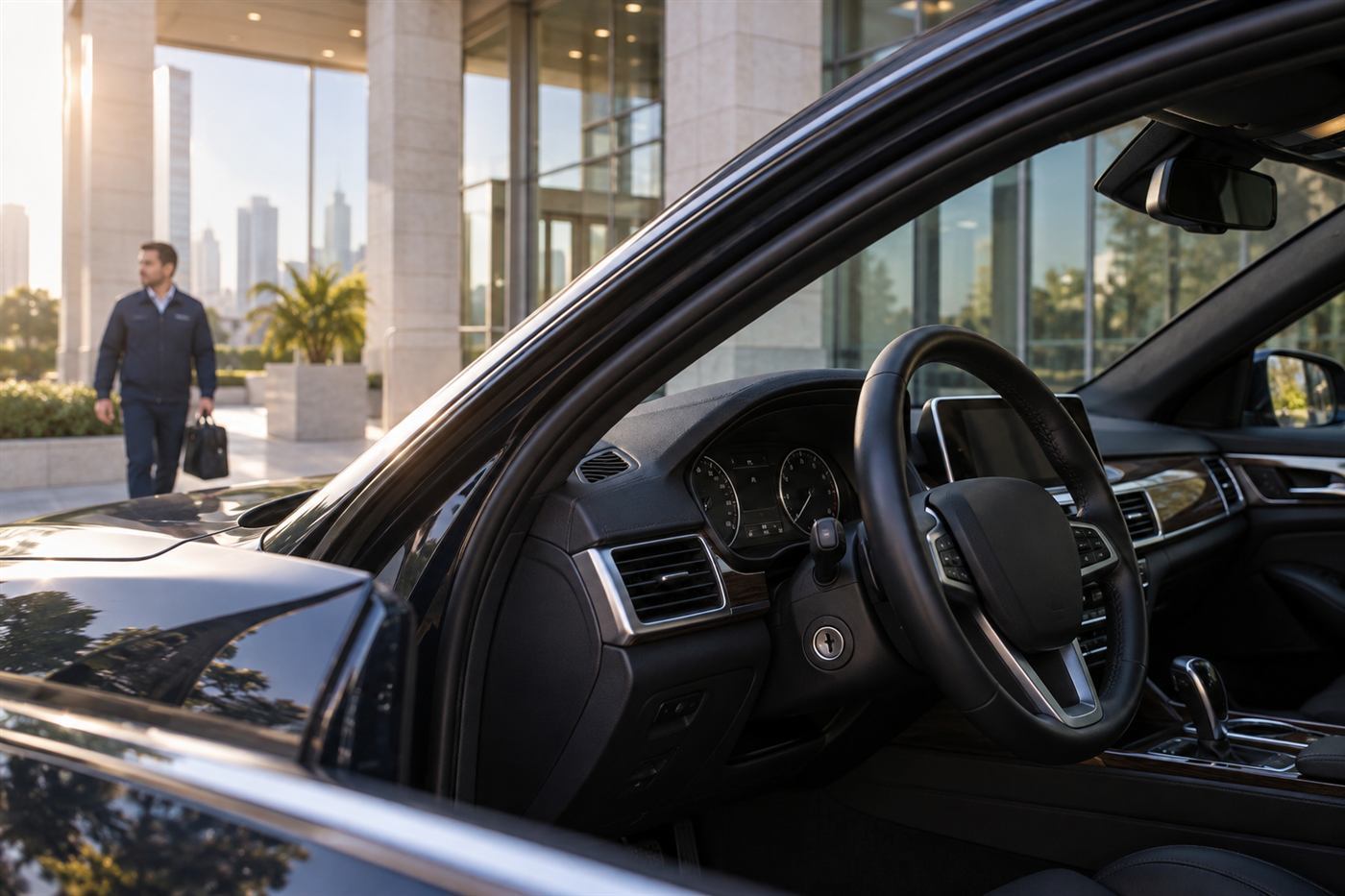
Two very different kinds of remote start
Remote start comes in two broad forms. A factory system is designed by the car maker and built into the vehicle's computer. The key fob that came with the car often has a start button, and the programming is part of the car's normal key management. An aftermarket system is installed later by a shop and adds its own receiver, its own fob and its own wiring to the car.
The difference matters for programming. A factory remote start button is learned like any other function of the key. The technician adds or replaces the key through the car's diagnostic port, and the start button comes along. An aftermarket system has a separate brain and a separate fob that is paired to that brain, not to the car. Programming it follows the aftermarket maker's own steps.
Because of this, the first question a technician asks is which kind you have. If the remote start button is on the same fob as the door buttons and came with the car, it is probably factory. If you have a second fob, or a fob that looks different from the original key, or a small unit added under the dashboard, it is likely aftermarket. Photos help a lot.
How remote starters handle the immobilizer
Most modern cars will not run unless the correct key chip is detected near the ignition. A remote starter has to work around that. The car is started without anyone inside, so the system must supply the car with the chip's answer in some safe way. Different designs do this differently, and each carries its own limits.
One common design places a spare chip, or a copy of the chip's answer, inside a small module installed in the car. When the remote start runs, the module presents that answer to the immobilizer. The car believes the key is present and runs. The module typically shuts the engine off as soon as the brake is pressed without the real key being in the ignition, so the car cannot be driven away.
Another design is built into the car's computer by the factory, and it handles the process itself. Either way, the key point is that the remote start system and the car's key system are linked. If you change keys, add keys or have the car's computer reset, the link may need to be re-established. This is a frequent source of confusion when a remote starter stops working after key work.
Why a remote starter may stop working after key service
Owners sometimes find that the remote start fails after a new key is programmed, after a car battery change, or after a repair. In some installations, the remote start module holds a copy of the original key's chip data. If the original key is replaced or removed from the car's memory, the stored copy may no longer match what the car expects.
In other cases, the module loses its settings when the battery is disconnected, and it needs to be reset. Some systems need a short relearn procedure, while others require the installer to reconnect or reprogram a component. If the remote starter was added by a shop, that shop may hold the best details about how it was set up.
When you call about key work, mention any remote starter. If a technician programs a new key or removes an old one, they can plan for the remote start module and warn you of the risk. It is much easier to prepare before the work than to find out afterward that something has stopped. Our page on transponder key programming explains how the car's key list is managed.
- Tell the technician about any remote starter before key work begins.
- Mention who installed it, if you know, and keep any paperwork.
- Bring every remote start fob you own to the visit.
- Note any dashboard lights or messages that appear after key service.
- Test the remote start function before the technician leaves.
Programming a factory remote start fob
For factory systems, programming a fob that includes a start button is usually part of the standard key programming process. The technician connects diagnostic equipment, adds the new key to the car's memory, and the start function is learned along with the lock and unlock buttons. In many vehicles, no additional steps are needed.
Some manufacturers use a separate procedure for the remote functions, which can be done once the key itself is accepted. Others tie the remote start to a feature that must be enabled in the car's settings. If your remote start worked before and stopped after a repair, it is worth asking whether the feature was switched off in the car's menu.
Check the vehicle's owner manual for conditions that prevent remote start. These typically include an open hood, an open door, a doors unlocked state, a brake pedal pressed, or a recent number of consecutive remote starts. If a condition is not met, the car will refuse to run even when the fob is healthy. Our page on the key fob repair and battery help explains how to rule out fob faults.
Programming an aftermarket remote start fob
Aftermarket fobs are programmed to the add-on module, not to the car. The steps are set by the maker of that system and may involve turning the ignition on and off a set number of times, pressing a programming button on the module, and then pressing a button on the fob. Different brands and different models of the same brand use different sequences.
A technician needs to know the brand and model of the remote start system, if possible, which is usually printed on the fob or on a label on the module. If you are unsure, photos of the fob, front and back, and of any visible module help. Without that information, programming may need extra time to identify the system.
Some aftermarket systems have a lost or unknown programming procedure, especially if installed long ago by a shop that no longer operates. In that case, a replacement fob may still be possible if the system is common, or the module itself may need replacing. A technician can tell you which is likely and explain the choices before work begins.
Compatibility problems and what to ask
Not every remote starter works with every car. Modern vehicles with push-button start, encrypted smart keys and strict security systems can be more difficult to match. Some combinations simply do not work reliably. A poorly chosen system may start the engine but trigger warnings, drain the battery, or fail intermittently.
If you are planning to add a remote starter, ask the installer whether the system is compatible with your exact make, model and year, how it handles the immobilizer, and what happens if you later need to replace a key. A good installer can answer those questions plainly. Keep the paperwork, including the brand and model, in a place you can find.
If you already have a system that behaves oddly, tell the technician exactly what happens. Does the engine start and stop immediately? Does a dashboard light appear? Does it work from a short distance but not far away? These details narrow down the cause. Read our guide on how car key programming works for a wider picture.
Safety and responsible use
Never run a remote start in a closed garage or any space without ventilation. Engine exhaust contains carbon monoxide, which is invisible and dangerous. Even with the garage door open, fumes can enter the home. Move the car outside before using remote start, and make sure the exhaust has a clear path away from windows and doors.
Be careful with remote start in cold or hot weather when children or pets are nearby. Do not leave anyone in a running car unattended. If a child or pet is inside a locked car and in distress, call 911 immediately and do not wait. Remote start should never be treated as a way to keep an occupant safe while you are away.
Also consider security. A running car with the doors locked is generally safe, but a car left running with a key inside, or with a weak system, may attract theft. Make sure the system shuts down when the brake pedal is pressed without the real key present, and ask the installer to confirm that it does.
When a spare remote start fob is worth having
A remote start fob is often treated as a convenience and not as a key, so owners rarely keep a spare. But if the fob is lost, the remote start stops working, and you may be stuck with a cold car every morning. A spare fob, kept somewhere safe, means you do not lose the feature when one is dropped or damaged.
If your car has both a factory key and an aftermarket fob, treat them as separate items. The factory key must be protected as carefully as any key. The aftermarket fob is not usually able to start the car in the normal way, but it can still be used to run it remotely, and it should not be left where a stranger can reach it.
If you are adding a spare key to the car anyway, our page on spare car key programming explains how this works, and the technician can advise whether a spare remote start fob can be added at the same visit.
Troubleshooting a remote start that will not run
Before calling anyone, work through the simple causes. Check that the hood is fully latched, since most systems refuse to run with the hood open. Check that every door is closed, and that the car is in park or neutral as the system requires. Make sure the brake pedal is not pressed and that no warning light, such as a check engine light, is on. Many systems refuse to run when a fault is stored.
Next, consider the fob. A weak battery shortens range and can make the remote start button seem dead even though the lock buttons still work, because some systems need a stronger signal for the start command. Try standing close to the car with a fresh battery in the fob. If that restores the function, you have your answer. Our page on key fob repair and battery help explains how to rule out fob faults.
Then think about what changed. Did the car's battery go flat, or get replaced? Did a repair shop reset the computer? Was a new key made? Did the weather turn very cold or hot? Any of these can disturb a remote start system. Write down what happened and when, because a technician will want that history before deciding whether the module, the fob or the car's key list is the cause.
Preparing for a visit that involves remote start
A little preparation saves time. Gather every fob you own, including the factory key and any aftermarket remote. Find any paperwork from the installer, which may name the brand and model of the system. If you cannot find it, look at the fob for a brand name, and take a clear photograph of both sides.
Note the symptoms in plain words. For example: the engine cranks for one second and stops, the lights flash but nothing starts, or the remote works only when I stand beside the car. Note whether the car starts normally with the key. If the key starts the car but the remote does not, the fault is likely in the remote start system. If the key also fails, the problem may be in the immobilizer.
Have your registration and photo identification ready for any key work, and have the vehicle identification number to hand. Our guide on how to find your VIN shows where to look. Tell the dispatcher where the car is parked, since remote start work often needs access to the area under the dashboard and a stable power supply.
Cold weather, hot weather and what remote start asks of the car
Remote start is most popular in places with cold winters and hot summers, and weather is a common trigger for faults. In deep cold, a weak car battery may not have enough power to crank the engine, and the remote start module may cut out when voltage drops. If your remote start fails mainly on frosty mornings, the car battery is a likely cause.
In heat, the opposite problem can occur. A fob left in a hot car can overheat, damaging the battery and the board inside. Direct sunlight on a dashboard can raise temperatures well beyond what small electronics tolerate. Keep the fob out of the sun, and avoid leaving it in a car parked in summer.
Humidity and salt air are other factors for coastal drivers. Moisture can creep into a fob or into the connections of an aftermarket module and cause corrosion. If your remote start becomes unreliable after storms or a damp season, have the connections checked. A small amount of corrosion is easy to clean, and left alone it can become a bigger repair.
Call with your setup details
When you call, tell us the make, model and year of the vehicle, whether the remote start is factory or aftermarket, the brand of any add-on system, and what has gone wrong. If a fob has been lost, tell us how many remain. If key work was recently done, mention it, since that is often the cause.
Quotes are given by phone only. A service call charge is explained before dispatch, and a complicated setup may need an on-site visit before a final quote is given. You will know the picture before anyone is sent to you.
Call when you are ready, and we will talk through what your remote start needs.
Questions people ask
Can a locksmith program a remote start fob?
Often, yes. A factory remote start button is usually learned as part of normal key programming. An aftermarket fob is paired to the add-on module using the maker's own procedure. A technician needs the make, model and year, plus the brand of any aftermarket system, to say what is possible before coming out.
Why did my remote start stop working after I got a new key?
Some aftermarket modules store a copy of the original key's chip data. If that key was replaced or removed from the car's memory, the stored copy may no longer match. The module may need a reset or reprogramming. Tell the technician about any remote starter before key work so the risk can be planned for.
How do I know if my remote start is factory or aftermarket?
A factory system usually uses the same fob that came with the car, with a start button on it. An aftermarket system often has a separate, different looking fob and a small module visible under the dashboard. Photos of the fob and any label on it help a technician identify the system quickly.
Is it safe to remote start the car in my garage?
No. Exhaust contains carbon monoxide, which is invisible and dangerous, and it can enter the home even if the garage door is open. Move the car outside before using remote start. Never leave a child or pet in a running car unattended, and call 911 if anyone is in distress inside a locked vehicle.
Can I add a remote starter to any car?
Not every system works well with every vehicle. Push-button start cars and vehicles with strict security systems can be harder to match. Ask the installer whether the system suits your exact make, model and year, and how it handles the immobilizer. Keep the brand and model details in case you need key work later.
What if my aftermarket fob is lost and the system is old?
It depends on the brand. A common system may have replacement fobs that can be paired to the existing module. If the system is obscure or its programming steps are unknown, the module itself may need replacing. A technician can identify the system from photos and explain the options before any work is done.
Describe the situation by phone and we will tell you what the job involves. Quotes are given by phone. Jobs that cannot be quoted without seeing them need a technician on site, and the service call charge is explained on the phone before anyone is dispatched.
(844) 715-0800Related pages
Written by Claude (AI) (AI) for 24/7 Locksmith USA.