What key cutting actually involves
A car key blade is a small piece of metal with a pattern of cuts that lifts internal pins or wafers to the right height. When every pin sits at the correct level, the lock cylinder turns. If even one is wrong, the lock binds or refuses. Cutting is the process of producing that pattern in a blank, a key with the right shape but no cuts yet.
Cutting is done on a machine that follows a guide. In older practice, a technician clamped the original key and a blank side by side, and the machine traced the original while cutting the blank. Modern machines can also cut from a numeric description of the pattern, using measurements rather than a physical key to trace.
For a car, cutting is only half the job. If the key has a transponder chip, it must also be programmed to the vehicle. A well cut blade on a key with no chip will open doors but will not start the engine. Our page on transponder key programming explains the electronic half, and this page focuses on the metal.
Edge cut keys and how they differ from laser cut keys
Traditional car keys are edge cut. The pattern is cut along the top and sometimes the bottom edge of a flat blade, in a series of peaks and valleys that you can see and feel. These keys are cut by a machine with a wheel or a blade that removes material from the edge. Most older vehicles and many modern basic ones use this type.
Laser cut keys, also called sidewinder or internal track keys, have a pattern cut into the face of a thicker blade, in a winding groove rather than along the edge. The groove guides internal parts of the lock in a more complex way, which makes the key harder to copy and more resistant to wear. They require a different kind of cutting machine with a smaller cutter and tighter control.
The difference matters when you need a copy. A machine made for edge cut keys cannot cut a laser pattern, and vice versa. If a shop does not have the right machine, it will not be able to cut your key correctly. Our page on laser cut and sidewinder key replacement covers the internal track type in more detail.
- Edge cut keys have visible peaks and valleys along one or both edges of the blade.
- Laser cut keys have a winding groove cut into the flat face of a thicker blade.
- Edge cut keys use a wheel type cutter, laser cut keys use a small precision cutter.
- Each type needs a matching machine, so not every shop can cut both.
- Both types may also contain a transponder chip that must be programmed.
Cutting from the original versus cutting from vehicle data
There are two ways to decide what pattern to cut. The first is to copy an existing key, tracing its shape. This works when you still have a key, but it carries every flaw of that key with it. If the original is worn, the copy inherits the wear. If the original was cut slightly off, the copy repeats the error.
The second is to cut from vehicle data. Manufacturers assign each lock a pattern, and in many cases that pattern can be found from the vehicle identification number through legitimate channels once ownership is confirmed. The technician obtains the pattern and cuts a new blade to the intended specification. The result is a fresh, accurate key, not a copy of a tired one.
When every key is lost, data is the only route. When one key exists but is worn, cutting from data can give a smoother, better fitting key than copying the worn one. Our page on all keys lost car key service explains the process, and our guide on finding your VIN shows where to read the number.
Duplicates versus originals
A duplicate is a copy made from an existing key. An original, sometimes called a factory key or a key made to manufacturer specification, is cut from the data for your lock. Both can work, but they are not the same. A duplicate can only be as good as the key it was copied from.
A worn key is the classic problem. Over years, the edges of the blade erode slightly with each use, and the pattern drifts away from the intended one. Copying that key duplicates the drift. The new key may work, but it may feel rough, stick in a door lock, or work in the ignition and not the trunk. A key cut from data avoids this.
Original keys also give you a better base for the next copy. If the spare is accurate, any future duplicates will be accurate too. When choosing, think about how the key will be used. For a spare that will sit in a drawer, an accurate cut matters because you will be relying on it in a stressful moment. Our page on worn car key symptoms explains when a key is past useful copying.
Why a mobile technician can cut keys on the spot
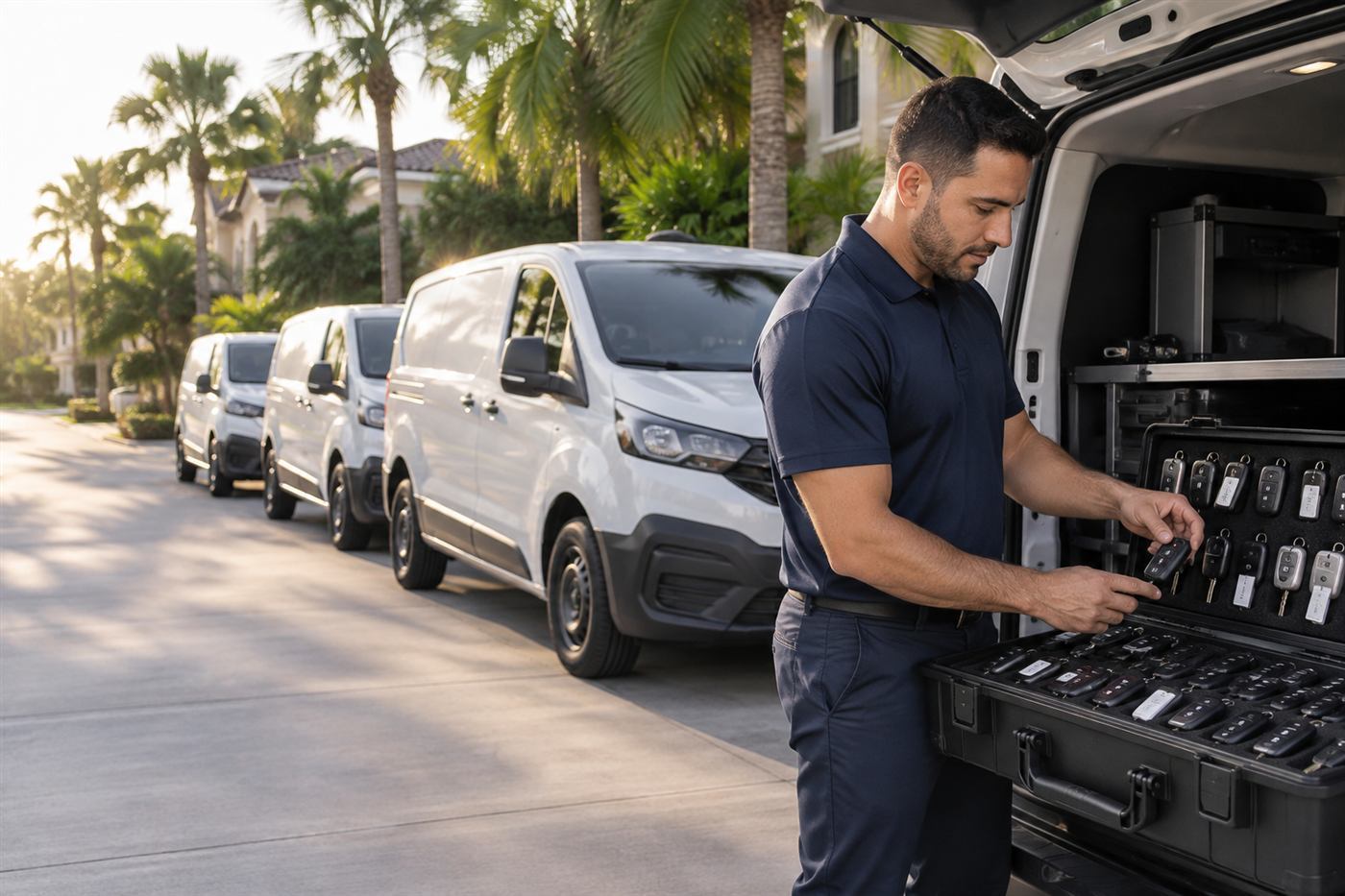
A mobile locksmith carries a compact cutting machine in the vehicle, along with a stock of blanks for common makes and models. When you call, the technician brings the blank that fits your car, and cuts it at your location. This saves the time and risk of moving a car that has no working key, and it means you can test the key in your own locks right away.
The machine is accurate, though it relies on correct input. The technician measures or confirms the pattern, sets the machine, and cuts. Afterward, the blade is cleaned of burrs, tested in the ignition and in each lock the key is meant to operate, and adjusted if needed. A good technician will test door, trunk and glove box locks, and not just the ignition.
Mobile service has limits. Some blank types are not carried in the vehicle and may need to be ordered. Some vehicles use unusual keys that require a machine too large to carry. A technician will tell you this on the phone, so you do not wait for a visit that cannot finish the job. Ask whether the blank for your car is on hand.
Blank quality and why it matters
Not all blanks are equal. A good blank has the right metal, the right dimensions, and a head shaped to fit the key shell and chip. A poor one may be softer, slightly off size, or badly finished. A soft blank wears quickly, and a badly sized one may jam in the ignition or bend under normal use.
A key that is cut carefully on a poor blank is still a poor key. Ask what type of blank the technician plans to use, and whether it matches the original specification for your car. Reputable suppliers make blanks for specific makes, and a technician can show you the match.
Test any new key several times before the technician leaves. Insert and remove it, turn it in the ignition and each door, and check that it does not stick or require force. Keys that feel rough on day one usually get worse. If something feels wrong, say so right away, and ask for the blade to be adjusted or recut.
Signs a cut is wrong
A badly cut key often announces itself. It may enter the lock but refuse to turn, turn with resistance, or turn only when wiggled. It may work in the door and not the ignition, or the reverse. It may need to be pulled slightly out of the lock to turn. These are signs the pattern does not match the pins, or that burrs remain on the blade.
Do not force a key that will not turn. Force can bend the blade, damage the lock, or snap the key in the cylinder, which turns a small problem into a larger one. Our page on a car key that will not turn explains the common causes and what to do next.
If a new key sticks, stop using it and call the technician who cut it. A properly cut key should move smoothly and need no force. Minor burrs can be removed quickly, and a recut may be needed if the pattern is off. Keep your original key safe in the meantime, and avoid using the poorly fitting copy repeatedly, because it can wear the lock.
Looking after cut keys
Once cut well, a key will last years if treated sensibly. Avoid carrying it on a heavy ring that pulls on the ignition. Avoid using the key as a tool, such as for prying or scraping. Keep it clean, and avoid forcing it into a stiff lock. If a lock becomes stiff, have it checked before the key suffers.
Keep each key separate from the main ring when you hand it to a valet or a mechanic. Give them only the key they need, and keep the rest. If a key is lost or stolen, ask about removing it from the car's memory when a replacement is made. Our guide on car key care and maintenance collects more tips.
If a key bends or the head loosens, replace it before it breaks. A broken key stuck in a lock is a much bigger problem than a worn one on the ring. Our page on broken key extraction explains what is involved when that happens.
Cutting for more than the ignition
Many cars use more than one lock cylinder. The driver door, the ignition and sometimes the trunk, the glove box or a fuel door all have their own lock, and a key must be cut to suit every one that matters to you. On some vehicles the door and ignition use the same pattern, and on others the key has a different cut for each, or a valet key operates only some of them.
A technician will ask which locks you need the key to work in, and will test each. If you only want the key to start the car, say so. If you want it to open every lock, including a locked glove box or a trunk, say that instead. A valet key, cut to operate the ignition and doors but not the trunk, is a sensible choice if you hand the car to a parking attendant.
Always test the new blade in each lock before the technician leaves. A key that starts the engine but sticks in the driver door is not finished, and it will frustrate you every day. A short test in each lock at the visit prevents long frustration afterward.
Key cutting for different vehicle types
Passenger cars are the most common job, but other vehicles have their own quirks. Pickup trucks and vans often use durable blanks and may have extra locks for toolboxes and rear doors. Our page on truck and work van key service covers these needs, including keys for ladder racks and cargo areas.
Motorcycles, scooters and similar vehicles use smaller keys and often have a steering lock that works with the same key. They may contain a chip as well. Recreational vehicles and trailers have their own sets of locks, sometimes several different ones on one unit, and they are often exposed to weather that wears keys quickly. Each needs the right blank and the right machine.
Older classic cars may use keys that are no longer made. A technician may cut these by hand or from a similar blank, and the work can take longer. Our guide on classic and older car keys explains what to expect. If your vehicle is unusual, describe it carefully when you call, so the technician can say whether the blank is available.
Why a technician asks for proof before cutting
It may seem unnecessary to show identification for a piece of metal, but a car key is a way to take a vehicle. A responsible technician confirms that the person asking is the owner or an authorised user, and keeps the process consistent for everyone. That protects you in the same way it would protect your car if someone else asked for a key to it.
Expect to be asked for photo identification and a registration, title or lease paperwork that matches the vehicle. If the car belongs to an employer or a family member, a letter or a call from the owner may be needed. Our guide on proof of ownership for a car key explains what is usually accepted.
Be wary of anyone who offers to cut a key for any car with no questions at all. That is a sign of poor practice, and it is not in your interest. A short check at the start keeps the process safe for you and for the technician.
Ready to cut a key
When you call, tell us the make, model and year of the car, the type of key you use or have lost, and whether you still have a key to copy. If you do not, have the vehicle identification number ready, along with your registration and photo identification, since cutting from data requires confirmation of ownership.
Quotes are given by phone only. A service call charge is explained before dispatch, and a complicated key may need an on-site visit before a final quote is given. You will hear the full picture first.
Call when you are ready, and we will tell you what your car needs.
Questions people ask
Can a locksmith cut a car key at my location?
Yes, in many cases. A mobile technician carries a compact cutting machine and blanks for common vehicles, and can cut and test the key where the car is parked. Some blank types or unusual keys may need to be ordered first. Describe your vehicle on the phone, and the dispatcher can tell you whether the blank is likely to be on hand.
What is the difference between a laser cut key and a regular key?
A regular edge cut key has peaks and valleys along its edges. A laser cut key has a winding groove cut into the flat face of a thicker blade. They need different cutting machines, so not every shop can cut both. Many laser cut keys also contain a transponder chip that needs programming.
Is a duplicate key as good as an original?
Only as good as the key it was copied from. A duplicate of a worn key inherits the wear and may stick in locks. A key cut from vehicle data follows the intended pattern and is usually smoother. Ownership is confirmed before data is used, so have your registration and identification ready.
Why does my new key open the door but not start the car?
The blade may be cut correctly while the chip inside is missing or not programmed to the car. The ignition turns, but the immobilizer rejects the key. A technician can test the chip and program it. Avoid repeated attempts, since some vehicles pause further attempts after several failures.
What should I do if a new key sticks in the lock?
Do not force it. Forcing can bend the blade or damage the lock. Stop using the key, keep your original safe, and call the technician who cut it. Burrs can often be cleaned off quickly, and a recut may be needed if the pattern is off. A well cut key should move smoothly.
Can a key be cut if I have lost every copy?
Usually yes, by cutting from vehicle data after ownership is confirmed. The technician needs the vehicle identification number, photo identification and registration. If the key also contains a chip, it must be programmed to the car as well. Our all keys lost page explains the full process and what to have ready.
Describe the situation by phone and we will tell you what the job involves. Quotes are given by phone. Jobs that cannot be quoted without seeing them need a technician on site, and the service call charge is explained on the phone before anyone is dispatched.
(844) 715-0800Related pages
Written by Claude (AI) (AI) for 24/7 Locksmith USA.