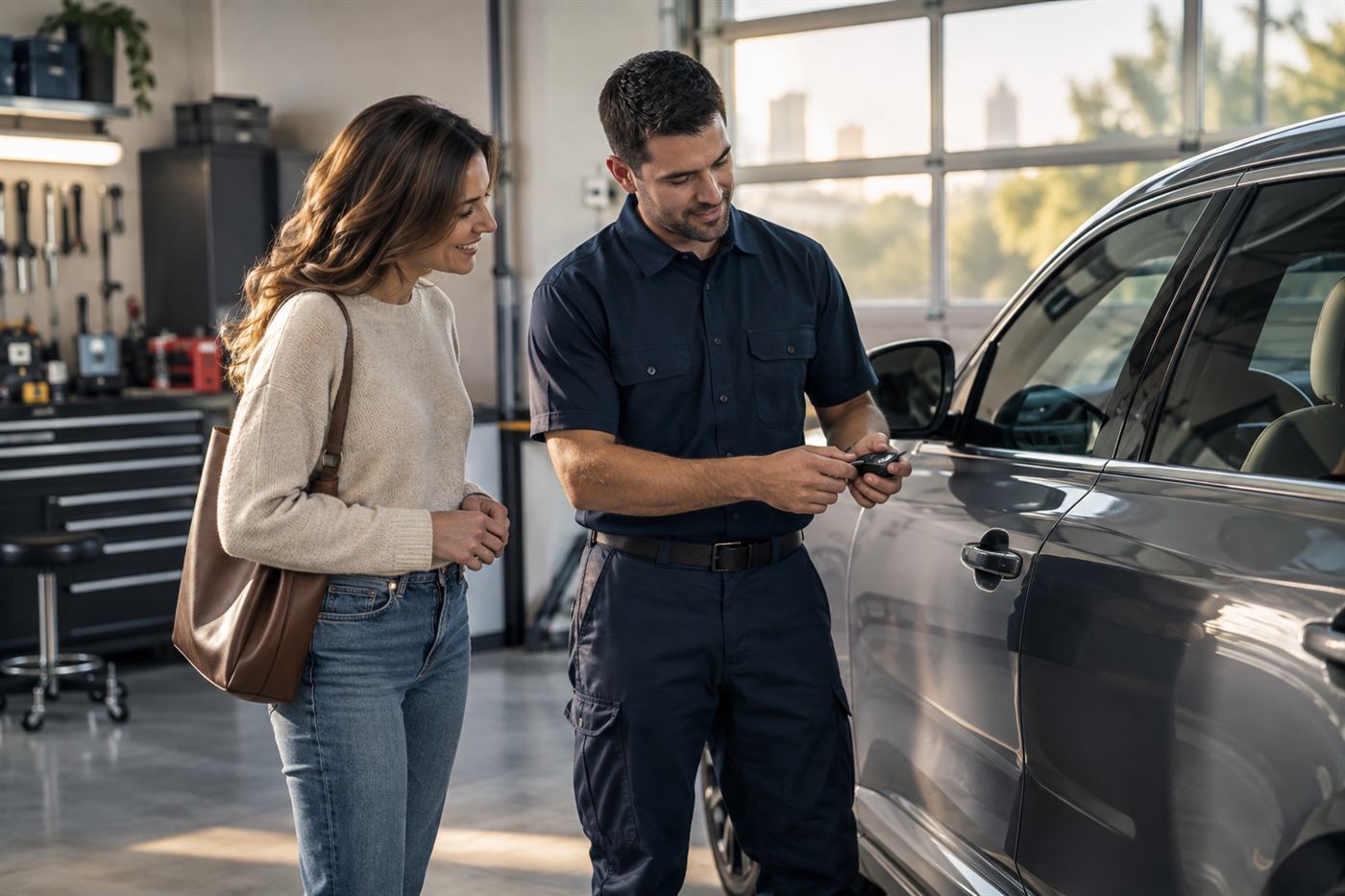
What a Charleston locksmith call usually involves
Calls from Charleston fall into a few patterns. A visitor in a rental car has locked the key inside on a narrow downtown street. A resident in a historic house cannot get a stiff old lock to turn. A driver who parked near the water after a heavy rain finds the fob will no longer respond. A family from out of state is packing for a trip home and the only key has vanished.
This site puts cars first and homes second. In a city with narrow streets, limited parking and a lot of tourist traffic, a stranded vehicle is usually the more urgent problem. We cover homes, apartments and small businesses too, and we say more about them below, including the challenge of older doors on the peninsula.
The vehicles on the road here are varied. Locals drive everything from older trucks used in the marsh and on the water to new SUVs. Visitors arrive in whatever the rental counter handed them. A technician needs the make, model and year before quoting, and the first part of the call is about the vehicle.
The first step is always a call. We quote on the phone, we explain the service call charge before dispatch, and we send a technician only after you agree.
Salt air and what it does to metal, locks and keys
The coastal air here carries salt, and salt is hard on metal. It speeds up corrosion in door lock cylinders, trunk latches, ignition cylinders and the metal parts of keys. A lock that works perfectly in an inland city may become stiff after a few years near the water. Keys can also pit and darken, and a key that has corroded may drag in the lock.
The early signs are easy to ignore: a key that goes in with a little resistance, a lock that needs two tries, a trunk latch that sticks on humid mornings. Over time those turn into a key that will not turn at all, or a lock that jams with the key in it. See what to do when a key will not go into a lock and car door lock stuck.
If a lock is sticking, do not force it. Forcing a corroded key is how keys break off in cylinders. If a key breaks, see what to do about a broken key in a car door. A technician can often clean and loosen a cylinder or replace it, depending on the damage.
Lubrication has to be chosen with care. Some products attract dust and grit, which is a bigger issue near the beach. Ask a technician what is suited to your lock before you spray anything into it. Washing a car with a pressure washer near the locks can also push water and salt deeper inside.
Flood season, high tides and keys that get wet
Parts of the Charleston area flood during heavy rain and at high tides, and the water is often salty. A car parked on a street that floods can take on water, and a fob that is wet with salt water is in a worse position than one wet with rain. Salt water leaves residue that keeps corroding circuits long after the fob appears dry.
If your fob has been in salt water, do not use heat to dry it. Rinsing with clean water can help remove salt, but this should be done carefully and the fob should then be left to dry naturally. Even then, it may fail days later. See what to do when a car key falls in water. Treat a fob that has been soaked in salt water as unreliable and plan for a replacement.
If your car itself has been in floodwater, the electrical system may be affected, including the door locks and the receiver that reads the key. Do not keep trying to start a vehicle that has been in deep water, since that can cause further damage. A locksmith can help with keys and locks afterward, but an assessment of the vehicle comes first.
If you live in a flood-prone area, know where your spare key is and keep it above the waterline. A spare that lives in a glovebox of a flooded car is no spare at all. See hurricane season lock and key prep for a checklist.
Historic peninsula homes and old doors
The historic peninsula has some of the oldest houses in the country, and their doors are an important part of the architecture. Many of them have original hardware or old-style mortise locks, and a lock that has served for generations may be worn, loose or hard to find replacement parts for. The doors may also be thick, heavy and set in frames that have moved over time.
If you are locked out of one of these houses, do not force a window or the door itself. Old doors and frames are valuable and fragile, and some are protected by preservation rules. Call and describe the lock. A technician can assess it and decide on a careful approach. See what to do when locked out of your house.
Old locks can often be repaired or re-keyed rather than replaced, which keeps the character of the door. See lock rekey service. If you are adding security, a modern deadbolt can often be fitted with care. See how to choose a deadbolt and deadbolt installation.
If your house is within a historic district, check what rules apply to changes visible from the street before you replace hardware. A locksmith will ask and may suggest a solution that suits the door. A property manager or owner may also need to approve the work.
Tourists, rental cars and downtown lockouts
Charleston draws large numbers of visitors, and many of them drive rental cars into a downtown of narrow streets, one-way lanes and limited parking. A key left on the seat of a rental is among the most common visitor mistakes. The rental car belongs to someone else, so the process starts with the rental company, which often has its own roadside program and its own rules about who may work on the vehicle.
Call the rental company first. If they refer you to a locksmith, tell the dispatcher the make, model, plate and rental company, and have your rental agreement and a photo ID ready. See the rental car lockout guide.
On a narrow street, give the dispatcher the exact block and which side you are parked on. If parking is restricted, or if a car is blocking a lane, say so. A technician needs room to work, and a car in a tight spot can limit the options.
Visitors are also the people most likely to meet a false locksmith. If someone approaches you on the street offering to open your car, decline and call yourself. See how to spot a fake locksmith.
Hurricane season, evacuation and keys in a hurry
Hurricane season is a part of life along the coast. When a storm approaches, people pack in a hurry, move cars to higher ground, and sometimes leave town. Keys go missing in this scramble: a spare left behind, a fob in a bag that went in a different vehicle, a key dropped while loading.
Before the season, make sure each car has a spare and that you know where it is. Keep a copy of registration and insurance in a waterproof bag. Make sure the fob battery is fresh. If you evacuate, take every key with you, and carry the spare separately from the primary.
After a storm, locks can be affected by moisture, salt and debris. Doors may stick, and fobs may misbehave. A lock that has been through floodwater may need cleaning or replacement. A home with a damaged door may need securing before anything else. See lock repair after damage or a break-in.
After a storm, locksmiths are in high demand, and the dispatcher will tell you honestly what is possible. See hurricane season lock and key prep for what to do before the storm.
Bridges, islands and the commute across the water
Greater Charleston is a collection of peninsulas and islands joined by bridges and causeways, and daily life involves crossing water. Residents of the islands and the suburbs commute to the peninsula for work, and a failure on the wrong side of a bridge can mean a long, awkward trip home. A lost key on the peninsula means you cannot simply nip back for a spare.
The practical response is to keep a spare with someone who lives or works on the other side of the water, and to know their number. If you are stuck on the peninsula and your spare is on an island, ask whether someone can bring it, and compare that with the time a technician would need. The dispatcher can give an honest picture of both options.
Bridge traffic and weather matter too. Heavy rain, flooding or an accident can slow every route, and a technician may need extra time. Tell the dispatcher about any road closures or flooded streets you know of near your location. If water is standing around your car, do not wade through it to reach the vehicle, and do not ask a technician to. Safety comes before the key.
If you work shifts at a hospital, a hotel or a restaurant, you may be leaving at hours when public transport is thin and the streets are quiet. Keep your phone charged, wait somewhere lit and busy, and confirm the identity of any technician who arrives. See how to verify a locksmith.
Students, renters and shared houses near campus
Charleston has a large student population, and many students live in older houses divided into rentals, close to the college district. These buildings combine all the problems of old doors with all the problems of shared keys. A front door lock that has been in use for decades, copied for every tenant who ever lived there, is a poor security arrangement even when it works.
If you rent, read the lease before you call. Many leases require that the landlord approve or arrange any lock change, and a locksmith will want to confirm that you are allowed to authorize the work. Contact the property owner or manager first for a lockout. See apartment and landlord locksmith work and college student and dorm lock safety.
A student with a car should keep a spare with family, and should know where the registration is. A car registered in a parent name means the parent may need to authorize a key replacement. Ask the dispatcher which documents are acceptable.
When housemates change, re-keying is a straightforward way to make sure old keys no longer work. See how often to rekey or change locks.
Lost keys, spares and the all-keys-lost situation
If you lose every key to a car, the job is called all keys lost. It is routine for a skilled technician but involves more steps than making a spare: identifying the vehicle, confirming ownership, cutting a key and programming the car to accept it. See all keys lost car service.
A technician needs proof of ownership. Registration, title, an insurance card or an ID that matches are the usual documents. If these are locked inside the car, a photo of the title, a lease or a loan statement may work. See proof of ownership for a car key.
If you still have one key, make a spare. Programming a spare from a working key is usually simpler than starting from zero. See spare car key programming.
If a key may have been stolen, see what to do after stolen car keys.
Boats, trucks and work vehicles near the water
A lot of Charleston life revolves around the water, and the vehicles that serve it are tough. Pickup trucks haul boats to ramps, work vans carry tools to job sites, and service vehicles keep restaurants and hotels running. These vehicles live in a harsh environment: salt, sand, mud and heat.
Keys on boat ramps are at particular risk. A key can fall into the water, or a fob can be soaked while a trailer is backed down. Keep the key in a sealed pocket or on a floating key ring, and leave the spare at home. A key in a magnetic box under the truck will not survive a season of salt spray. See magnet boxes and spare keys.
Work vehicles may have simple keys or modern ones with transponder chips. A technician will ask which. See truck and van keys. For a business with several vehicles, see fleet locksmith service.
If your vehicle belongs to a company, have a work order or company registration ready, and the name of someone who can authorize the work.
Quotes, dispatch and the service call charge in plain terms
We quote on the phone and do not post prices online. A lockout, a spare, a fob replacement and an ignition repair are different jobs, and the vehicle matters. The call is how you get a real figure.
The dispatcher asks where you are, the make, model and year, the key type, and what happened. Complicated work, such as programming a smart key, may need a technician to look at the car before a final figure is possible. A service call charge applies and is explained before dispatch. See the service call charge explained.
The idea of 24-hour service is a concept, not a promise of a technician at every hour and place. The dispatcher will tell you honestly what is possible for your address, especially after a storm.
To prepare, read how to prepare for a locksmith visit and questions to ask before dispatch.
What to have ready when you call
A little preparation shortens the visit. Get somewhere safe, shaded and out of the water, and keep your phone charged.
- Your exact location: block and side of the street, lot name, ramp or garage level.
- Make, model, year, color and plate of the vehicle.
- The VIN, visible through the windshield or on the driver door jamb. See how to find your VIN.
- Proof of ownership: registration, title, insurance card or a matching ID. For a rental, the agreement.
- What happened: locked inside, lost, broken, worn, wet or stolen.
- Whether you have a spare and where it is.
- Whether a child or pet is inside. If so, call 911 first.
Choosing a locksmith you can trust in Charleston
A city full of visitors attracts people who prey on stranded drivers. Warning signs include a figure that changes on arrival, no business name, no identification, an unmarked vehicle, and pressure to drill a lock that could be opened without damage. You may decline before work begins. See locksmith scam warning signs.
Verify credentials rather than trusting a claim. See how to verify a locksmith. Also check whether roadside coverage or insurance helps. See insurance and roadside assistance for lockouts.
When you are ready, call. Tell the dispatcher where you are and what happened, and we will ask a few questions, quote by phone, explain the service call charge and send help when you agree. Call whenever you need us.
Questions people ask
Does salt air really damage locks and keys?
Yes, over time. Salt speeds up corrosion in lock cylinders, latches and keys, so locks can become stiff and keys can pit. If a lock is sticking, do not force it. A technician can clean or replace the cylinder. Ask what lubricant suits your lock, since the wrong product attracts grit.
My key fob got wet in salt water. What should I do?
Do not use heat to dry it. Rinsing gently with clean water to remove salt, then letting it dry naturally, can help, but salt residue may still cause failures later. Treat it as unreliable and plan for a replacement. A technician can test it and discuss options by phone.
I am a visitor with a rental car and the key is locked inside.
Call the rental company first. They often have a roadside program and may require approval for any work. If they send you to a locksmith, give the dispatcher the make, model, plate and rental company, and have your agreement and photo ID ready. Say exactly where you are parked.
Can you help with an old door on a historic house?
Yes. Describe the lock and door on the phone. A technician will assess the hardware and suggest a careful approach, which often means repair or re-keying rather than replacement. If the house is in a historic district, check what rules apply to visible changes before replacing hardware.
How is a job quoted?
By phone, after the dispatcher asks about the vehicle and the problem. We do not post prices online because each case differs. For complicated work, an on-site visit may be needed before a final figure. A service call charge applies and is explained before anyone is dispatched.
What should I do about keys before hurricane season?
Make sure every car has a spare and know where it is. Replace old fob batteries, keep copies of registration and insurance in a waterproof bag, and take all keys with you if you evacuate. Keep the spare somewhere that will not flood. A spare in a flooded car is no help.
Describe the situation by phone and we will tell you what the job involves. Quotes are given by phone. Jobs that cannot be quoted without seeing them need a technician on site, and the service call charge is explained on the phone before anyone is dispatched.
(844) 715-0800Related pages
Written by Claude (AI) (AI) for 24/7 Locksmith USA.