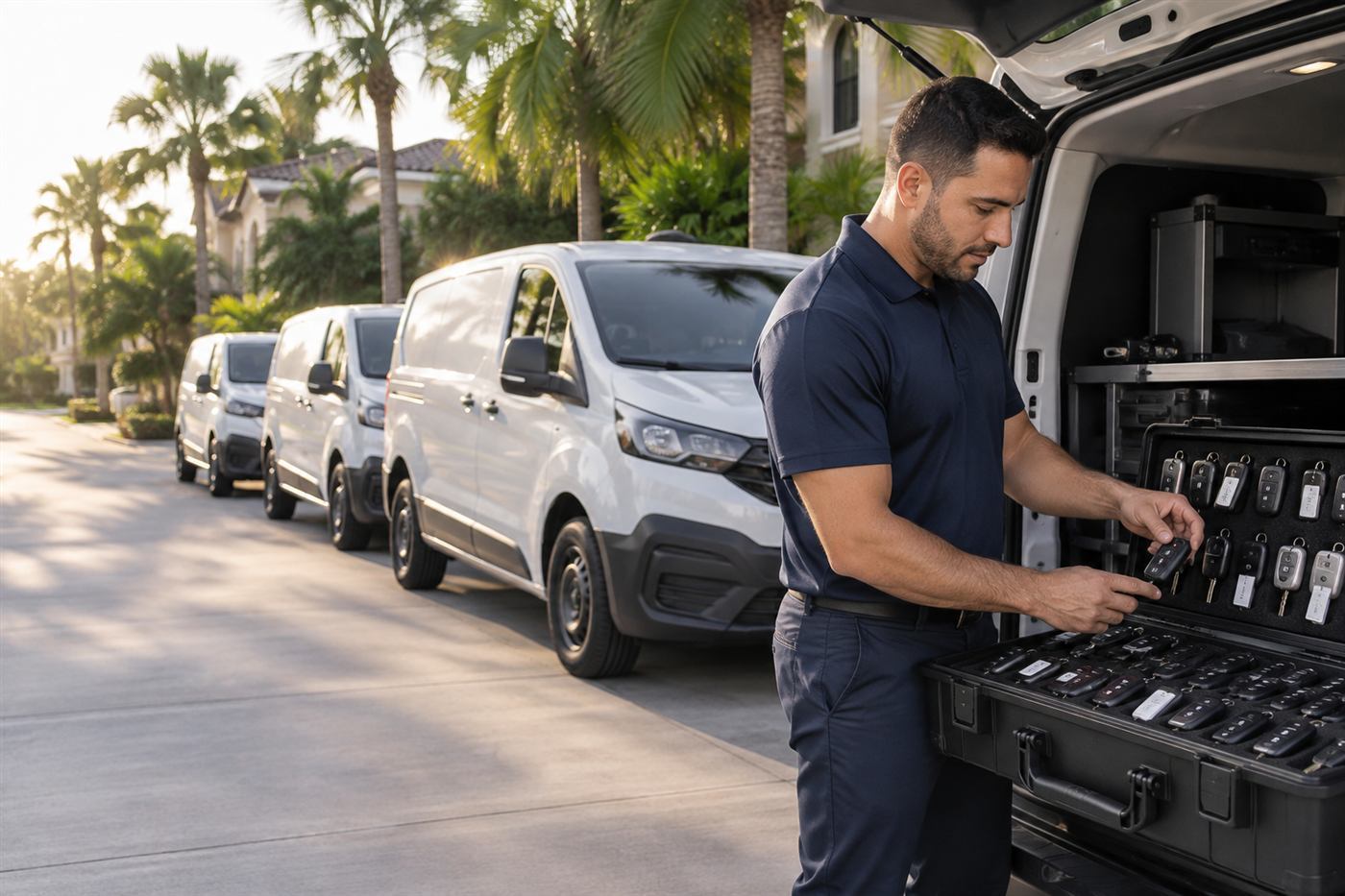
Rowhouses, curbs and the Baltimore parking reality
A large share of Baltimore residents live in rowhouses and park on the street. There is no private driveway, no garage and often no reserved space near the front door. That affects every kind of key problem. A car left on a block overnight is parked wherever there was room, and the person who comes back to it may be a block or two away from their door when something goes wrong.
For lockouts and key replacement, street parking means the technician works at the curb. Space is limited, cars are close on both sides and traffic moves by. A professional plans around that, placing equipment safely and opening doors in a way that keeps the vehicle and the neighboring cars unharmed. It also means the dispatcher needs an exact location: the street, the block, the nearest house number and which side of the street.
Residents with permit parking should keep their permit visible and mention any time limit. Visitors should note signs about street cleaning or tow zones. These do not change what the technician can do, but they can change how urgent the call is and whether the car needs to be handled before a specific time.
Because so many people park a distance from home, a key problem often happens in two steps. First the key is lost somewhere between the car and the house. Then the car cannot be moved or started. The guide on what to do when you lose your car key lays out a calm order of operations for exactly that situation.
How a call works, from the first question to dispatch
A dispatcher will ask for the location, the vehicle and the problem. They will also ask whether you have any working keys, whether anyone is in danger and whether the car is in a tight spot. These questions are not stalling. They let the dispatcher plan the right tools and give you a realistic quote.
Quotes are given only by phone. There is no price list on this page because the figure depends on your vehicle and what is wrong. After the details are clear you hear a number, and the service call charge that applies to dispatching a technician is explained before anyone is sent. If the actual job turns out to be different, the technician explains what changed and you decide whether to continue.
More complicated situations, such as a car with every key lost and a high-security system, may call for an on-site visit before a final price. No one honest can promise an arrival time without knowing the technician's location and the traffic, so there is no such promise here. You will, however, be given a clear picture of what to expect.
Keep your phone charged and stay near the car if it is safe to do so. If you are somewhere uncomfortable or unlit, choose a nearby business with lights and a seat, and tell the dispatcher where you are.
- Give the street, block and nearest house number.
- State the vehicle year, make and model.
- Describe the problem and what keys you have.
- Hear the quote and the service call charge explanation.
- Confirm a callback number and the best meeting spot.
Harbor humidity, salt and worn locks
Baltimore summers are humid, and the harbor adds moisture to the air near the water. Humidity affects locks and keys slowly but surely. Cylinders collect grit and moisture, metal parts corrode, and key blades develop a film that makes insertion stiffer. Combined with years of use, the result is a lock that works until the day it does not.
Door locks on cars are a common victim. A key that sticks, turns reluctantly or fails to go in all the way is a warning. Resist the urge to force it, since a broken key is harder to fix than a stiff one. The page on key will not turn describes causes and safe responses, and key will not enter covers the opposite complaint.
Electronics suffer too. A fob exposed to heavy moisture, a drink spill or a pocket in the rain can develop corrosion on its contacts. If your fob has been wet, read water-damaged fob before doing anything else. Do not use heat to dry it, and do not press the buttons repeatedly because that can short a damp board.
Summer heat adds another layer. A key or fob left in a hot car can deform, and heat shortens battery life. See summer key safety for easy habits that protect your keys from the sun.
- Do not force a key that sticks
- Do not dry a wet fob with heat
- Replace worn keys before they snap
- Keep keys out of direct sun on the dashboard
- Check fob batteries when the weather changes
Car key replacement and programming in Baltimore
Baltimore drivers use all kinds of vehicles, from older sedans with simple keys to newer cars with transponders, laser-cut keys and push-button starts. The method for replacing a key depends on which one you have. A mobile technician identifies the type, cuts the blade if there is one and programs the electronics so the car accepts the new key.
The important distinction is between adding a key and replacing every key. If you have one working key, adding a spare is straightforward. If you have none, the process is called all keys lost and takes more steps. The page on all keys lost outlines what is involved, and transponder key programming explains the chip side.
A legitimate technician will ask for proof that you own the car. That means photo ID that matches the registration or title and the vehicle identification number. Find the VIN on the dashboard at the base of the windshield, on the driver's door jamb or on your insurance card. If you cannot reach any of these, the guide on proof of ownership explains what else helps.
Many people wonder whether to go to a dealer or call a locksmith. Both options exist. The page on locksmith or dealer compares them honestly. A mobile locksmith comes to you, which matters if the car sits at a curb and cannot be driven.
Older doors, older homes and residential calls
Baltimore's rowhouses and older apartments have doors that have been painted, swollen, shifted and re-hung over many decades. Their locks are often a mix of original hardware and later additions. A door may have an old mortise lock, a surface deadbolt added by a previous owner and a chain that has not been used in years.
A residential lockout in these homes requires care. A technician verifies that you live at the address, then opens the door while limiting damage to old wood and finishes. If the door has swollen with humidity, the latch may bind, and what looks like a lockout may be a sticking door. The page on door will not latch covers related issues.
After a lockout, the visit is a good moment to evaluate the hardware. If a lock is loose or failing, loose lock explains what that means and what can be done. If you recently moved in, rekeying makes sure old keys no longer work.
For anyone who has had a break-in, after a break-in explains how to secure a door quickly and safely. Document damage for insurance purposes and call the police before touching anything if the situation requires it.
Campus areas, visitors and unfamiliar streets
Baltimore draws students, hospital workers, commuters and visitors, and each group has its own lockout pattern. A student leaves a key in a dorm room and cannot get into the car parked across town. A hospital worker finishes a long shift and finds the fob dead. A visitor parks near the harbor and discovers the keys are locked inside.
Visitors and newcomers are at higher risk of a bad experience because they do not know who is reputable. The best protection is knowledge. Ask for the business name, ask how the quote is built and ask about the service call charge. See questions to ask before dispatch for a full list.
A person traveling with a rental should read rental car lockout, since the rental company may need to be involved. Someone traveling far from home with a lost key should also read lost keys while traveling.
For students, college student lock safety includes habits that prevent common problems, like keeping a spare with a trusted friend and not leaving a key in a bag in a shared space.
Staying safe and spotting a bad operator
No one should have to feel threatened or rushed during a lockout. Dishonest operators rely on that feeling. They quote a low number on the phone and add charges on site. They arrive in an unmarked car and refuse to name the company. They start working before you agree, then insist you pay.
Protect yourself with three habits. Ask questions before dispatch. Verify identity when the technician arrives. Confirm the price before work begins. If something feels wrong, you may decline the service. Be aware that a service call charge may still apply once a technician has been dispatched, which is why it is explained up front.
The guide on scam warning signs gives specific examples. How to verify a locksmith describes how to check credentials. Rules vary by location, so confirm what applies rather than trusting a logo on a van.
Never give a stranger a car key to hold while you wait, never sign a blank form, and never hand over payment details until the work is described and agreed. A reputable technician does not mind these precautions.
Preparing for the next time
A little planning goes a long way. Make a spare key and keep it somewhere safe, not in a magnet box on the car. Replace worn keys before they fail. Keep a record of the VIN in your phone. Know where your registration or title is.
The guide on how to avoid locking keys in the car gives practical habits. Some people set a routine of checking pockets before shutting the door. Others keep a spare fob in a wallet. Whatever works, repeat it until it is automatic.
If you rent or share a vehicle, make sure everyone knows who holds the spare. If you manage a small business with a work vehicle, fleet service describes how to keep track of multiple keys.
Finally, check your insurance and roadside coverage. Insurance and roadside coverage explains what to look for. Know the number to call before you need it.
Calling for service in Baltimore
24/7 Locksmith USA takes calls for car keys, lockouts and related lock work in the Baltimore area. The name reflects the round-the-clock phone service concept, not a promise that a technician is waiting at every hour and place. What you can rely on is a clear conversation, a quote given only by phone and an explanation of the service call charge before dispatch.
For more detail on the main services, see car key replacement, car lockout and key fob programming. The Maryland page gives a state-level overview.
If a child or pet is in a closed car, or anyone is in danger, call 911 first. A locksmith is not the right first call in that case. Once everyone is safe and a key or lock problem remains, call and a dispatcher will help.
When you are ready, call the number on this page, describe where you are and what happened, and listen to the quote and service call charge explanation.
Questions people ask
Can a locksmith help if my car is parked on a Baltimore street?
Yes. Most calls happen at the curb. The dispatcher will ask for the street, block and nearest house number, plus anything that limits access such as tight spacing or a posted time limit. A technician plans the work around the traffic and the neighboring cars so the vehicle is opened without damage.
How are quotes given for lockouts and key replacement?
Only by phone, after the dispatcher knows your vehicle, key type and situation. A service call charge applies to dispatching a technician and is explained before anyone is sent. Complicated jobs may require an on-site visit before a final number. If the job differs from the description, the change is explained before work starts.
Does humidity really damage car keys and locks?
Over time, yes. Moisture and grit corrode cylinders and coat key blades, so locks feel stiff or gritty. Wet fobs can develop corrosion on their circuit boards. If a key sticks, do not force it. If a fob gets wet, do not heat it or press the buttons. A technician can assess the damage and advise.
What proof do I need to get a car key made?
Expect to show photo ID that matches the registration or title, and to supply the VIN. This is standard for legitimate key work. If you do not have the title nearby, other documents may help. Be cautious about anyone who will make a key without checking ownership, since that protects no one.
Can you rekey the locks on an older rowhouse door?
Often yes. Older doors need careful assessment because the hardware may be original, worn or mismatched. A technician will look at the lock type and the door condition and tell you what is practical. Tenants should check the lease first, since landlords may require copies of keys or restrict changes.
What should I do if a child or pet is locked in my car?
Call 911 immediately. Emergency responders can act faster than a locksmith, and waiting is not safe in heat or cold. Do not hold back on the call because of cost or embarrassment. After the emergency is handled, a locksmith can help with any key or lock problem that remains.
Describe the situation by phone and we will tell you what the job involves. Quotes are given by phone. Jobs that cannot be quoted without seeing them need a technician on site, and the service call charge is explained on the phone before anyone is dispatched.
(844) 715-0800Related pages
Written by Claude (AI) (AI) for 24/7 Locksmith USA.