
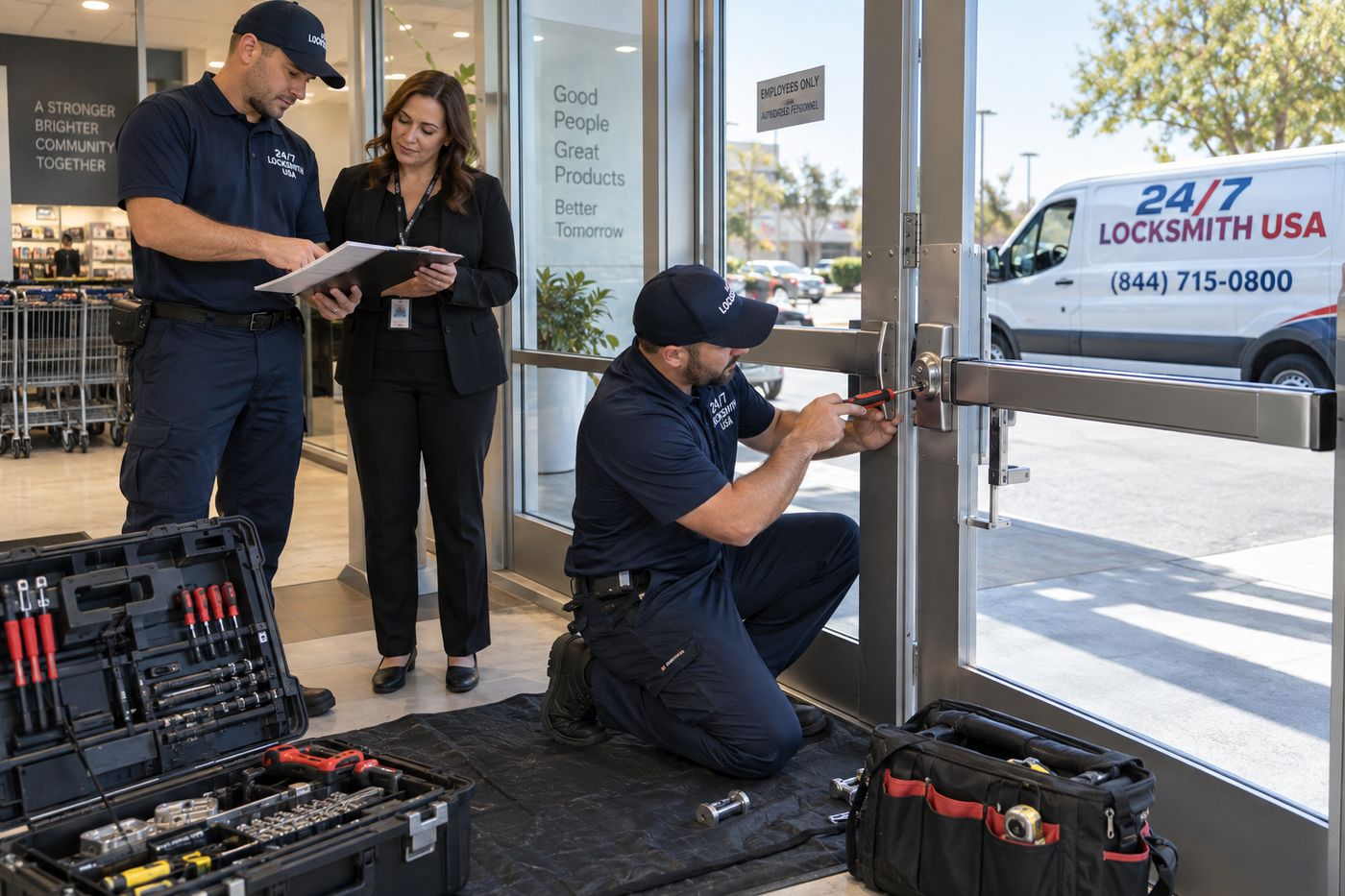
What we handle in Tampa.
One mobile team across Tampa, residential, automotive and commercial.
Marine & Dock Hardware
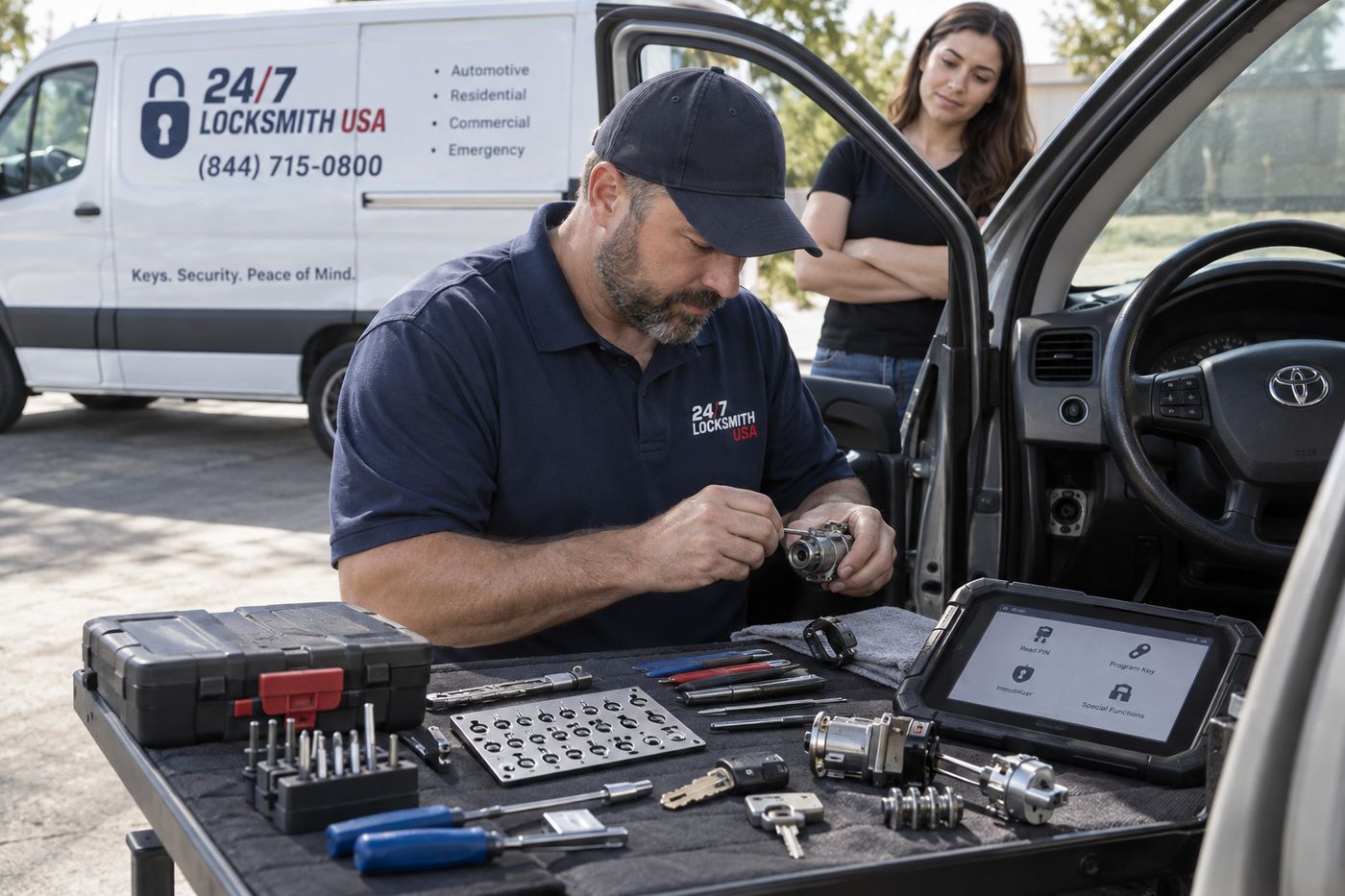
Corrosion-resistant cylinders and padlocks for boats, dock boxes and waterfront storage.
Historic & Period Hardware
Mortise locks and original hardware serviced rather than ripped out of a period door.
Impact Door & Storm Hardware
Multipoint locks and hardware on impact-rated doors adjusted, repaired or replaced.
High-Security Cylinders
Medeco and Mul-T-Lock cylinders for doors that need genuine key control rather than hardware-store pins.
Safe Opening & Servicing
Locked-out safes opened, and re-combinated where the model allows it.
Gate & Access Hardware
Pedestrian gates, keypads and gate locks for gated communities and fenced yards.
Locks in Tampa: what actually goes wrong.
Tampa is one of the two Florida counties that actually built a locksmith licensing program before the state preemption, so local expectations about "qualified locksmiths" trace to the Hillsborough ordinance rather than to any state credential. The second local pattern is age-driven: nearly a quarter of the housing stock predates 1960 and the bungalow districts run back to the 1880s-1930s, so rekeying an original Ybor City or Hyde Park door often means adapting modern hardware to non-standard historic door thicknesses and prep. ACS 2024 1-year estimates give Tampa a median year built of 1987, but with a distinctly bimodal stock: 9.5% of units date to 1939 or earlier and 24.5% predate 1960, while 38.0% were built in 2000 or later. With roughly 24.5% of housing predating 1960, original strike plates and softened jambs are the norm, not the exception, and a lock that 'sticks' is usually a door problem wearing a lock costume. Single-family detached homes make up about 49.8% of units, which shapes what we carry on the van. Near the water, standard plated cylinders corrode from the inside out; solid brass or marine-grade hardware lasts several times longer for a small difference in price. Waterfront neighborhoods on Tampa Bay and the Interbay Peninsula fall inside FDOT's "Extremely Aggressive" corrosion band for structures within a half mile of high-chloride water, while inland Tampa does not. NWS lightning climatology for Florida shows a flash-density maximum west of Tampa, which is the operative risk for powered access control, gate operators and networked locks. Just under half of all units (49.8%) are single-family detached. Tampa's local historic districts define the older half - Ybor City (period of significance 1886-1940), Hyde Park (1886-1933), Tampa Heights (1890-1945), Seminole Heights (1912-1939) and West Tampa (1893-1933) - so pre-1940 wood doors, mortise locks and non-standard bore sizes are common in those areas.
What makes a big metro area different for keys
A large, spread out metro area changes the way lockouts happen. People drive long distances, park in unfamiliar lots, leave cars at airports and garages, and move between homes, workplaces and shared buildings in the course of a single day. Every one of those transitions is a chance to leave a key on a seat or lose a fob in a bag, and the cost of a lockout grows with the distance from home.
The practical lesson is to plan for the problem before it appears. A spare key stored somewhere reachable, a photo of your vehicle identification number and a note of your lease or ownership papers turn a stressful event into a manageable one. Residents who commute across the bay or between counties benefit most, because they are the people most likely to be stuck far from their spare.
This page is general guidance for Tampa and does not describe past work in the city. Association rules, lease terms, building policies and vehicle regulations vary, so check with the right manager or office whenever a question goes beyond what is covered here. The aim is to help you understand how locksmith work proceeds, what you will be asked for and which questions are worth asking.
Because Tampa sits in a region of connected cities, many readers also work or visit across city lines. If you spend time around the bay, the guidance for St. Petersburg reads much like this page, and the same habits help in both places. The core ideas never change from one city to the next: know your documents, describe the problem clearly and ask about the quote before you agree to anything.
The first phone call and what you should be able to say
A good call is specific. State where you are, what you drive or what kind of door you face, and what has happened. Mention whether a key broke, whether a fob lights up, whether the door is locked or merely stuck. Say if you have any working key left. These details let the dispatcher choose the right technician and give you a realistic quote.
Expect questions in return. The person on the phone will want to know that the vehicle or property is yours, so be ready to say what documents you can show. A photo ID, a registration, a title, a lease or a utility bill are the usual choices. If your documents are locked inside, say so honestly and ask what alternatives are acceptable.
Ownership is checked before anyone opens, rekeys or programs anything. That is not an obstacle; it is the reason you can trust the service. A locksmith who skipped the question would open a stranger's door as easily as yours. Read whether you need proof of ownership for a car key to see how the principle applies to vehicles.
Stay on the line long enough to confirm the details. Repeat back the address or the location, the vehicle description and the amount you were quoted, and ask who will be arriving and how you will recognize them. Then keep your phone charged and your documents within reach. It sounds like a lot of procedure, but the whole exchange takes only a few minutes and it sets up a visit that goes the way you expect.
Condos, high rises and shared entrances
Tampa has many condominiums and apartment buildings, and shared housing multiplies the number of locks involved. There may be a lobby door, a garage gate, a floor key card, a unit door and a mailbox. Each can belong to a different party, and the lock you are stuck at may not be the one that needs attention. Work out whose door it is before you call.
Associations often have rules about lock changes, particularly on exterior doors and on any hardware visible from common areas. Ask the management office whether approval is needed and whether there is a preferred type of lock. Requirements vary from building to building, so a short email or call can save a disagreement later.
If you are locked out of a unit, the office may hold a spare. If not, a locksmith can help once your right to enter is confirmed. Having a lease, a deed or a message from management on your phone settles the matter without argument. Landlords who manage several units should read about the apartment and landlord locksmith service, which covers rekeying between tenants and master key planning.
Key cards and fobs for lobbies and garages are usually managed by the building, not by a locksmith. If yours stops working, contact the office before assuming the card is at fault, because the system may have been reset or your access may have expired. A locksmith can still help with the unit door and any private locks, and can tell you honestly which problems fall outside their work.
Airports, garages and the car you left behind
Many travelers leave a car for days in a garage or lot, and a returning traveler with a dead fob or a lost key faces a particular kind of frustration. Tired, carrying bags and far from home, the last thing anyone wants is a locksmith call, but it is better to make it with a clear head and a few facts at hand.
First, test the simple things. Try the emergency blade or key slot if your fob has one, and replace the battery if the fob has been silent. Many fob failures are just battery failures, especially after a long trip. If the car still will not start, note whether the dash lights up, whether the engine turns and whether you see a security light flashing. Read about an immobilizer light flashing to understand what that symptom may mean.
Tell the dispatcher about the garage rules: the level, any gate or ticket requirement and whether outside vendors may enter. Some facilities restrict who may work on a vehicle, and sorting this out in advance prevents delays. Keep your parking ticket and your ID with you, and take a photo of the level and pillar number.
Smart keys and the cost of programming
Newer cars use fobs that carry encrypted chips and radios, and many use push button starts. Replacing one is a combined job: cutting an emergency blade if needed, then programming the key to the car so that the engine computer accepts it. A key that opens the door but does not start the engine is a common outcome of an incomplete job.
Programming depends on the make, model and year. Some vehicles can accept a new key through an on site process, while others limit the number of keys or require special equipment. The page on how car key programming works describes the general idea, and the page for car key replacement in Tampa covers the city specific service in more detail.
Ask what the quote includes. Does it cover the key, the cutting, the programming and the service call charge? What would cause the total to change? Keep your old fob, even if it is damaged, because it may carry a part number. Test every function before the technician leaves: lock, unlock, trunk, panic and start.
If a quote for dealer service seems high, it is reasonable to compare. Dealerships and mobile locksmiths each have advantages, and the choice often depends on whether the car can be driven, whether it must be towed and how the total is calculated. The page on dealership versus locksmith keys sets out the tradeoffs so that you can decide with the facts in front of you.
Storm season and hardware that has to hold
Like much of the Gulf coast, Tampa has to think about storms each year. Locks and keys belong in the plan because storms cause evacuations, power loss and sudden repairs. Before the season, check that exterior doors close firmly, that bolts extend fully and that strike plates are screwed in with long screws. A strong lock on a weak frame protects little.
Gather important keys and documents in one place that you can grab in a hurry. Photograph your vehicle identification number, and store the ownership papers in a waterproof pouch. If you evacuate, carry a spare car key separately from the main set. The guide on hurricane season lock and key prep contains a fuller checklist.
After a storm, expect swollen doors and damp locks. Do not force a door. If water reached an electronic lock or a key fob, let it dry thoroughly before testing and replace the batteries. For hardware that has been submerged, a technician can advise whether the lock is safe to keep or should be replaced. Corrosion can be hidden, and a lock that appears to work may fail at the worst time.
Do not overlook the garage entry door, the side gate and the sliding patio door, which are often neglected in storm preparation. They hold tools and supplies you may need afterward, and a loose latch is an invitation. Check that each one closes and locks cleanly, replace worn padlocks and think about whether a simple secondary lock on the slider would give you more peace of mind during an evacuation.
Rekeying a home, a rental or a business
Rekeying is one of the most useful and least understood services. The lock stays; the inside changes so that old keys no longer work and a new key does. It is the right move after you buy a home, after a tenant leaves, after a lost key with an address attached or any time you are not sure who holds a copy.
For a house, rekey all exterior doors to the same key if you like, so you carry one key rather than four. For a business, consider a plan with different keys for different people, so that staff have access only to what they need. The page on lock rekey service explains the process and what you should expect during the visit.
Replacement is a different path, better suited to worn, damaged or inadequate locks. A technician can look at your hardware and advise honestly. If a lock is loose, sticks badly or has an unreliable latch, rekeying will not fix it. If it is sound, rekeying can solve the key control problem without the cost of new hardware.
Business doors, storefronts and fleets
Businesses in a metro this size face a wide range of lock needs, from a small office with a single door to a warehouse with many. A commercial locksmith can assess the doors as a system: the lock, the closer, the strike, the panic hardware and any electronic reader. Fixing the weakest part first gives the strongest return.
Fleet operators have a different problem: many vehicles, many drivers and many keys. A simple log of which key belongs to which vehicle, who holds it and where the spare lives prevents costly downtime. Ask about duplicates for each vehicle, and decide who is allowed to authorize a replacement, because a driver who is stranded will otherwise call whoever is nearest and pay whatever is asked.
If you discover a damaged or open door at your business, do not go in alone. Call the police and wait. After they clear the premises, arrange lock repair and secure the opening. Record damage with photographs for your own files. Remember that the first priority is people, then property.
Small details make a big difference in daily operation. Label key rings by door rather than by employee name, keep a master list in a locked cabinet and avoid stamping the business address on any key. A key found on a sidewalk should never tell a stranger which door it opens. If a key goes missing, treat the matching lock as compromised until it is rekeyed, and record the date of the change.
Quotes, charges and the warning signs of a bad deal
A sound quote has two parts: a service call charge for the visit and a price for the work. Ask for both before anyone is dispatched. Ask what is included, whether programming and parts are separate and what might change the total once the technician sees the car or the door. Honest companies answer plainly.
Be wary of a number far below the rest. It often covers only the visit, with the real price arriving after you are stuck. Be wary also of a company that will not state its name, an unmarked vehicle, or pressure to drill a lock that should be simple to open. The guide on how to spot a fake locksmith lists the patterns.
You may decline at any point, and a responsible technician will not pressure you. Write down who you spoke to, what was quoted and what was promised. If the price changes sharply on arrival, ask for an explanation. If it does not make sense, say no, and call another company. Your notes will help.
Keeping the next lockout small
The simplest protection is a spare. Cut a spare from a working key before you lose the last one, and store it somewhere other than the car. Give one to someone you trust. Avoid magnet boxes and flowerpots, which are the first places a thief looks. Think of each key as access that could be copied, and limit how many exist.
Build habits. Touch your pocket before closing a door. Put your keys in the same place at home every day. Check the seat before you step out of the car. These small routines are the reason some people never have a lockout at all. They cost nothing and remove most of the risk.
Once a year, go through your keys and locks. Label them, discard the ones that no longer open anything and test every spare. If you split time between cities, remember that pages like St. Petersburg and the wider Florida overview offer similar guidance. A few quiet minutes now spare you a long night later.
Teach the people you live with, too. Children old enough to carry a key should know what to do if it goes missing, and an older relative may need a simple card listing whom to call. Agree on one rule for the household: nobody leaves a key in the lock or in the car, and anyone who loses one tells the others at once so the locks can be rekeyed if needed.
Common questions
What should I have ready when I call a locksmith in Tampa?
Know your location, what kind of door or vehicle is involved and what has happened. Have a photo ID and proof you are entitled to the work, such as a registration, title, lease or utility bill. For a car, have the vehicle identification number or know where to find it.
Can I change the locks in my condo myself?
Check with your association first. Many buildings have rules about exterior locks and approved hardware, and requirements vary. Ask the management office whether approval is needed. Once you know what is allowed, a technician can handle the work in a way that matches the rules.
My key fob stopped working after a trip. What do I check?
Start with the battery, which is the most common cause after long periods of use or heat. Try the emergency blade to enter the car. If the car still will not start, note any warning lights and tell the dispatcher. A technician can test the fob and the car's response.
Is rekeying better than replacing a lock?
If the lock is in good condition and you only need to cancel old keys, rekeying is usually the more economical choice. If the lock is worn, loose or damaged, replacement is better. A technician can examine the hardware and tell you honestly which fits your situation.
How do I protect my keys during storm season?
Keep spare keys and ownership papers together in a waterproof pouch, carry a spare car key separate from the main set if you evacuate and check door hardware before the season. After a storm, let any wet electronic lock or fob dry fully before you test it.
What if a locksmith's price changes at my door?
Ask for the change to be explained in plain words and compare it with what you were told on the phone. You may decline the work. If the explanation does not make sense, call another company. Writing down names and amounts at the time of the first call helps.