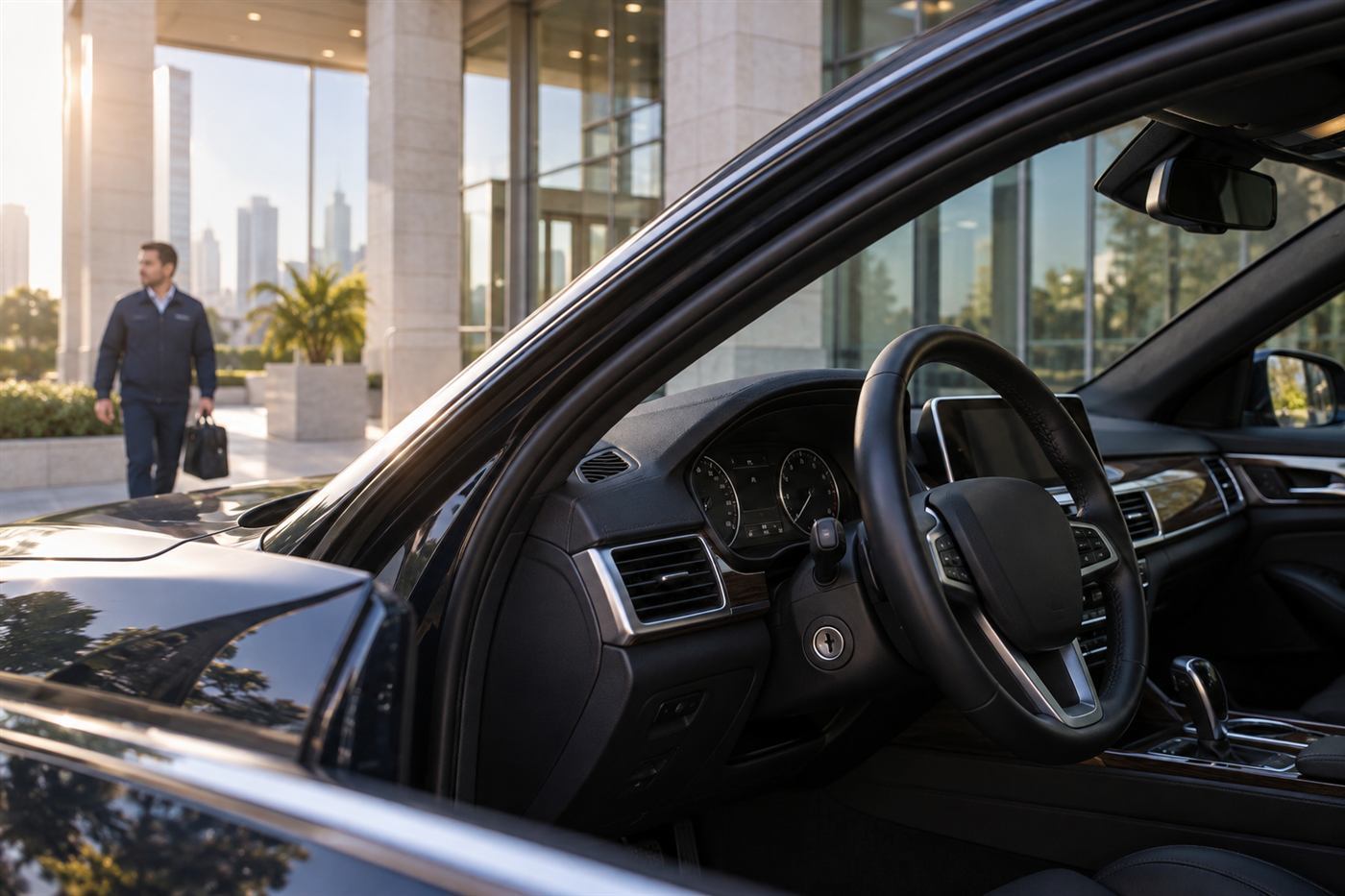
What the immobilizer is and why it blinks
The immobilizer is an anti-theft system built into almost every car made since the late 1990s. It works by pairing the key with the car. A tiny transponder chip in the key, or a smart fob that talks to the car by radio, carries an identity. When you turn the key or press the start button, the car reads that identity and compares it with the ones it has stored. Only if they match does the car allow the engine to run.
The dashboard light is how the system communicates. On many cars, a slowly blinking light when the car is parked and locked is normal. It signals that the immobilizer is armed and watching, and it is a deterrent to would-be thieves. That blink is not a fault. When you put the right key in and turn it on, the light usually goes off within a second or two.
The light becomes a problem when it behaves differently from your car's normal pattern. A light that stays on, flashes rapidly, or blinks while you try to start the engine usually means the car did not accept the key. The car then cuts fuel or spark, and the engine either does not start or starts briefly and stalls.
Normal blinking versus a warning sign
Because cars differ, the first step is to learn what is normal for yours. When the car is off and locked, a slow, regular blink every few seconds is the most common normal pattern. When you switch the ignition to on, the light should go on for a moment as a bulb check and then go out. A light that goes out and stays out, with the engine starting, is working properly.
A warning pattern is different. A light that stays on steadily with the key in the on position, a light that flashes fast, or a light that flashes while the engine cranks but does not fire points to a recognition problem. Some cars also show a message, such as key not detected or vehicle security, which is a clearer sign.
Your owner's manual describes the patterns for your model, usually in the section on the anti-theft or immobilizer system. If you do not have the manual, many manufacturers publish it online. Take a moment to read what a steady, slow or fast blink means for your car, since the manufacturer's description is more reliable than any general guess.
- Slow blink with the car off: usually normal and armed
- Brief light at ignition on, then off: normal bulb check
- Light stays on or flashes fast with the key on: key not recognized
- Light flashes while cranking and the engine will not start: security lockout
- Message on the display about the key: read it and note it
Common reasons the car stops recognizing the key
The most common cause is a problem with the key's chip. Chips are small and tough but not indestructible. A key that has been dropped many times, run through a wash or stored in a hot dashboard can have a cracked or damaged chip. The key still turns and looks perfect, but the car cannot read it. A key cut at a hardware store without programming is another classic case, since it fits the lock but has no chip identity the car knows.
A weak or dead battery in a smart fob can stop it from answering the car. A weak car battery can disrupt the immobilizer's handshake even when the key is fine. A damaged or loose antenna ring around the ignition cylinder can fail to read a healthy chip. Metal objects, other keys with chips or a thick keychain next to the key can interfere with the reading.
Finally, the car's own memory can be the cause. A recent battery replacement, a module replacement, or a software glitch can leave the car without a valid list of keys. In that case, even a perfect key will not be accepted until the car is told to trust it again. Which cause applies is something a technician with the right tool can read directly from the car.
Safe things to try first
There are a few simple, safe steps that sometimes clear a flashing immobilizer light. First, try your spare key. If the spare starts the car, the first key or its chip is the issue, and the car itself is healthy. Second, take extra keys, fobs and metal objects off the key ring and try again with only the car key, since interference can disturb the reading.
Third, wait about ten to fifteen seconds with the key in the off position, then try again, since some systems reset after a short pause. Fourth, if you have a smart key, replace the fob battery or use the backup start spot described in your manual. Fifth, check the car battery by looking at the dash lights and listening to the cranking. A weak battery can mimic a key problem.
Stop there. Do not repeat the attempts dozens of times, since some cars lock out the security system for a period after several failed attempts. Do not try to defeat the immobilizer, disconnect the battery repeatedly or open the steering column. We do not provide bypass instructions, and tampering can disable security features and cause costly damage.
- Try the spare key or spare fob
- Remove other keys and metal objects from the ring
- Wait ten to fifteen seconds in the off position, then retry
- For smart keys, use a fresh battery or the backup start spot
- Check the car battery state by the dash lights
- Stop after a few tries and call
Things not to do, and why
People under pressure reach for shortcuts, and the immobilizer is exactly the system that punishes them. Do not keep cranking the engine for long periods. It will not help if the car is refusing the key, and it can drain the battery or overheat the starter. Do not jump start the car repeatedly in the hope that a stronger battery will fix a recognition fault, since it will not and a poorly done jump can spike voltage.
Do not try to disconnect the battery to reset the system as a routine step. On some cars that does clear a glitch, but on others it erases data or forces a relearn that needs equipment. Do not buy and fit a bypass module or an unknown electronic device from an online listing. These can disable parts of the car's security and may void insurance coverage after a theft.
Do not take the advice of strangers in a parking lot who offer to start the car for you with a gadget. A person who can defeat your immobilizer quickly with a device is a person who can do it to anyone's car. If you need help, use a provider you contacted yourself, and read our guide on how to spot a fake locksmith before agreeing to anything.
How a technician diagnoses the problem
A technician who works on cars uses a diagnostic tool connected to the car's diagnostic port. The tool talks to the immobilizer module and shows what the car sees. It can show whether the car detects a key, whether the key's chip responds, how many keys are stored, and whether any faults are logged. This turns a mystery light into a specific finding.
They will also examine the key, test the spare, and check the antenna ring and the wiring around the ignition. If the key is worn or damaged, a new one can be cut and programmed. If the car's list of keys has been lost, the technician can add the keys back. If the antenna or a module has failed, they will say so, and explain whether they can fix it or whether a specialist is needed.
Quotes are given only by phone. Complicated vehicles, especially those with advanced security, may need an on-site visit before a final quote can be given. There is a service call charge, explained on the phone before dispatch, and work begins only after you agree to the plan. Our page on transponder key programming explains the usual fix.
Fixes that restore a working key
If the key's chip has failed or the key was never programmed, the fix is a new key, cut to match your car and programmed to it. If the car lost its stored keys, the fix is to load the keys again, which requires the vehicle's security information and proof of ownership. If a smart fob has a dead battery or has lost pairing, the fix is a new battery or reprogramming. Our page on key fob lost programming covers that path.
If the antenna ring or the immobilizer module has failed, the repair is a component replacement, which may be done by the technician or by a mechanic or the manufacturer's service center. A good provider does not sell you a key when the key is not the problem. They will test and say so, and they would rather lose a sale than do the wrong repair.
If you have only one key and it is the one that fails, the job is more involved because the car may need to be told to accept an entirely new key. That is the same process described on our all keys lost page. It is routine for an experienced technician, and the sooner you start, the sooner you have a working key.
Flashing light with a car that does start
Sometimes the light flashes while the car starts and runs normally. In that case, the light may be reporting a lesser fault, such as a key that is almost failing, a low fob battery, or a past recognition error that the car logged. It can also signal that a spare key or an aftermarket device is causing mild interference.
Treat this as an early warning. A key that sometimes triggers the light is a key that may fail at a worse time. Have it tested, and consider making a spare before the current one stops working completely. Starting problems that come and go are much easier to fix when you still have a working key than when you have none.
If the light flashes while driving, check the dashboard for other warnings, and if the engine runs normally, drive carefully to a safe place and arrange a check. Do not ignore a flashing light for weeks. If any other warning appears, such as one for the engine or brakes, follow your manual and stop in a safe place.
Why different makes show different lights
There is no single universal symbol, and that is why general online advice can mislead. Some makes use a car outline with a key inside it, others a plain key, a padlock or a car with a lock. Some blink slowly while parked and some stay dark. Some flash only on a failed start and some give a text message instead. A pattern that is harmless on one car can signal a fault on another.
Push-button cars add another layer. Many display a message such as key not detected, or ask you to place the fob against the start button. Some beep repeatedly. These messages are the car telling you what it needs, and they are usually more helpful than the small light, so read them before you press anything else.
Aftermarket additions matter too. Alarms, remote starters and tracking devices installed after purchase sometimes use their own indicator lights, which can be mistaken for the factory immobilizer light, or can interfere with it. If you have such a device and the light behaves oddly, say so. Our page on remote start key programming explains how those systems interact with keys.
Two short examples
A driver finds that the engine cranks but dies at once, with a key-shaped light blinking. Her spare key starts the car without trouble. The main key's chip was cracked after years of drops. A technician programs a new key, and she now keeps both keys in separate places.
A homeowner sees a blinking padlock light after his car battery was replaced, and neither key works. The car lost its key list during the swap. A technician reloads both keys using diagnostic equipment and tests them. Two different keys, two different causes, and the same light, which is why an accurate diagnosis is worth more than a guess.
What to have ready when you call
Have the make, model and year of the car, and your location. Describe what the light does, when it started and what the engine does. Say whether a spare key works, whether the car battery was recently replaced, and whether the key was dropped, wet or copied. Take a photo of the dashboard with the light showing, if you can do so safely.
Have photo identification and proof that the car is yours, such as registration or insurance, and the vehicle identification number if you can read it at the base of the windshield. When you are ready, call, describe the symptoms and ask for the quote and the service call charge before agreeing to dispatch. A few clear details let the person on the phone judge what to bring.
Questions people ask
What does a flashing key light on the dashboard mean?
It is the immobilizer indicator. A slow blink with the car off is usually normal and shows the system is armed. A light that stays on or flashes fast when you try to start, along with an engine that will not run, usually means the car does not recognize the key. Check your owner's manual for the patterns on your model.
Can I start the car if the immobilizer light is flashing?
Sometimes with a different key. If the spare key starts the car, the first key or its chip is the problem. If no key works, the car's security system may be locked out or have lost its key list. Repeated attempts rarely help, and some cars lock out after several failures, so stop and call.
Is it safe to bypass the immobilizer?
We do not recommend or provide bypass steps. Bypass devices can disable the car's security, may affect insurance, and can cause electronic damage. The right fix is to restore a recognized key, by programming a new key or relearning the existing keys, which a technician can do with proper equipment and proof of ownership.
Will a new battery stop the light from flashing?
Only if a weak battery was the cause. A weak car battery can disturb the security handshake, and a weak fob battery can stop a smart key from answering. If a good battery and a jump start change nothing, the key, its chip or the car's memory is more likely at fault, and a diagnostic check is the next step.
Can another key or metal object cause the light to flash?
Yes. Other chipped keys, metal fobs and thick key rings near the ignition can interfere with the reading. Try the car key alone on a bare ring. If that works, the interference was the cause and you can rearrange how you carry your keys. If not, the key or the car needs testing.
How do I get a quote to fix an immobilizer problem?
Quotes are given only by phone. Describe the car, what the light does and what has happened recently, and the service call charge will be explained before dispatch. Complicated vehicles may need an on-site visit before a final quote can be given. Work begins only after you agree to the plan.
Describe the situation by phone and we will tell you what the job involves. Quotes are given by phone. Jobs that cannot be quoted without seeing them need a technician on site, and the service call charge is explained on the phone before anyone is dispatched.
(844) 715-0800Related pages
Written by Claude (AI) (AI) for 24/7 Locksmith USA.