
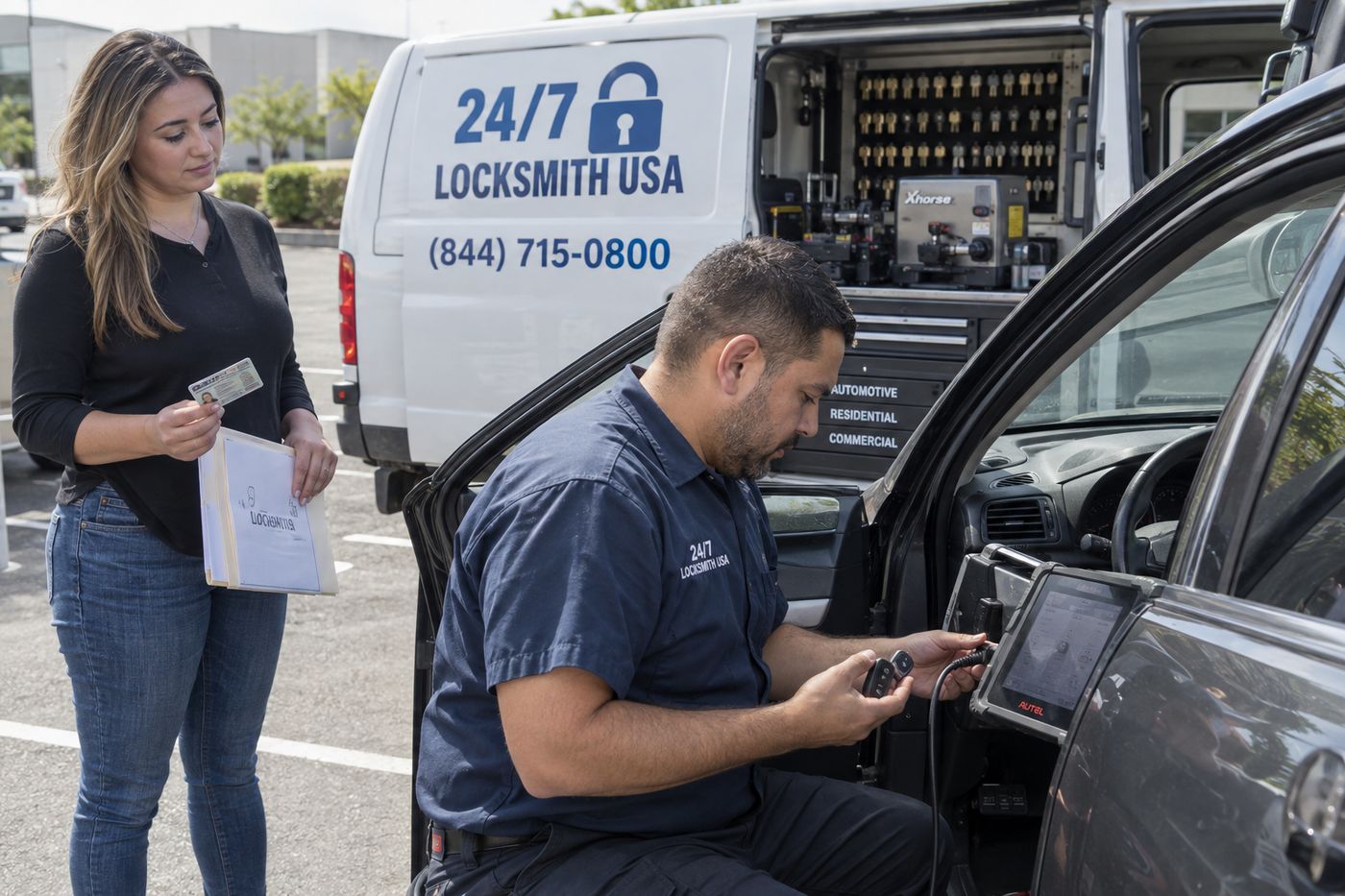
Tampa car key services.
Cutting, programming and ignition work performed at the vehicle.
Lost Key Replacement
No key at all after an airport-lot loss, rebuilt from your VIN at the vehicle.
Corroded Fob Replacement
Fobs killed by a bay-water dunk at a Tampa ramp get replaced and paired to the car.
Ignition Switch Repair
Worn switches on high-mileage commuter trucks fixed in the driveway or the office deck.
Smart Key Replacement
Proximity keys for newer vehicles handled anywhere from Carrollwood to Brandon.
Broken Key Removal
A blade sheared off in a hot cylinder comes out and a replacement gets cut on the spot.
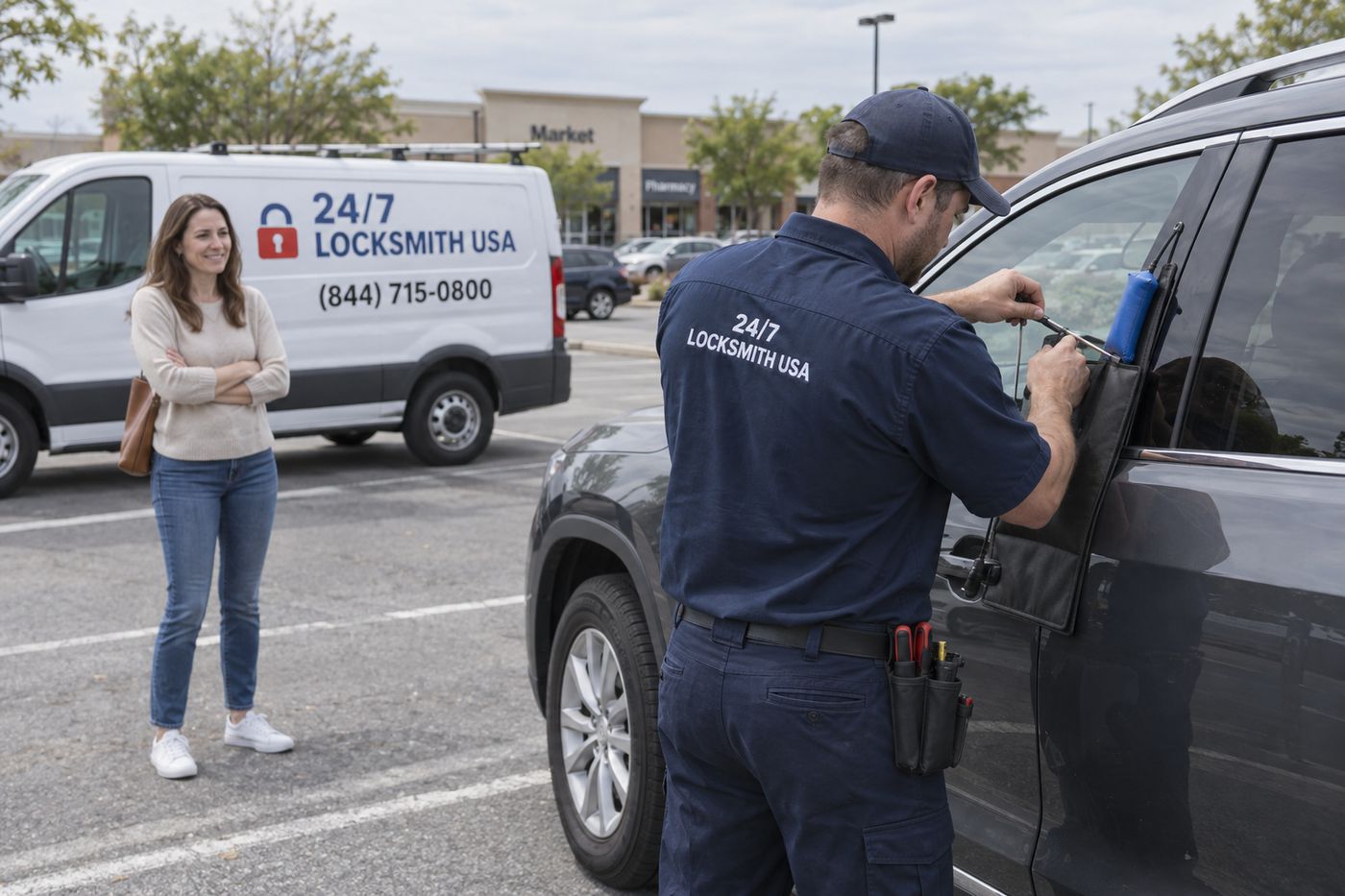
Emergency Lockout Entry
Doors opened cleanly when the key is sitting on the seat in an Ybor lot.
What Tampa does to car keys.
Tampa drivers spend their lives in a handful of chokepoints, and keys disappear at every one. The economy and long-term lots near Westshore fill with vehicles left for a week while their owners fly out, and a fob that falls between a suitcase and a shuttle seat is not discovered until the return flight lands. MacDill families deal with the opposite problem, cars parked for a full deployment with a single key that has to still work on the day someone comes home. Down at Ballast Point and Picnic Island the trailer crowd wades knee-deep to launch, and a fob riding in a swim-trunk pocket takes a dunk in brackish water that eats the board from the inside. Ybor City street parking after a night out produces its own steady run of keys left on a bar rail. Then there is storm season, when an evacuation order for the low zones sends South Tampa and Davis Islands residents to park in unfamiliar inland garages, and the scramble that follows is where a lot of keys get separated from their owners. Our van carries the cutting and programming equipment to each of those situations.
What makes keys wear out in a humid, sunny place
A car key lives a harder life in Florida than it seems. The dashboard of a parked car can get hot enough to warp plastic, and a fob left in a cup holder or on the dash may spend hours baking before you pick it up. Heat shortens battery life, softens glue and can make the rubber buttons on a fob sticky or cracked.
Humidity adds its own problems. Moisture creeps into the seams of a key fob and slowly corrodes the little metal contacts that hold the battery in place. A fob that has been rained on, dropped near a pool or carried through a beach day can work perfectly for a week and then quit with no warning.
This page is general guidance for people in Tampa. It does not describe any particular neighborhood or claim a history in the area, and it avoids guessing at local rules. It is meant to help you understand what is likely happening to your key and what a sensible next step looks like.
Three different problems that feel the same
When a car will not respond to your key, it is easy to assume the key is simply broken. In practice there are three separate situations, and they need different help. In the first, the key still exists and mostly works but the battery or the buttons are failing. In the second, the key is locked in the car, dropped somewhere or lost. In the third, there is no key at all and no spare to copy.
A weak battery is the simplest case and sometimes you can solve it yourself. A locked car is a lockout, which is a matter of opening the vehicle without harming it. A lost key with no spare is the most involved, because a technician must create a new key from the vehicle's identification number and make the car accept it.
When you call, say which of these you are facing. A clear first sentence, such as that you lost the only key to a particular make, model and year, lets the dispatcher explain what the job involves and what the service call charge covers before anyone is sent.
- A fob that sometimes works and sometimes does not usually points to a battery or worn contacts.
- A key that turns the ignition but will not start the engine points to a chip or immobilizer problem.
- A key that will not go into the door or ignition points to damage on the key or dirt in the lock.
- A key you cannot find anywhere is a replacement job, and the more details you have, the smoother it goes.
Water, pools and summer storms
Afternoon storms roll in suddenly during the warm months, and a key in a wet pocket is a common casualty. If you drop a fob in water, resist the urge to press buttons to test it. Pull out the battery if you can, dry the outside with a soft cloth and let it sit somewhere dry and not hot. Do not use a hair dryer or leave it in direct sun, since both can damage the circuit board.
Salt water is worse than fresh water because it leaves residue behind that keeps corroding after the key dries. After a beach trip or a boat day, a key that was submerged deserves a close look even if it appears to work. Our page on a car key that fell in water goes through the steps in more detail.
If the fob never recovers, a technician can often build a replacement and program it to the car. In some cases the key blade and chip survive and only the remote portion needs attention. Ask which part of your key is actually failing, because that affects the work and the quote.
Lost keys and what proof you should bring
No honest locksmith will cut or program a key for a car without checking that the person asking has the right to it. This protects owners from theft, and it applies whether the call is about a sedan in a driveway or a work truck in a lot. Expect to show a photo ID, plus a registration, title or another document that connects you to the vehicle.
The vehicle identification number is the second piece. It is stamped on a plate visible through the windshield on the driver's side and printed on your registration and insurance card. Our short guide to finding your VIN shows where to look, and the page on proof of ownership for a car key explains the reasoning.
If your name is not on the paperwork, because the car is leased, belongs to a business or is registered to a family member, tell the dispatcher at the start. There are usually acceptable ways to show authority, but they differ from case to case, so it is better to settle them before the visit than at the car door.
All keys lost versus adding a spare
Copying a key you still have is different from starting from nothing. With one working key in hand, a technician can often duplicate it and program the new copy without much trouble. When every key is gone, the key must be cut to a code derived from the vehicle and then introduced to the car's computer, and that takes more steps and more time on site.
The distinction matters for your budget and your stress. If you are down to a single key, make a spare now rather than waiting for the key to break or disappear. The page about all keys lost situations describes what changes when no original is available, and the overview of car key replacement covers the usual flow.
A spare kept at home is only useful if it has been tested. Walk to the car and make sure it unlocks the doors and starts the engine. A spare that was never programmed correctly is no help at the moment you need it, and finding out in a parking lot at night is the worst way to learn that.
Also decide where the second key will live. Some people keep it in a drawer at home, others with a partner or a close relative. What matters is that you can get to it without needing the car, since a spare locked inside the vehicle solves nothing. If you manage several cars, label each key clearly so that you do not mix them up under pressure.
Chips, transponders and why hardware store copies fail
Most car keys made in recent decades contain a small chip that talks to the vehicle. The key has to carry the right code or the engine will crank briefly and stop, or refuse to turn over at all. A copy cut perfectly on a machine, with no chip programmed, will open the door and still leave you stuck.
A transponder key programming service matches the chip in a new key to the car. Some vehicles accept a new key after a short sequence, while others need equipment that talks to the onboard computer. A technician will know which applies to your make and model, and can say so on the phone.
Push button cars use a different system. The fob communicates by radio, and there is usually a hidden emergency blade inside. Replacing that kind of key means programming a smart fob, and the process is closer to pairing a device than to cutting metal. If you are not sure what you own, describe the car and let the dispatcher help you identify it.
Hurricane season and the keys in your pocket
The Gulf coast has an annual storm season, and anything that disrupts normal life also disrupts the way people handle keys. Evacuations are hurried, cars are moved, and bags are packed in a hurry. A spare key left behind in a flooded home or a key lost in a move is a real risk.
A short checklist helps. Know where every key to every vehicle is, keep a spare outside the house with someone you trust, and photograph your registration and insurance cards so that the information survives if papers are lost. Our guide to lock and key preparation for hurricane season collects these ideas in one place.
After a storm, if the car was in floodwater, do not try to start it. Water can damage the electronics that also control the key system, and a service visit may involve more than a simple key. Tell the dispatcher about the exposure so they know what to expect.
Power outages bring a smaller problem of their own. If your home has an electronic lock or a keypad, find out now what happens when the battery runs low, and keep a mechanical key somewhere safe. People are often surprised that a smart lock can leave them standing outside after a long outage, and a few minutes of checking beforehand avoids that. The same thinking applies to a garage entry door and any gate you rely on every day.
Preventing the lockout in the first place
Many lockouts happen because of routine habits, such as setting the key on the roof while loading groceries, leaving the fob in a bag you lock in the trunk or closing the door with the engine running. A couple of small changes can remove most of that risk. Put the key in the same pocket every time, and pause before shutting a door to touch that pocket.
Our guide to avoiding locking keys in your car goes into the habits that help. For a family that shares a vehicle, agree on one place for the spare and tell everyone where it is. For people with push button cars, remember that many fobs will still lock the door when left inside, depending on the model, so check your own manual.
If you do end up locked out, take a breath and avoid forcing anything. Pry tools and wedges can bend the door frame or scratch the paint, and a repair for that may cost more than the service you were trying to avoid. A professional opening is gentler on the car.
Dealership or locksmith: choosing how to get a key
There are two usual routes to a replacement car key. One is to bring the car to a dealership, which will order and program a key. The other is to call a locksmith who can often travel to the vehicle. Each has strengths, and the right choice depends on the car, the timing and how the car is currently parked.
If the vehicle cannot be driven, because every key is gone, a dealership visit might mean arranging a tow. A mobile technician can sometimes avoid that. Our page comparing dealership and locksmith keys sets out the differences so you can weigh them for your situation.
Whichever way you go, ask for a clear explanation of the quote. What does it include, what could change it, and what is the service call charge for the visit? A straightforward answer before dispatch is a good sign. Vague answers are a reason to keep looking.
Timing also deserves a thought. A dealership works from set business hours and keeps the car while it is programmed, whereas a mobile locksmith can come to wherever the car is stuck, including a driveway or a workplace lot. If you need to be somewhere, ask whoever you call how long the visit tends to take for your type of key, understanding that no one can promise an exact time before seeing the car.
Parking lots, garages and shared spaces
A large share of key trouble in a busy city happens in places where many cars sit close together: shopping center lots, apartment garages, hospital decks and beachside parking. In these places a lockout carries extra complications. The car may be wedged between others, the space may have low ceilings, and there may be a rule about who can work on site. Mention the type of place when you call so the technician can plan.
If you are in a garage with a gate or a ticket system, tell the dispatcher how access works. Some buildings need a name at the front desk, and others limit hours for outside vendors. Ask the property manager or attendant what is required, since such rules vary and differ from one property to the next.
It also helps to take a photo of where you parked and the level or section. When you are stressed it is easy to forget those details, and a clear description can make the difference between finding the car at once and wandering around a deck. Keep your phone charged, and if the battery is low, find a place to plug it in before the call.
If you are traveling with children or elderly relatives, ask them to wait somewhere comfortable and shaded while you sort things out. Heat builds in a parked car with surprising speed, so never leave a person or a pet inside a locked vehicle, even for a short errand.
Other Florida cities nearby and the state overview
Tampa drivers often travel across the bay or toward the center of the state. If you find yourself in St. Petersburg or Orlando, the same kind of guidance applies, since the basic process is similar everywhere.
You can also read the broader Florida overview to see how service is arranged across the state. Requirements for vehicles, registration and towing vary, and you should ask the right office or your insurer if you are unsure about a rule that affects you.
Whatever the city, the first step is the same: call, describe the car and where it is, confirm that you can prove ownership, and ask for a quote and a clear explanation of the service call charge before anyone heads your way.
Common questions
Can a new car key be made in Tampa if I have no spare?
Yes, in most cases a technician can cut and program a new key from the vehicle identification number when no spare exists. You will be asked for a photo ID and a document tying you to the car. Ask when you call whether the work can be done where the car is parked.
Why does my key fob work only some of the time?
An unreliable fob usually points to a weak battery, worn contacts or moisture inside the case. Heat and humidity make these problems common in Florida. Replace the battery first and clean the contacts gently. If it still behaves oddly, the fob may need to be programmed again or replaced.
What should I do if my key fell in a pool or the ocean?
Do not press the buttons. Remove the battery if you can, dry the outside with a soft cloth and let it air dry away from direct heat. Salt water leaves residue that keeps corroding, so have the key checked even if it seems to work. A replacement fob can often be programmed.
Do I need the VIN to get a key made?
Yes, the vehicle identification number is normally required for cutting and programming a key. It is on a plate visible through the windshield on the driver side, and printed on your registration and insurance card. You can describe the make, model and year first to get a general idea of the job.
Will the locksmith ask me to prove the car is mine?
Yes. Ownership or authority is checked before any opening, cutting or programming. A photo ID that matches the registration or title is typical. If the vehicle is leased or belongs to a business, mention that at the start so you can bring the right paperwork.
How is the final quote decided?
A quote is given by phone based on your vehicle, the type of key and where the car is. The service call charge is explained before dispatch. Details such as a damaged ignition or an unusual key type can change the work, so share everything you know on the call.