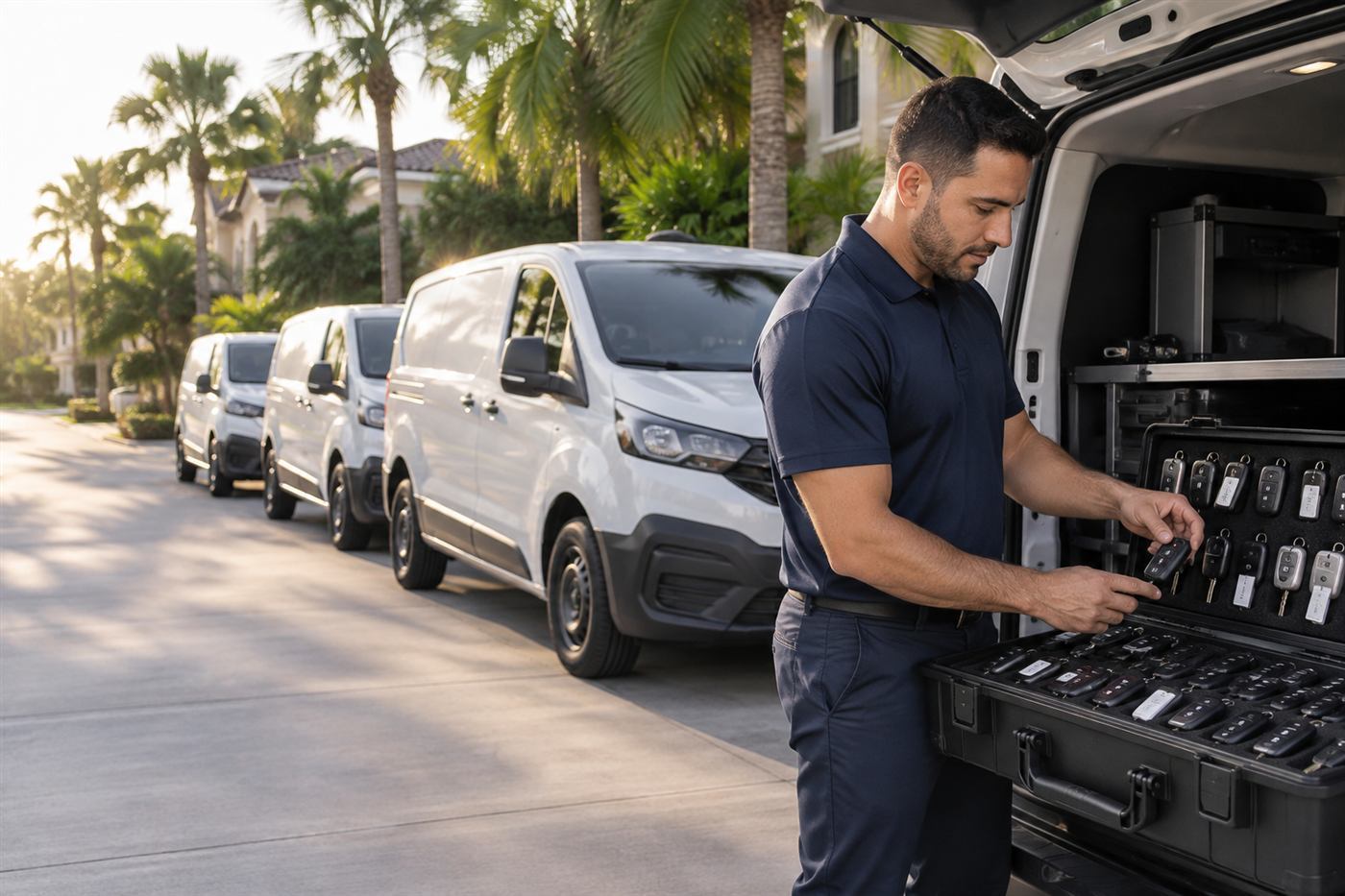
A city with three kinds of callers
Virginia Beach is unusual because three very different groups of people end up needing a locksmith in the same week. There are the visitors, who arrive for a beach weekend and lock a rental car with the keys inside. There are the military families, who move in and out of the area on a schedule set by orders and who have house keys, car keys and storage keys scattered across several addresses. And there are the longtime residents of neighborhoods like Kempsville, Princess Anne, Great Neck and Hilltop, whose cars and homes simply get older each year.
Each group has a different problem. Visitors need speed and clarity because they are away from their own tools, their own spare keys and their own paperwork. Military households need practical help with rekeying, spare keys and sometimes several vehicles at once. Residents tend to call about wear, failing fobs and ignition trouble that has been building for months.
The service works the same way for all three. You call, describe the vehicle and where you are, and receive a quote by phone before anyone is dispatched. A service call charge applies to dispatching a technician and is explained on the call before you agree to anything. Complicated work, such as a lost smart key on a newer vehicle, may need an on-site visit to assess, and the dispatcher will tell you so honestly. If a child or pet is locked in a hot car, call 911 first and call us afterward.
Oceanfront calls, rental cars and hotel lots
The Oceanfront and the streets behind it generate a steady flow of lockout calls. A rental car is parked at a hotel, a family carries beach gear to the boardwalk, and a door closes with the key fob inside the bag that was just placed on the back seat. Paid lots and metered spaces near Atlantic Avenue are crowded, and many have time limits, which adds a layer of stress to the situation.
Rental vehicles bring a few extra points. The key or fob belongs to the rental company, and the agreement usually says who to contact first. Some rental companies have their own roadside program, and calling them may be quicker or may be required to avoid a penalty. Check the paperwork in your email or on the agreement before you call anyone. If the company says to use your own locksmith, or if you cannot reach them, a technician can open the vehicle. If the key itself is lost, the situation is different, because a replacement fob for a rental car needs the company to confirm ownership. Our guide on the rental car lockout guide walks through the order of calls.
When you phone, give the name of the lot or hotel, the level if it is a garage, and a landmark such as a cross street or a numbered block. The Oceanfront can be confusing for people who do not know it, and a technician who arrives at the wrong entrance loses time for everyone. Stay with the vehicle, keep sunscreen and water close by in warm weather, and wait in the shade.
Military families, moves and spare keys
Virginia Beach is home to a large military population, with households connected to the naval air station, the amphibious bases and other commands in the Hampton Roads region. Moves are frequent, and many families arrive at a rental home or a purchased house with a stack of keys nobody can account for. Former tenants, contractors, previous owners and property managers may all have held copies.
Rekeying is the practical answer. It changes the internal pins of a lock so that old keys no longer work, while the lock itself stays in place. It is quicker and simpler than replacing hardware and gives you a clean starting point on day one. You can read more on our page about lock rekey service. For a family with several vehicles, it also makes sense to think about spare programmed keys. One spouse deployed and one at home with a single working key is a situation where a spare saves a very bad day. Our page on spare car key programming explains how it works.
Vehicles are another part of the picture. Cars may be left at home during deployments, parked in storage lots or shipped. A battery that sits unused can go flat, a fob that sits in a drawer can lose its charge, and a key that has not been used for months may behave oddly. If you are preparing to leave a vehicle for a long period, replace the fob battery first and consider a spare key kept somewhere safe and trusted. If you have a power of attorney or a family member handling the car, tell the dispatcher, because proof of ownership requirements still apply and we want to explain them before anyone drives out.
Salt air, sand and what they do to keys and locks
Salt air is the defining local factor. It is carried inland on the wind and settles on door handles, lock faces, ignition keyways and key blades. Over time it causes corrosion, stiffness and pitting. A lock that has been exposed for years may feel rough, sticky or gritty. A key that is used daily in that environment wears faster. A deadbolt on a beachside entry door can start to bind in the cold months, when moisture and temperature changes collect inside the cylinder.
Sand adds to the problem. It works into hinges, door tracks and car door locks, and it settles inside key fobs when they are carried in pockets and beach bags. A fob that has been rinsed, dropped on the sand or left in a wet bag may continue to work for a while and then fail. The silicone seals around buttons are especially vulnerable to damage.
There are sensible things you can do. Wipe the key and the lock face with a dry cloth after a beach trip. Do not spray heavy oils into a lock, because they attract dust and sand and can make the problem worse over time. Keep a fob out of wet pockets and swim bags. If a lock is hard to turn, do not force it. A key that snaps in a cylinder is much more trouble than a gentle service call. See broken key extraction for what a technician does if it already has.
Car key problems we hear about most
In Virginia Beach, car key calls fall into familiar patterns. A key that has been in daily use for ten years starts to feel loose in the ignition. A fob works at the front door and fails at the car. A push-button start vehicle shows a warning that it cannot detect the key. A spare key that was cut years ago turns the lock but will not start the engine. A key snaps in the door after a cold morning.
Most of these have understandable causes. Worn blades stop lining up with the wafers inside the ignition, which is why a copy of a copy often performs worse than the original. A weak fob battery reduces range and makes the car appear deaf. A spare key that turns but does not start usually lacks a programmed transponder chip or was never programmed to the vehicle. And a broken key is usually the end result of a long process of wear and stress.
A technician will test the key, the fob and the vehicle before suggesting a fix. Sometimes the answer is a new battery. Sometimes it is a new key cut to the vehicle's key data and programmed on site. Sometimes the ignition cylinder itself has worn and needs attention. Our pages on key turns but car will not start and car will not unlock with the fob explain the likely causes and what to check before you call.
Lockouts and what to avoid
A lockout feels like an emergency, and sometimes it is. Even when it is not, the temptation to fix it yourself is strong. We advise against that. Improvised tools can scratch glass, tear the rubber seal around the door and damage the wiring and airbag components inside the door panel. Newer vehicles are more complicated inside than people expect. The repair of a bent door frame or a torn seal is usually larger than the original problem.
We do not describe opening techniques on this site, and nobody should treat a web page as a guide to bypassing a lock. What we can say is that a trained technician opens the vehicle with equipment made for the purpose and without leaving marks. The process is usually short. The part that takes time is arriving, which depends on traffic, bridges, tunnels and the time of year. Hampton Roads has a lot of water, and crossings can back up in ways visitors do not expect. We do not promise an arrival time, but we will tell you honestly what the dispatcher sees.
If the engine is running, say so. If the keys are in the trunk, say so. If the alarm is sounding, say so. Each detail changes what the technician needs to bring. Our page on locked keys in a running car explains why the engine situation matters and how to stay safe while you wait.
Homes, condos and short-term rentals
Virginia Beach has a lot of vacation rentals, condos and townhouses, particularly near the water and along the Chesapeake Bay side. These properties see frequent guest turnover, and a rental owner or property manager often wants a lock change or a rekey between seasons. A combination lock or a smart lock may also be used, and those bring their own problems, such as dead batteries and forgotten PINs.
For an owner, a clear approach helps. Rekey or change locks after a long-term tenant leaves, after a lost key and after any incident that gives you doubts about who holds a copy. Keep a record of how many keys exist and who has them. Consider hardware suited to a marine climate, because ordinary finishes do not always last near salt air. Our page on smart lock installation and our guide on how often to rekey or change locks are useful starting points.
For a resident locked out of a home, the process is similar to a car lockout. You call, give the address and describe the door. A technician verifies that you live there before opening. That step protects you, and any honest locksmith should insist on it. If you are locked out of a condo, remember that building rules may limit who can enter and when, and the front desk or management office may need to be told.
Quotes, the service call charge and honesty
We give quotes only by phone. You describe the situation, the dispatcher asks about the vehicle and the location, and you hear the number before anyone is sent. A service call charge covers dispatching a technician and is explained on the phone before dispatch. For simple jobs, the quote is complete on the call. For more complicated ones, an on-site visit is part of how the final figure is set.
If the job is not what you described, the technician tells you the revised figure before touching anything. You are always allowed to decline. We do not ask for payment before a job is clear to you, and we do not use a very low opening figure to get a technician through the door. If a company on the phone refuses to say anything about cost until arrival, treat that as a warning sign. Our guide on questions to ask a locksmith before dispatch lists what to ask, and how to verify a locksmith's credentials explains what to look for when someone arrives.
We also do not claim to be everywhere at every hour. The name of the service reflects a concept, not a promise that a technician is waiting at every address at every moment. What we promise is plain talk, a quote before dispatch and respect for your time.
Getting ready to call
Before you call, gather what you can. The dispatcher will ask for the make, model and approximate year of the vehicle, the exact location and a short description of what happened. For a replacement key, you will need the vehicle identification number and proof of ownership. A registration, a title or a document in your name, plus a photo ID, is the usual combination. For a rental car, the agreement is the key piece of paper. For a military family, a vehicle registered in another state is not a problem, but the paperwork should match the name on your ID.
Stay safe while you wait. Pick a visible, well-lit spot away from traffic and keep your phone charged. When the technician arrives, check identification and confirm the company name matches the one you called. Ask them to repeat the quote before work begins. If something feels wrong, you can stop.
If you are stuck at the Oceanfront on a busy weekend, in a quiet cul-de-sac in Kempsville or at a base gate and cannot get in, call and tell us where you are and what happened. We will take it from there, plainly and without pressure.
- Vehicle make, model, year and VIN if available
- Exact location, including lot name, level or cross street
- Photo ID and proof of ownership or the rental agreement
- A charged phone and a safe place to wait
- Notes on whether the engine is running or an alarm is sounding
Questions people ask
I locked the keys in a rental car near the Oceanfront. Who should I call first?
Check your rental agreement, because many companies have their own roadside program and may require you to use it. If the company tells you to use a local locksmith, or if you cannot reach them, call us with the vehicle and location. If a child or pet is inside, call 911 before anything else.
Can you make a replacement key if my only key is lost?
In most cases yes. A technician works from the vehicle identification number and proof of ownership, then cuts and programs a new key on site. Some newer smart key vehicles need a look first, and the dispatcher will tell you on the phone. Have your photo ID and registration or title ready when you call.
Does salt air really damage car keys and house locks?
It does over time. Salt settles on lock faces and key blades and causes corrosion, stiffness and wear, especially near the water. Wiping keys and lock faces with a dry cloth helps, and heavy oil sprays usually make things worse. If a lock is hard to turn, do not force it, because a broken key is a bigger problem.
We just moved here with the military. Should we change the locks?
Rekeying is a sensible first step in a new home. It makes old keys useless without replacing the lock hardware, so previous tenants, owners and contractors no longer have access. It is usually quicker than a full replacement. Call and describe the doors, and the dispatcher will explain the quote and the service call charge.
How is the price decided?
Quotes are given only by phone, after you describe the vehicle or door and the location. A service call charge applies to dispatch and is explained before anyone is sent. Complicated jobs may need an on-site visit to set the final figure. If anything differs on arrival, you hear the revised quote before work starts and can decline.
Will a technician open a car for someone who cannot show ownership?
No. A responsible technician verifies that you are the owner or an authorized user before opening a vehicle or making a key. A registration, title or rental agreement with a matching photo ID is the usual proof. This protects you from someone trying to take your car or have a key made without permission.
Describe the situation by phone and we will tell you what the job involves. Quotes are given by phone. Jobs that cannot be quoted without seeing them need a technician on site, and the service call charge is explained on the phone before anyone is dispatched.
(844) 715-0800Related pages
Written by Claude (AI) (AI) for 24/7 Locksmith USA.