
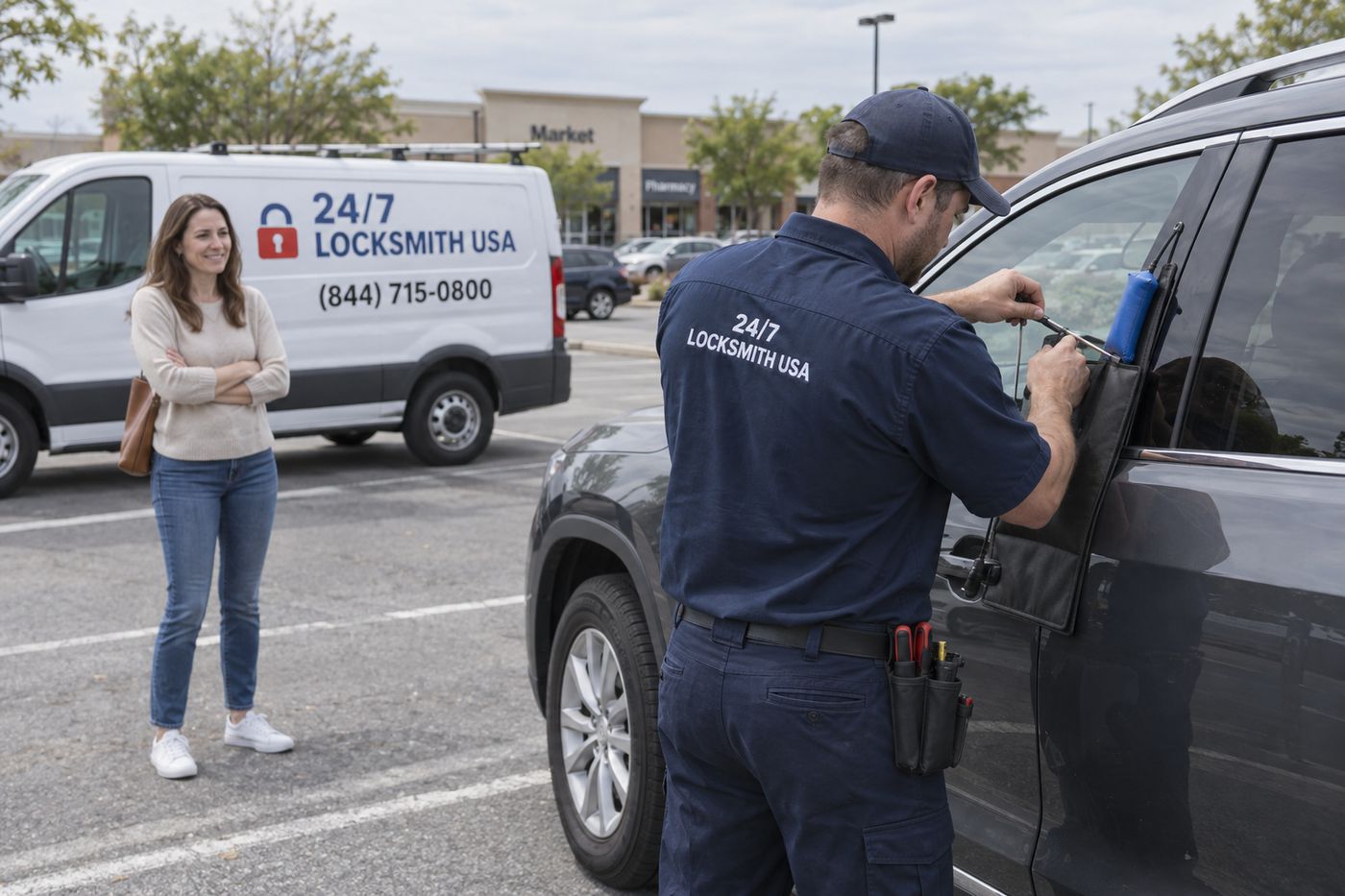
Car keys, lockouts, ignitions and rekeys across San Diego and the surrounding California metro. Call (844) 926-0400.
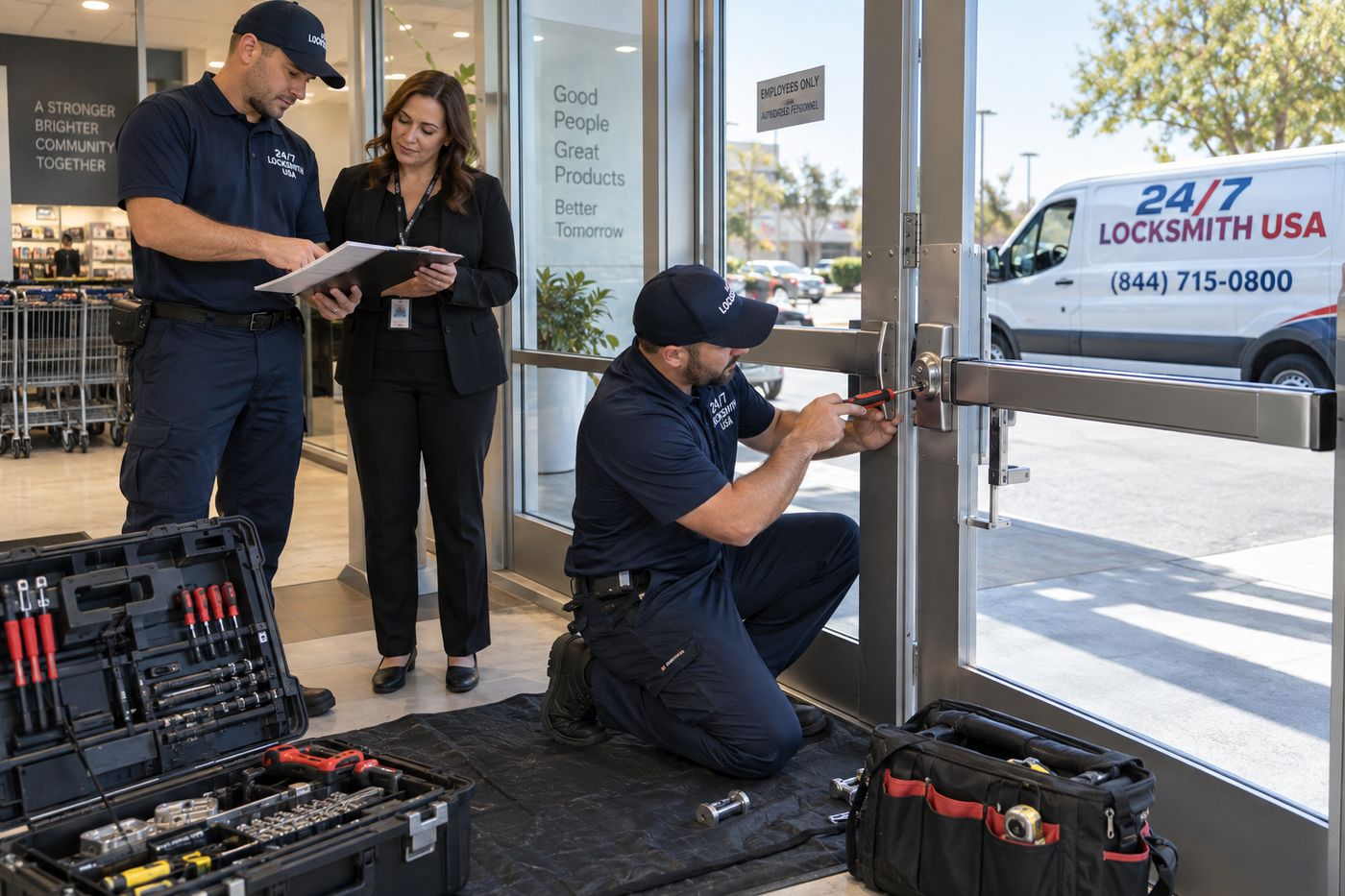
24/7 Locksmith USA covers San Diego for automotive, residential and commercial lock work. Lost car keys and fobs, cars and homes opened without damage, broken keys pulled out of ignitions and cylinders, locks rekeyed after a move, and commercial hardware for storefronts and offices. Everything is done at your address. Call (844) 926-0400.
People searching 247 locksmith san diego land here for the same reason everyone does: they want one number, a real technician, and a price agreed before anybody drives out. That is how we run it. You describe the situation on the phone, you get a number, and if what we find on site is different from what was described you hear the revised figure before any work starts.
What We Handle in San Diego
San Diego ZIP codes covered: 92101, 92103, 92104, 92109, 92115, 92117, 92122, 92130
- Car key replacement, cut and programmed on site from the VIN and proof of ownership, including push-to-start systems
- Key fob programming, added to a vehicle that still has a working key, or programmed from scratch when every key is gone
- Car and home lockouts, opened without damage to the door, the seal or the latch
- Broken key extraction, blades snapped in ignitions, door locks and deadbolts
- Ignition repair, keys that will not turn, cylinders that turn but will not start
- Rekeying, after a move, a tenant change, a breakup or a contractor handover
- Commercial hardware, storefronts, offices, mailboxes, file cabinets and master key systems
What San Diego Actually Calls About
Coastal corrosion on exterior hardware, rental turnover near the universities, and a lot of beach-area lockouts where the keys went into a bag and never came out.
California Conditions
California work is dominated by high-density parking, older housing stock with original hardware, and a very high rate of push-to-start vehicles. Coastal salt affects hardware in the beach cities the same way it does in Florida.
Arrival Time, Honestly
San Diego is deceptively spread out, from the beach communities up through the inland valleys, and Interstate 5 traffic changes by the hour. We cannot responsibly hand you a countdown before we know your neighborhood. Share your location and we will talk through a realistic arrival window based on where the closest technician actually is that day. If the distance means a longer wait than usual, we say so up front rather than letting you stand outside guessing.
What to Have Ready
For a vehicle: your driver licence or photo ID and something showing you own the car, registration, insurance card or title. Photograph both now and keep them on your phone; it saves twenty minutes on the roadside. For a home or business: photo ID with the address, or a lease, or another way of showing the property is yours. A legitimate locksmith will always ask. One that does not is a warning sign.
How to Tell a Real Locksmith From a Scam Listing
The pattern is consistent: a listing with no verifiable address, a phone quote of fifteen or nineteen dollars, an unmarked car, and a technician who says the lock has to be drilled. Most residential and automotive locks do not need drilling. Ask for the company name, get an estimate before dispatch, and confirm the technician is insured. Read how to spot a fake locksmith before you call anyone.
Other Cities We Cover
Los Angeles, CASan Jose, CASan Francisco, CASacramento, CAFresno, CAAll of CaliforniaFull coverage
Starting with a clear phone call
A good locksmith job begins before anyone drives to you. When you call, you describe what has happened and where you are, and the person on the other end asks a few focused questions. They want to know whether it is a house, a car or a business door, what make and year the vehicle is, and whether a key has broken, been lost or simply stopped working. Short, honest answers are the most useful kind.
Say what you know and what you only suspect. If the key turned a little and then jammed, say that. If the fob lights up but the doors do not respond, say that too. These small details separate a stuck cylinder from a dead battery from a programming fault, and each one calls for different tools and a different quote.
This page is general guidance for San Diego and does not describe past work in the city. Rules and requirements for vehicles, buildings and rentals vary, so check with your lease, your owner's manual or the relevant local office when a question comes up that is not answered here.
Salt air, damp mornings and the wear they cause
Coastal California has a gentle reputation, but air carrying salt and moisture is hard on small metal parts. Door locks, padlocks, gate hardware and mailbox cylinders near the ocean can corrode slowly, and the first sign is usually a key that feels gritty or a bolt that moves with a catch in it. Do not oil a lock heavily, because oil collects grit. A dry lubricant made for locks is the usual recommendation, and a technician can advise on the product.
Cars live outdoors here, too. Chrome trim, door handle linkages and ignition cylinders all take a beating over time, and a key that has worn smooth from daily use can begin to hang up in the ignition. Our page on worn car key symptoms describes the early signs. Replacing a worn key before it snaps costs less and is far less stressful than extracting a broken piece later.
If you live close to the water, make a habit of checking exterior hardware twice a year. Look for pitting, stiff movement, rust streaks and loose screws. A lock that has begun to corrode is easier to replace on your schedule than at midnight, and a locksmith can usually tell you whether cleaning will do or whether the cylinder has reached the end of its life.
Padlocks and gate locks deserve the same attention, since they sit outdoors all year. A shackle that has started to rust shut is a common source of frustration, and forcing it with a hammer only damages the lock and sometimes the hasp. Choose hardware designed for outdoor weather if you are replacing one, and keep a spare key for it in a dry place indoors.
Keys that meet sand, surf and swimming
Beach days are a common reason keys disappear or stop working. A fob dropped in the sand may keep working, but one that has been dunked in salt water is a different story. Salt gets into the circuit board and the battery contacts, and the damage often shows up days later as buttons that respond only sometimes. If your key has been wet, pull the battery as soon as you can and let it dry in a dry place rather than a hot one.
Do not try to dry a fob with a hair dryer or leave it in the sun on the dashboard. Heat can warp the plastic and the solder joints. The page on a car key that fell in water explains what usually works and what usually does not, and it is worth reading while the key is still drying.
When the key does not recover, a replacement can be cut and programmed once ownership is shown. Bring your registration, a photo ID and the vehicle identification number. If the key was your only one, ask about the process for all keys lost, because it differs slightly from copying a working key, and the quote you hear should reflect that difference.
While you wait, keep the key's remains if it broke or the fob if it is damaged. A technician can sometimes read a part number, a key code or a chip type from what is left, and that information helps match the replacement. Do not throw anything away until the new key works and the old pieces are no longer needed for reference.
Parking lots, garages and the car you cannot reach
Lockouts happen in predictable places: outside a gym, at a trailhead, behind a restaurant, in a beach lot. The pattern is nearly always the same. Hands are full, the door closes, and the key is on the seat or in a bag that is now inside. Stand still for a moment and check every door, because it is surprising how often one is unlocked.
If a child or a pet is inside, treat it as an emergency. Heat builds up in a closed car within minutes even on a mild day, so call emergency services first and ask a locksmith to follow. Our page on a child or pet locked in the car explains the order of steps.
For an ordinary lockout, see car lockout. A trained technician uses tools made for the job and avoids the paint, weatherstripping and wiring that a coat hanger or a wedge can ruin. Never try to pry a door with a screwdriver. Modern doors contain airbag wiring and side impact sensors that are expensive to repair.
Prevention is mostly habit. Get used to touching your pocket for the key before you close the door, and keep a second key somewhere other than the car. Some drivers leave a spare with a trusted friend, others keep it at home in a drawer. Whichever you choose, the point is that a lockout becomes a minor delay when a spare exists, and a spare can be fetched without any special tools or fees.
Remote keys, push button starts and what programming involves
Most cars sold in recent years use a key or fob that talks to the vehicle electronically. A transponder key holds a chip, and the engine computer will not allow the car to start unless that chip is recognized. A smart key goes further and communicates by radio when it is near the car. Cutting a blade alone does not make either of them work.
Programming means teaching the vehicle's computer to accept a new key. The method depends on the make, the year and whether any working key remains. You can read the general process in how car key programming works, and the service itself is described under key fob programming.
Be cautious about bargain priced online fobs. Some do not match the frequency or chip type that your car needs, and a locksmith may be unable to program one. If you already bought a fob, tell the dispatcher before the visit so the technician can check compatibility. A short description of the part number printed inside the case, or a photograph of the circuit board if the case is open, can save a wasted trip.
One more habit pays off. After any programming, test every function before the technician leaves: lock, unlock, trunk release, panic button, remote start if the car has it, and starting the engine itself. Walk a few steps away and test the range too. Finding a problem while the technician is still standing there is much easier than discovering it the next morning.
Houses, condos and the lock that stops working
A lock does not usually fail all at once. It gets stiff, the key needs a little jiggle, the bolt hesitates, or the door only latches if you lean on it. Those signs deserve attention because they tend to end in a lockout. Check first whether the door itself has shifted, since a sagging hinge or a swollen frame can make a good lock behave badly.
If the problem is in the lock, you have three choices: clean and adjust it, rekey it, or replace it. The right one depends on age, condition and how much you care about key control. Our page on a deadbolt that will not turn covers the usual causes, and a technician can walk you through grades of deadbolt if you decide to upgrade. Look for a bolt that extends well into the frame, a strike plate fastened with long screws, and a cylinder that does not wobble in its housing. Those three details matter more than a fancy finish.
Condo owners should check association rules before changing exterior locks, since some buildings require a particular hardware type or a record of who holds keys. Requirements vary, so ask your management office. For a front door that needs new hardware, lock change and installation describes what the work includes.
Rentals, short stays and moving between places
San Diego draws visitors and people who move often, which means a lot of keys change hands. If you rent out a room or a unit, you cannot always be sure every copy came back. Rekeying between tenants is the simple way to start fresh, and it takes far less time and money than most people fear. It also protects you if a problem later arises and someone asks whether the locks were changed.
Visitors have their own risks. A key lost on holiday becomes a travel problem as well as a locksmith problem, and a rental car adds the rental company's rules. Read the rental car lockout guide before calling anyone, because the company usually wants to be told first and may have its own assistance number.
If you are moving in or out, plan the lock work together with the move. A simple checklist covers who should hold keys, which doors to rekey and what to do with old keys, including the ones left in drawers by the previous occupants. Do it on the first day, before boxes pile up in front of the entrance.
Business doors, storefronts and work vehicles
A business has more doors than it first appears: front, rear, storage, office, gate. Each one has its own key history. If an employee has left, a manager has changed or a key has gone missing, rekeying or replacing the cylinders is a routine response. A commercial locksmith can also help organize keys so that fewer people hold more access than they need.
Work vans and trucks follow similar logic. A tradesperson with a missing key loses a day of income, so planning a spare is easier on the budget than reacting to an emergency. Trucks and vans often carry more than one key type, such as an ignition key, a door key and a separate key for a cargo area or toolbox, and the quote should account for all of them. Ask whether duplicates of each can be made in the same visit.
Fleet owners with several vehicles should think about a consistent plan. Label each key set, record which vehicle it belongs to, and decide who is responsible for spares. When a driver leaves, ask whether any keys or fobs remain unaccounted for. A tidy system turns a surprise lockout into a short interruption rather than a lost working day.
Whatever the business, keep written records of who holds which key. A small paper log or a spreadsheet is enough. When something goes wrong, you will be able to say exactly which locks need attention instead of replacing everything out of caution.
Understanding quotes and avoiding surprises
The conversation about price should happen on the phone, before anyone is dispatched. A normal structure is a service call charge for coming to your location, plus the cost of the work and any parts. Ask what the service call charge covers, whether programming is included, and what might change the total after the technician sees the car or door.
Vague answers are a signal. If a quote sounds far below everyone else's, it often grows on arrival. If the company will not tell you its name, or answers with a generic greeting, take a moment to find out who you are dealing with. Our article on the service call charge explained describes what is reasonable.
You have every right to decline the work if the situation changes in a way you do not accept. Politely ask for the new price to be explained, and if it does not make sense, say no. A responsible technician will not pressure you, and the call to a different company costs you only a few minutes.
Keep a note of everything you were told. Write the name of the person you spoke with, the amount quoted, the description of the work and the time of the call. If a dispute comes up, those notes carry weight, and the habit of writing them down also slows you just enough to ask the question you would otherwise forget.
Keeping a spare, and keeping it smart
The least expensive key you will ever make is the spare you cut while you still have a working one. Copying from an existing key is simpler than starting from nothing, and it avoids the stress of an all keys lost situation. Store the spare somewhere that is not the car, not a magnet box on the bumper, and not in the same bag as your main key.
Magnet boxes are a popular idea and a poor one, because thieves know where to look. The article on whether to keep a spare car key in a magnet box goes through the reasoning. A trusted family member or a locked drawer at home is a better home for a spare.
If you have a house key that you share, think about who really needs one. Each additional copy is another chance for something to go astray. Keep a short list, rekey after any doubt, and treat keys as the access tokens they are, not as trinkets to leave on a hook by the door.
Common questions
Does salt air really damage door locks and keys?
It can. Salt and moisture corrode small metal parts over time, so locks near the coast may feel gritty, stiff or slow to turn. A dry lubricant made for locks and periodic checks of exterior hardware help. If a cylinder has started to pit or stick, a technician can tell you whether cleaning or replacement makes sense.
What should I do if my fob was dunked in the ocean?
Remove the battery as soon as you can and let the fob dry in a dry, cool place. Avoid heat from a hair dryer or direct sun. If it still misbehaves after drying, the board may be damaged by salt, and replacement or reprogramming could be needed. A locksmith can test it.
What documents will a locksmith ask for with a car key?
Expect to show a photo ID and proof that the vehicle belongs to you, such as a registration or title. The technician will also need the vehicle identification number. If a lender holds the title, ask what other proof is acceptable. Requirements can differ by situation, and the dispatcher can explain.
Is rekeying worth it after a roommate or tenant moves out?
Usually yes. Rekeying makes old copies useless without replacing the hardware, so you know exactly who has a working key. It is a sensible step after any change in who lives or works in a place. A technician can tell you whether your locks can be rekeyed or should be replaced.
Can a locksmith program a fob I bought online?
Sometimes, but not always. Many online fobs do not match the chip type or frequency your car needs. Tell the dispatcher about the fob before the visit and give any part number you can see on the case, so the technician can judge compatibility and quote the job accurately.
What if I am locked out and someone is in danger?
Call emergency services immediately. A child or pet in a closed car, or a person who needs help inside a locked home, is an emergency that comes before any locksmith call. Once emergency responders are on the way, you can contact a locksmith to follow up on the lock.