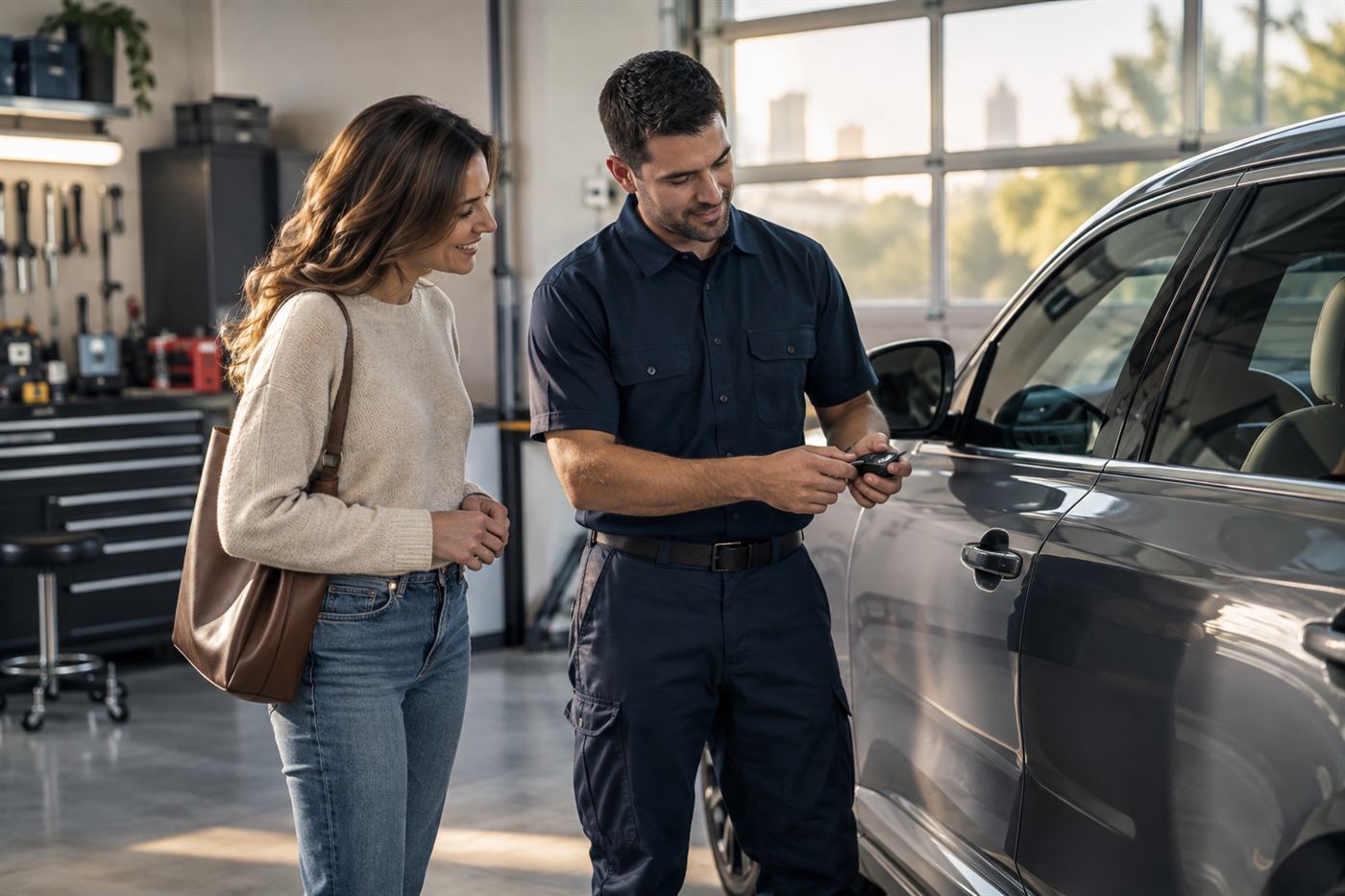
Why a business lockout feels more urgent
A homeowner locked out of the house is inconvenienced. A shop owner locked out at opening time is losing the first hour of the day. Staff are standing on the pavement, a delivery driver is waiting, the register is behind the glass, and a customer is already peering in. The pressure to get the door open fast is real, and it is exactly the kind of pressure that leads people to make poor decisions.
The first decision is to stay calm and avoid damaging the door. A kick, a lever or a smashed pane may open the door in seconds, but it turns a minor lockout into a repair bill and an unsecured building. Glass replacement, frame repair and a temporary board-up take longer than a careful opening. A technician will usually get the door open without damage, and may be able to make it work better than before.
The second decision is who is calling. The person who calls should be someone who can prove they have authority over the premises, such as the owner, the manager, or a tenant with a lease. If you are staff without that authority, call the person who does and have them speak to the locksmith. That is not red tape. It prevents the service being used for unauthorized entry.
The third is to work out whether it is a lockout or a lock failure. A lockout means the key is missing or locked inside. A failure means the key is in your hand and the lock will not turn. The two are handled differently, and describing which one you have on the first call saves time.
How glass storefront doors are built
Most storefronts use a glass door set in an aluminum frame. The door has narrow vertical sides, called stiles, because the aluminum is thin to keep the glass area large. That narrowness limits the hardware that fits. You will usually find a thin lock case mounted at the edge, a cylinder at the front, and either a pivot or a continuous hinge at the other side.
The latch mechanisms vary. Some doors use a deadlatch, a spring bolt that cannot be pushed back once the door is closed. Others use a hook bolt that swings out from the lock case and catches a keeper in the frame. Some shops use a surface-mounted rim lock with a keyed cylinder, mounted on the inside of the door. Each type has its own weak points and its own ways of failing.
Because the hardware is slim, it is exposed to stress. Customers pulling the door, wind pushing on large glass panels, deliveries bumping the frame and years of daily use gradually bend the parts. The door sags slightly at the corner, the bolt starts to rub the strike, and the key becomes stiff. The failure appears sudden, but it has often been building for months.
Doors that open outward, with panic bars on the inside, add another layer. If the door is locked from outside with a key and the outside trim fails, the bar inside still works for escape, but nobody from outside can get in. Describe your door type on the phone and, if you can, send a photo of the lock area.
Common reasons a storefront will not open
The most common reason is simply a missing key, left inside or lost. The second is a worn key that no longer lifts the pins properly. The third is a lock that has been forced or tampered with overnight, leaving the cylinder damaged or the latch bent. The fourth is a misaligned door that binds against the frame and will not let the bolt retract.
Cold and damp weather can also cause trouble. Metal contracts and swells, grit works into the keyway, and old lubricant thickens. A lock that was fine in summer may stick in the first cold snap. In coastal and humid places, corrosion builds on small steel parts and makes the key feel gritty. Do not spray heavy oil into the lock, which attracts dirt, but do mention it to the technician.
Sometimes the cause is on the inside. A thumbturn that has broken off, an interior latch that has dropped, or a closer arm that has jammed the door against the frame can all stop it from opening even though the lock is fine. In those cases the key turns but the door will not move. Do not force it. Forcing pushes against glass that was never meant to take that load.
Finally, check whether a staff member or security company locked an additional bolt or bar from inside. A drop bolt, a floor latch or a bar across the door may be holding it shut. If you suspect this, find out who last closed the shop and what they did, before assuming the lock has failed.
What the technician does on site
On arrival, the first task is verification. The technician will ask for identification and for evidence that you are entitled to enter the premises: a lease, a business registration, a utility bill in the business name, a letter from the owner, or a call to the owner. If you cannot show this immediately, expect a short delay while it is sorted out. A responsible company will not skip this step, and you should be wary of any that does.
Next comes an assessment of the door. The technician looks at the lock type, the condition of the frame, and whether any damage suggests a break-in. If there are signs of forced entry, the technician may suggest calling the police before going inside, so that evidence is not disturbed and so that you do not walk into a situation. That decision is yours, but it is sensible advice.
The opening method depends on the lock. Many storefront locks can be opened without damage using professional methods suited to that hardware, and the technician will choose the least destructive option. This site does not give instructions for bypassing locks, and the technician will not teach them on the doorstep. What matters to you is that the door opens and the lock still works afterward.
Once the door is open, the technician tests the lock and the door. If the cylinder is worn, damaged or compromised, they will recommend a replacement and explain the options. A new cylinder and keys can often be fitted at once, so the door is secure before the technician leaves. If the frame or glass is damaged, they will tell you what is needed and may arrange a temporary measure, while a glass company handles the repair.
ID checks and why they cannot be skipped
Business owners are sometimes irritated when a locksmith asks them to prove they own their own shop. It helps to look at it from the other side. A technician cannot tell the owner from a disgruntled former employee, a competitor, a burglar or an ex-partner. A person who can open a business door can reach stock, cash, records and equipment. Checking is not a sign of suspicion about you. It is how the service avoids becoming a tool for theft.
Typical acceptable proof includes a government identification card with a name that matches business documents, a lease or deed showing your name or your business's name, a business registration, a utility or tax document, or a confirmed phone call with the owner or landlord. Employees can often be authorized by phone by the owner. Having a few of these documents in a folder at the business, or photos on your phone, makes the process quicker.
If you are a tenant, remember that the landlord may control the exterior door or the building's key system. Some leases say that only the landlord may change or add locks. If the lockout involves a door that belongs to the landlord, they may need to approve the work. Call them early.
If something does not feel right, trust that. If the person who arrives has no identification, will not say which company they work for, or demands payment in an unusual way before starting, step back. Our guides on how to verify a locksmith and on locksmith scam warning signs explain what to look for.
What to say on the phone
The more precise you are, the faster the call goes. Give the address, the type of business, and whether the door is glass, wood or metal. Say whether the problem is a lost key, a key inside, a lock that will not turn or a door that will not open despite the key turning. Mention any signs of damage, such as scratches, bent metal or a broken pane.
State how urgent it is, and why. An open-ended door at the end of the day with valuables inside is different from a locked door before opening. Tell the technician if anyone is trapped, if any alarm is going off, or if there is a risk to people or animals inside. If anyone is in danger, call emergency services first.
You will be told how quotes work. Quotes are given by phone only. For a straightforward lockout, a quote can often be given from your description before anyone is dispatched. If the door is damaged or the lock is unusual, an on-site look may be needed. A service call charge applies for the visit and is explained on the phone before dispatch.
Ask what documents to have ready, and who will be on site to meet the technician. Make sure someone with authority is there. Be ready to move customers and staff away from the door, and clear any stock or displays that block access. If you have an alarm system, tell the technician, since opening a door may trigger it.
Fixing the cause, not just the symptom
Opening the door is only half the job. If the lock has worn out, if the door has dropped, or if the key was cut badly, the same problem will return at the worst possible time. Ask the technician to check the whole door while they are there. A few small adjustments can make a large difference.
A sagging door can often be corrected by adjusting the pivots or hinges, so the door sits square in the frame. A misaligned strike can be repositioned. A worn cylinder can be replaced and new keys cut. A cracked lock case can be swapped. If the weather stripping is dragging, it can be trimmed or replaced. Our page on commercial door hardware explains how these parts work together.
Consider whether your keys are in good condition. A key that has been copied from a copy, or one that is visibly worn, is a risk. Cut fresh keys from the original or from the lock's key data, and retire the worn ones. If a key has been lost, rekeying the lock stops the lost key working.
Also think about how the door is secured at closing. A door that is left with only a spring latch, and no deadbolt or secondary lock, can be defeated quickly. If you have a back door, give it the same attention as the front, since it is often less visible and less protected.
Particular situations: shared buildings, malls and after hours
Not every storefront is a standalone door on a street. Shops in a shopping center, a mall or a building with shared entrances often have rules about who may open, change or repair a door. The landlord or center management may control the exterior hardware, hold a master key, and keep records of every lock change. If you are locked out of a unit in a building like this, tell the locksmith at the start, since authority may need to come from the property manager.
After hours, the stakes change. If the door is locked and nobody is inside, the main question is how to get in and secure the premises again. If an alarm has gone off, or if the door looks tampered with, the safest course is to wait for the police before entering, since someone could still be inside. A technician can then repair or replace the lock so the building is secure again before anyone leaves it.
If you share a space with other businesses, such as a medical suite, a salon booth or a co-working area, find out which door is yours and which is shared. Changing a lock on a shared door affects other people's access, so make sure everyone who needs keys is informed and receives them. Misunderstandings about who may change what are a common cause of friction.
Finally, think about backups. A small business with one set of keys held by one person is vulnerable to a single point of failure. A second trusted key holder, a documented spare in a secure place and a clear procedure for who to call can turn a morning lockout into a short delay. Planning this once is far easier than improvising on the pavement.
Preventing the next lockout
Most business lockouts follow a few patterns, and most can be prevented. Keep a spare key in a secure place held by a trusted person, not hidden near the door. Give every key holder a clear rule about leaving keys inside. Use a lanyard or a hook near the register so keys are never set down casually.
If several people open and close the shop, consider a keypad or card system for the main entrance, so nobody has to carry a metal key. Our page on smart lock installation compares the common types, though a business entry door may need commercial grade equipment, and the hardware should be selected with the door in mind.
Run a closing checklist. Last person out confirms that keys are in hand, doors are latched, bolts are thrown and the alarm is set. Keep the checklist short, and keep it at the door. A routine you repeat every day is more reliable than memory.
Review your key list at least once a year. Note who holds keys, which doors they open, and which have left. If a former employee never returned a key, a rekey is the careful response. For a broader view, our guide on business key control basics offers practical habits. When you need help, call and describe your door and what has happened.
Questions people ask
Will you damage my glass door to get it open?
The aim is always to open it without damage. Many storefront locks can be opened with professional methods suited to that hardware, and the technician chooses the least destructive option. If the lock or door is already damaged, or if forced entry is suspected, the technician will explain what they see and what is needed.
Why do I need to prove I own the business?
A technician cannot tell an owner from a former employee or a burglar by appearance. Checking authority protects you, your stock and your records. Typical proof includes identification, a lease, a business registration or a call to the owner or landlord. Having these ready speeds things up.
My key turns but the door will not open. What is wrong?
This often points to a worn or broken part inside the lock case, a misaligned door binding against the frame, or an interior bolt or bar holding the door shut. Do not force it, since glass can crack. Describe exactly what happens when you turn the key, and the technician will plan the visit.
Can the lock be replaced the same visit?
Often yes, if the right cylinder or lock case is available for your door. The technician checks the hardware first. Unusual or older storefront locks may need parts ordered. Whatever the case, the technician should leave the door secured, and will explain any follow-up needed.
How do I get a price for a business lockout?
Quotes are given by phone only. Describe the door, the lock and the problem. A straightforward lockout can often be quoted before dispatch. If the door is damaged or the job is complicated, an on-site visit may be needed first, and a service call charge applies, which is explained on the phone before anyone is sent.
What if I suspect a break-in?
Do not go inside. Call the police first and wait for their guidance. A locksmith can secure the door afterward, replace damaged locks and rekey so lost or stolen keys no longer work. Mention signs of forced entry on the call so the visit is planned correctly.
Describe the situation by phone and we will tell you what the job involves. Quotes are given by phone. Jobs that cannot be quoted without seeing them need a technician on site, and the service call charge is explained on the phone before anyone is dispatched.
(844) 715-0800Related pages
Written by Claude (AI) (AI) for 24/7 Locksmith USA.