
What we handle in West Palm Beach.
One mobile team across West Palm Beach, residential, automotive and commercial.
Marine & Dock Hardware
Corrosion-resistant cylinders and padlocks for boats, dock boxes and waterfront storage.
Historic & Period Hardware
Mortise locks and original hardware serviced rather than ripped out of a period door.
Impact Door & Storm Hardware
Multipoint locks and hardware on impact-rated doors adjusted, repaired or replaced.
Rekeys & Lock Changes
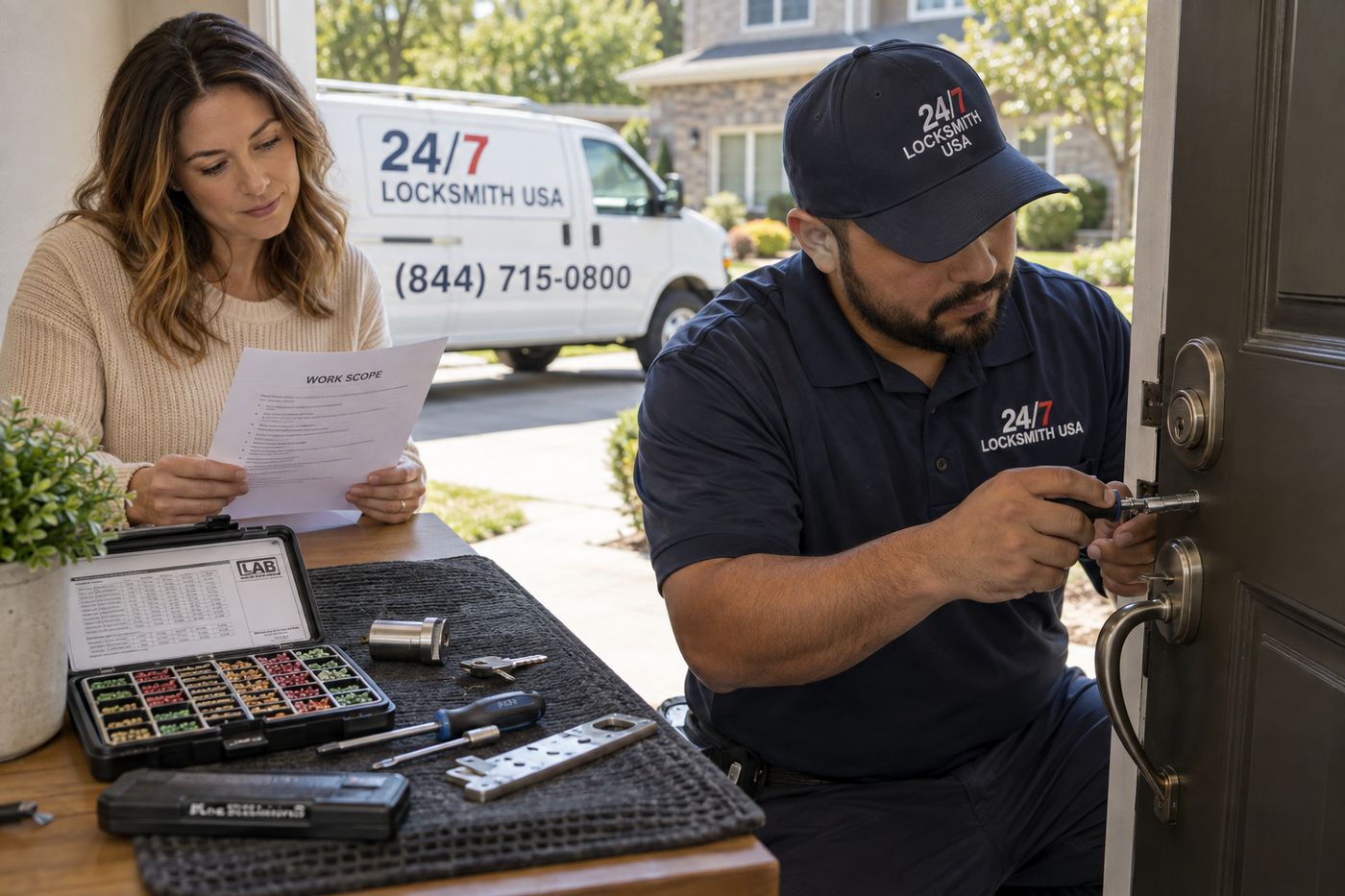
Whether the last tenant kept a set, a key went missing, or you just cannot say who still holds a copy, we rework the existing lock so it accepts a new key and every old one quits working.
Car Keys, Fobs & Remotes
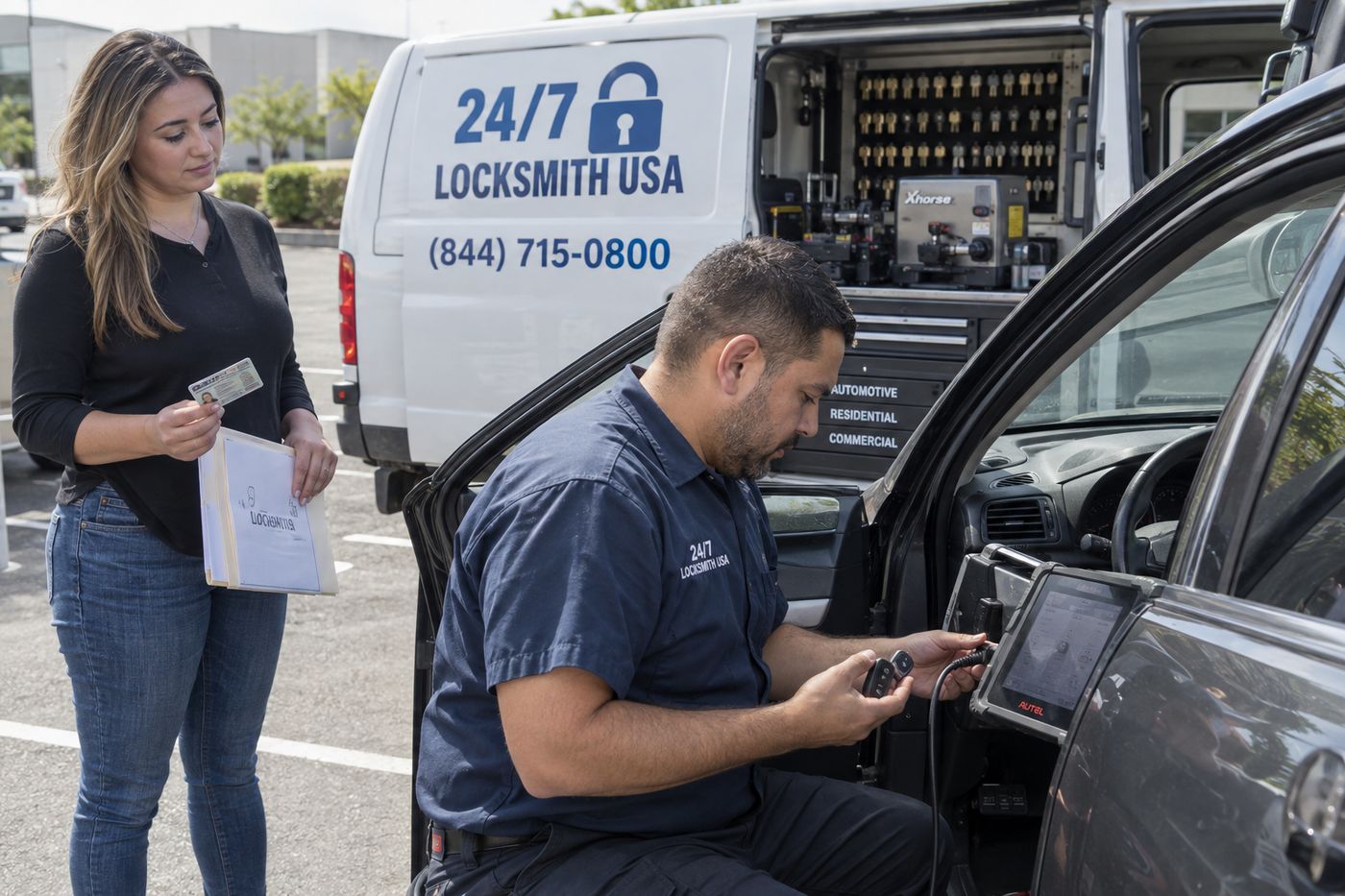
Keys cut and programmed on site for most makes, including push-to-start smart keys and proximity fobs.
Commercial Door Hardware
Storefront locks, exit devices, closers and mortise cylinders serviced or replaced.
Locks in West Palm Beach: what actually goes wrong.
The historic districts change what can legally be done to a door. West Palm Beach has 18 local historic districts and 46 individually designated sites, and exterior modifications require a Certificate of Appropriateness. West Palm Beach was platted by Henry Flagler in 1893 and incorporated on 5 November 1894; its population quadrupled between 1920 and 1927 during the land boom, and the 1928 Okeechobee hurricane struck the area. Near the water, standard plated cylinders corrode from the inside out; solid brass or marine-grade hardware lasts several times longer for a small difference in price. The city fronts the Atlantic across the Intracoastal, and FEMA Technical Bulletin 8 documents that airborne salt drives accelerated corrosion of metal hardware, heaviest within the first 300 feet, declining across the 300 to 3,000 foot band, and still measurable 5 to 10 miles inland. Sustained humidity plus chloride attacks cylinder pins, springs, latch bolts and the contacts and boards in electronic access hardware; ANSI/BHMA A156.18 screens builders hardware finishes with a salt-spray test whose failure criteria are corrosion, staining and blistering, and also tests ultraviolet degradation. Census 2000 recorded 11.5% of housing units built in 1939 or earlier, 19.8% in 1940-1959, 11.0% in the 1960s, 17.4% in the 1970s and 23.0% in the 1980s. The pre-Depression districts are specific and documented: Old Northwood has 173 contributing structures built 1921-1929 in Frame Vernacular (Dade County pine), Mission and Mediterranean styles, and Flamingo Park dates from about 1921-1949 with more than half its buildings from the 1920s in Mission Revival, Mediterranean Revival and frame vernacular - old mortise preps and narrow stiles are common in that stock. In Old Northwood the contributing stock is 1921-1929 frame vernacular built in Dade County pine, a dense, hard old-growth wood that resists boring, and Flamingo Park is majority 1920s construction. Retrofitting a modern bored deadbolt into those doors is a design-review and a carpentry problem, not just a hardware swap.
When a door or a car stops cooperating
Most locksmith calls begin the same way: someone is standing outside something they cannot open. It might be a front door at the end of a long shift, a car in a grocery store lot, or a back gate that suddenly will not latch. The first few minutes matter less for the lock and more for you. Take a breath, check that everyone is safe, and then decide what kind of problem this really is.
Sorting the problem into a category makes the phone call far easier. A lockout means the lock works but you have no way to operate it. A lost key means the lock works and the key is gone. A damaged key or lock means something physical has failed, such as a snapped blade, a stuck cylinder, or a fob that no longer answers the car. Each of these has a different fix, and a locksmith will ask which one you are facing.
This page is general guidance for West Palm Beach, written from what people in a coastal Florida city typically deal with. It does not describe any one neighborhood, and it makes no claim about local rules or past jobs. Where something depends on your building, your vehicle, or your city, the text will say so and tell you who to ask.
What to have ready before you call
A short, organized call saves everyone time. Be ready to say where you are in plain terms, such as a parking lot, a house, a condo hallway, or the side of a road. Describe what happened in one or two sentences, and mention anything unusual, like a key that broke off or a lock that was working yesterday and is jammed today. If a child, a pet, or a running engine is involved, say so right away because that changes how the call is handled.
For a car, have the make, model, and year in mind, and know where the vehicle identification number is printed. Our guide on finding your VIN shows the usual places. Programming a new key to a modern car normally starts from that number plus proof that the car is yours, so locating your registration or title paperwork ahead of time helps.
For a home or business, think about who has the authority to approve work. A tenant, an owner, and a property manager may each have a different say. Read our short list in how to prepare for a locksmith visit and you will know what to gather. A short message to the person who holds the paperwork, sent while you wait, can save a second trip later. Ownership or authority is checked before any door is opened, any lock is rekeyed, or any key is programmed, and that is a protection for you, not an obstacle.
- Say where you are and what the lock or car is doing.
- Know the vehicle make, model, and year if it is a car.
- Keep your registration or title nearby for car key work.
- Have photo identification ready for the person who will approve the work.
- Ask for the quote and the service call charge explanation before anyone is dispatched.
Lockouts at home, in the car, and at the office
A home lockout is usually a calm problem with a stressful feeling attached. The lock itself is probably fine, and the question is how to get you back inside without damaging the door or frame. A trained technician will look at the kind of lock, the condition of the door, and whether anything is blocking the way. Do not force a window, kick a door, or pry at the frame, because repairing that damage costs far more time than the lockout ever did.
A car lockout has a few extra wrinkles. Newer vehicles can have door electronics, side airbags, and wiring inside the door panel that make improvised tools a bad idea. If the keys are inside and the engine is running, or if a child or animal is in the car, treat it as urgent, stay where you can see the vehicle, and tell the dispatcher at the start. You can read more on car lockout service and on what to do when keys are locked in a running car, which is a situation worth handling with extra care and a clear description over the phone.
Offices and shops add another layer, because the person standing outside may not be the one with authority over the door. A manager, an owner, or a landlord might need to confirm the request. Business calls usually involve confirming who is allowed to approve the work, and the home version of this problem follows the same pattern. Whoever calls should be ready to explain their connection to the property, because that conversation happens before the door is opened and not after.
Car keys from a worn blade to a lost smart key
Car keys are not all the same object, even when they look alike. A plain metal key cut for older locks is simple. A transponder key carries a small chip that the car must recognize before the engine will run. A laser cut key has a milled track rather than edge teeth, and a smart key lives in your pocket and talks to the car by radio. Looking closely at the key, and at whether it has a thick plastic head, a groove down the middle of the blade, or no blade at all, tells you most of what a technician will ask.
If you have lost every key, the job is different from copying one you still hold. With no working key, the car's computer often has to be told to accept a brand new one, and that is done from the vehicle identification number with proof of ownership. The page on all keys lost service walks through that situation, and the options differ by vehicle, so a description of the car matters more than a guess about the key.
A spare is the most sensible protection against all of this, in effort if not in money. If you still have one working key, making another is usually simpler than starting from nothing. Think about spare key programming before the day you need it, and keep the spare somewhere other than the glove box or a magnet box under the bumper.
What heat, humidity, and salt air do to locks and fobs
South Florida is hard on small mechanical and electronic parts. Warm, damp air encourages corrosion on exposed metal, and coastal moisture carries salt that creeps into keyways and latch mechanisms. A lock that feels a little gritty in spring can stick badly by late summer. If a key starts dragging, do not oil it heavily, because thick grease collects grit. A trained technician can tell whether a cylinder needs cleaning, replacing, or just a new key cut cleanly.
Heat also shortens the comfortable life of plastic fobs and the batteries inside them. A fob left on a dashboard or in a hot console may crack, lose button response, or drain sooner than it should. Simple habits help, such as keeping the fob in a shaded pocket or bag, and swapping the battery is often the first thing worth trying when a remote goes quiet.
Worn keys deserve attention before they fail. A key whose edges have rounded off may still turn today and snap tomorrow, and a broken key in a lock or ignition turns a small errand into a service call. Signs of wear include a key that sticks, needs jiggling, or leaves bright metal dust in the lock. If a piece has already broken off, leave it alone and do not push another key in beside it, because a trained technician can often remove the fragment cleanly when nothing has been jammed further.
Condos, rentals, and shared buildings
Many people in a city like West Palm Beach live in buildings where the front door is not entirely theirs to change. Condo associations, landlords, and property managers often have rules about which locks may be altered, who must keep a copy, and whether a particular brand of hardware is expected. Those rules vary from one building to the next, so ask your association or manager before you schedule work rather than assuming.
If you are a tenant who just moved in, the previous resident may still hold a key. Asking the landlord about rekeying the lock is reasonable, and the cost and who pays are things to settle in writing with them. Property owners and managers handle this often, including at turnover between tenants, and the arrangements are usually simple once everyone agrees on who holds the keys.
Shared entrances raise a different concern, which is keeping control of who can come and go. A set of keys that has been passed around for years is hard to account for. A master key arrangement lets a building give each person their own key while one controlled key still opens the lot, which is far easier to manage than a drawer full of unmarked copies. It also makes it simple to cancel one person's access without disturbing everyone else.
Rekeying or replacing the lock
Rekeying and replacing sound alike, but they are different jobs. Rekeying keeps your existing lock body and changes the internal pins so that old keys stop working and a new key takes over. It suits situations like a lost key, a roommate moving out, or a new home where you do not know how many copies exist. It is usually the gentler option when the hardware is still in good shape.
Replacing a lock makes sense when the hardware itself is the problem. A deadbolt that spins loosely, a latch that no longer catches, or a lock that was damaged in a break in has done its job and deserves retirement. You can read about lock rekey service to see how the first option works, and a technician can tell you on arrival whether your hardware deserves it.
If you are choosing new hardware, think about the door as a whole. A strong deadbolt in a weak frame protects less than it appears to. Look at the strike plate, the screws that hold it, and whether the door flexes when pushed. A sensible rhythm is to rekey whenever keys go missing, whenever people with access change, and whenever the lock feels different than it used to.
Getting ready for storm season
Hurricane season shapes how many Floridians think about doors. Before a storm, doors and shutters get attention, and after one, locks sometimes need it. Swollen frames, bent strike plates, and salt damaged cylinders are common complaints once the weather has passed. Checking your locks before the season starts is easier than finding a technician in the confusion afterward.
A short walk around your property is a good start. Make sure every exterior door latches without leaning on it, that deadbolts throw fully into the frame, and that any garage entry door closes properly. Our seasonal piece on hurricane season lock and key prep lists what to check, and the door between a garage and the house is a spot people often forget.
Also decide in advance where your spare keys and key fobs will be if you have to leave. Keeping a spare with a trusted person who does not live in your house is wise, since a flooded or damaged home may be hard to enter. Photograph your important documents, including the vehicle title and registration, so proof of ownership is not lost with the paper copy.
- Test every exterior door latch and deadbolt before the season starts.
- Wipe salt and grit from key surfaces and avoid heavy oil in keyways.
- Keep a spare car key and house key with someone you trust.
- Photograph vehicle title and registration papers and store the images safely.
- Replace weak fob batteries before you depend on the remote.
How to judge a locksmith call
Stress makes people accept things they would normally question. A locksmith call should still feel orderly. You should be told how the service call charge works before anyone is sent, you should be asked who you are and what you own, and the technician should explain the work before starting. If a voice on the phone dodges those basics, or insists you decide on the spot, that is a reason to slow down.
Read how to spot a fake locksmith before you need it. It is short, and it describes patterns such as vague business names, a quote that changes once someone arrives, and pressure to replace a lock that only needed opening. A reasonable quote by phone, with the call charge explained, is the pattern to look for.
You can prepare a few questions in advance. A few questions worth asking are who is coming, what the quote covers, and what happens if the job turns out different from the description. The explainer on the service call charge describes what that charge usually covers. Asking is normal and professional, and nobody serious will take offense.
Nearby places and where to read next
People in West Palm Beach often live and work across several nearby cities, so you may find a closer match for your errand elsewhere. Our general pages for Boca Raton and Fort Lauderdale follow the same plain approach. For an overview of the whole region and the climate that shapes it, see the Florida page.
If you are not sure which service you need, the services overview lists everything in one place, and the guides section holds the how to articles written for people in a hurry. Start with whichever heading matches your situation, and call when you are ready to describe it.
Everything here is general information. It does not describe past work in any particular part of West Palm Beach, it does not quote a price or a time, and it does not replace what a technician finds when looking at your actual lock or vehicle. Describe the situation by phone, ask for the quote and the call charge explanation, and decide from there.
Common questions
What should I say when I call about a lockout?
Say where you are, what is locked, and whether anyone or anything is at risk, such as a child, a pet, or a running engine. Mention the vehicle make, model, and year for a car. Expect questions about ownership, because that is checked before any door is opened or key is programmed.
Do I need proof that the car is mine?
Yes, for key work. Programming a new key from the vehicle identification number requires proof of ownership, typically registration or title along with photo identification. This protects you from someone else making a key to your car. If the paperwork is at home, you may be able to get it before the work starts.
Is rekeying better than changing the whole lock?
It depends on the hardware. Rekeying changes the internal pins so old keys stop working and is a gentle choice when the lock is still sound. Replacement makes more sense when the lock is worn, loose, or damaged. A technician can look at the lock and tell you which option fits.
How do I know the quote is honest?
A sound quote is given by phone, with the service call charge explained before anyone is dispatched. Be cautious if the number is vague, if it changes on arrival without a clear reason, or if you are pushed to replace something that only needed opening. You can always ask for the reasoning in plain words.
Can heat and salt air really damage my keys?
They can contribute. Warm, damp, salty air encourages corrosion in keyways and latches, and heat can crack plastic fobs or shorten battery life. Keep fobs out of hot dashboards, avoid heavy oil in locks, and replace keys with rounded edges before they break off inside a cylinder.
Who approves lock changes in a condo or rental?
Usually the owner, the association, or the property manager, depending on the building. Rules vary, so ask them before scheduling work. A locksmith will also want to confirm that the person asking has the authority to approve the change, and may ask for identification or a lease or ownership document.