Why locksmith calls look different on Oahu
Honolulu is an island city, and that fact quietly changes almost everything about a locksmith call. Space is tight. Parking is limited. Many residents live in high-rise buildings with controlled access, shared garages and strict rules about who can enter and when. Vehicles are shipped or flown in rather than driven across a state line, and spare parts for a particular make can take longer to arrive than they would on the mainland. Visitors fill the rental fleet year round, and the air carries salt and moisture to every surface.
These conditions do not make a locksmith call harder in principle, but they do make planning matter. A technician who understands the building, the garage and the vehicle can solve most problems at the curb or in the stall. A technician who arrives without that information may lose time at a gate, in a loading area or at a front desk. That is why the first phone call matters so much. The more precisely you describe where the car is and what has happened, the more accurate the quote and the smoother the visit.
Quotes are given only by phone, before dispatch. A service call charge covers sending a technician to you and is explained on the call before you agree. Complicated jobs, such as a lost smart key on a newer vehicle, may need a visit to assess, and the dispatcher will say so honestly. If a child or pet is locked in a warm car, call 911 first, because emergency responders can reach them faster than any locksmith.
Condo towers, garages and building rules
Much of urban Honolulu, including Waikiki, Ala Moana, Kakaako and parts of Makiki, is made up of condominium and apartment buildings. These buildings usually have a residential garage with a gate, a guest parking area with its own rules and a management office that controls entry. A locksmith call in one of these buildings often involves a third party who has to be told about the visit.
Before you call, find out how a visitor is let in. Some garages need a fob or a remote, some need a guest pass, and some send visitors to a front desk. If your own garage remote is in the locked car, the technician may need someone to open the gate manually. If you are a resident, a manager can often confirm that you live there and that a service provider is expected. Tell the dispatcher about any rules, including height limits for tall vehicles, which can prevent a service van from entering at all.
Garage stalls are tight. A car parked between a pillar and a wall may leave very little room to open the door fully, which affects how a lockout can be handled. Take a photo of the car's position if you can, and describe it on the phone. If the vehicle is in a multi-level structure, give the level and the stall number. For residents locked out of a unit, the process involves the front door of the unit, not only the building, so mention whether the problem is the building entry, the unit door or both. Our page on car locked with keys inside in a parking garage explains how to prepare.
Tourist rental cars and what changes
Tourism is a major part of Honolulu life, and rental cars are a large part of tourism. A rental car is parked at a hotel in Waikiki, a beach in the east or a shopping center, and a traveler locks keys inside or loses a fob in the water. The situation is stressful because the person is far from home, often with family, and sometimes has a flight, a tour or a dinner to catch.
The key point with rental vehicles is ownership. The car belongs to the rental company, and the agreement usually tells you who to contact first. Some rental companies have a roadside program that covers lockouts, and using it may be required to avoid extra fees. Read the agreement or the email confirmation before you call anyone. If the company tells you to use your own locksmith, or if you cannot reach them, a technician can open the vehicle after verifying your name against the rental paperwork.
Lost rental keys are more involved. A replacement fob for a rental generally requires the rental company to confirm that the car is theirs and that you are the authorized driver. That conversation can take time, and the locksmith cannot shortcut it. Our rental car lockout guide lists the usual order of calls. If you are on a short visit, calling early in the day gives you more room to solve the problem before your plans are affected. We do not promise arrival times, but we can tell you honestly what is realistic from where you are.
Salt, humidity and wear on keys and fobs
The trade winds keep Honolulu comfortable, and they also carry salt. Salt settles on car door handles, lock faces, ignition keyways and key blades. Combined with steady humidity, it causes corrosion that appears slowly and then all at once. A lock that felt smooth last year may feel gritty now. A key that always worked may start to stick. A fob that has spent years in a pocket on a beach day may begin to drop signals.
Electronics suffer in the same way. Moisture gets into the small gaps around fob buttons, slowly corrodes the contacts on the circuit board and weakens the battery. Fobs that are rinsed with fresh water and dried quickly last longer than those left damp. A fob that has been dropped in the ocean or a pool should be opened, dried and checked, and in many cases replaced. Rice in a bag does not repair salt damage. Salt crystals remain and continue to corrode.
There are habits that help. Keep your key and fob out of wet swim bags. Wipe lock faces and key blades with a dry cloth after beach days. Replace a fob battery at the first sign of weak response, rather than waiting for it to die in a parking structure. Do not spray heavy oil into locks, because it traps grit. If a key feels rough in the ignition, do not force it. A snapped key is a bigger problem than a replacement ordered ahead of time. See our page on key fob battery keeps dying for what to check, and key fob battery and repair for what a technician can do.
Car key replacement on the island
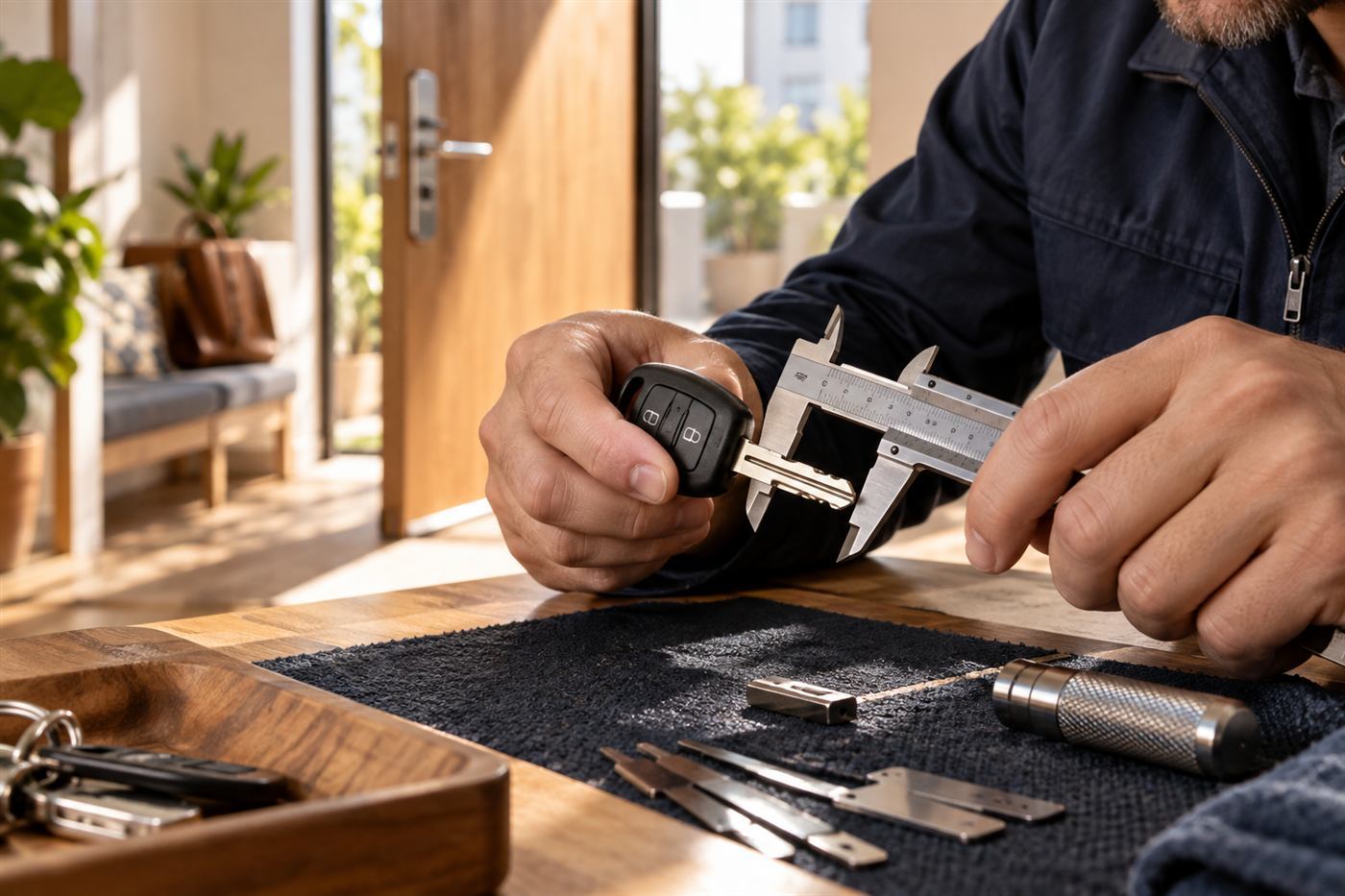
A replacement key for a modern car needs to be cut where required and programmed to the vehicle. Many cars on Oahu are imported from the mainland or from overseas, and a few are specialty or less common models. The key blank, the transponder chip and the programming path all depend on the make, model and year. A technician needs the vehicle identification number and proof of ownership, and may need to see the car to confirm the key type.
When every key is lost, the process usually runs as follows. You call, provide the vehicle details and receive a quote and the service call charge explanation. A technician comes to the vehicle, verifies your ownership, cuts a blade if one is needed and programs a new key to the car. For push-button start vehicles, the proximity key must be registered to the vehicle's computer, which requires the proper equipment and a battery in good condition. The whole visit usually happens at the curb or in the stall.
Spare keys are worth thinking about, perhaps more than on the mainland. If your only key is lost on an island, getting a replacement may involve more steps than it would in a large inland city. Making a spare while you still have a working key is generally simpler. Read our page on spare car key programming, and the guide on types of car keys explained, if you are not sure which kind of key your car uses.
Lockouts without damage
A lockout in Honolulu usually happens in the middle of ordinary life. Groceries are loaded, a door is shut, and the keys are on the seat. Or someone steps out for a quick moment at a beach park, a trailhead or a shop, and the door closes behind them. The vehicle is closed, the sun is high, and the temperature inside rises quickly.
We do not recommend that anyone try to open a locked vehicle with improvised tools. Wedges, hangers and wire scratch paint, damage seals and can disturb wiring or airbag components inside the door. A technician opens a vehicle with proper equipment and without leaving marks. We do not describe methods on this site and we do not offer lock-bypass instructions, because they would help the wrong people as much as the right ones.
What helps most is a clear description. Tell the dispatcher whether the engine is running, whether the trunk is locked, whether an alarm is sounding and whether a child or pet is inside. If so, call 911. In a warm climate, a closed car heats fast, and emergency responders are trained for this. Once everyone is safe, call us for the lock and the keys. Our page on car lockout service explains the process in detail.
Home and condo locks in Honolulu
Residential calls in Honolulu include lockouts, rekeys and lock replacements in condos, townhouses and older homes in neighborhoods like Manoa, Kaimuki and Makiki. Many homes have sliding doors, louvered doors and open-air entries designed to let the breeze through. These need hardware that holds up to damp air and still locks securely. A deadbolt on a main entry door and a secondary lock on a sliding door are common needs.
In a rental or short-term property, owners often rekey between guests or after a lost key. In a condo, the rules of the association may limit what you can change on the unit door, so check them before ordering new hardware. A technician can explain the options on site. Smart locks are popular in vacation rentals, but they depend on batteries and good connectivity, and in a humid climate the battery compartment needs to stay dry. Our page on smart lock installation covers the basics, and how to choose a deadbolt helps with hardware decisions.
If you are locked out of a home, a technician will ask you to show that you live there before opening the door. A photo ID with a matching address, a lease or a utility bill is the usual proof. That step protects you and your neighbors, and any honest locksmith insists on it.
How quotes work and what to ask
Quotes are given only by phone. You describe the situation, the dispatcher asks about the vehicle or door and the location, and you hear a figure before anyone is sent. A service call charge covers dispatch and is explained on the call before you agree to it. Simple jobs can be quoted fully by phone. Complicated jobs may need an on-site visit, and the dispatcher will tell you why.
If the job on arrival differs from what you described, the technician tells you the revised figure before starting. You can decline. We do not ask for payment before the job is clear. If a company refuses to talk about cost until the technician is at your door, treat that as a warning sign. Read questions to ask a locksmith before dispatch and how to spot a fake locksmith before you choose anyone, including us.
The name of this service reflects a concept, not a promise that a technician is standing by at every address at every hour. Honolulu traffic, heavy congestion on the main routes and building access can all affect arrival. We will not invent a number to make you feel better. We will tell you what the dispatcher sees and let you decide.
What to have ready and what happens next
Before you call, collect the make, model and year of the vehicle, the exact location with the building name, level and stall if relevant, and a short description of what happened. For a replacement key, you will need the vehicle identification number and proof of ownership. For a rental car, the rental agreement. For a unit or home, a photo ID and something showing your address.
Wait somewhere safe and visible, in the shade if you can. Keep your phone charged. When the technician arrives, check identification, confirm the company name and ask to hear the quote again before work begins. If anything feels wrong, you can stop. Our guide on how to prepare for a locksmith visit lists the steps in one place.
Whether you are a resident of a Kakaako tower, a visitor staying in Waikiki or a family in a quiet valley neighborhood, the next step is the same. Call, tell us where you are in Honolulu and what has happened, and we will talk through the quote and the plan with you.
- Move to a safe, visible place and note your exact location.
- Gather vehicle details, VIN, ID and ownership or rental papers.
- Check building rules for gates, guest passes and the front desk.
- Call and ask for the quote and the service call charge explanation.
- Confirm the technician's identification on arrival.
Questions people ask
I am visiting Honolulu and locked my keys in a rental car. What now?
Check your rental agreement for a roadside number, since some companies require you to use it. If they say to use a local locksmith, or you cannot reach them, call us with the vehicle and location. We verify your name against the paperwork before opening. If a child or pet is inside, call 911 first.
Can a technician work inside a condo garage?
Often yes, but access depends on the building. Tell the dispatcher the building name, level, stall and how visitors are let in, including gates and height limits. Residents can usually ask the management office to expect a service provider. A short call to the front desk before the technician arrives can save a lot of time.
Does salt air shorten the life of car keys and fobs?
It can. Salt and humidity corrode lock faces, key blades and the contacts inside a fob, and wet swim bags make it worse. Rinse and dry a fob that gets wet, wipe keys with a dry cloth and replace weak batteries early. If a fob has been in the ocean, expect that it may need replacing.
Can you make a new key if I lost the only one?
In most cases yes. A technician works from the vehicle identification number and proof of ownership, then cuts and programs a new key at your location. Some newer vehicles need an on-site look first, and the dispatcher will tell you on the phone. Have photo ID and registration or title ready when you call.
How do I know what it will cost?
Quotes are given only by phone, and the service call charge is explained before dispatch. Simple jobs can be quoted fully on the call, while complicated ones may need a visit to assess. If the job differs from your description, you hear the revised figure before work starts and may decline.
Do you help with house and condo locks too?
Yes. Cars come first on this site, but we handle lockouts, rekeys, deadbolts and lock replacement for homes and condos. A technician asks for proof that you live at the address before opening a door. For a condo, check your association rules before changing hardware on the unit door.
Describe the situation by phone and we will tell you what the job involves. Quotes are given by phone. Jobs that cannot be quoted without seeing them need a technician on site, and the service call charge is explained on the phone before anyone is dispatched.
(844) 715-0800Related pages
Written by Claude (AI) (AI) for 24/7 Locksmith USA.