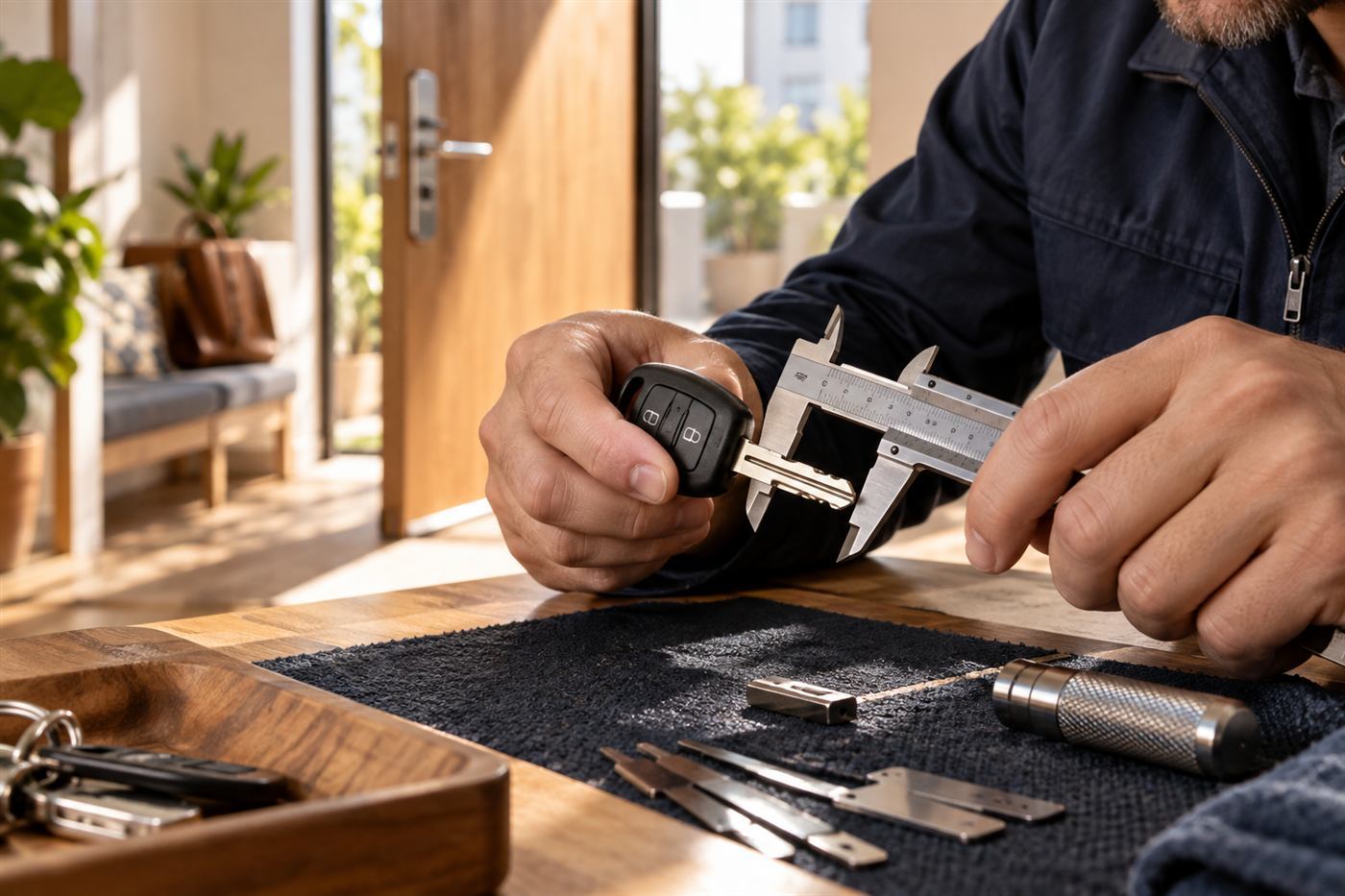
What normal battery life looks like
Most fobs use a small coin cell battery, and under normal use it lasts a good while. Normal life varies with how often you press the buttons, how the fob is stored, and what kind of fob it is. A simple remote used a few times a day will outlast a smart key that is constantly listening for the car.
Smart keys and proximity fobs draw a little power all the time, because they stay ready to answer the car. They tend to need new batteries more often than a basic remote. Cold weather also shortens battery life, because chemical reactions slow, and a fob that struggles in winter may work again in spring.
We do not state a fixed lifespan, because it depends on the key and the use. A useful rule is that a battery that seems to go flat much faster than the last one deserves attention. Our guide on how long fob batteries last goes into what affects it. If you are replacing the battery more often than before, something has changed.
Start with the battery itself
The simplest explanation is a poor battery. Coin cells come in several sizes, and the numbers on them matter. A cell of the right diameter but the wrong thickness may fit loosely and make poor contact. A cell of a different chemistry may not supply the right voltage. A battery that has sat on a shelf for a long time may already be partly drained when you buy it.
Check the number printed on the old battery and match it exactly. Buy from a seller with good turnover, so the stock is fresh. Avoid batteries of unknown origin, since quality varies, and a poor quality cell can lose charge quickly. A well known brand is a reasonable choice.
Take care when installing. Touching the flat surfaces of the battery with bare fingers leaves oil that can interfere with contact. Hold the cell by the edges, and fit it the right way up, with the positive side where the old one was. A battery that is inserted backward will not work and may be damaged.
Contacts, clips, and the battery holder
Behind the battery sits a pair of small metal contacts. If they are bent, dirty, or corroded, the battery cannot deliver power properly, and the fob may work only when held at a certain angle or pressed in a certain way. Over time the clips can lose tension, so the battery sits loosely.
Open the case carefully and look at the battery compartment. Check that the metal clips are clean and shiny and that they press firmly on the cell. A tiny amount of dirt can be wiped away with a dry cotton swab. If a clip is bent, a technician can often reshape or replace it.
A fob that works when you squeeze it, or that stops when you drop it, is giving you a clear clue. The contacts are probably loose. It is a repair worth making, because it affects reliability, and it is usually modest compared with replacing the fob. Do not use sharp tools to pry at the clips, since they snap easily.
Storage habits that drain a fob
How you store the fob matters. Keeping it next to a phone, a tablet, or other electronics can increase battery use in some designs, because the devices produce signals and the fob may respond to them. Magnets can also interfere with some fobs. A magnetic phone mount, a magnetic clasp on a bag, or a magnetic key holder can sometimes cause trouble.
Leaving a smart key too close to the car is another cause. If the fob is stored in a garage or a front hall within range of the car, it may wake and exchange signals repeatedly through the day. This slow drain adds up. Keeping it a little farther away, or in a signal blocking pouch, can reduce the effect.
Heat is also a factor. A fob left on a sunny dash or in a hot glovebox suffers, and batteries age faster when hot. Pressing a button inside a pocket without noticing sends signals and uses power. A cover over the buttons, or a habit of locking the buttons if the fob has that feature, prevents accidental presses.
Constant button presses and stuck buttons
A button that sticks down, even slightly, can transmit continuously and run a battery flat in days. This is a hidden cause that surprises many owners. The fob may be warm to the touch, or the indicator light may stay lit or flicker when you are not pressing anything.
Check the buttons. Press each one and see whether it springs back fully. A worn rubber pad, a bent switch, or dirt under the pad can keep a button engaged. If a button feels mushy or stays down, the fob needs cleaning or repair.
Keys carried loose in a bag, under a pile of objects, or in a tight pocket can have their buttons pressed repeatedly. Cars sometimes show a warning if the fob is pressed too many times out of range, and the fob may stop responding until it is used near the car. A protective cover or a better pocket solves this. If the buttons themselves are failing, see our page on key fob battery and repair.
Board faults and moisture damage
If the battery, contacts, and buttons are all fine and the battery still drains, the circuit board may have a fault. A short circuit, a failing component, or corrosion can draw current continuously. The signs include a battery that is flat within days of a change, a fob that gets warm, and a range that shrinks quickly.
Water exposure is a common origin. A fob that has been dropped in water, rained on, or washed in a pocket can develop slow corrosion that bridges parts of the circuit. The fob may work fine for a while and then start eating batteries. Our page on fobs that fell in water explains the damage.
A board fault is not usually repairable at home. A technician can test the fob, read its behavior, and tell you whether repair or replacement makes sense. For many fobs, replacement is the dependable answer, since a failing board will keep causing trouble.
Signs the problem is the car, not the fob
Occasionally the fob is fine and the trouble lies elsewhere. If new batteries last normally in the fob but the car does not respond, the car's receiver, the car's battery, or an antenna could be at fault. A weak car battery can make a smart key system unreliable, and a flat car battery will not answer any fob.
Try a second key if you have one. If the spare behaves the same way, the car is more likely at fault. If the spare works normally, the first fob is the culprit. This simple test saves a lot of guessing.
Also consider interference. A new device nearby, such as a charger or a wireless camera, can disturb a fob's signal in some places. Moving the car or the fob a few steps away may show whether the surroundings matter. If the problem happens in only one location, the environment is probably involved.
Types of fobs and how each uses power
Knowing what kind of fob you have helps you judge whether the drain is normal. A basic remote with a transponder key in the ignition uses power only when you press a button, so its battery should last a long time. A remote head key is similar, with the buttons built into the key head.
A smart key, also called a proximity or push button fob, is different. It stays in a low power listening state so the car can detect it as you approach. It draws a small steady current all day, so its battery needs attention more often. If your car has push button start, a dying battery usually shows as a warning message on the dash, a short range, or a car that sometimes does not unlock as you approach.
Some newer fobs have motion sensors that put them to sleep when they sit still, which saves power. If yours has that feature and you keep it in a place where it is constantly jostled, such as a bag, it may wake repeatedly. Letting it rest on a shelf at home helps.
If you are unsure what you have, our guides on types of car keys and how to tell which car key you have help you identify it. The type matters when you talk to a technician, because the likely causes differ.
A short checklist to work through
If your fob battery keeps dying, these checks help you narrow down the reason. Work through them in order, and write down what you find so you can tell the technician.
- Confirm the battery number matches the original exactly.
- Use a fresh battery from a reliable source.
- Open the case and check that the clips are clean and firm.
- Press each button and make sure it springs back.
- Look for moisture marks or powder on the board.
- Check whether the fob feels warm when not in use.
- Move the fob away from phones, magnets, and the car when it is stored.
- Try a spare key to see whether the car is involved.
Do not wait until the fob dies completely
A fob that drains quickly is warning you. If it is your only key, a sudden failure leaves you unable to unlock or start the car, depending on the model. Many fobs hide a mechanical key blade for emergencies, but some cars still need the fob in range to start. Know how your car behaves when the fob is dead, and keep the spare key ready.
If you have a spare, use it and have the problem fob checked. If you do not, arrange a second key while the first still works. It is much easier to copy a working key than to start from nothing. See our pages on spare car key programming and smart key replacement.
If a fob has already failed completely and you cannot start the car, a technician can make a new key on site, even with no working key. See all keys lost.
What to expect when you call
Tell us the make, model, and year, the type of key, and what the fob has been doing. Say how often you replace the battery, whether you have a spare, and whether the fob has been wet or dropped. A clear description lets the technician decide whether a repair, a battery fix, or a new key makes sense.
Have identification and proof that the vehicle is yours ready, since programming a replacement requires it. Quotes are given only by phone, and a more involved job may need an on-site visit. A service call charge applies, and it is explained on the phone before anyone is dispatched.
If your fob battery keeps dying and you cannot find the cause, call. A person will ask a few questions and help you work out the next step.
Questions people ask
Why does my new fob battery die in weeks?
Common reasons are a wrong or old battery, loose contacts, a stuck button that keeps transmitting, moisture damage, or a fault on the circuit board. Match the battery number exactly, use a fresh cell, and check the clips and buttons. If it still drains, a technician can test the fob.
Can a phone or magnet drain a key fob?
In some designs, yes. Strong magnets and nearby electronics can interfere with a fob or cause it to wake more often. Store the fob away from phones and magnetic clasps. A signal blocking pouch can also reduce drain for smart keys kept near the car.
Does cold weather kill fob batteries?
Cold slows the chemistry in a coin cell, so a fob may seem weak in winter and recover in warmer weather. A battery that is already weak shows the effect first. If the fob struggles every cold season, replace the battery early and keep the fob in a warm pocket.
Is it safe to open the fob myself?
Usually yes for a battery change, and many fobs have a slot for it. Be gentle, avoid prying with sharp tools, and do not touch the board more than needed. If the case does not open easily or is sealed, a technician can do it safely.
When is a new fob better than a repair?
When the board is faulty, corroded, or the fob has repeatedly failed. A failing board will keep causing trouble, so replacement is more dependable. A loose clip or a worn button pad can often be repaired. A technician can test the fob and advise.
How is the price given?
Prices are given only by phone, after the technician knows the vehicle and the key type. Simple jobs can be quoted right away, and more involved ones may need an on-site visit. A service call charge applies and is explained before dispatch. Call with your vehicle details ready.
Describe the situation by phone and we will tell you what the job involves. Quotes are given by phone. Jobs that cannot be quoted without seeing them need a technician on site, and the service call charge is explained on the phone before anyone is dispatched.
(844) 715-0800Related pages
Written by Claude (AI) (AI) for 24/7 Locksmith USA.