
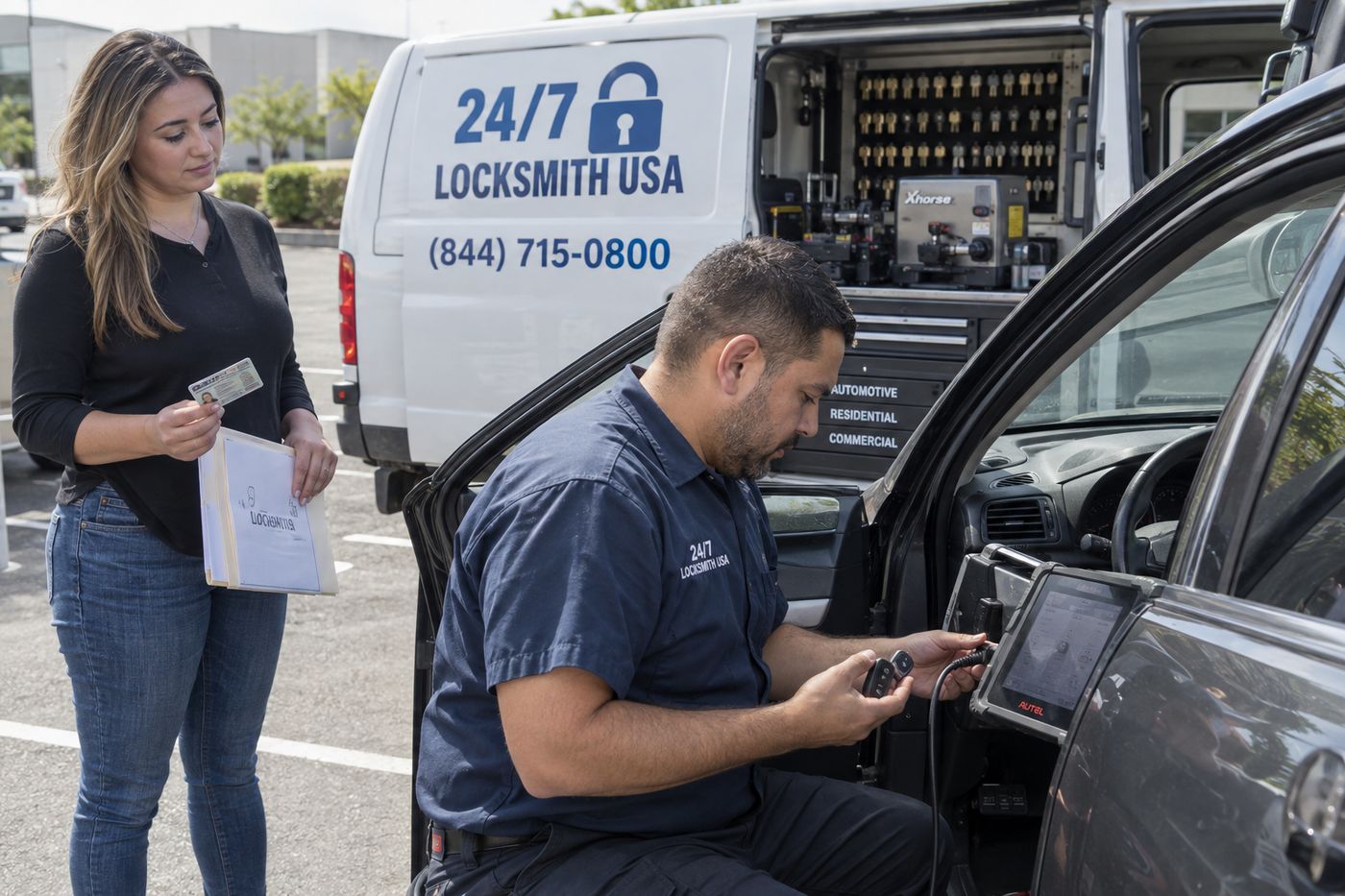
Everything a Denver key needs.
Dealer-grade cutting and programming brought to the curb, from work trucks on Brighton Boulevard to late-model SUVs parked in Cherry Creek.
Lost Car Key Replacement
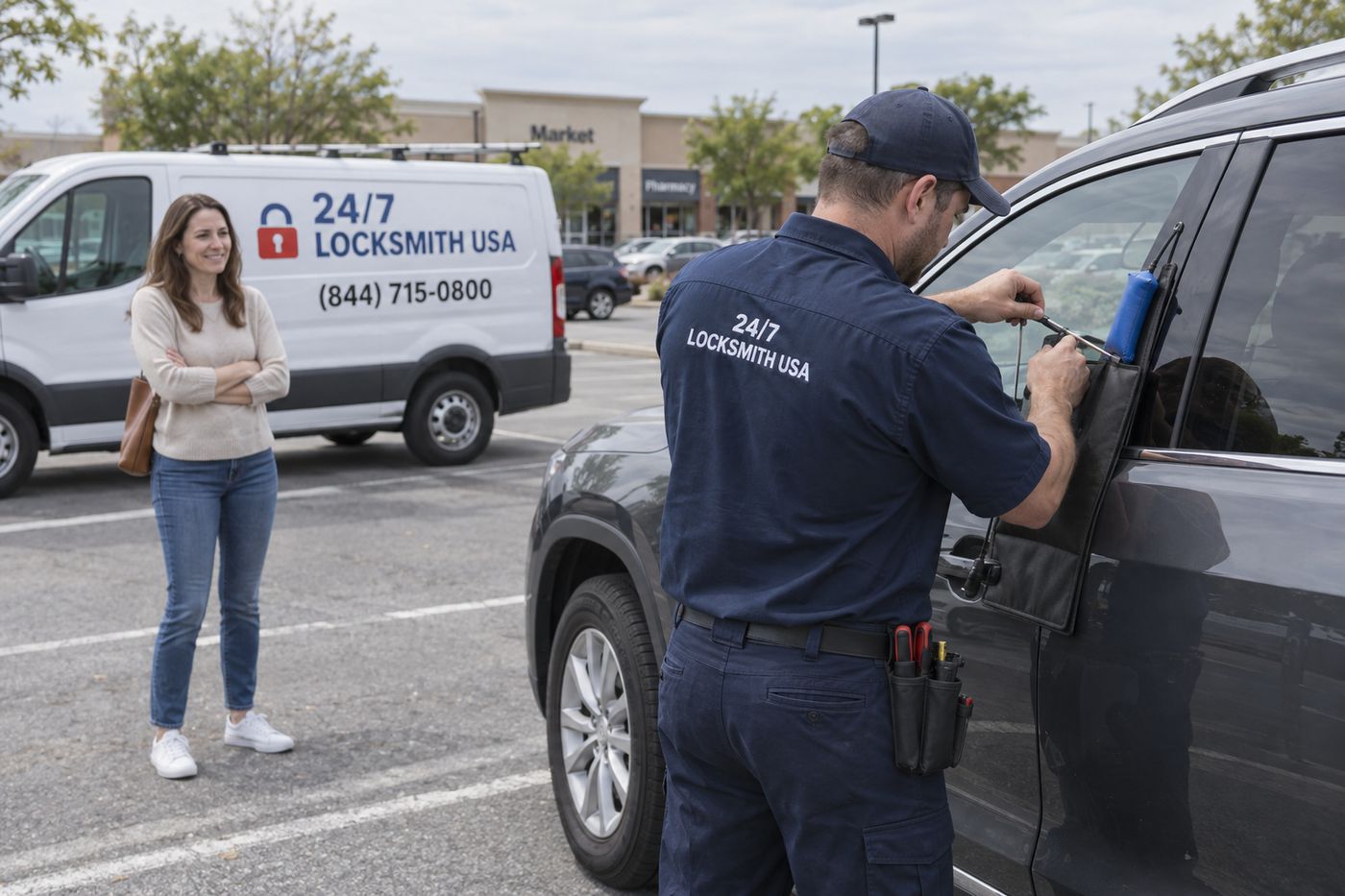
Every key gone into a snowbank downtown? We originate a brand-new key from scratch at the vehicle.
Push-to-Start Smart Keys
Proximity keys for late-model SUVs programmed right on the parking deck, with no run out to a dealer lot.
Key Fob and Remote Programming
Front Range temperature swings destroy fob electronics; we supply and pair a replacement remote on the spot.
Ignition Cylinder Repair
De-icer creep off the interstates leaves cylinders gritty and tight, so we rebuild or replace until the key turns clean.
Airport Long-Term Lot Service
We work the DIA economy and shuttle lots, so a key lost twenty-five miles out does not become a tow.
Broken Key Extraction
Cold turns a worn blade brittle; we pull the snapped half from the door or ignition and cut a fresh one.
Why car keys fail in Denver.
Denver's problem is not cold so much as motion. A February day here can start near nine degrees, climb past fifty by mid-afternoon and drop back under freezing before the commute clears. Every one of those swings pulls damp air into a fob case, condenses it on the board and drives it out again, and after a few winters the contacts under the rubber buttons stop making a clean connection. The second half of the story is what gets sprayed on I-25 and I-70. Magnesium chloride clings to a vehicle long after rock salt would have blown off, and it wicks down into door lock cylinders and ignition housings where it leaves the wafers and springs chalky and stiff. Then there is sheer geography. Denver International sits twenty-five miles northeast of downtown with long-term lots the size of neighborhoods, and I-70 climbs west into ski country where a key dropped in the snow is nowhere near a parts counter. We work at the vehicle itself - a shuttle lot row, a garage deck off Wazee, a driveway in Green Valley Ranch - and originate the key there.
A large metro means more ways to lose a key
Life in a large metro area moves between many places in a day: a home garage, an office parking structure, a gym, a restaurant, a stadium lot, an airport. Every stop is a chance to set a key down or drop it. The more places you visit, the harder it is to remember where the key was last in your hand. That is not a character flaw; it is arithmetic.
Because the area is spread out, the first practical question is usually where you are right now. Someone who is stuck at the far end of a long commute faces a different situation from someone who is a few steps from home. This page is general guidance and does not claim anything about particular streets or neighborhoods, but the logic applies anywhere: know your location, describe it plainly and expect the person on the phone to ask follow up questions.
If you are unsure whether you actually lost the key or just misplaced it, take five minutes before calling. Check coat pockets, the bottom of your bag, the seat of the last place you sat, and any car you share with someone. Ask a family member whether they picked it up. Many calls that begin as lost key emergencies end with a key found in a jacket, and that is a very good outcome.
Sorting out what actually happened
Three different problems get called lost keys. In the first, you have no key and the car is locked. In the second, the key is inside the locked car. In the third, you have the key but the car does not respond to it. Each has a different remedy, and describing the right one saves time on the call.
If the key is visible inside the car, that is a lockout, covered on the page about car lockout service. Nothing needs to be cut or programmed; the goal is to open the door without damage and without reaching for tools yourself. If you have no key anywhere, you are in replacement territory and the page about car key replacement applies.
If the key is in your hand but the car will not start, the key may have lost its link to the car, or the ignition may have a mechanical fault. That deserves its own diagnosis, and our page on a key that turns but the car will not start describes the usual causes. A short, honest description on the phone will point the technician in the right direction.
Take a moment to mention anything unusual. Did the key stop working right after a repair, a battery change or a car wash? Did the lock feel stiff before it failed? Has the car been in an accident, or has anyone else tried to fix it? Those small facts rarely seem important to the driver, yet they often explain the problem and help the person on the phone choose the right equipment before arriving.
The paperwork question, answered in advance
A responsible provider will not open a vehicle or make a key for someone who cannot show a connection to it. Expect to be asked for identification and for a document that links you to the car, such as a registration, title or lease. Rules about what counts differ from provider to provider, so ask when you call rather than guessing.
People often worry that paperwork is locked in the glove box of the very car they cannot open. That is a common trap. A photo of the registration on your phone, an insurance card in your wallet or an email from your lender can sometimes fill the gap. Our proof of ownership guide goes through the options in more detail.
If the car is leased or financed, the title may be held by someone else, and that changes what documents are useful. In that case, call your leasing company or lender early and ask what they will accept, then pass the answer to the provider. The key point is to ask early, so a missing document does not hold up the work on the day.
How a replacement key is made from the VIN
Behind a modern key is a small set of facts about your vehicle. The vehicle identification number identifies the exact car, and from it a technician can look up the key blank and the cut that matches your locks, as well as the type of chip the car expects. Once the blade is cut, the chip has to be introduced to the car so that it will accept the new key.
That second step is called programming. The technician connects specialized equipment to the car, usually through a port under the dashboard, and teaches the car to recognize the new key. Older keys may be cut only, while newer ones need both steps. You can read the longer version in the guide to how car key programming works.
Programming also has a side effect that surprises people: it may be possible to remove old keys from the car's memory. If you lost a key and are worried that someone might find it, ask whether the old one can be erased. The answer depends on the vehicle, but it is a reasonable question and a good provider will explain what is possible.
Fobs, blades and everything on the key ring
Some vehicles use a flip key where the blade folds into the fob. Others use a separate fob and a plain key. A third group has no blade at all, only a smart fob that works near the car. The more complex the key, the more steps are involved, so identify what you have before you call.
A smart key is more than a piece of plastic. It carries encrypted data, a battery and sometimes a hidden emergency blade, and it needs to be paired to the car in the right way. The page on smart key replacement explains what that involves. If you drive a high end brand with a more demanding system, say so on the first call, because the steps and the equipment can be different from those used on an everyday sedan.
If your fob works but the buttons are worn or the case is cracked, the answer may be a repair rather than a replacement. A technician can sometimes move the working electronics into a new shell. Ask whether that is an option, because it can make sense when the internal parts are fine and only the housing has failed.
Whatever you carry, treat the key as a small computer rather than a piece of metal. Heat, moisture and hard drops can damage the electronics, even if the case looks fine. Avoid hanging a heavy bunch of keys from the ignition while you drive, since the weight wears the switch over time. A light key ring is a small habit that protects both the key and the ignition behind it.
Parking structures and the problem of the closed door
A very common way to lock a key inside is to put it on the seat, get out, and shut the door while holding a bag or a phone. In a large city this happens most often in garages, where it is dark and you are in a hurry. The details of getting help in a garage can differ because of height limits, access rules and security desks.
If you are in a structure with an attendant, tell them what has happened. They may be able to advise on the rules for outside service providers and may know where a vehicle can be reached. Our page on a car locked with keys inside a parking garage addresses the practical points, such as telling the technician the level and the nearest landmark inside the structure.
Do not try to force the door, and do not use a tool you saw in a video. Modern doors have airbags, wiring and sensors inside, and a wedge or a rod can damage them. A locksmith has methods that are designed to avoid that harm, and the cost of a repair after a failed attempt can be far greater than the call.
Households with several drivers and several keys
In a family with multiple cars, keys often get mixed up. One key ring holds three fobs, and no one remembers which opens which. When a key is lost, the first step is to identify which vehicle is affected, because you will need that vehicle's exact details.
It is also a good moment to take stock. How many keys does each car have? Where do the spares live? Who has access to them? A spare that sits in a drawer at home is useful. A spare that lives in a kid's backpack is less so. Putting the answers on a short list for the household can turn a future emergency into a simple errand.
If a key was stolen rather than lost, treat it more seriously. The usual steps include securing the vehicle and, in many cases, reprogramming so the missing key no longer works. Do not wait to see whether the car is still where you left it before deciding.
Cold mornings and the dead fob
Winter in this part of the country can be sharp, with dry cold and snow. Batteries in fobs lose strength in the cold, so a fob that was borderline in autumn may quit in January. If the fob does not work and the car is otherwise normal, a weak battery is the first suspect.
Many vehicles allow you to start the engine with a dead fob by holding it against a particular spot, often near the start button or in a small pocket. The owner's manual explains the procedure for your model. Nothing about this requires tools, and it can save a call. If you are unsure, the page on a fob battery that keeps dying describes patterns worth noticing.
For the winter months in particular, the guide to winter lockout prevention collects habits that help. Warming the car with a remote starter and then leaving the fob inside is one mistake the guide warns about. A few minutes spent building habits can prevent a miserable wait in the cold.
Building a spare plan around your own routine
The easiest key emergency to solve is the one you prepared for. Think about your own week: which car do you drive most, where does it spend the night, and who else uses it? A person who drives alone and parks at home has different needs from a household that shares one vehicle between three people. Start with the car that would cause the most disruption if it could not move tomorrow morning.
For that car, aim to have two working keys that live in two different places. One is the key you carry. The other stays at home, in a drawer or a small box, where you will remember it. If you can add a programmed spare while you still own a working key, the work is usually simpler than starting from nothing after a loss.
Spend a minute writing down the vehicle details while you are at it: the year, make, model, the VIN, and what kind of key the car uses. Store the note in your phone. When something goes wrong, the people on the other end of the call will ask for exactly those facts, and having them ready makes you sound organized and keeps the conversation short and calm.
Judging a provider before you commit
There are many businesses that answer phone calls about car keys, and not all of them are what they appear. A reliable one is open about what it will do, what the service call charge covers and what happens if the job is different from the description. It does not demand cash only without explanation or refuse to say who is coming.
Ask who will arrive, how the work will be performed, and what the quote covers. If the person gives a price that seems far too low and then changes it, treat that as a warning. Our guide to spotting a fake locksmith lists the signals that matter,, and it is worth reading before you dial anyone you found in a hurry.
The aim is not to distrust everyone but to be an informed caller. You are paying for a service and you have the right to understand it. A professional will answer plainly, because clear answers are good for business. If you feel pressured, hang up and call someone else; there is rarely a reason that a decision must be made in the next sixty seconds.
After the key works again
Once you have a working key, test it fully before the technician leaves. Try the door lock, the trunk, the ignition and the remote functions. Make sure each key you ordered does what it should. If anything seems off, say so right away while the technician is still there.
Then make a plan for spares and for storage. Keep one spare at home and perhaps one with a trusted family member. Avoid hiding a key on the car itself. A key tucked under a bumper can be found by anyone who knows where thieves look, and it can fall off on the road, so a safer home for a spare is somewhere inside your own house.
If you travel along the Front Range or elsewhere in the state, the nearby city pages for Colorado Springs and Colorado offer a similar overview. A little preparation turns a stressful day into a manageable one, and that is the whole purpose of this guidance.
Common questions
What is the first thing to do if I lose my car key in Denver?
Stay safe, then check the obvious places: pockets, bags, the last seat you used and anyone who shares the car. If the key is truly gone, note the vehicle make, model, year and exact location, and find the VIN. Then call a provider, describe the situation and ask what documents you will need to show.
Do I have to prove I own the car even if I have the registration in my wallet?
Yes, ownership or authority is checked before any key is made or any door is opened. A registration in your wallet usually helps, together with photo identification. If you lease or finance the car, other papers may be needed, so ask when you call what the provider accepts.
Can a key be made if the car is in a parking garage?
Often yes, though garage rules differ. Tell the attendant what happened, give the technician the level and a nearby landmark, and ask the property whether outside service providers have to check in. Requirements vary by property, so it is wise to ask on site.
Is a locksmith or a dealer the better choice for a new key?
It depends on the vehicle, the situation and your schedule. A mobile locksmith comes to the car, while a dealer may require towing and an appointment. Some newer or unusual models have limits on who can program them. Describe your car on the phone and ask what is possible before deciding.
Will programming a new key stop my lost key from working?
On many vehicles, yes, the old key can be erased from the car's memory during programming, which protects you if the lost key falls into the wrong hands. The details depend on the make and model. Ask the technician whether this is possible for your car and whether it is part of the job.
How do I avoid paying more than I was told?
Get the quote by phone, ask what the service call charge covers, and ask what could change the total. Confirm the key type and number of keys. If the price changes at the door, ask for an explanation before work starts. You are entitled to decline if the answer does not satisfy you.