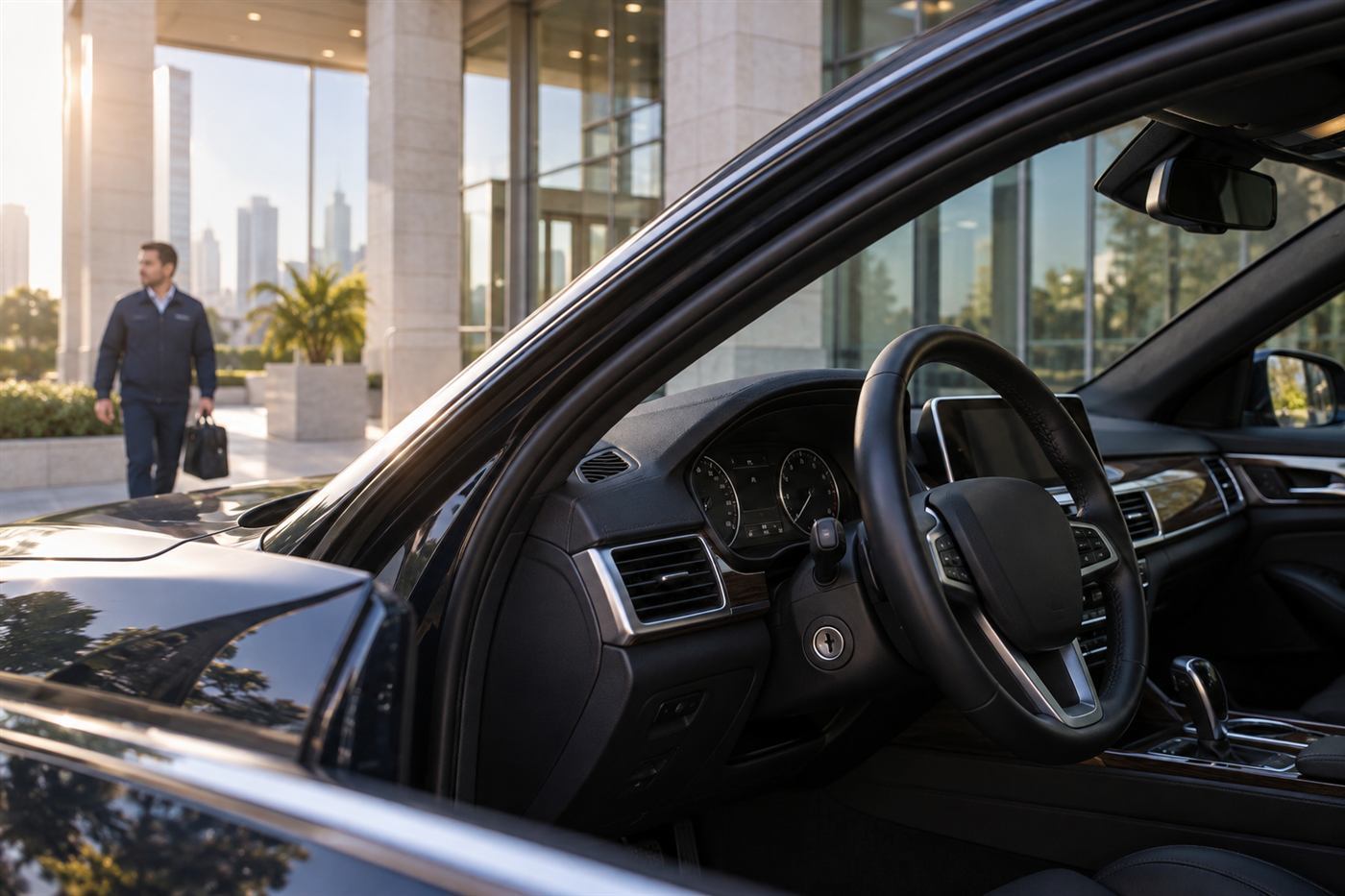
How a call works for Nevada drivers
Everything begins with a call. Tell the dispatcher where the vehicle is, what has happened, and the make, model and year. We ask whether you have any working key, whether anyone or any animal is inside, whether the car is on a public road or private property such as a resort garage, and whether you can show it is yours. Those answers decide what the job involves and whether a technician has to come to the vehicle.
Quotes are given by phone only. We do not publish prices, because a simple door lockout on an older sedan is very different from programming a proximity key for a recent model. For complicated work, we may explain that an on-site visit is needed before a firm number is possible. A service call charge applies when a technician is sent, and we explain it before dispatch so nothing comes as a surprise at the vehicle.
We do not promise arrival windows. Nevada covers long distances with few services between them, and a promise about timing from a dispatcher who cannot see traffic on the strip, a closed road in the desert or snow on a mountain pass would be dishonest. What we promise is an honest answer by phone about whether and how we can help where you are.
The 24/7 in our name describes the service concept, not a technician at every hour in every place. If a person or pet is locked inside a hot vehicle, call 911 first. In Nevada heat, minutes matter, and emergency crews are the correct first call. The key problem can be handled once everyone is safe.
Las Vegas heat and what it does to fobs and keys
A parked car in the Las Vegas summer can become far hotter inside than the air outside. Dashboards, cup holders and door pockets turn into ovens. A key fob that lives there suffers. Plastic cases warp or become brittle, solder joints fatigue after repeated cycles of heat, and batteries lose capacity or leak. The common symptom is a fob that works at first and then gradually loses range until it stops responding altogether.
Heat also wears out the rubber buttons and the little contacts underneath them, so a fob that has been cooked may need more than a battery. Our guide on summer heat and car key safety explains habits that protect keys, such as keeping them out of sun-baked spots, using a shaded pocket and not leaving a spare in the car. If a fob case has already cracked, a technician can sometimes move the electronics into a new shell, and in other cases a replacement is the better choice.
Door locks and ignition cylinders face heat and dust together. Fine desert dust works into a lock, and heat dries out any lubricant, so a key that used to turn easily begins to drag. That wear is gradual, but it is a reason to act when a key starts to feel rough rather than waiting for it to fail on a hot day. If a key is already stiff, do not force it. Read our page on a car key that will not turn.
For Las Vegas specifics, see our Las Vegas locksmith page and the page for Henderson. When you call during extreme heat, tell us whether you can stay in shade or an air-conditioned place while you wait. Your safety matters more than the car. Do not stand on hot asphalt for a long time, and bring water.
Resort, casino and garage parking
Las Vegas has some of the largest parking structures anywhere, attached to resorts, casinos, convention halls and malls. Many are multi-level, with confusing numbering and long walks. A common call starts with a visitor who has parked on one level of a garage, forgotten which one, and also cannot find the keys. Another starts when the keys are locked inside and the driver has no idea who controls access to the structure.
Garages have their own rules. Some are managed by the resort, some by a parking company, and many have security staff who must be told when a vehicle service is happening. Tell the dispatcher the name of the property, the garage or lot, the level and the nearest elevator or stair marker. If the garage requires approval for outside vendors, tell us, because a technician who cannot get in cannot help. A security desk can often explain the process.
Valet parking raises another question. Many valet services keep the key or fob while the car is parked, and some use a valet key that can open the doors and start the engine but not open the trunk or glove box. If you hand over a fob and cannot reclaim it, start with the valet desk first. Do not call a locksmith for a vehicle held by valet staff, because the staff, not you, are in control of the keys at that moment.
If you lose a key at a resort, check with lost property and security before you assume it is gone. Fobs are small, and they fall out of pockets in cars, elevators and restrooms. If it truly is missing, our page on what to do when you lose your car key lists sensible steps. For a car with no key at all, see all keys lost service.
Visitors, rental cars and keys far from home
Nevada hosts a very large number of visitors who arrive by air, rent a car, and drive to places they have never seen. A rental car lockout is a different kind of problem from a lockout in your own car. The vehicle belongs to a company, the keys may be electronic, and the rental agreement often says what you can and cannot do. Before you call anyone, check the paperwork or app that came with the car for a roadside number.
Many rental companies run their own roadside assistance, and some include lockout help. A locksmith can often help as well, but you should tell the company what you plan to do, because they may require that any work be authorized. Our rental car lockout guide explains the order of steps. Do not allow anyone to drill or force a rental vehicle, because damage becomes your responsibility.
If you are a visitor who has lost a personal car key far from home, the problem is harder. Your car is in Nevada, your spare is at home, and your flight is booked. A technician can usually program a new key on site if you can show the vehicle is yours. Gather the VIN, a photo ID and the registration or title before you call. If you do not have them with you, tell us, because a family member at home can sometimes send photos of the documents.
Plan ahead if you drive in from out of state. Carry a spare key somewhere other than the vehicle, such as with a traveling companion, and make sure your insurance or roadside plan covers lockouts. Our guide on insurance and roadside assistance for lockouts explains what to check before the trip.
Desert driving, long stretches and what to do when stranded
Outside the cities, Nevada highways run for long distances with few exits and very little shade. If a key fails in the middle of that, the situation is a safety problem as well as a mechanical one. A vehicle that will not start in July far from any town can quickly become dangerous. Always carry water, make sure your phone is charged, and let someone know your route before a long drive.
A key that fails to start the car is not always a key failure. If the engine does not turn over, the car's battery may be weak, or the immobilizer may be rejecting the key. A flashing security light on the dashboard is a clue. Our page on immobilizer light flashing explains what the light usually means. Describe to us exactly what the car does when you turn the key: clicks, silence, cranking without starting or a warning light.
Roadside locations make technician access harder. Tell us the highway number, the nearest mile marker or exit, and the direction of travel. If you have cell signal, share your location by text. If the vehicle is on a shoulder, stay away from traffic and keep hazard lights on. In extreme heat, stay in shade, and if the situation becomes unsafe, call 911.
Remote areas also expose vehicles to dust, rocks and rough roads, and keys on rings with many items take a beating. A key that is bent, cracked or stiff is not safe to rely on for a long trip. Have a spare made before the drive. A second key stored at home or with a companion is a small step that can prevent a long wait. Our page on spare car key programming explains the process.
Reno, Sparks and Sierra winters
In northern Nevada, the climate shifts from desert heat to real winters. Reno and Sparks sit at altitude near the Sierra, with cold nights, ice and snow that can arrive early and linger. Cold sharply reduces battery capacity, so a fob that has been fine all summer may stop working on the first frozen morning. Replacing the battery before winter is an easy precaution, and our guide on how long key fob batteries last explains what to expect.
Locks can ice over, too. Moisture inside a door lock turns to ice, and a key forced into frozen metal can snap. Do not use force, and do not pour hot water over the lock. Warm the key gently with your hands, and call us if the lock will not respond. Our page on broken key extraction covers what we do if a key has already broken.
Mountain driving brings its own risks. Vehicles heading to the lakes and ski areas use chains, roof racks and gear, and keys are often handled with gloves in the cold. Gloved fingers drop keys into snow, and a fob lost in a snowbank is hard to find until spring. If you drop a key in deep snow, mark the spot before it gets buried, and search carefully rather than digging randomly.
For city specifics in the north, see our Reno locksmith page. The practical advice is the same as for any cold-weather place: a fresh battery, a spare key kept somewhere safe, and a habit of checking pockets before closing the door. Winter lockouts are miserable, and prevention is much less unpleasant than rescue.
Work vehicles, rideshare cars and shift workers
Nevada's economy runs at all hours, and many people drive for a living or work shifts that start or end in the middle of the night. A rideshare driver whose car will not start loses income for every hour it is parked. A hospitality worker finishing a late shift in an employee garage may find the key fob dead. A delivery driver locked out of a van is stuck with a load that cannot wait.
For people whose car is their livelihood, having a spare key and a plan matters more than for the average driver. A second key made in advance is simpler than an all-keys-lost situation, and it means a failure does not park the vehicle for a day. Our page on truck and van keys covers work vehicles in detail.
Small businesses that keep several vehicles should think about key control. Who has which key, where spares are stored and how a lost key is reported are questions worth answering before a crisis. Our guide on key control basics for business owners explains the habits that keep a fleet running.
Late-night calls need extra care. If you are alone in a garage or an empty lot, tell someone where you are and wait somewhere visible and safe. Do not accept help from strangers who approach you offering to open the car. If you need help at an unusual hour, tell the dispatcher honestly what is realistic and ask what is possible. We will tell you whether we can help rather than promise something we cannot deliver.
Key types, proof of ownership and being ready
Modern keys come in several types, and knowing which one you have makes any call smoother. A basic metal key is the simplest. A transponder key has a chip in the head that the car must recognize. A laser-cut key has a milled groove down the blade. A proximity key lets the engine start by button when the fob is inside the car. Replacement for each type involves different tools, and a proximity key must be paired to the car's computer. See types of car keys explained for pictures.
We check proof of ownership before making a key. That means a photo ID and a document that ties you to the vehicle, such as a title, registration or insurance record. Know the VIN, which is on the dashboard near the windshield and on the door jamb. Our guide on how to find your VIN shows where to look. The check protects every honest owner, because it stops a stranger from getting a key to your car.
If you are not sure whether you have the documents, tell us on the phone. We can explain what is accepted and whether there are other ways to confirm. For visitors, a photo of the documents sent by a family member is sometimes enough to start. See proof of ownership for a car key for details.
Before you call, make sure your phone is charged, you know your exact location and you have a way to pay. If you are in heat, find shade. If you are in cold, stay warm. Our checklist on how to prepare for a locksmith visit covers the essentials.
Avoiding bad operators in a tourist state
Places with many visitors attract operators who rely on people not knowing the local market. A stranded visitor with a dead key and a flight to catch is vulnerable. The best defense is a short list of questions, asked before you agree to anything. Ask for the company name and the technician's name. Ask about the service call charge and what it covers. Ask whether the phone quote is what you will pay for the work described.
Be wary of a very low phone quote that rises at the curb, a company that will not give its name, a listing with many city names but no real local presence, and a technician who arrives in an unmarked vehicle and demands cash. Our guides on locksmith scam warning signs and questions to ask a locksmith before dispatch list more.
We make no claim about credentials or certification on this page, and we encourage you to check any company yourself. Rules for locksmith work are set at the state level, and a reader can ask a company for its details and verify them through the relevant state office. Our guide on how to verify a locksmith's credentials explains the approach.
If anything feels wrong, you can end the call and try someone else. Take a moment to write down the company name, the number and the quote you were given. A calm caller who asks questions is the hardest person to mislead. When you are ready, call, tell us where you are and what happened, and we will explain what is realistic before anything is arranged.
Questions people ask
Do you publish prices for Nevada car key work?
No. Quotes are given only by phone after we know the vehicle and the situation. A simple lockout and a new proximity key are very different jobs. Some work needs an on-site visit before a firm quote. A service call charge applies when a technician is sent, explained on the phone before dispatch.
A child or pet is locked in my car in the heat. What do I do?
Call 911 immediately. Heat inside a closed vehicle becomes dangerous very fast, and emergency crews are the right first call. Do not wait for a locksmith. After everyone is safe, we can help with the key, the lock or any damage to the door.
Can you help with a rental car lockout in Las Vegas?
Often yes, but check your rental paperwork first. Many rental companies run their own roadside service and may require that any work be authorized. Tell us the make, model and year and the situation, and we will explain what is possible. Do not let anyone drill or force a rental vehicle.
Why did my key fob stop working after summer?
Heat is hard on fobs. A hot dashboard can warp the case, weaken the battery and fatigue the solder joints. A fresh battery may help, but if the fob has been cooked, it may need repair or replacement. Call with the make, model and year and describe what the fob does.
Can you reach a car stuck far out on a Nevada highway?
It depends on the location and conditions, and we do not promise arrival times. Tell us the highway, mile marker, direction and nearest town, and we will say honestly whether and how we can help. If you are in danger from heat or cold, call 911.
What proof of ownership do I need as a visitor?
A photo ID and a document that ties you to the vehicle, such as a title, registration or insurance record. Know the VIN. If the documents are at home, a family member can sometimes send photos. Tell us on the call and we will explain what we can accept before any key is made.
Describe the situation by phone and we will tell you what the job involves. Quotes are given by phone. Jobs that cannot be quoted without seeing them need a technician on site, and the service call charge is explained on the phone before anyone is dispatched.
(844) 715-0800Related pages
Written by Claude (AI) (AI) for 24/7 Locksmith USA.