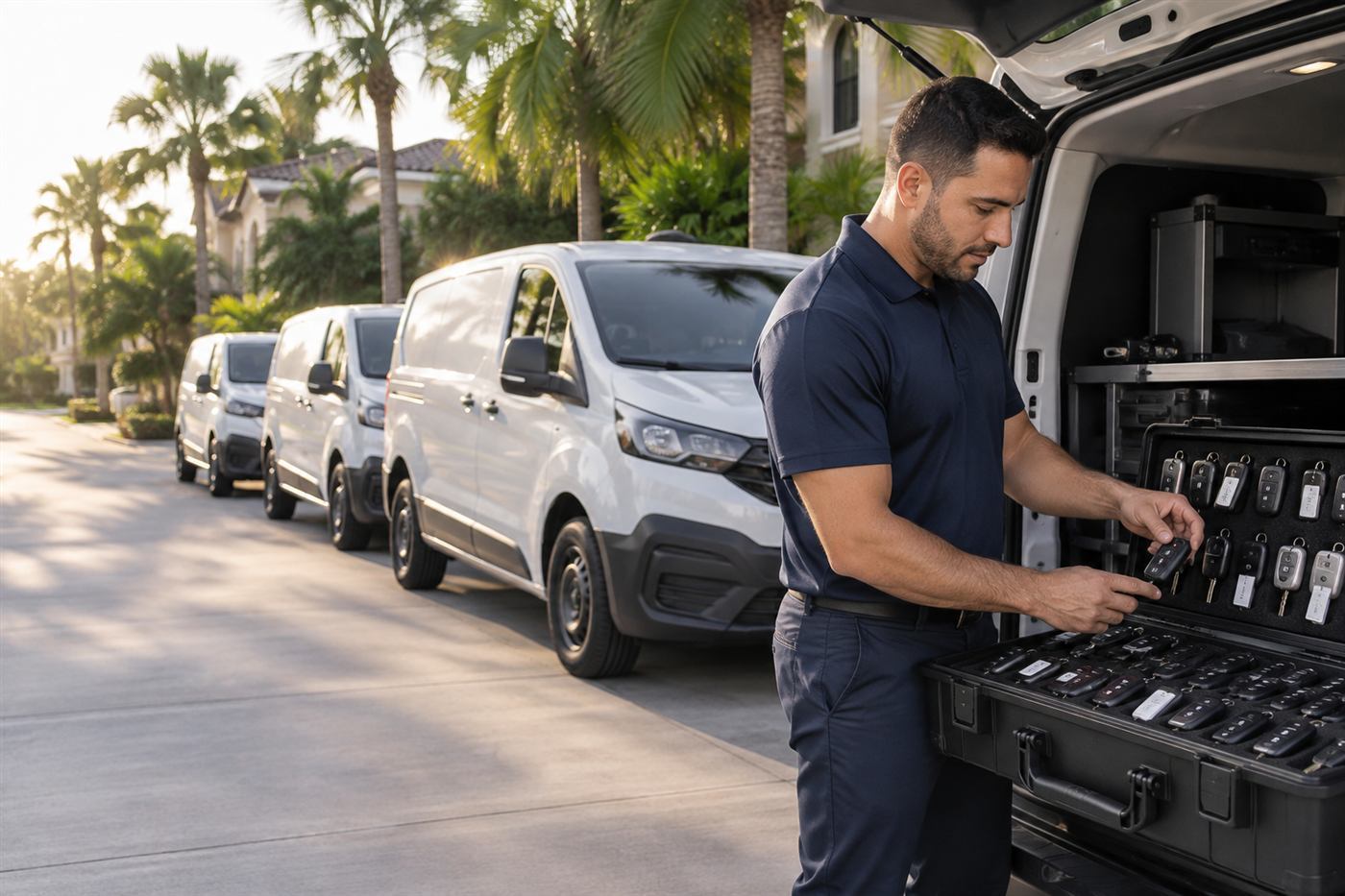
How a locksmith call works in Oklahoma
A call begins with three facts: where you are, what the vehicle or door is, and what happened. From those, the dispatcher can tell you whether it is a lockout, a key that has to be cut and paired, a broken key to be extracted, or something that needs a technician to see it in person. Quotes are given by phone only, and no prices appear on this site, because the right figure depends on the vehicle, the key type and the situation.
Some jobs can be quoted completely on the phone. Others, such as a damaged ignition or a door lock that has been forced, need an on-site visit before a firm number is possible. There is a service call charge for dispatch, and it is explained on the phone before any technician is sent. Ask what it covers and whether the quote is for the whole job. Settling those questions early prevents misunderstandings at the vehicle.
The name includes the phrase 24-hour because the idea of the service is that people lose keys at night, on weekends and in storms. It describes the concept. It is not a promise that a technician is standing by at every hour in every county, and the dispatcher will tell you plainly what is possible where you are, particularly when severe weather affects the roads.
- Where you are: the road, mile marker, lot, or nearest landmark
- Vehicle make, model, and approximate year
- What happened, and whether anyone or any animal is inside
- A phone number that works where you are, with a charged battery
Tornado season: safety before keys
Oklahoma's severe weather season brings tornado watches, warnings, hail and high winds, and it arrives with little notice. When there is a warning, your safety comes before any lock, key or car. Follow local emergency guidance and move to shelter. A locksmith is not an emergency service, and a lockout is never a reason to stay in a dangerous place.
Preparation is sensible. Keep a spare key somewhere that does not depend on the car or the house standing: with a relative, in a safe, or in a small waterproof container you can carry. Keep a record of your vehicle identification number and your ownership documents in a place you can reach after a storm, such as a phone photo or a document in cloud storage you can open from any device.
The guide on finding your VIN shows where the number is. If your car is damaged or moved by a storm, or your home is damaged, you may need new keys or lock repair, and the VIN and ownership documents make that faster. Do not return to a damaged building until authorities say it is safe.
- Take shelter first and follow local emergency guidance.
- When it is safe, check vehicles and doors for damage and photograph everything for insurance.
- If keys or documents were lost, note the vehicle details you remember and any photos you have.
- Call for help with locks and keys once the area is safe to enter.
After the storm: damaged doors, broken windows and lost keys
After a severe storm, the lock and key problems are practical. Hail can break car windows, leaving a vehicle that cannot be secured. Wind can bend door frames so a lock no longer lines up. Debris can strike a door and damage the latch. Power outages can disable electronic deadbolts, keypad locks and garage door openers.
A damaged door that will not latch is a security problem, and it is worth fixing quickly. The page on a door that will not latch explains the usual causes. If a lock was forced or the door was damaged and someone could enter, the guide on lock repair after a break-in covers what to do and what to photograph. Electronic locks that stop working after an outage are covered in the smart lock guide.
For vehicles with broken windows, the glass and body work is a matter for the appropriate shop and your insurer. A locksmith can help with door locks, ignition problems and key issues that came with the damage. Do not leave valuables in a car that cannot be locked, and photograph the damage before anything is moved.
Oklahoma City and Tulsa: wide metros and long distances
Oklahoma City covers a very large land area, and Tulsa spreads across many suburbs. People drive long distances for work, shopping and school, and a lost key can leave someone far from home with no easy way back. That affects what you should do first. If you have a spare at home and someone who can bring it, that may be the fastest fix. If not, call and give a clear location.
Large parking lots at malls, stadiums, hospitals and shopping centers are common, and a technician who goes to the wrong entrance loses time. Give the store name, the nearest entrance, a row or light pole number if there is one, and the color and make of the car. If the lot is gated or the garage needs a ticket, tell the dispatcher.
Because the metros are so spread out, a spare key is a sensible investment. The page on spare car key programming explains how one is made, and it is usually a shorter job when you still have a working key. The guide on what to do when you lose your car key offers a clear order of steps if it has already happened.
Trucks, trailers and work vehicles
Oklahoma is a truck state. Pickups, work vans, livestock trailers and equipment haulers are everywhere, and their keys lead hard lives. They are copied many times, worn smooth, dropped in dirt and carried with tools. A worn key produces a worn copy, and eventually one fails in a door or an ignition.
Replace a worn key before it breaks. A technician can often cut a fresh key from the vehicle's key data, which gives a cleaner result than copying a worn one. The page on worn key symptoms describes what to look for, and truck and van key service explains how work vehicle keys differ from passenger car keys.
Trailers and campers have their own locks, often corroded from exposure. The page on RV and trailer locks explains the common types and when rekeying makes sense. If you run several vehicles, fleet service covers how to manage keys across a group.
Heat, wind, dust and the wear on keys
Beyond tornadoes, Oklahoma weather is hard on keys in quieter ways. Summer heat bakes fob housings and drains batteries. Wind carries dust that gets into lock cylinders and ignition switches. Temperature swings stress metal and plastic. Winter ice storms coat doors and locks in ice.
Dust and grit in a lock make a key feel rough. Do not spray random lubricants into a lock, because some attract more dirt. If a lock feels gritty, a technician can clean or replace the cylinder. A key that has become hard to turn is a warning to act before it fails, and the page on a key that will not go in the lock covers a related problem.
After an ice storm, a frozen lock is common. Do not pour hot water on it, and do not force the key. The page on locks that stick in the cold explains safe steps, and the guide to summer heat and car key safety covers the hot-weather side.
Common key problems and the steps that help
The same problems recur across the state. A key that has been copied many times may stick. A fob can lose its pairing after a battery change or a hot season. A blade can snap in a door or ignition. A key that turns without starting the car may have a transponder problem.
Stop at the first sign of trouble. Forcing a key can snap it, and prying a door can bend the frame. If a key breaks, keep the pieces and do not push the broken part deeper. The page on broken key extraction explains the process. If the car shows a flashing immobilizer light and will not start, see the immobilizer light guide.
If every key is gone, you are in an all-keys-lost situation. A technician will verify ownership, identify the vehicle, cut a new key and program it. The page on all keys lost service covers the steps.
| Situation | Why it happens here | Helpful step |
|---|---|---|
| Hail broke a window | Severe storm season | Photograph, protect valuables, call a glass shop and your insurer |
| Door will not latch after wind | Frames bend and shift | Do not force it, call |
| Lock gritty and rough | Dust and wind-blown dirt | Do not oil blindly, call before the key breaks |
| Lock frozen after ice storm | Winter ice | Try other doors, no hot water |
| Worn truck key failing | Heavy use and many copies | Replace before it breaks |
Proof of ownership and avoiding scams
A responsible locksmith will ask for reasonable proof that you are entitled to a vehicle before making a key. A photo ID and a matching registration are the usual starting point. After a storm, documents may be lost or damaged, and the technician will tell you what else may be accepted. The guide on proof of ownership for a car key explains more.
Locksmith scams exist, and after a storm, people in a hurry are targets. Warning signs include a company that will not give its name, a quote that grows when the technician arrives, an unmarked vehicle, and pressure to agree before any explanation. The article on scam warning signs has a checklist, and verifying a locksmith explains how to check what Oklahoma or your city requires. Do not assume any company holds a credential. Check yourself.
You may always decline if the work does not match what was explained on the phone.
Home and business locks in Oklahoma
Cars are the main focus here, but the same call also covers doors. Wind-blown dust, heat and storm damage all take a toll on door hardware, and a deadbolt that sticks may really be a door frame that has shifted. Landlords and small business owners also ask about rekeying after a tenant or employee leaves, since changing the lock is simpler than tracking every copy of an old key.
When you call about a door, describe the lock, the door material and whether the key turns at all. Jobs with several doors, or hardware upgrades, may need an on-site visit before a quote is possible. The page on commercial locksmith service explains what a technician will look at in a shop or office.
What to have ready before you call
A little preparation shortens the call. Know where you are. Know the make, model and approximate year of the vehicle, and if you can see the VIN through the windshield, write it down. Have a photo ID and the registration or a photo of it.
If every key is lost, think about whether you want a spare during the same visit. Two keys in one trip is often more practical, and the dispatcher will explain the quote for each option. If you have a working key that is worn, mention it, because copying it before it fails is the simplest path.
Expect a brief explanation of the quote and the service call charge, both given by phone before anyone is sent. When your details are together, call and tell the dispatcher what is going on.
Questions people ask
Can you help during or after a tornado warning?
Your safety comes first. During a warning, take shelter and follow local guidance. Once it is safe, call, give your location and ask what is possible. Roads may be blocked, and the dispatcher will tell you honestly whether a visit is practical. Photograph any damage for insurance before moving anything.
Hail broke my car window. Can you help?
Glass and body repair are handled by the appropriate shops and your insurer. A locksmith can help with door locks, ignition problems and keys affected by the damage. Do not leave valuables in a car that cannot be locked, and photograph the damage first. Describe the situation when you call so the dispatcher understands.
How far out in rural Oklahoma do you go?
It depends on where you are and what the dispatcher can arrange at that moment. Call, give the road name, nearest crossroads and any landmarks, and ask. If a location is too far or conditions are unsafe, you will be told plainly. If you are in danger, call 911 first.
Can you cut a key for an older truck?
Often yes. Older trucks may use simple keys without a chip, which are quicker, but a worn original can produce a poor copy. A technician can often cut a fresh key from the vehicle's key data. Give the make, model and year when you call, and the dispatcher will explain what is involved.
Can you make a new key if every key is lost?
In many cases, yes. The technician needs proof you are entitled to the vehicle and a way to identify it, such as the VIN. Push-button start and some imported models take longer than a simple key. The dispatcher will explain how your vehicle is handled and quote the job by phone.
How are quotes given?
By phone only. The dispatcher asks about the vehicle and the problem, then explains the quote. Complicated jobs may need an on-site visit before a firm number is possible. A service call charge applies to dispatch and is explained before a technician is sent. No prices appear on this site.
Describe the situation by phone and we will tell you what the job involves. Quotes are given by phone. Jobs that cannot be quoted without seeing them need a technician on site, and the service call charge is explained on the phone before anyone is dispatched.
(844) 715-0800Related pages
Written by Claude (AI) (AI) for 24/7 Locksmith USA.