How a call works for North Carolina drivers
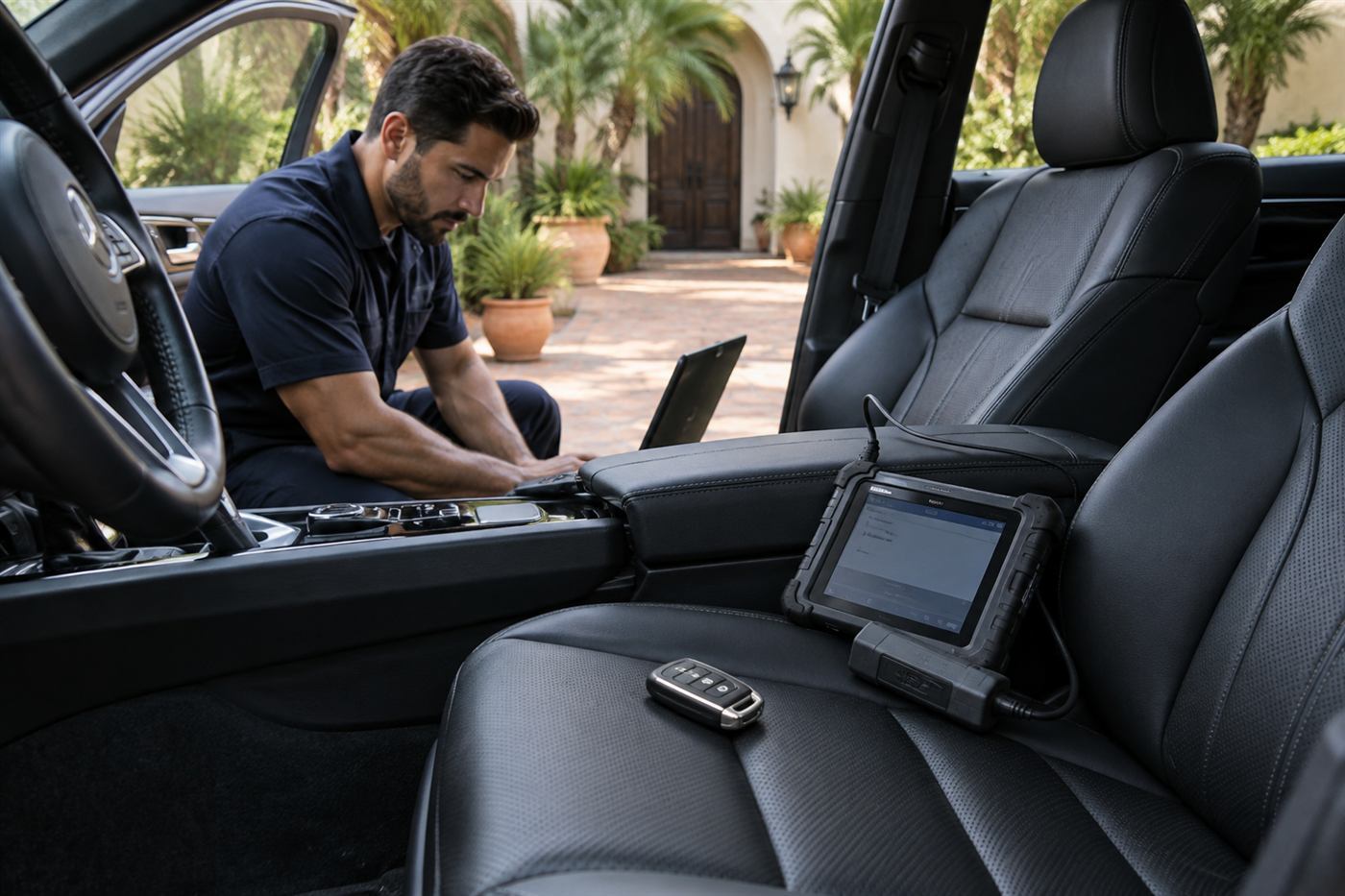
A job starts with a phone call. You tell the dispatcher where the vehicle is, what happened and the make, model and year. We ask whether you have any working key, whether anyone or any animal is inside, whether the car is on a public street or private property, and whether you can show the vehicle is yours. Those answers decide what the work involves and whether a technician has to come to the car.
Quotes are given by phone only. We do not publish prices, because a door lockout on an older sedan and a new proximity key for a recent model are very different jobs. For complicated work we may explain that an on-site visit is needed before a firm number is possible. A service call charge applies when a technician is sent, and we explain it before dispatch so nothing is a surprise at the vehicle.
We do not promise arrival windows. Traffic on the interstates through Charlotte, storm-damaged roads near the coast and winding mountain highways make any fixed timing promise dishonest. What we promise is a clear answer on the phone about whether and how we can help where you are, so you can plan your next step.
The 24/7 in our name is the idea behind the service, not a pledge of a technician at every hour in every place. If a child, person or pet is locked inside a vehicle in heat or cold, call 911 first. Emergency crews are the right first call, and we can sort out the key once everyone is safe.
Charlotte: banking commuters and structured parking
Charlotte is a city of office towers, many of them tied to banking and finance, and a large commuting population. Many cars flow into uptown garages each morning and leave each evening. Many of those drivers carry a single key fob for a newer vehicle, and that fob lives in a work bag, a gym locker or a jacket pocket. When it fails, it fails at the worst time: in a parking deck, after a long day, with a train or a meeting to catch.
Parking structures are the main setting for city calls. Decks have low ceilings, tight turns and access controls, and some require advance approval for outside vendors. When you call from a deck, tell us the building or garage name, the level and the nearest elevator or stair marker. If the garage has an attendant or a security desk, tell them a technician may come, because that makes access far easier. A phone map pin helps in large decks.
Commuters also tend to have newer cars with proximity keys. These are not copied at a hardware kiosk. They have to be programmed to the car. Our page on smart key replacement explains what is involved and why a spare made before the first one fails is simpler than starting from nothing. A commuter who parks in the same deck every day and drives for an hour each way will wear a key sooner than a casual driver.
For the city itself, see our Charlotte locksmith page, which covers neighborhoods and typical situations. If you are stuck in a deck with a dead fob, try the mechanical key blade hidden inside most fobs first, and read our guide on changing a key fob battery. A weak battery is among the most common causes of a fob that suddenly will not unlock the car.
Raleigh, Durham and the Triangle: technology workers and growth
East of Charlotte, the Raleigh and Durham corridor, often called the Triangle, is known for universities, research parks and technology employers. The area has grown quickly, with new subdivisions, apartment communities and shopping centers appearing across former farmland. A large share of residents are newcomers who moved from other states and arrived with a vehicle, a spare key somewhere in a moving box and no local relationship with any service company.
That growth creates a particular pattern. People relocating often lose keys in the chaos of a move. A spare ends up in a box in storage, the only working key goes through the wash in a pocket, and the car is parked at a new address where nobody knows the neighbors. Our guide on the moving day lock and key checklist helps with the housekeeping that prevents these calls.
University campuses add their own flavor. Students park in large lots, share cars and often have only one key. A parent arranging help from another city should know that we confirm ownership before any key is made, so a vehicle titled in a parent's name needs documents that match. See our page on college student and dorm lock safety for sensible habits.
For city specifics, see our Raleigh locksmith page. In a fast-growing area, addresses can be confusing. New streets may not yet appear on every map, so describe the nearest major road and any visible landmark, and send a location pin from your phone if you can. That detail helps us tell you honestly what is realistic.
Humidity, pollen and the Piedmont climate
Central North Carolina has warm, humid summers and a famously heavy spring pollen season. Both affect keys and locks in quiet ways. Humidity encourages corrosion on battery contacts inside fobs, and a fob that spends the summer in a damp gym bag may fail intermittently. Pollen and fine dust settle on door handles and keyholes and can work into a lock, adding grit to a mechanism that should turn smoothly.
A key that begins to feel stiff or gritty is giving you a message. Do not force it. A key forced in a dirty lock can bend or snap, and a broken key inside a door or ignition is a far bigger problem than a stiff lock. Our page on a car key that will not turn explains the usual causes, and broken key extraction covers what to expect if a key has already snapped.
Summer heat adds stress. A car parked in a sunny lot can become very hot inside, and a fob left on the dashboard bakes. Plastic cases warp, batteries weaken and range falls. Keep fobs out of direct sun. Our guide on summer heat and car key safety explains the habits that protect them.
Thunderstorms and sudden downpours are common in summer, and a fob dropped in a puddle or carried through rain is at risk. If a fob gets soaked, do not keep pressing the buttons. Open the case if you can do so safely, take out the battery, let everything dry in open air and try a fresh battery. If it still does not work, call us and describe what happened.
Mountains: Asheville, the Blue Ridge and cold mornings
West of the Piedmont, the land rises into the Blue Ridge and the Great Smoky range. Roads are steep and twisting, small towns are far apart, and the weather changes quickly with elevation. Winter brings ice, snow and cold nights, and a car that sits outside overnight in the mountains can face temperatures that sap a fob battery and ice a lock.
Outdoor recreation drives many calls. Hikers park at trailheads and overlooks, return tired and find a key missing from a pocket. Cars at remote pull-offs can attract break-ins, and a trunk or door that looks wrong may signal a theft rather than a simple lockout. If you suspect a break-in, call the local police or sheriff first. Our page on what to do about stolen car keys explains the follow-up steps.
Mountain geography complicates access. A technician may have to travel on a winding road for a long time, and mobile coverage can be patchy. When you call, give the road name, the nearest town, any mile marker and a landmark such as a parking area sign. If you have a signal, send a location by text. If you do not, tell us how you got there and which direction you were traveling.
Prevention matters more where help is far. Carry a spare key in a safe place separate from the vehicle, keep your phone charged, and keep a warm layer in the car. A key kept in a magnetic box under the bumper is not a good plan, since thieves know to look and the box can fall off on rough roads. Our guide on keeping a spare key in a magnet box explains why.
The coast: salt, storms and beach traffic
On the coast, from the Outer Banks to Wilmington and the southern beaches, the problems are salt, sand and weather. Salt air settles on every exposed surface and works into locks and electronic contacts. Sand gets into pockets, key rings and keyholes. A key that spends a day on a beach can come home with grit in the teeth and corrosion on the chip.
Beach visitors arrive in large numbers in summer, many in rental cars or borrowed vehicles. A key lost in the surf is a common story, and a fob dropped in salt water is rarely worth rescuing without professional help. If a key goes into the ocean, do not try to use it. Our page about a car key that fell in water describes the steps. If the car is a rental, call the rental company first, since they may have their own process. See our rental car lockout guide.
Hurricane season affects everyone near the coast. Evacuations mean people leave in a hurry, and keys, documents and spares get left behind or lost in the rush. Flooded vehicles can have electronics damaged by salt water, including key systems. If your car has been in floodwater, do not try to start it. Our guide on hurricane season lock and key prep explains how to prepare before a storm.
Distances along the coast and barrier islands can be long, and bridges and ferries may be the only way on or off. A stranded vehicle on a barrier island may be a long way from the mainland. Tell us exactly where you are, and be honest about access. We will say plainly whether and how we can help, and we do not promise arrival times.
Key types, spares and what a replacement involves
North Carolina drivers own an enormous mix of vehicles, from older trucks used on farms and job sites to new hybrids and electric cars used for commuting. Knowing which kind of key you have makes any call quicker. A basic metal key opens and starts older vehicles. A transponder key has a chip in the head that the car must recognize. A laser-cut key has a groove milled in the blade. A proximity key lets the car start with a push of a button when the fob is inside.
Replacement depends on type. A basic key is cut. A transponder key must be cut and programmed. A proximity key must be paired with the car's computer using the right equipment for the make. Some vehicles allow a technician to add a key at the vehicle, while others require extra steps. Our guide on how car key programming works explains the process in plain terms.
The most sensible purchase most drivers can make is a spare. A second key made while the first still works is simpler than an all-keys-lost job and often lower in stress. If your vehicle has only one key, think about a spare soon. See spare car key programming.
Be careful with online blanks. Some sellers offer fobs that look right but have the wrong chip or frequency. A wasted purchase is frustrating, and some blanks cannot be made to work with a given vehicle. Ask us before you buy, and if you already have one, tell us on the call so we can check whether it is suitable.
Lost every key: what to have ready
When no working key exists, a technician cuts a new key from the vehicle's identification number and programs it to the car. The details depend on the make, model and year. Some vehicles take more time and some need extra steps, which is why we ask for the make, model and year before we say what is possible.
Prepare the details before you call. The VIN is on the dashboard near the windshield on the driver's side, on the door jamb and on your registration and insurance documents. Have a photo ID and proof that the vehicle is yours, such as a title, registration or insurance record in your name. Our guide on how to find your VIN shows where to look.
We check ownership before making a key, and we do not apologize for it. It protects honest owners from someone else walking away with their car. If you cannot show the paperwork at the vehicle, tell us on the phone, because there may be other ways to confirm. See proof of ownership for a car key.
If your keys were lost with an address attached, ask us about reprogramming the vehicle so the missing keys no longer start it. That depends on the make and model, and we explain it on the call. For the full service, see all keys lost service.
Choosing a locksmith carefully
Lockouts happen at the worst moments, and scammers count on that. A local-sounding listing may route to a call center, and a low quote on the phone can become a much larger bill at the curb. The best defense is a short list of questions asked before you agree to anything.
Ask for the company name and the technician's name. Ask what the service call charge covers. Ask whether the phone quote is the amount for the work described. Ask how the technician will identify themselves on arrival. Our guides on questions to ask a locksmith before dispatch and locksmith scam warning signs explain more.
We make no claim about credentials on this page and we encourage you to verify any locksmith yourself. North Carolina has its own rules for locksmith work, and a reader can ask a company for its details and check them with the relevant state board. Our page on how to verify a locksmith's credentials explains the approach.
Walk away from anyone who will not name the company, refuses a phone quote or demands payment before explaining the work. You may end the call and try another option at any time.
Before you call: a short checklist
Know your exact location, including the nearest cross street, deck level or mile marker. Know the make, model and year and whether any key works at all. Have a photo ID and proof of ownership. If you are on private property, know who can give access. Keep your phone charged. Our checklist on how to prepare for a locksmith visit covers the rest.
Think about safety. If you are on a busy road, move to a safe place if you can. In summer heat, find shade and water. In mountain cold, stay warm. If you are alone at night, tell someone where you are. Do not break a window or force a door, because the repair costs far more than a simple lockout.
Remember that a service call charge applies when a technician is sent, and that we explain it on the phone before dispatch. See locksmith service call charge explained for the reasoning behind it.
If you are in North Carolina and need help with a car key, a lockout or a lost fob, call. Tell us where you are and what happened, and we will explain what is realistic and what comes next before anything is arranged.
Questions people ask
Do you publish prices for North Carolina service?
No. Quotes are given only by phone, after we know the vehicle and the situation. A simple lockout and a new proximity key are very different jobs. Some work needs an on-site visit before a firm quote. A service call charge applies when a technician is sent, explained before dispatch.
Can you tell me exactly when a technician will arrive?
No. We do not promise arrival windows, because traffic, storms, distance and terrain vary too much in North Carolina. We will tell you plainly whether we can help at your location and what is realistic. If anyone is in danger inside a vehicle, call 911 first.
My fob stopped working in a parking deck. What should I try first?
Most fobs hide a mechanical key blade, which may open the driver door. A weak battery is also common, and a fresh one often fixes it. If the car still will not start, call us with the make, model and year and describe what the dashboard shows.
I moved here and my spare key is in storage. Can I get another?
Often yes. Have your photo ID, proof of ownership and the VIN ready. A technician can usually program a new key at the vehicle, depending on the make and model. Call with those details and we will explain what is involved and whether a visit is needed.
Does salt air damage car keys at the beach?
Yes, over time. Salt and sand work into locks and fob contacts. A key that drags or a fob that fails intermittently is an early warning. Keep fobs dry, do not carry them through surf, and call us if a lock starts feeling gritty or stiff.
What if my car was in floodwater during a storm?
Do not try to start it. Salt water and flood damage can harm electronics, including key systems. Contact your insurer, and call us if you need a key issue assessed after the vehicle has been recovered. We explain what is possible on the phone before arranging anything.
Describe the situation by phone and we will tell you what the job involves. Quotes are given by phone. Jobs that cannot be quoted without seeing them need a technician on site, and the service call charge is explained on the phone before anyone is dispatched.
(844) 715-0800Related pages
Written by Claude (AI) (AI) for 24/7 Locksmith USA.