
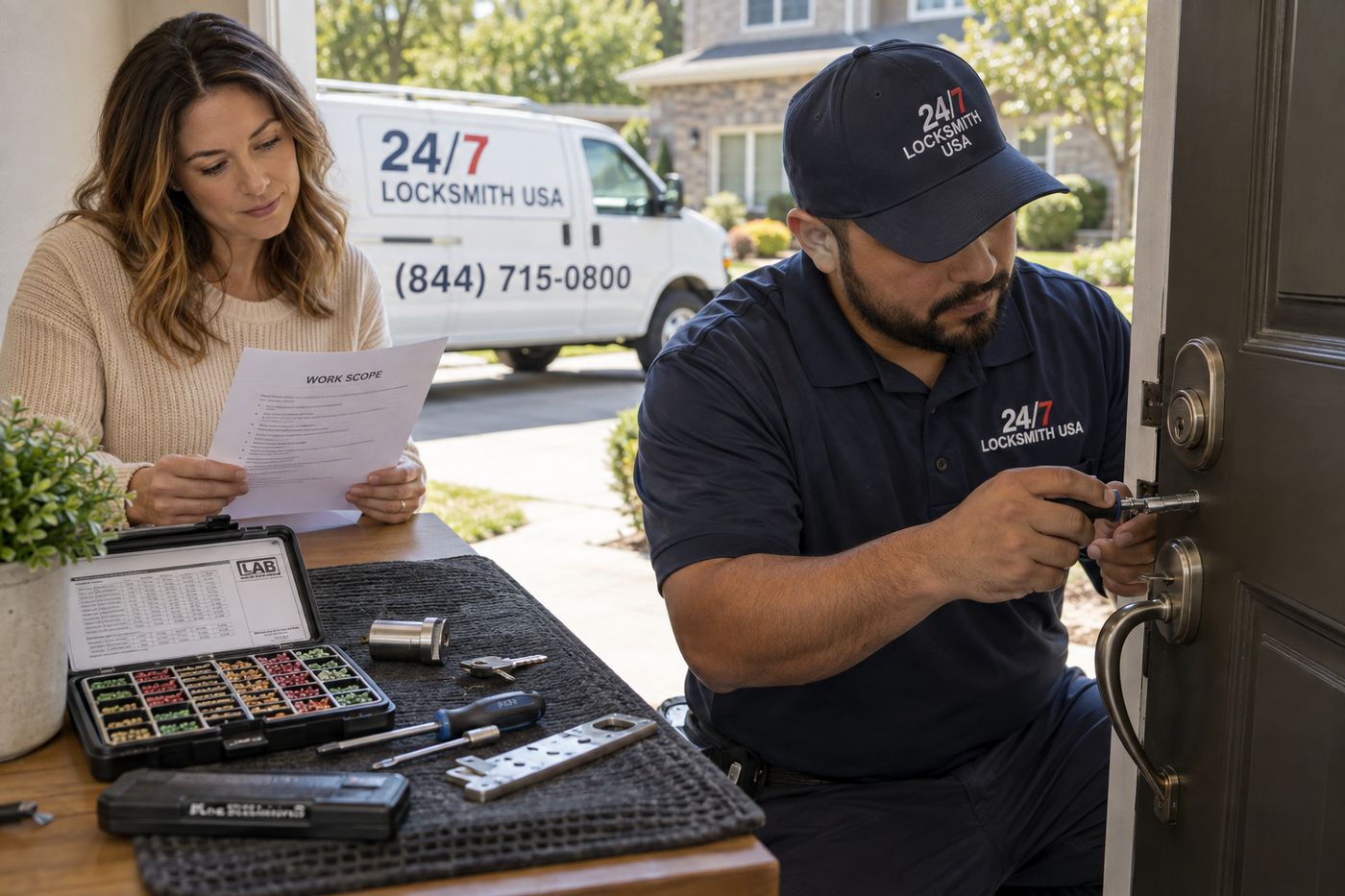
What we handle in Clearwater.
One mobile team across Clearwater, residential, automotive and commercial.
Marine & Dock Hardware
Corrosion-resistant cylinders and padlocks for boats, dock boxes and waterfront storage.
Impact Door & Storm Hardware
Multipoint locks and hardware on impact-rated doors adjusted, repaired or replaced.
High-Security Cylinders
Medeco and Mul-T-Lock cylinders for doors that need genuine key control rather than hardware-store pins.
Safe Opening & Servicing
Locked-out safes opened, and re-combinated where the model allows it.
Gate & Access Hardware
Pedestrian gates, keypads and gate locks for gated communities and fenced yards.
Mailbox & Cluster Box Locks
Communal and cluster box locks re-keyed or replaced, common in condo and HOA buildings.
Locks in Clearwater: what actually goes wrong.
Jurisdiction, not the state, decides the paperwork here: unincorporated Pinellas has had no occupational license requirement since Ordinance 95-53 took effect September 30, 1995, while a business inside Clearwater city limits must hold a city Business Tax Receipt before opening and can be cited by a city inspector for operating without one. Clearwater also notes that professionals working in the city who hold neither a DBPR nor a PCCLB license 'must first register their business with our Building Department prior to obtaining permits'. Near the water, standard plated cylinders corrode from the inside out; solid brass or marine-grade hardware lasts several times longer for a small difference in price. Tampa Bay area normals show mean annual relative humidity of 74.1 percent with an August peak of 78.4 percent and roughly 49.5 inches of yearly rain, about two-thirds falling June-September. Saltwater intrusion into hardware is also a documented flood issue: during Hurricane Helene 'up to 8 feet of water' entered homes and businesses on Pinellas County barrier islands and coastal south Tampa. Home Corporation'; the Harbor Oaks Residential District was listed on the National Register in 1988. The result is 1910s-1920s bungalow-era stock near the bluff, large volumes of post-war and 1970s tract housing inland, and a mid-century pocket in Skycrest.
A place where keys go missing at the beach
Coastal cities with visitors have a particular pattern of key trouble. People arrive for a short stay, bring a rental car and a set of rental home keys, spend the day by the water and lose track of something small and important. A key left on a towel, dropped in the sand or carried into the surf can vanish, and a fob soaked in salt water may never recover.
Residents have their own version of the problem. Pockets get wet, bags get dumped on the ground, and spare keys hide in places that become corroded. The sun, the sand and the sea each wear on metal and electronics, and the result is a steady flow of lockouts, dead fobs and sticky locks.
This page is general guidance for people in Clearwater. It does not describe any particular beach, street or neighborhood, and it makes no claim about local history or about a company having worked in the area. Its aim is to help you understand your situation, prepare for a call and ask good questions.
If you lose a key on vacation
Losing a key far from home is stressful because you are outside your usual routine, without your usual tools. First, stop and retrace your steps. Check pockets, bags and the car, and call the last place you were. Many keys are found within minutes of a calm search.
If the key belongs to a rental home, contact the host or the management company right away, because they may have a spare or a keypad code. If it belongs to a rental car, call the rental company before doing anything else. They have procedures for lost keys and may not want an outside party to work on their vehicle.
If the key is for your own car and you are far from home, a technician can often make a new one after confirming ownership. You will need a photo ID and proof that the car is yours, which can be difficult to produce on vacation. Our page on lost car keys on vacation walks through what to gather.
- Retrace your steps and check bags, pockets and the car before calling.
- Contact the host or management if the key belongs to a rental home.
- Call the rental company first if the key belongs to a rental car.
- Keep a photo of your registration and ID on your phone as a backup.
Rental cars and who must be called
A rental car belongs to the rental company, not to you, and that changes the rules. A locksmith needs authority from the owner to open or make a key for a vehicle. In most cases the rental company must be contacted, and they may arrange their own roadside help or give permission for someone else to work.
Read your rental agreement to see what it says about lost keys and lockouts, and keep the company phone number handy. Some agreements include roadside assistance, and your credit card or auto insurance may also offer help. Check these sources before spending money.
Our rental car lockout guide covers the steps in more detail. If the company authorizes a locksmith, ask for that authorization to be given directly to the technician or in writing. A clear chain of permission keeps everyone safe and avoids disputes about damage.
Vacation rental homes and changing guests
Short term rentals bring heavy key traffic. Dozens of guests, cleaners and maintenance workers may touch the same lock in a season. Codes get shared, keys get copied and nobody remembers who has what. For owners, the most useful habit is resetting a code or rekeying between guests, or at least on a regular schedule.
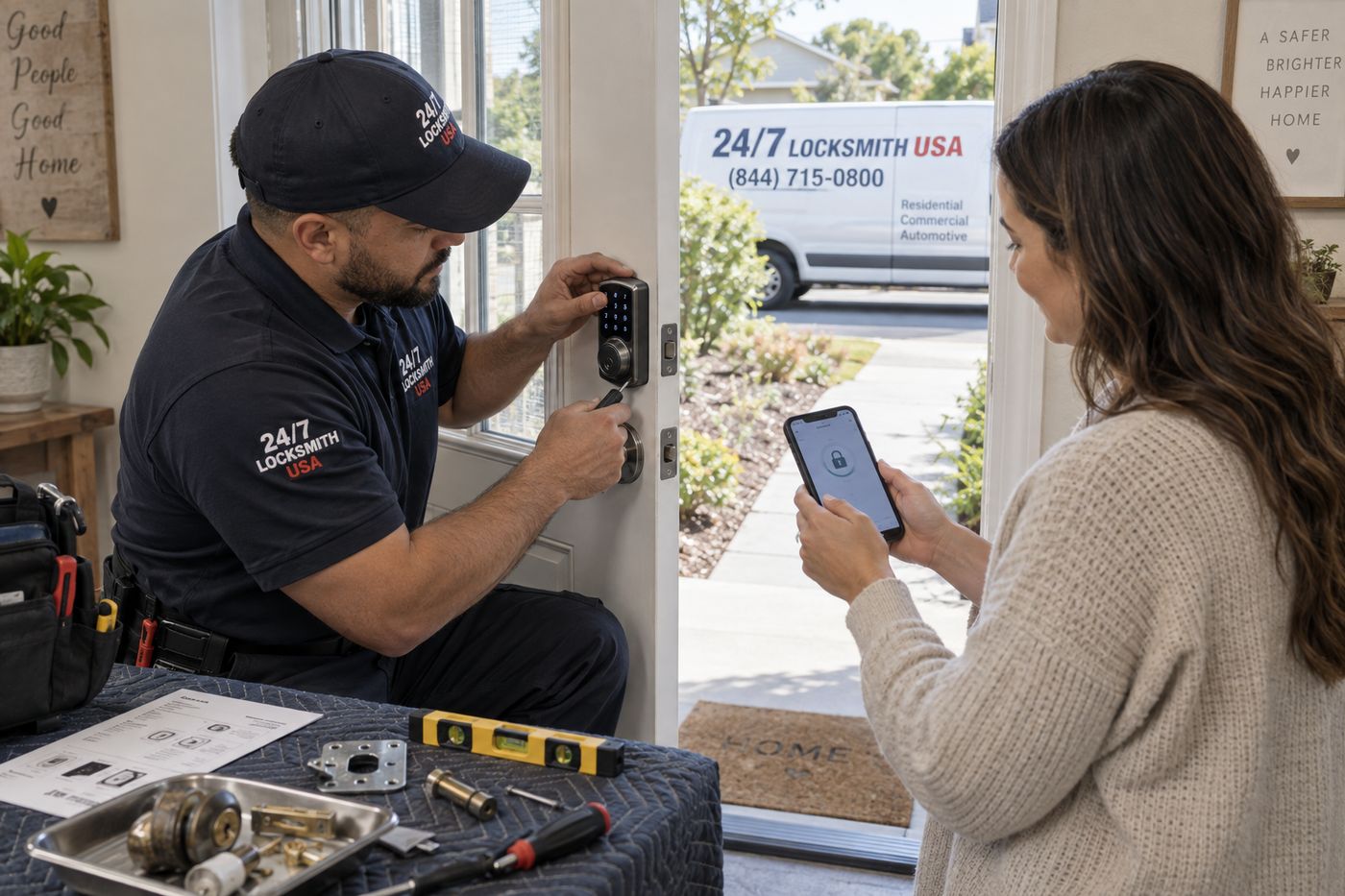
Keypad and smart locks help, because a code can be changed without a physical key. They also depend on batteries and care, so keep spare batteries on hand and test the lock regularly. Always have a mechanical backup stored where a trusted person can reach it. Our page on smart lock installation explains what is involved.
Guests who lock themselves out should contact the host first. If the host cannot be reached, a technician can sometimes help, but only after the person with authority over the property agrees. The owner or manager may need to confirm by phone, so expect a short delay while that is arranged.
Guests can help by keeping the host informed and by not trying to force the door. A host who knows the lock model can often talk a guest through a reset or point them to a hidden spare, and that is usually simpler than any visit. Keep the host contact in your phone, not only in an email you cannot open without internet access.
Salt air, sand and sticking locks
Salt and sand are hard on moving parts. Salt corrodes metal, while sand works into cylinders and acts like fine sandpaper. A lock that was smooth when new may become gritty and then stiff. Patio doors, gate latches and beach side storage lockers are especially vulnerable.
Rinsing exposed hardware with fresh water now and then helps, followed by drying and a suitable lock lubricant. Avoid heavy oil, which collects sand. If a key feels rough, do not force it. A worn key may snap, and a broken piece in a cylinder is a bigger problem than a stiff lock.
Remember the small things that live on the same ring. Bottle openers, metal charms and heavy fobs all add weight and wear to an ignition or door cylinder. If you spend a lot of time at the beach, consider a separate light key for the car and keep the rest of the ring in your bag. It reduces both wear and the risk of losing everything at once.
When a lock has corroded badly, replacement is usually wiser than repair. Our page on lock rekey service explains the alternative if the lock is still sound but the keys are not. A technician can look at the hardware and tell you which path suits you.
When you discuss replacement, ask about the grade of the hardware and whether it suits an exposed spot near the water. Some finishes stand up to salt far better than others, and a modest upgrade in material can mean a lock that lasts many seasons instead of one.
Car lockouts in hot parking lots
Locking keys in a car happens everywhere, but heat adds urgency. A closed car in the sun warms up rapidly, and the inside becomes dangerous for a child, a pet or a person who is unwell. If anyone is inside, call emergency services first and do not wait for a locksmith.
If the car is empty, move to shade, drink water and call for help. Do not try to force the door or wedge tools into it, which can bend the frame and scratch paint. A technician can open most vehicles using professional tools without damage, after confirming that you own the car or have authority over it.
Be ready to show a photo ID and a registration or other document. Our page on car lockout describes the process. If you are a visitor with a rental car, remember to contact the rental company first. Keep a spare key somewhere other than the car itself.
Many visitors lock a key in the trunk of a rental car without realizing that the trunk can be opened from inside on some models. Check your manual for a release lever or a button, and know how to use it. Do not climb into the trunk or reach in through the back seat in a way that could cause injury or damage.
Replacing a lost car key for a local driver
Residents who lose a car key have the advantage of having documents close at hand. A technician can cut and program a replacement from the vehicle identification number once ownership is confirmed. The VIN is on the dashboard plate by the windshield on the driver's side and on your registration and insurance cards.
If you have no spare, the job is a replacement from scratch, covered on the car key replacement page. It involves cutting a blade to the vehicle code and programming the chip or fob so that the car accepts it. Describe your vehicle and ask whether the work can be done where it is parked.
Make a spare as soon as you can after the new key is made. Two working keys give you a margin of safety, and the second key is easier and simpler to make while the first still works. Test both at home before you rely on them.
If you drive a work vehicle or share a car with family, think about who needs a key and who does not. A smaller number of keys is easier to control, but each driver needs reliable access. Write down which key belongs to which car if you manage more than one, and keep the notes somewhere safe and not inside the vehicle.
Storm season and your locks
The annual storm season affects more than roofs and windows. Locks and keys are part of the picture. Doors swell in humid, wet conditions, shutters must be latched, and in an evacuation it is easy to leave a key behind or lose one in the confusion.
Before the season begins, test every lock and make sure each household member has a key. Put a spare with someone outside your home and photograph your registration, insurance and ID so that the information survives if papers are lost. Our guide on hurricane season lock and key preparation offers a full checklist.
After a storm, inspect your doors before you trust them. Flooding can ruin electronic locks, and forced or jammed doors may not secure properly. Photograph damage for your insurer and ask a technician to check the hardware. A lock that still turns is not necessarily a lock that still protects.
If you left a spare key with a neighbor or friend before a storm, check in to make sure it is still safe. If you took keys with you, put them in one place you will remember. In the stress of an evacuation, simple systems work well, such as a labeled pouch that goes in the same bag every time.
Condos, apartments and shared buildings
Many residents and seasonal visitors stay in condos or apartment buildings. The association or landlord usually controls entrances, gates and shared spaces, and your own unit door may be subject to rules about hardware and keys. Requirements differ from building to building, so ask the management office rather than guessing.
If you are locked out of a unit, the office may hold a key and can often help at once. If not, a technician can open the door after confirming that you live there, typically with a photo ID and a lease, bill or similar proof. The page on apartment and landlord locksmith work describes the process.
Landlords and owners should rekey between tenants, keep a record of keys and codes, and tell tenants who to call after hours. Clear instructions prevent most emergency calls, and they make it easier to resolve one when it occurs.
For seasonal residents who spend months away, arrange for someone to check the property and the locks from time to time. Doors can swell, batteries can die and keypads can malfunction while no one is there to notice. A short visit now and then, with a brief test of every lock, catches problems before they become a lockout on the day you return.
Shops, restaurants and small businesses
A beach city has many small businesses, from shops to restaurants to rental offices. They face busy doors, shifting staff and the pressure of opening on time. A lockout on a busy morning is costly, so a key log, a spare held offsite and a plan for who to call make a real difference.
For commercial doors, hardware quality matters. Heavy use wears locks out sooner, and salt air makes things worse. A door used all day by customers, staff and delivery people takes a beating that a home door never sees. Our commercial locksmith page explains the range of work, including replacing worn hardware, rekeying after staff changes and setting up master keys for several users.
If you are locked out of a business, the technician will want proof that you have authority over the premises, such as a lease, a business document or confirmation from the landlord. Have that ready, and do not break glass, since repairs cost far more than the lockout.
Many business owners also benefit from changing the keys on a schedule rather than only after a problem. Seasonal staff come and go, and each person who leaves with a key is a loose end. A rekey at the end of a busy season keeps control tidy and gives you a fresh start for the next one.
Nearby cities and the Florida overview
Clearwater is part of a busy bay area where people cross between cities daily. If you are in St. Petersburg or Tampa, those pages offer similar guidance for local conditions.
For a wider look, see the Florida state page. Rules for rentals, associations, vehicles and permits vary, and you should ask the proper office, your association or your insurer about anything specific to your case.
When you are ready to call, have your location, the type of lock or vehicle and your ID ready. Describe what happened in order, ask for a quote and make sure the service call charge is explained before anyone is dispatched.
If you are a visitor, give the dispatcher the name of the place you are staying or the nearest landmark you can see, along with your phone number, because you may not know the street names. Mention how long you will be in the area, since that can affect which kind of replacement key makes sense for a short stay.
Common questions
What should I do first if I lose my key while on vacation?
Retrace your steps and check pockets, bags and the car. If the key belongs to a rental home, call the host or management. If it belongs to a rental car, call the rental company before anyone else. For your own car, a technician can make a key after confirming ownership.
Can a locksmith open a rental car?
Usually the rental company must authorize it, because the car is theirs. Read your agreement, call the company and ask whether they arrange help or give permission to a locksmith. A clear authorization avoids disputes about damage or cost, and many agreements include roadside assistance.
How can a short term rental owner manage keys?
Reset keypad codes or rekey between guests, or on a regular schedule, and keep a log of who holds keys. Use locks with a mechanical backup, keep spare batteries on hand and test the lock often. Store one spare key with a trusted person away from the property.
Why are my beach side locks so stiff?
Salt corrodes metal and sand acts like fine grit inside cylinders. Rinse exposed hardware with fresh water, dry it and use a suitable lock lubricant instead of heavy oil. If a key feels rough, do not force it. Badly corroded locks are usually better replaced.
What proof will I need for a lockout at home?
A photo ID plus something that links you to the address, such as a lease, utility bill or mail. For a vehicle, bring a registration or title. The check protects residents from anyone trying to enter property that is not theirs, and a responsible company always performs it.
How is the price decided?
A quote is given by phone based on the lock or vehicle, the work and the location, and the service call charge is explained before dispatch. Details found on site can change the job, so ask what might affect the number and get that answer before agreeing to proceed.