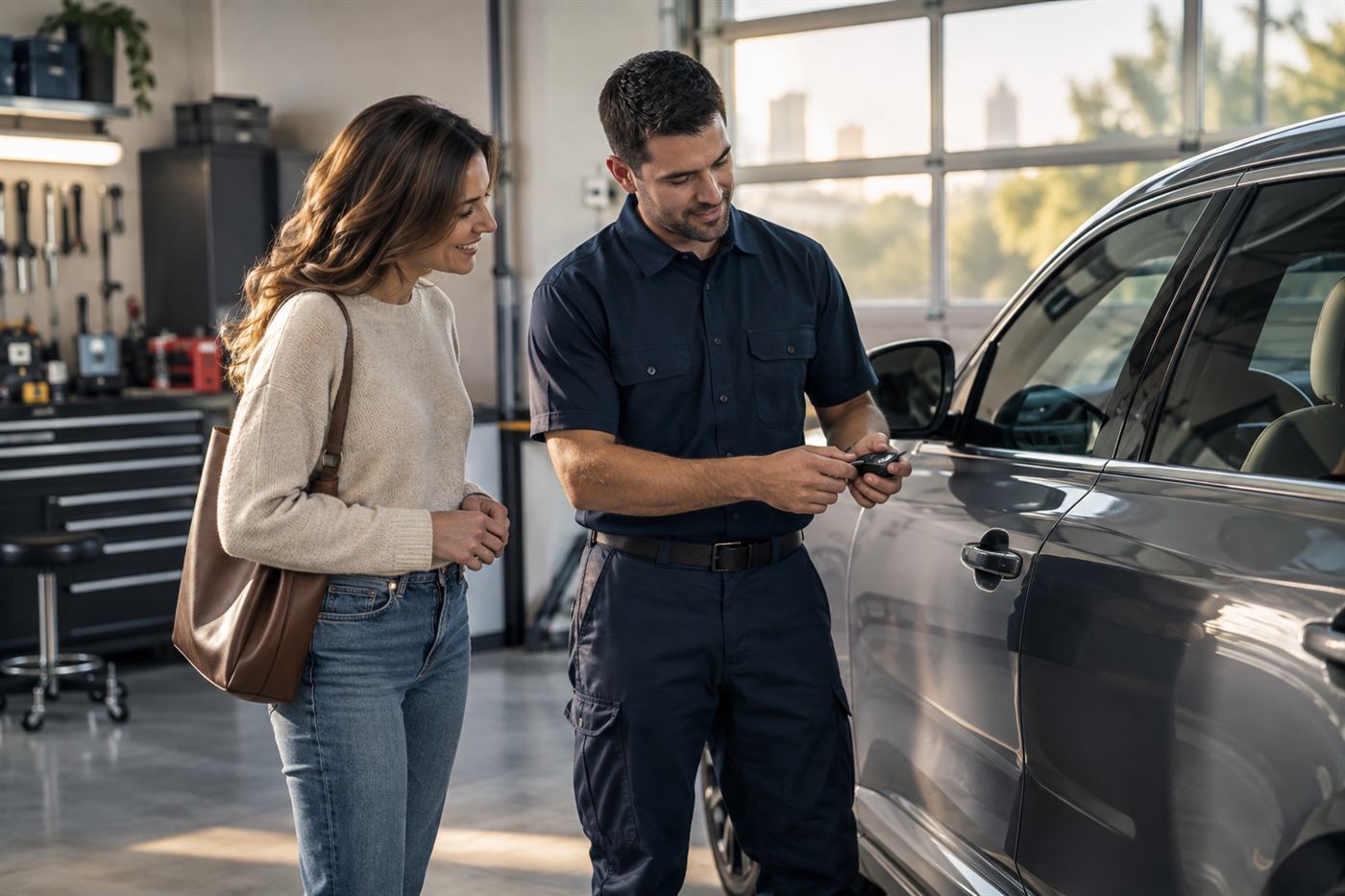
What a Raleigh locksmith call usually involves
The Triangle is built around three anchors, Raleigh, Durham and Chapel Hill, with a lot of growth in between. Most people drive, often long distances, and many have jobs in office parks, labs and campuses with big surface lots. Calls from this region often start in one of those lots: a researcher leaves a lab with a bag and no key, a student finishes a late class and finds the fob gone, a worker in an office park watches the door close on a key left in the cup holder.
This site puts cars first and homes second. In a region this spread out, a vehicle that will not open or start is the more urgent problem for nearly everyone. We cover homes, apartments and small businesses too and describe them below.
Housing here ranges from older brick houses inside the Beltline to brand-new subdivisions on the edge of Wake County. The vehicles range just as widely, from older sedans with plain keys to new crossovers and electric vehicles with proximity fobs and phone keys. A technician needs the make, model and year before quoting, and the first part of the call is questions about the vehicle.
The first step is always a call. We quote on the phone, explain the service call charge before dispatch, and send a technician only after you agree.
Tech workers, labs and office-park lots
Research and technology employers have drawn many workers to the area, and many of them commute to large, spread-out campuses. Campus parking lots are big, with several entrances, and some are gated or require a badge. A lockout in one needs a precise location: the building name, the lot letter or number, and the row if there is one.
If you are locked out at work, tell the security desk or facilities, because some campuses have rules about outside service providers and may need to register a visitor. Ask what the procedure is. If you can arrange for a technician to be met at the gate by someone from security, the visit is much smoother.
Workers in these settings tend to carry many items: badges, laptops, lab cards, a phone, and a fob. Keys end up in a bag, a lab coat, a bin at a security checkpoint. A key that is lost inside a secure building is a different problem from one lost in the lot, so check with colleagues and security before assuming the worst. See what to do when you lose your car key.
If your fob has become unreliable, a fresh battery is the first step. See how to change a key fob battery. If it does not help, see key fob programming.
NC State, student parking and campus-area lots
The area around NC State and other campuses has a lot of students, many of them away from home for the first time. Students lose keys at a high rate: a fob left on a table at a library, a key dropped on the way to class, a shared car passed among roommates. The first-semester student who locks the only key inside a car is a common caller.
If you are a student, treat a spare key as essential. Ask a parent or family member to hold one at home, and keep your vehicle registration somewhere you can reach. A technician will need proof of ownership, and a car that is registered in a parent name needs that parent to authorize the work or provide documentation. See proof of ownership for a car key and college student and dorm lock safety.
Campus lots have their own parking rules, and a car left for a long time can be ticketed or towed. Tell the dispatcher which lot you are in, and whether a permit is involved. Contact campus police if the car has been broken into.
For off-campus rentals, a landlord may hold a key or need to approve lock changes. See apartment and landlord locksmith work.
Cary, Apex and the long suburban drive
The suburbs around Raleigh, including Cary, Apex and others, are made up of neighborhoods with homeowner associations, wide streets and attached garages. Most households have two or three cars, and each car has more than one key. That sounds like safety, and it often is, but it also means keys are scattered. A child has one, a spouse has another, and the third is somewhere in a kitchen drawer.
Suburban lockouts are often simple mistakes made in a driveway or a school pickup line. Keys left on a seat, a trunk closed on a set of keys, a fob in a jacket left on a chair. If a child or pet is inside the car, call 911 first. Otherwise, take a breath, check that you are in a safe place, and call. See trunk lockout help and car lockout service.
The long drives that suburban life involves also wear out keys. A key that has been used for years can stick, and a fob that has been dropped a few too many times begins to fail. See worn car key symptoms.
If you are in an HOA community, there may be rules about vehicles in the street and about work in common areas. Mention gates or access rules when you call.
Spring pollen, summer storms and humidity
The Triangle gets thick spring pollen, hot humid summers with sudden storms, and mild winters with occasional ice. Each season leaves its mark on keys and locks. Pollen and dust coat everything, including door lock cylinders, and a lock that sticks in April may just need cleaning. Humidity and heat strain fobs and their batteries in summer. Ice storms, though occasional, can freeze locks.
A sticky lock should be checked rather than forced. See what to do when a key will not go into a lock and car door lock stuck. Spraying the wrong product into a lock can make things worse by collecting grit, so ask a technician what suits your lock.
A fob that has been soaked in a storm should be left to dry naturally. See what to do when a car key falls in water.
In summer heat, a car parked in the sun can reach temperatures that stress electronics on the dash. Do not leave fobs there, and never leave a child or pet in a closed car. See summer heat and car key safety.
Lost keys, spares and the all-keys-lost situation
If you lose every key to a car, the job is called all keys lost. It is routine for a skilled technician but involves more steps than making a spare: identifying the vehicle, confirming ownership, cutting a key and programming the car to accept it. See all keys lost car service.
A technician needs proof of ownership. Registration, title, an insurance card or an ID that matches are the usual documents. If these are locked inside the car, a photo of the title, a lease or a loan statement may work.
Leased and financed cars are common in this region. If yours is one, bring the paperwork. See leased and financed car keys.
If you still have one key, make a spare now. See spare car key programming. If your key was stolen, see what to do after stolen car keys.
Smart keys, push-button start and electric vehicles
The Triangle has many newer vehicles, including a growing number of hybrids and electric cars. These use proximity keys that stay in a pocket, key cards, or phone keys. When the system works, it is convenient. When it fails, the failure can be confusing: a car that will not unlock, a start button that does nothing, or a message about a key not detected.
Most proximity fobs have a hidden mechanical key and a spot on the dash or column where the car can read a fob with a dead battery. Many owners do not know either until they need them. The owner manual shows both, and a technician can demonstrate. See types of car keys explained and smart key replacement.
A phone key adds another dependency: the phone. If the battery dies, the key dies. Know where your backup card or fob is. See electric vehicle key cards and phone keys.
Replacement keys for newer vehicles may require more preparation than a simple copy. The dispatcher will tell you after hearing the make, model and year.
Airport trips, long-term parking and travelers
Many people in the region travel for work, and Raleigh-Durham airport sees a steady stream of drivers who leave a car in long-term parking for days. That creates a different kind of key problem. You return from a trip tired, with luggage, and the fob does not respond, or the key is not in the bag where you thought it was. Batteries drain over a long stay, and a car left sitting may have a weak vehicle battery as well, which can look like a dead fob.
Before blaming the key, check the simple things. Try the hidden mechanical key to get in. Try holding the fob against the start button or the spot your manual describes. If the car is slow to respond, the vehicle battery may be the issue, and that is a roadside problem rather than a locksmith one. If the car turns over but the key is not recognized, the fob is more likely at fault.
If you lost the key during the trip, the options depend on where you are. A traveler who loses a key in another city should call a locksmith there, and one who loses it at home before leaving should plan to have a spare made before the trip. See lost car keys on vacation.
When you call from a parking lot, tell the dispatcher the lot name, row and shuttle stop, and how long the car has been there. Large airport lots have rules about service vehicles, and the operator may need to be told that a technician is coming.
Hospital shifts, late nights and early mornings
The region has large medical and research employers, and many people work long shifts that end late at night or start before dawn. Parking lots at those hours are dimly lit and quiet. A lockout then is more than an inconvenience, because you are tired and you may be alone.
If you are in that position, safety comes first. Stay close to the building or the security desk rather than waiting beside the car. Tell a coworker or family member where you are. If your workplace has a security escort service, use it. Call from a spot with light and people nearby.
We use the phrase 24-hour as the idea behind the service. We do not promise a technician at every hour and place, and the dispatcher will tell you what is realistic for your location and the time. What we do promise is a plain conversation: you describe the problem, you hear a quote on the phone, and you hear the service call charge before anyone is sent.
Shift workers should have a spare key in a place they can reach at any hour, such as with a family member who lives nearby. A key sitting in a locker or a break room is a good example of a spare that does not work when it is needed.
Homes, townhomes and new construction
Raleigh is a city of new construction, and new homes have their own lock issues. Builders often key every house in a development in the same way or leave temporary keys in circulation. Contractors, inspectors and agents may have had keys during the build. If you have bought a new house, re-keying is a sensible first step. See lock rekey service and home security checklist for new homeowners.
If you are locked out of a house, see what to do when locked out of your house. Do not climb through a window, and if you think someone has entered, do not go in and call the police.
Smart locks are common in new homes and fail in their own ways. See smart lock not working and smart lock installation.
A residential job is quoted by phone like any other, and larger work may need a look before a final figure.
How quotes, dispatch and the service call charge work
We quote on the phone and do not post prices online. A lockout, a spare, a fob replacement and an ignition repair are different jobs, and the vehicle matters. The call is how you get a real figure.
The dispatcher asks where you are, the make, model and year, the key type, and what happened. Complicated work, such as programming a smart key, may need a technician to look at the car before a final figure is possible. A service call charge applies and is explained before dispatch. See the service call charge explained.
The idea of 24-hour service is a concept, not a promise of a technician at every hour and place. The dispatcher will tell you honestly what is possible for your address.
To prepare, read how to prepare for a locksmith visit and questions to ask before dispatch.
What to have ready when you call
A little preparation shortens the visit. Get somewhere safe and shaded, and keep your phone charged.
- Your exact location: campus lot and building, office park and entrance, or street address.
- Make, model, year, color and plate of the vehicle.
- The VIN, visible through the windshield or on the driver door jamb. See how to find your VIN.
- Proof of ownership: registration, title, insurance card or a matching ID.
- What happened: locked inside, lost, broken, worn or stolen.
- Whether you have a spare and where it is.
- Gate, badge or campus access details if a technician needs to enter.
- Whether a child or pet is inside. If so, call 911 first.
Choosing a locksmith you can trust around the Triangle
A fast-growing region with many newcomers attracts people who prey on stranded drivers. Warning signs include a figure that changes on arrival, no business name, no identification, an unmarked vehicle, and pressure to drill a lock that could be opened without damage. You may decline before work begins. See locksmith scam warning signs.
Verify credentials rather than trusting a claim. See how to verify a locksmith. Also check whether roadside coverage or insurance helps. See insurance and roadside assistance for lockouts.
When you are ready, call. Tell the dispatcher where you are and what happened, and we will ask a few questions, quote by phone, explain the service call charge and send help when you agree. Call whenever you need us.
Questions people ask
I am locked out at a campus or office park. What should I do?
Note the building and lot, and tell security or facilities that you have called a locksmith. Some campuses need to register outside service providers or open a gate. Then call and give the dispatcher your exact location and vehicle details. If a child or pet is inside, call 911 first.
I am a student and the car is in my parent name. Can you still help?
Usually yes, with the right documents. A technician needs proof that the car belongs to the family and that you may have access, such as registration, a letter or a call from the owner. Ask the dispatcher which documents are acceptable before dispatch.
My fob stopped working. Is it the battery?
It often is. Try a fresh battery first, and try the hidden mechanical key if you need to get in. If it still does not work, the fob may need programming or repair, or the car receiver may be at fault. A technician can test and tell you which.
Do you handle new-construction homes?
Yes. Many new homes benefit from re-keying, since builders, contractors and agents may have had keys. Residential work is quoted by phone like any other job, and larger work may need a look before a final figure is given. Cars come first on this site, but homes are covered.
How is a job quoted?
By phone, after the dispatcher asks about the vehicle and the problem. We do not post prices online because each case differs. For complicated work, an on-site visit may be needed before a final figure. A service call charge applies and is explained before anyone is dispatched.
What does a technician need to see?
Proof that the vehicle is yours: registration, title or an insurance card matching your ID. If those are locked in the car, a photo of the title, a lease or a loan statement may work. A reputable technician always checks first, and that protects you as well as the technician.
Describe the situation by phone and we will tell you what the job involves. Quotes are given by phone. Jobs that cannot be quoted without seeing them need a technician on site, and the service call charge is explained on the phone before anyone is dispatched.
(844) 715-0800Related pages
Written by Claude (AI) (AI) for 24/7 Locksmith USA.