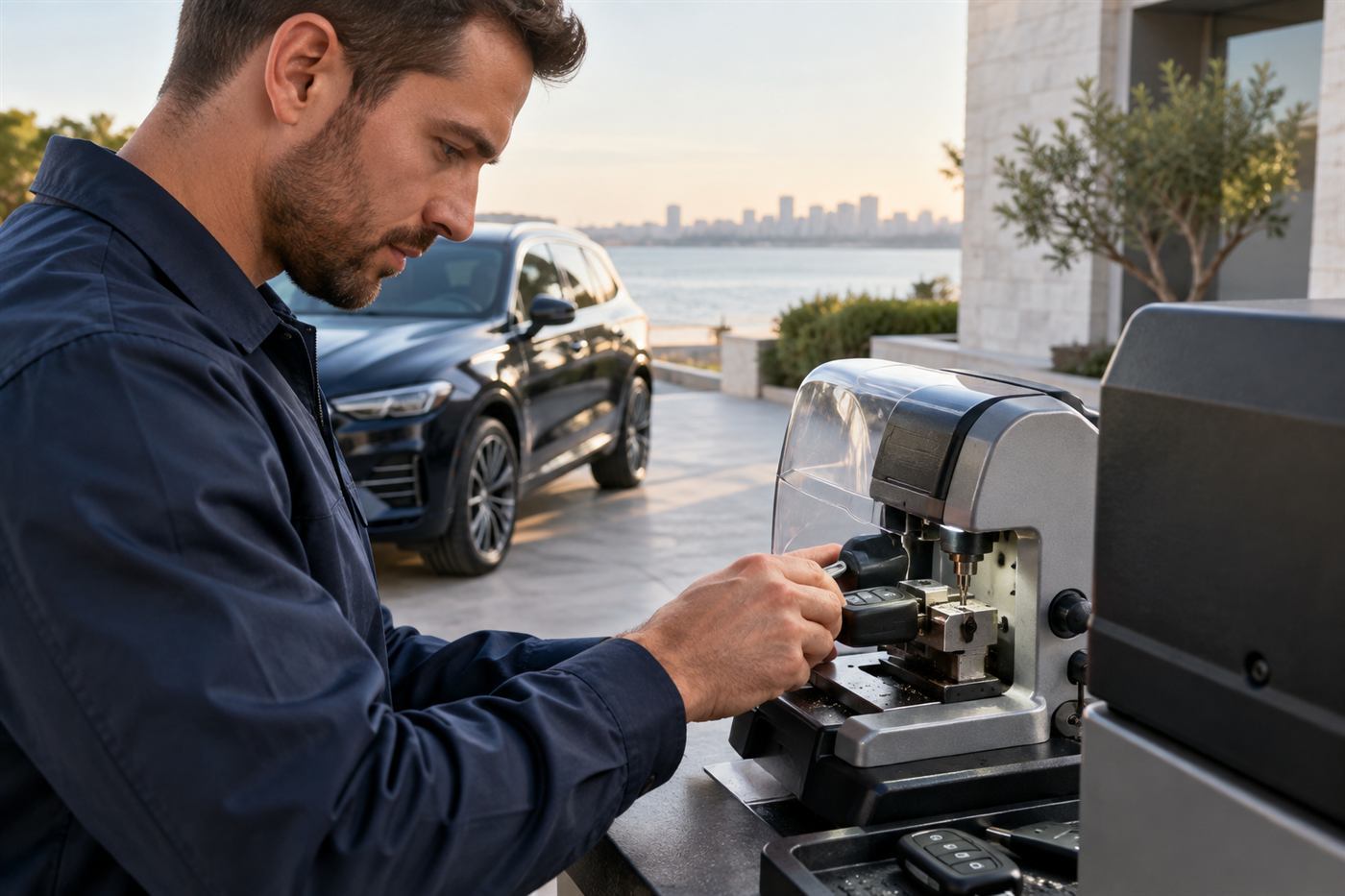
Why a new home needs new key control
The moment you receive the keys to a new house, you also inherit a history you cannot see. The previous owner may have given a key to a dog walker, a cleaner, a relative or a neighbor. A listing agent may have used a lockbox that others could open. Contractors who did repairs or inspections before the sale may have copied a key or kept one. None of this is sinister. It is simply how houses work. But it means that the number of working keys is almost certainly larger than the number you were handed.
Rekeying changes the inside of a lock so that old keys no longer fit and new keys do. It is usually the first and most useful security step a new owner can take, because it resets who has access without the cost of replacing all the hardware. The decision to do it is not about distrust. It is about starting with a known situation, where you know exactly who has a key because you issued each one.
If you are not sure how rekeying differs from replacing locks, the page on lock rekey service explains it, and lock change and installation covers full replacement.
Walk the property and list every entry point
Before you call anyone, take a slow walk around the property and write down every way in. Include the front door, the back door, any side doors and the door between the garage and the house. List sliding glass doors, patio doors and any basement or crawl space entries. Add gates, sheds, detached garages and any mailbox or utility cabinet that locks.
Then look at each entry and note what lock it has. Is it a deadbolt, a knob lock, a handle set or a keypad? Are the exterior doors keyed alike or each different? Does the garage entry door have a deadbolt, or only a knob that can be pushed open with a strong shove? Are the sliding doors secured with a good latch and a bar or pin? These notes become your plan, and they let you describe the job accurately when you call for service.
Do not forget windows. Most homeowners focus on doors and forget that a ground-floor window with a weak latch is an easy entry. You do not need to replace them all, but check that they close and latch firmly and that any previous owner's modifications have not left gaps.
- Front, back and side doors
- Door between garage and house
- Sliding glass and patio doors
- Basement, cellar or crawl space access
- Detached garage, shed or workshop
- Gates, fences and side yard access
- Mailbox, utility box and any storage cabinet
Rekey every exterior lock
The first and most valuable step is rekeying. A technician removes the cylinder from each lock, changes the internal pins to a new pattern, and cuts new keys that match. The old keys, wherever they are, stop working. The hardware stays the same, so the job is quicker and less disruptive than replacing every lock.
Many owners choose to have all exterior locks rekeyed to a single key, so that one key opens the front door, the back door and the garage entry. This is convenient, and it reduces the number of keys on a ring. Others prefer separate keys for different doors, which can make sense if you want to give a contractor access to one door only. Either way, decide before the technician arrives so that the job goes smoothly.
While the technician is there, ask them to check the condition of each lock. A worn lock that has been rekeyed will still be a worn lock. If a cylinder feels rough, a latch sticks or a deadbolt does not extend fully, it may be better to replace that piece of hardware rather than rekey it.
Check the hardware, not just the key
A good lock mounted badly is a weak lock. Part of a new homeowner's checklist is looking at how each door is actually secured. Check that the deadbolt extends fully into the frame and is not just resting against the edge. Check the strike plate, the metal piece on the frame where the bolt enters, and see whether it is fastened with short screws that only reach the thin trim. Longer screws that reach the structural framing make a door much harder to force.
Look at the door itself. A hollow, damaged or warped door will not hold a lock well. Look at the hinges, especially on doors that open outward, where exposed hinge pins can be a weakness. Look at the glass near the lock, since a pane within arm's reach of a deadbolt thumb turn lets a person break the glass and reach in.
These checks do not require trained skill. If you find something loose, damaged or unclear, note it and ask the technician. The guide on choosing a deadbolt explains grades and what to look for when hardware needs replacing. Do not attempt repairs that involve dismantling a lock you do not understand.
Garage doors, openers and the interior entry
The garage is often the least secure part of a house and the most overlooked. Many people assume that the overhead door is locked in some strong way, but the main security usually comes from the opener. Start by clearing the opener's memory so that old remotes stop working, using the steps in its manual. Then set up the remotes you will actually use, and change any keypad PIN on the outside of the garage.
Next, look at the door between the garage and the house. This is often a plain interior-grade door with a knob lock. Because it is hidden from the street, a person who gets into the garage can work on it at leisure. It should have a solid door, a proper deadbolt and a strong strike plate, and it should be keyed to your new system.
Check for an emergency release cord on the garage door, which can sometimes be reached through a gap at the top by someone outside. Ask a garage door professional about shielding it if you have concerns. Work on the springs and the opener mechanism is dangerous and is not a do-it-yourself job. The page on garage entry door lock problems covers common trouble.
Smart locks, keypads and the question of shared access
New owners often wonder whether to install a smart lock right away. These locks can be a good fit, especially for a household where several people come and go, since they let you issue and remove individual access without cutting keys. But they are also another system to set up and maintain. They depend on batteries, and some depend on a connected account.
If you choose a smart lock, set it up carefully. Use a strong, unique PIN for the owner, avoid birthdays or simple sequences, and remove any default or demonstration entries. Keep a physical key as a backup, since batteries die and electronics fail. Read about the options on the page for smart lock installation.
Whatever system you use, keep the list of who has access current. A guest who stayed last month does not need a standing PIN today. The best system is one you actually maintain.
Build a simple key record for your household
Once the locks are rekeyed, you have a clean starting point. Keep it clean by writing down who has which key. This does not need to be elaborate. A note in your phone listing each key, who holds it and when it was issued is enough. Add any PINs or access PINs, stored securely, so you can remove them later.
Decide on a policy for lending keys. A good rule is that nobody gets a permanent key without a reason, and that temporary access for contractors or guests is returned or changed afterward. If you hire cleaners, painters or movers, consider whether you need to give them a key at all, or whether you can be present or use a temporary smart lock entry.
Mark your keys in a way that does not reveal the address. A key tag that says your street and number turns a found key into an invitation. Use a neutral marker you recognize, and keep spare keys with trusted people, not hidden under a mat or in a fake rock, which are the first places a person looks.
Think about the people who already know your house
A new home also comes with a set of people who know it. Before you moved in, the home was shown to buyers, inspected, appraised, photographed and perhaps repaired. You cannot track all of them. What you can do is make sure that nothing they learned can still be used.
Ask the seller or agent if any lockbox, hidden key or shared access method was used, and make sure it is removed. Check outside for old hiding places, such as a key behind a loose board or in a planter. Check the interior for an old alarm panel with a PIN you do not know, and contact the alarm provider to reset it if there is one.
If the home was rented or had many occupants, the risk of extra keys is higher. If the property was empty for a while, check that nothing was disturbed. If you find signs of earlier forced entry, such as damaged frames or patched door edges, have the doors inspected. The guide on lock repair after a break-in explains what a technician will look at.
Scheduling the work and what to expect
The best time to rekey is before you move in, or as soon as possible after closing. Plan for it just as you plan utilities. When you call a locksmith, tell them how many exterior doors you have, what types of locks they are and whether you want them keyed alike. Mention any deadbolts that stick or locks that seem damaged.
A technician will usually check each lock, rekey the cylinders, cut the new keys and test every one before leaving. You will be asked to confirm that each key works in each lock. Quotes are given by phone, and larger or more complicated jobs may need an on-site visit, with the service call charge explained before dispatch. For guidance, read how to prepare for a locksmith visit.
Be present, or arrange for a trusted person to be, and ask to see ID. If you want to check credentials, the guide on verifying a locksmith explains how.
A one-page checklist to keep
Pulling it together, here is a short list you can copy. Work through it in the first week of ownership, and keep a copy with your home records.
- Walk the property and list every entry point.
- Ask the seller and agent about lockboxes, hidden keys and shared access.
- Rekey all exterior locks, including the garage entry and any outbuildings.
- Check deadbolts, strike plates and screws for strength.
- Clear the garage opener memory and reset keypad PINs.
- Reset the alarm panel and any smart device accounts.
- Build a key record: who holds which key and when it was issued.
- Store a spare key with a trusted person, not outside the house.
- Review the list again after any contractor work.
Make the first week count
Owning a home brings plenty of tasks, and security can slip down the list. It should not. It is quick, it is one of the few steps that gives you real control from day one, and it usually involves a single visit. When you are ready to schedule, call and a technician will talk you through your doors, your locks and the order of work.
Questions people ask
Should I rekey or replace the locks on a new house?
Rekeying is usually enough when the locks are in good condition, because it changes which keys work without replacing hardware. Replace a lock if it is worn, damaged, loose, or a weak type for an exterior door. A technician can check each one and tell you which approach fits.
How soon after buying a home should I change the locks?
As soon as possible after closing, ideally before you move belongings in. The longer you wait, the longer unknown key holders can still enter. Many owners schedule the work for the day they receive the keys. It is a short visit that gives you a clean starting point.
Can I key all my exterior doors to the same key?
Yes. Rekeying lets a technician match the front door, back door and garage entry to one key, which reduces the ring you carry. If you want to give someone access to one door only, ask to keep that lock on a separate key.
Do I need to reset the garage door opener too?
Yes. Previous remotes and keypad PINs may still work. Clear the opener's memory using its manual, then set up only the remotes you will use. Work on springs or the opener mechanism is hazardous, so leave that to a garage door professional.
What if I find a hidden key somewhere on the property?
Treat it as a sign that others may have used it. Remove it, and rekey the lock it fits, since you cannot know who else knows the location. Also check for other hiding places so you are not left with a false sense of security.
Is a smart lock a good first upgrade for a new home?
It can be, especially for households where several people need access. But rekeying the existing locks first gives you a secure baseline. If you add a smart lock, use a strong PIN, keep a physical key as backup and maintain the list of who has access.
Describe the situation by phone and we will tell you what the job involves. Quotes are given by phone. Jobs that cannot be quoted without seeing them need a technician on site, and the service call charge is explained on the phone before anyone is dispatched.
(844) 715-0800Related pages
Written by Claude (AI) (AI) for 24/7 Locksmith USA.