
Car keys, lockouts, ignitions and rekeys across Los Angeles and the surrounding California metro. Call (844) 926-0400.
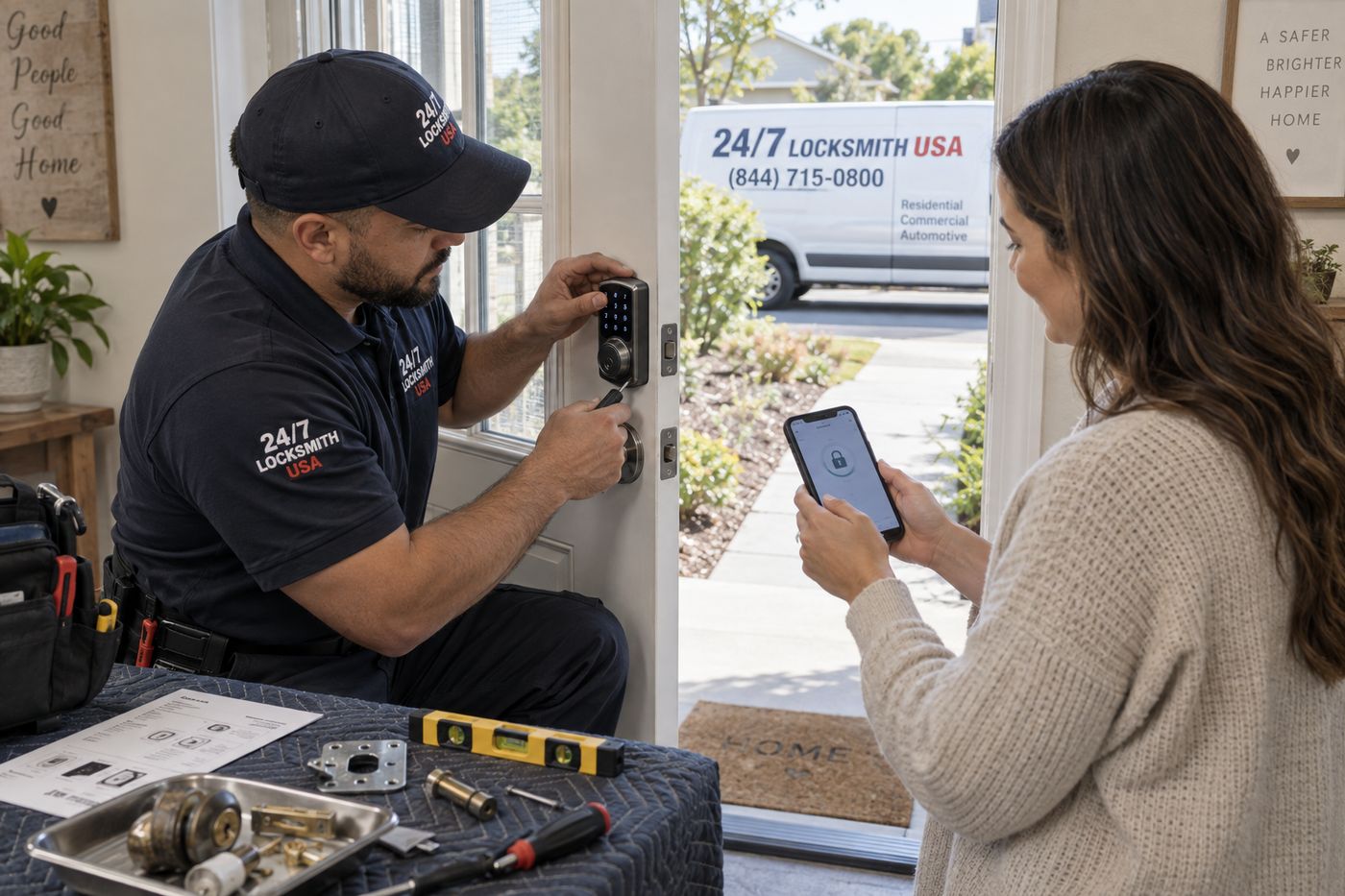
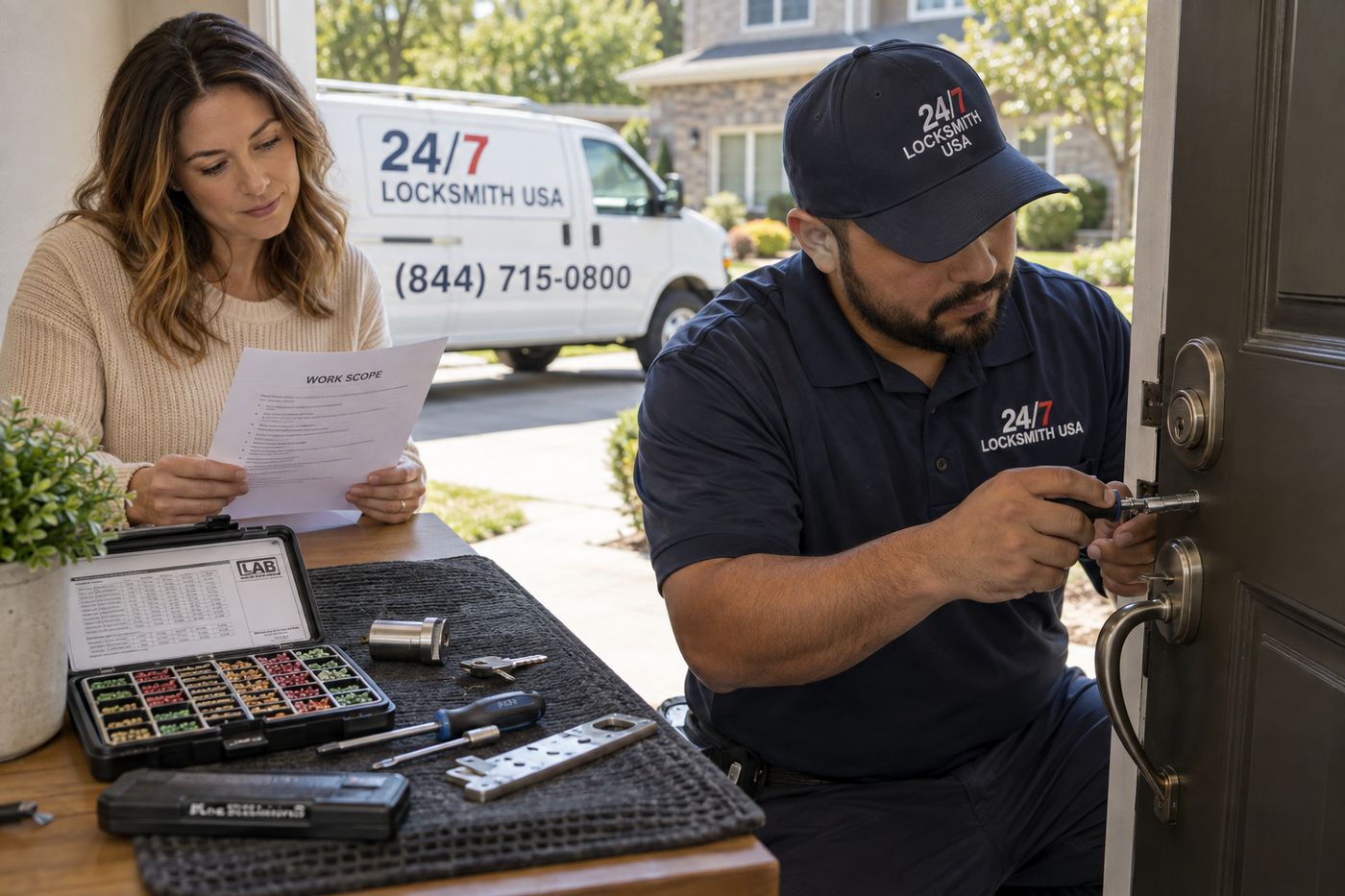
24/7 Locksmith USA covers Los Angeles for automotive, residential and commercial lock work. Lost car keys and fobs, cars and homes opened without damage, broken keys pulled out of ignitions and cylinders, locks rekeyed after a move, and commercial hardware for storefronts and offices. Everything is done at your address. Call (844) 926-0400.
People searching 247 locksmith los angeles land here for the same reason everyone does: they want one number, a real technician, and a price agreed before anybody drives out. That is how we run it. You describe the situation on the phone, you get a number, and if what we find on site is different from what was described you hear the revised figure before any work starts.
What We Handle in Los Angeles
Los Angeles ZIP codes covered: 90012, 90026, 90034, 90042, 90048, 90064, 90066, 90291
- Car key replacement, cut and programmed on site from the VIN and proof of ownership, including push-to-start systems
- Key fob programming, added to a vehicle that still has a working key, or programmed from scratch when every key is gone
- Car and home lockouts, opened without damage to the door, the seal or the latch
- Broken key extraction, blades snapped in ignitions, door locks and deadbolts
- Ignition repair, keys that will not turn, cylinders that turn but will not start
- Rekeying, after a move, a tenant change, a breakup or a contractor handover
- Commercial hardware, storefronts, offices, mailboxes, file cabinets and master key systems
What Los Angeles Actually Calls About
Parking structures, street parking and a car for every adult. Lost-all-keys jobs and fob programming are the bulk of the work, alongside apartment lockouts across the basin.
California Conditions
California work is dominated by high-density parking, older housing stock with original hardware, and a very high rate of push-to-start vehicles. Coastal salt affects hardware in the beach cities the same way it does in Florida.
Arrival Time, Honestly
An exact number of minutes before we know your location is not something anyone who has actually driven L.A. traffic can promise honestly. Distance and whatever the freeways are doing at that hour are what really decide arrival time here. Tell us where you are and we will talk through a realistic window instead of a figure invented to keep you from calling a competitor. If we genuinely cannot reach you quickly, we will say so directly instead of leaving you sitting and waiting.
What to Have Ready
For a vehicle: your driver licence or photo ID and something showing you own the car, registration, insurance card or title. Photograph both now and keep them on your phone; it saves twenty minutes on the roadside. For a home or business: photo ID with the address, or a lease, or another way of showing the property is yours. A legitimate locksmith will always ask. One that does not is a warning sign.
How to Tell a Real Locksmith From a Scam Listing
The pattern is consistent: a listing with no verifiable address, a phone quote of fifteen or nineteen dollars, an unmarked car, and a technician who says the lock has to be drilled. Most residential and automotive locks do not need drilling. Ask for the company name, get an estimate before dispatch, and confirm the technician is insured. Read how to spot a fake locksmith before you call anyone.
Other Cities We Cover
San Diego, CASan Jose, CASan Francisco, CASacramento, CAFresno, CAAll of CaliforniaFull coverage
Why a big, spread out city changes the way you call
In a city as large as Los Angeles, the first thing a dispatcher needs is a precise location. Saying you are somewhere off a freeway is not enough, and neither is naming only a neighborhood. Look for a cross street, a business name on a sign, a building number or a level and row number in a parking structure. The clearer you are, the less confusion there is when a technician tries to find you.
This page is general guidance for people in Los Angeles. It does not describe particular blocks, buildings or lots, and it makes no claim that the company has worked at any specific address. What follows applies to the situations most drivers and residents of a large, warm, car centered city are likely to meet.
Also be honest about your own situation. If you are standing on a busy road with traffic close by, say so, because your safety comes before the lock. Move yourself and any passengers to a safe spot, turn on hazard lights if the car still has power, and let the dispatcher know whether you will be waiting beside the car or somewhere nearby. A good call begins with where you are and whether you are safe.
Battery and signal are worth a thought as well. Distances in a large city mean you may wait a while, and a phone that is nearly out of charge is a poor companion. Plug into a car charger if the car still has power, or ask a passerby you trust to help you keep the line open. Keep notes of the time you called, the name of the person you spoke to and the quote you were given, so that if anything changes later you can point to what was said.
Parking structures, garages and street spaces
Many lockouts in a big city happen in places where you cannot just wait around comfortably. A covered garage may have low clearance, a gate, a ticket system or a tight turning space, and a technician needs to know about those things before arriving. Tell the dispatcher the level you are on, whether there is an attendant, and whether a service vehicle can reasonably reach you.
If you are stuck in a structure, our page on being locked out in a parking garage walks through what to check and what to tell the person on the phone. It also explains why the details of the space matter, from height limits to exit gates that may close on you while you wait.
Street parking brings different pressures. You may be watching a meter, a posted sign or traffic that does not slow down for a parked car. Do not try to force a door while cars pass close to you. A trained technician opens vehicles with purpose made tools that protect the door seals and wiring, and the work is far calmer when you are standing on the curb side rather than in a traffic lane. Check posted signs yourself, and ask the city if you are unsure about any restriction.
The wide mix of vehicles on Los Angeles roads
Drivers here own everything from older sedans with simple metal keys to late model hybrids, electric cars and imported luxury models with proximity fobs. The key for each of these is a different object, and the process of replacing it varies. A basic cut key is one thing. A transponder key carries a chip that the car must recognize. A smart key lets you start the car with the fob in your pocket and relies on an encrypted exchange with the vehicle.
Our guide to types of car keys helps you identify what you hold, which makes the phone call shorter and the quote more accurate. If you drive a premium brand, read the luxury car key replacement guide as well, since those keys often need extra steps and more careful verification.
Electric vehicles raise their own questions because some use key cards or a phone as the main key. If that describes your car, see key cards and phone keys for electric vehicles. Whatever you drive, replacement and programming are done from the vehicle identification number with proof of ownership, so keep your registration and ID close at hand, preferably somewhere other than inside the car.
If you bought your vehicle used, check which keys came with it. Sellers sometimes hand over one fob and keep a spare, and occasionally a key was cut by a shop that never programmed it properly. A key that opens the door but will not start the engine is a clue that the chip is missing or was never matched. Mention that on the call, because it points the technician toward programming rather than cutting.
Lost keys late at night or after an event
Losing keys after a long evening is a common story. You come out of a concert, a restaurant or a late shift, reach into a pocket and find nothing. Panic grows, the street is quiet, and it is tempting to accept the first offer of help that appears. Resist that. Step somewhere well lit, check every pocket and bag a second time, and retrace your steps in your head before deciding the keys are gone.
If they truly are, our page on lost car keys at night explains what to do while you wait and what to ask the locksmith. You want to be told, by phone, how the service call charge works and what the work will involve before anyone is sent to you. Beware of anyone who will not describe the process or who suggests the price will change on arrival.
Also think about your home. If your keys were on one ring with your address, a house key and a garage opener, the problem is bigger than the car. Consider whether you should change the locks, and whether someone else who lives with you can open the door. For a vehicle with no working key at all, all keys lost service covers what information you will need, such as the VIN and proof that the car is yours.
Apartments, condos and the rules that come with them
A large share of people in Los Angeles live in apartments, condos or shared houses. That changes who can authorize lock work. You may be able to rekey your own unit door in some buildings, while in others the owner or management company controls every lock, including the ones inside your home. Requirements vary, so ask your landlord or association what is allowed before you book anything.
If you are a tenant locked out, call the manager first, since they may hold a key. If they cannot help, a locksmith will still want to confirm that you live there, usually through ID, a lease or a utility bill showing the address. That step protects residents from strangers who might claim to live in a unit they do not.
Landlords and property managers often need rekeying between tenants, replacement of damaged hardware, or help with a lock that fails during a busy turnover. See apartment and landlord locksmith service for what these requests usually involve. A clear written record of who authorized each job helps everybody later if a question comes up about keys or cost.
Moving in, moving out and changing who holds the keys
Los Angeles has a lot of movement, with people relocating for work, school or housing. Each move leaves behind keys that you cannot account for. Previous tenants, roommates, cleaners and contractors may all have held copies. It is reasonable to assume that someone you do not know could still have a key, and equally reasonable to fix that.
Rekeying is the usual answer. It changes the internal pins in the lock so that old keys no longer work and new ones do, while the existing hardware stays in place. Read about lock rekey service to understand the difference between rekeying and replacing a lock, and use the moving day lock and key checklist to work out which doors and gates to include.
Do not forget the smaller items. Mailbox locks, storage cage doors, side gates and garage entries often get ignored until someone loses access. Walk around the property with a list, count the keys you were given, and ask the previous occupant or the manager what else exists. Once you know what you have, the rekeying order of work is straightforward and you can give a technician a complete picture on the phone.
Think about who needs a new key once the work is done. Family members, a trusted neighbor, a dog walker or a cleaner may all need access, and handing out copies casually undoes the benefit of rekeying. Decide who really needs a key, keep a short written list, and store one spare somewhere safe inside your home instead of under a mat or in a planter, where it is the first place a stranger would look.
Sun, dry air and the wear on keys and fobs
Los Angeles has long stretches of warm, sunny weather, and that has effects on small components. Sunlight bakes plastic and rubber, and the rubber buttons on a fob can crack or turn sticky after a long period on a dashboard. Batteries lose capacity when they get hot, which is why a fob left in a parked car on a warm afternoon tends to fail sooner than one kept in a pocket.
Dust and grit also work their way into door locks and ignition cylinders. A key that feels gritty or stiff may be telling you something. Look at your own keys and compare them with a spare. If one has visibly rounded edges, a bend or a loose head, it is worth replacing it before it breaks inside the cylinder, which turns a minor chore into a more involved repair.
Broken keys happen more often than people expect. If the blade snaps off in a door or ignition, stop turning and do not try to dig the piece out with a pin or a knife. The broken key in ignition page explains why gentle patience matters and what a technician can do. It is a small repair when handled early and a large one when forced.
A related habit is to keep the key ring light. A heavy bunch of keys hanging from the ignition swings with every bump in the road, and over time that weight wears the tumblers inside the cylinder. Many drivers in a city with long commutes put thousands of hours behind the wheel, so removing extra keys and decorations from the ring is a simple way to protect both the ignition and the key itself.
Shops, studios, offices and delivery doors
Los Angeles has an enormous range of businesses, from small shops and studios to offices, restaurants and warehouses. Their locks range just as widely. A back door might use a heavy commercial deadbolt, a front door a glass storefront lock, and an interior office a basic knob lock. When any of those fails, the problem is not only the inconvenience but the security of the contents.
Owners benefit from knowing which doors have which hardware and who holds keys. A simple log of every key issued, with the date and the person, is more useful than it sounds. When an employee leaves, a look at the log tells you whether a rekey is advisable. Commercial locksmith service describes the usual jobs, including rekeying, repair and hardware upgrades.
Fleet vehicles are part of the picture too. If you manage delivery vans or a company car pool, keep spare keys in a controlled place and track who has them. Lost keys on a work vehicle cost time, and an unmanaged set of duplicates can leave you unsure who has access. Plan ahead with a spare and a process for returning keys at the end of each shift.
Shared workspaces and creative studios deserve special care because many different people come and go on irregular schedules. If tenants share a door, agree on who handles key requests, who pays for rekeying and what happens when someone leaves. Deciding that in advance spares you an awkward conversation at the worst moment, such as when a lock has failed and everyone is waiting outside.
After a break in or a failed lock
A burglary or an attempted one leaves people shaken, and the lock is often the first thing damaged. If your door has been forced, do not assume it is secure just because it closes. A cracked frame, a splintered strike plate or a bent deadbolt may hold the door shut but fail the next time someone leans on it. Report the incident to the police before touching anything, and take photos for your insurer.
Then have the hardware inspected by a trained technician. Our page on lock repair after a break in explains the typical damage and the order in which to deal with it. Temporary securing is sometimes needed if the door cannot be locked at all, and a technician can explain the options on the phone.
It is also a good moment to rethink the overall setup. Is the deadbolt strong enough, do the strike plates have long screws, and is the door itself solid? These are questions to raise during the repair, not afterward. Be cautious about expensive upgrades offered under pressure. A reasonable technician describes the options, gives you a phone quote and lets you decide without hurry.
Choosing who to call and what to verify
With so many companies advertising in a city this size, it pays to know what a legitimate call sounds like. You describe the problem, you are told how the service call charge works, and you receive a phone quote that matches the job. Ownership or authority is checked before anything is opened, rekeyed or programmed. If a company will not talk through these points, move on.
Take a few minutes to read how to spot a fake locksmith. It lists warning signs, such as a company name that changes between the ad and the phone greeting, or pressure to agree to unusual charges. Knowing these in advance makes you much harder to mislead, and the reading takes only a few minutes.
If your situation involves a car key, start with car key replacement, which explains the information you will need to provide. For other California locations and general background, the California page and the San Diego guide offer similar practical help. Wherever you are, stay calm, give a clear location and keep your documents ready.
One last point about paperwork. Keep a photo of your registration and insurance card on your phone, and write your VIN in a note, because the number is printed where you can see it through the windshield but is awkward to read when you are locked out and the light is poor. With that information saved, a call from any place in a large city becomes far simpler.
Common questions
What details help most when I call from a large city like Los Angeles?
A precise location matters most: a cross street, a building number, a business name, or a level and row in a parking structure. After that, give the vehicle make, model and year, describe the problem, and say whether anyone is inside the car. Those few facts let the dispatcher give a sensible quote and send the right tools.
Can a locksmith help if my keys are locked in a parking garage?
Usually yes, but the technician needs to know the level, the clearance and any gate or attendant before arriving. Tell the dispatcher about the space, and keep your ID and registration ready, since ownership or authority is checked before the car is opened. Move to a safe spot while you wait.
Who can authorize lock changes in an apartment or condo?
It depends on your lease, owner and association rules, which vary from building to building. Ask your landlord or manager what is allowed before booking work. A locksmith will still want to confirm you live there, often through ID, a lease or a bill showing the address.
How do I know which kind of car key I have?
Look at the key. A plain metal blade with no plastic head is usually a basic cut key. A thicker plastic head often holds a transponder chip. A fob with buttons or a push button start suggests a smart key. Our guide on key types helps, and your registration and VIN confirm the vehicle details.
Is rekeying enough after I move into a new place?
For most homes, yes. Rekeying makes old keys stop working while keeping your existing locks. If the hardware is worn, damaged or too basic for the door, replacing it may make more sense. A technician can look at the lock and explain the choice before you decide.
What should I do first if I think my keys were stolen?
Protect the vehicle and your home. If the keys were stolen with an address, change the house locks too. For a car, a locksmith can program a new key from the VIN with proof of ownership in a way that removes the missing key from the car's memory. Report the theft to the police as well.