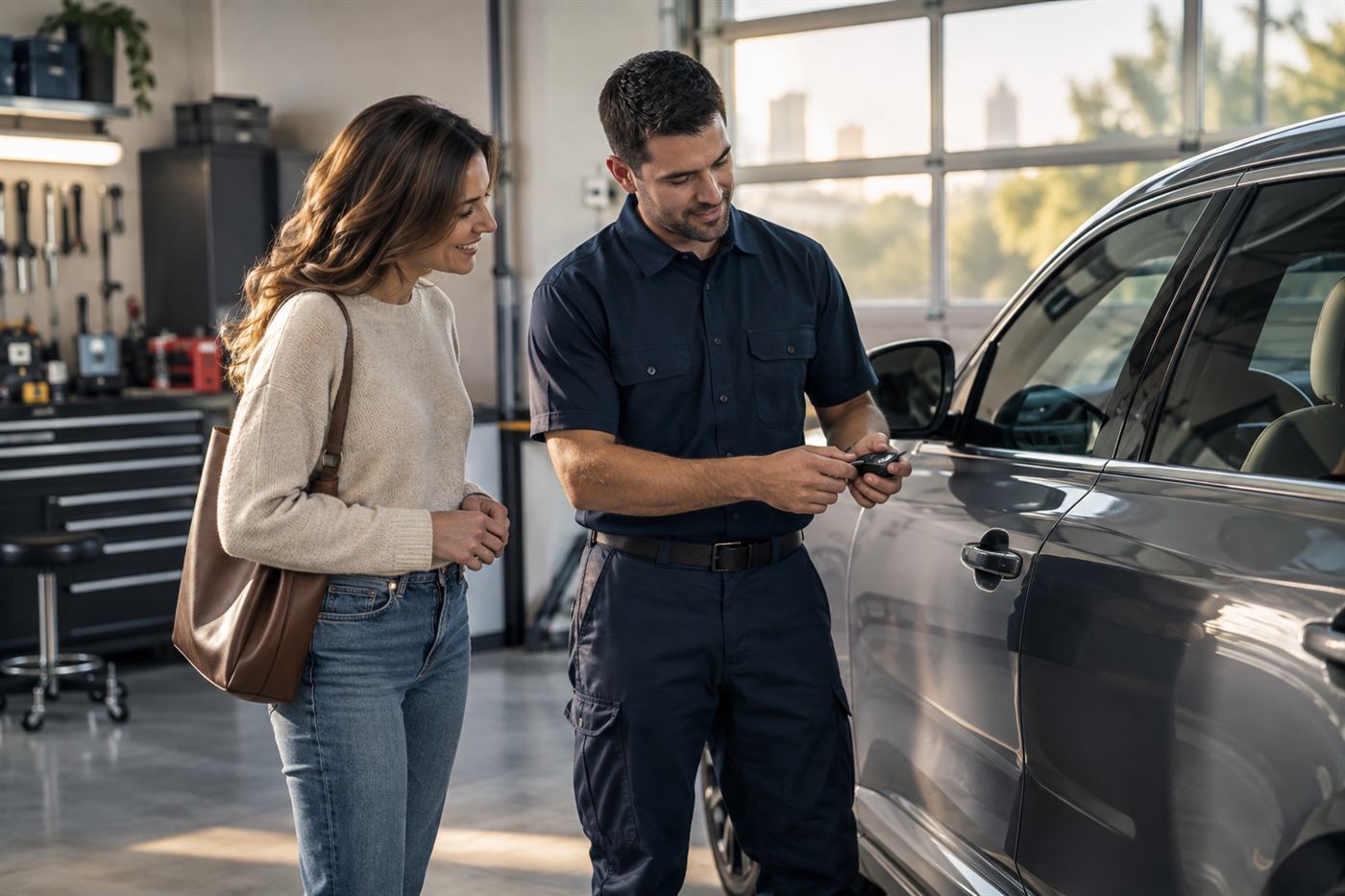
How a locksmith call works in Louisiana
A call starts with three facts: where you are, what the vehicle or door is, and what happened. From those, the dispatcher can tell you whether it is a lockout, a key that has to be cut and paired, a broken key to be extracted, or something that needs a technician to see it in person. Quotes are given by phone only, and no prices appear on this site, because the right figure depends on the vehicle, the key type and the situation.
Some jobs can be quoted completely on the phone. Others, such as a swollen door that has damaged its lock or an ignition that has failed, need an on-site visit before a firm number is possible. There is a service call charge for dispatch, and it is explained on the phone before any technician is sent. Ask what it covers and whether the quote is for the whole job. Settling those questions early prevents misunderstandings later.
The name includes the phrase 24-hour because the idea of the service is that people lose keys at night, on weekends and in storms. It describes the concept. It is not a promise that a technician is standing by at every hour in every parish, and the dispatcher will tell you plainly what is possible where you are, particularly when roads are affected by weather.
- Your exact location: street, cross street, lot, level, or landmark
- Vehicle make, model, and approximate year
- What happened, and whether anyone or any animal is inside
- A phone number that works where you are, with the battery charged
New Orleans: humidity, older doors and tight streets
New Orleans has a very large stock of older buildings: shotgun houses, double houses, townhouses with heavy wooden doors and iron gates, and apartments in converted older properties. Humid air makes wood swell, and a door that closes easily in a dry week may bind in a wet one. That leads to a common complaint: a deadbolt or latch that sticks, a key that turns hard, and a door that has to be lifted or pushed to lock.
Do not force a swollen door or a stiff key. Twisting a key in a binding lock is a common way to snap it, and forcing the door can damage the frame. The guide on a deadbolt that will not turn explains what to look at, and a door that will not latch covers the related case where the latch no longer meets the strike plate.
Street parking is the norm in many neighborhoods, and streets can be narrow and crowded with parked cars. For a car lockout, tell the dispatcher about any parking restrictions, tight spots and nearby landmarks. Visitors add to the pattern. Tourists lose keys, lock keys in rental cars and misplace fobs, and the guide on rental car lockouts explains the steps, including contacting the rental company.
Hurricane season: preparing keys and locks before a storm
The Gulf coast hurricane season is a regular part of life here, and preparation includes keys. If you evacuate, think about where your keys will be. Keep a spare in a safe, dry place, preferably with you and not left in the house. Make a note of your vehicle identification number and keep it somewhere other than the car. If your car might be flooded or moved, you want the documents that prove ownership with you, not at home.
The page on hurricane season lock and key prep has a practical checklist. It covers securing doors, checking that locks work, and deciding what to carry. If you have smart locks or electronic deadbolts, remember that power outages and low batteries can leave them unresponsive, so know where the mechanical key is.
Boarding up and securing a property before a storm is a decision for you and your insurer. A locksmith can help with locks and keys, and cannot make a house storm-proof. In a mandatory evacuation, follow official instructions, leave early, and do not delay for a lock problem.
- Put a spare key and a copy of ownership documents somewhere dry, and carry them if you evacuate.
- Check that every exterior lock turns smoothly before the storm.
- Replace weak batteries in fobs and electronic locks.
- Write down your VIN and keep it separate from the vehicle.
After a storm or flood: damaged locks and drowned electronics
After a hurricane or heavy flood, the problems change. Doors may have swollen from standing water or been struck by debris. Frames can shift. Locks may be corroded or full of silt. Cars that sat in floodwater can have damaged electronics, including the key system, the immobilizer and the door lock motors.
If a car has been in floodwater, do not try to start it repeatedly. Water in the engine and electronics can cause more damage, and a flooded car may need to be towed and assessed. A locksmith can sometimes help with a key that no longer works, but the larger question is whether the car is safe to run, and that is a matter for a mechanic and your insurer.
For homes, look at each lock after the water has gone. A swollen door may need to dry, and a lock that has been underwater may need to be cleaned or replaced. If the door will not latch, treat it as a security problem and call. The page on lock repair after a break-in is relevant too, because storm damage can leave a property open. Take photographs for insurance before any repair.
Baton Rouge and the river corridor
Baton Rouge anchors a busy corridor along the river, with a university, state government offices, industry and fast-growing suburbs. Many people commute long distances, park in large lots and garages, and drive trucks and work vehicles. The calls here tend to reflect both the university calendar and the industrial workforce.
Students and campus visitors lose keys on game days and move-in weekends, much as they do in other college towns. The guide on student lock safety covers dorm rules and what to do when a campus has its own policy about lock changes. Industrial and work vehicle drivers are the audience for truck and van key service.
If your car is in a restricted or secured lot, tell the dispatcher at the start. Gate procedures, badge rules and escort requirements may apply to a technician. A quick call to the security office or the facility manager can arrange access and prevent delays.
Bayou parishes, fishing trips and wet keys
Outside the cities, Louisiana life revolves around water: bayous, boat launches, fishing trips and camps. Keys get wet. They fall off docks, end up in tackle boxes, and ride in pockets through rain and spray. A fob that has been dunked is a classic call, and a key left in a boat is another.
If a fob has been in water, do not press buttons repeatedly. Remove the battery if it comes out easily, let the fob dry in open air, and do not use heat. The page on a key fob that fell in water explains the steps. A fob that has dried may recover, and one that has corroded may need replacement. A technician can test it.
Boat launches and camps often lack street addresses. Give the road name, the nearest town, and any landmark you can see. Be honest about how remote the spot is, because service may take longer or may not be possible, and the dispatcher will say so. If you are in danger, call 911 first.
Common key problems and what not to do
Across the state, the same problems recur. A key that has been copied many times may stick. A worn key can turn a lock halfway and then refuse. A fob can lose its pairing after a battery change or exposure to moisture. A blade can snap in a door or ignition. A key that turns without starting the car may have a transponder problem.
Stop at the first sign of trouble. Forcing a key can snap it, and prying a door can bend the frame. If a key breaks, keep the pieces and do not push the broken part deeper. The page on broken key extraction explains the process. If the car shows a flashing immobilizer light, read the immobilizer light guide.
If every key is gone, you are in an all-keys-lost situation. A technician will verify ownership, identify the vehicle, cut a new key and program it. The page on all keys lost service explains the steps, and the guide to finding your VIN shows where to look for the number a technician will ask about.
| Situation | Why it is common here | Helpful step |
|---|---|---|
| Door binds and key turns hard | Humidity swells wood | Do not force it, describe the lock and call |
| Fob stops after rain or dunking | Moisture reaches the circuit | Remove the battery, dry in open air |
| Lock fails after a flood | Silt, corrosion and swollen frames | Photograph for insurance, then call |
| Keys left behind in an evacuation | Rushed departures | Plan a spare and keep documents with you |
| Key lost at a boat launch | Water and wet clothing | Give road name and nearest landmark |
Proof of ownership and avoiding scams
A responsible locksmith will ask for reasonable proof that you are entitled to a vehicle before making a key. A photo ID and a matching registration are the usual starting point. After a storm, documents may be lost or damaged, and the technician will tell you what else may be accepted. The guide on proof of ownership for a car key explains more.
Locksmith scams exist, and after a disaster, people in a hurry are targets. Warning signs include a company that will not give its name, a quote that grows when the technician arrives, an unmarked vehicle, and pressure to agree before any explanation. The article on scam warning signs has a checklist, and verifying a locksmith explains how to check what Louisiana or your parish requires. Do not assume any company holds a credential. Check yourself.
You may always decline if the work does not match what was explained on the phone.
Home and business locks in Louisiana
Cars are the main focus here, but the same call also covers doors. In a damp climate, wooden doors swell, hinges loosen and metal hardware corrodes, so a lock that worked last month may start to bind. Landlords and small business owners also ask about rekeying after a tenant or employee leaves, since changing the lock is simpler than tracking every copy of an old key.
When you call about a door, describe the lock, the door material and whether the key turns at all. Jobs with several doors, or hardware upgrades, may need an on-site visit before a quote is possible. The page on residential locksmith service explains what a technician will look at.
What to have ready before you call
A little preparation shortens the call. Know where you are. Know the make, model and approximate year of the vehicle, and if you can see the VIN through the windshield, write it down. Have a photo ID and the registration or a photo of it, and if documents were damaged, say so when you call.
If every key is lost, think about whether you want a spare during the same visit. Two keys in one trip is often more practical, and the dispatcher will explain the quote for each option. For a house lockout, think about what proves you live there, such as a lease, a bill or an ID with the address.
Expect a brief explanation of the quote and the service call charge, both given by phone before anyone is sent. When your details are together, call and tell the dispatcher what is going on.
Questions people ask
My door swelled and the lock will not turn. What should I do?
Do not force the key or the door, because that can snap the key or damage the frame. Try lifting or pushing the door slightly while turning, once and gently. If it still binds, stop and call. A technician can adjust the strike plate or the lock, and the dispatcher can explain what is likely involved.
Can you help after a hurricane or flood?
It depends on road conditions and what the dispatcher can safely arrange. Call, give your location, and ask. If travel is unsafe, you will be told plainly. Take photographs of damage for insurance, and do not repeatedly try to start a flooded car, because that can cause further damage.
My fob went into the bayou. Can it be saved?
Sometimes. Do not press the buttons, remove the battery if it comes out easily, and let the fob dry in open air. Do not use heat. If it still does not respond, a technician can test it and tell you whether it can be repaired or whether a replacement is needed.
I am a visitor and locked my keys in a rental car. What now?
Check your rental agreement first, because the company may have a roadside process and may limit who can work on the car. A locksmith can often help, but you may need the rental company's permission. Have your agreement, photo ID and the car details ready when you call.
Can you make a key if every key is lost?
In many cases, yes. The technician needs proof you are entitled to the vehicle and a way to identify it, such as the VIN. Push-button start and some imported models take longer than a simple key. The dispatcher will explain how your vehicle is handled and quote the job by phone.
How are quotes given?
By phone only. The dispatcher asks about the vehicle and the problem, then explains the quote. Complicated jobs may need an on-site visit before a firm number is possible. A service call charge applies to dispatch and is explained before a technician is sent. No prices appear on this site.
Describe the situation by phone and we will tell you what the job involves. Quotes are given by phone. Jobs that cannot be quoted without seeing them need a technician on site, and the service call charge is explained on the phone before anyone is dispatched.
(844) 715-0800Related pages
Written by Claude (AI) (AI) for 24/7 Locksmith USA.