How a call works for Michigan drivers
A job starts with a phone call. You tell the dispatcher where the vehicle is, what happened and the make, model and year. We ask whether you have any working key, whether anyone or any animal is inside, whether the car is on a public street or private property, and whether you can show the vehicle is yours. Those answers tell us what the work involves and whether a technician has to see the car.
Quotes are given only by phone. We do not post prices, because a simple door lockout on an older sedan and a new proximity key for a recent model are very different jobs. For complicated work we may explain that an on-site visit is needed before a firm number is possible. A service call charge applies when a technician is sent, and we explain it before dispatch so there is no surprise at the vehicle.
We do not promise arrival windows. Lake-effect snow, whiteout conditions on highways, bridge traffic and the long distances of the northern Lower Peninsula and the Upper Peninsula make a fixed promise dishonest. What we promise is a plain answer on the phone about whether and how we can help where you are, so you can plan your next step.
The 24/7 in our name is the idea behind the service, not a pledge of a technician at every hour in every place. If a person, child or pet is locked inside a vehicle in cold or heat, call 911 first. Emergency crews are the right first call, and the key can be handled afterwards.
Detroit and the domestic vehicle fleet
Michigan is the heart of the American auto industry, and the roads reflect it. Drivers here often own vehicles from the domestic makers: Ford, General Motors brands and Stellantis brands such as Chrysler, Dodge, Jeep and Ram. Many are trucks and full-size SUVs, and many carry a decade or more of winters and miles. That shapes the kind of key work that comes up.
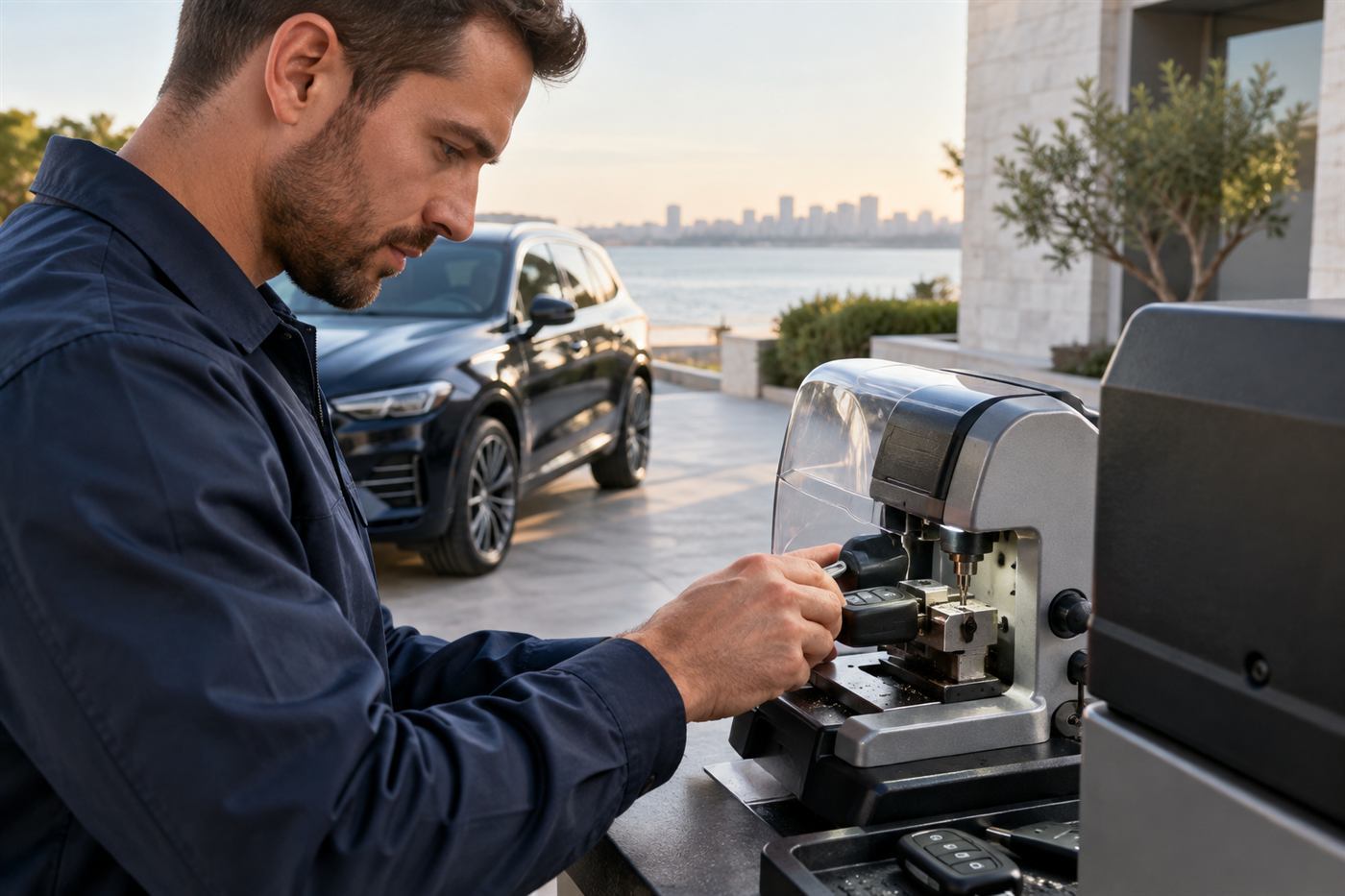
Domestic vehicles use a range of key systems. Older models may use a simple transponder key. Many newer ones use fobs with integrated keys or push-button start. Some trucks and vans can be handled at the vehicle by a technician with the right equipment, while others require extra steps. The make, model and year are the three facts that decide it, which is why we ask for them first. Our page on transponder key programming and key fob programming explain the two common cases.
Many Detroit-area drivers also use work vehicles: pickups, vans and service trucks that are shared among crews. A single key for a shared van is a business risk, and a lost key can idle a team for a day. Our page on fleet locksmith service explains how spares and records help, and key control basics for business owners covers tracking.
For city specifics, see our Detroit locksmith page. In a large metro area, describe the exact cross street or the lot where the car sits, and tell us if the car is in a parking structure, a driveway or on the street. Send a location pin from your phone if you can. A good description saves time and lets us tell you honestly what is realistic.
Winter cold, batteries and remote starts
Michigan winters are long. Cold reduces battery capacity, and the small coin cell inside a key fob is no exception. A fob that has been working fine may start to lose range in autumn and quit on the first deep cold morning. Replacing the battery before winter is a small step that prevents many calls. Our guide on how long key fob batteries last explains the signs, and how to change a key fob battery walks through the steps.
Remote start is popular in Michigan, and it creates a particular kind of lockout. A driver starts the car with the fob from the house, walks out, and finds the door locked with the keys inside, or leaves the engine running in a parking lot with the doors locked. Our page on locked keys in a running car explains the situation. If a child or pet is in the car, call 911 first.
Aftermarket remote starters bring another wrinkle. Some are installed with a bypass module that holds a copy of the key data, and replacing or adding a key can interact with it. If you have an aftermarket remote start and need a key, tell us on the call. Our page on remote start key programming explains what we look at.
Cold also affects mechanical parts. Door seals stick to the frame, handles stiffen, and lock cylinders collect moisture that turns to ice. Do not force a frozen door, because handles and weatherstripping tear. Do not pour hot water on a frozen lock, because the water can turn back to ice and damage paint. Warm the key gently in your hand and try again. If it does not work, call for advice.
Lake-effect snow, salt and the sticky lock
Snow off the Great Lakes arrives heavily along the western side of the state and across the northern parts of the Lower Peninsula and the Upper Peninsula. Roads can be plowed one hour and drifted shut the next. Salt trucks work constantly, and the residue coats everything. The effect on locks is slow but real: salt and slush work into door lock cylinders, trunk locks and the spaces around handles.
The usual pattern is gradual. A lock that used to turn smoothly begins to resist, then needs a jiggle, then fails altogether on a cold morning. The temptation is to force the key, and the risk is a snapped key in the lock. If you notice a lock getting stiff, treat it as a warning. Our page on door locks sticking in the cold explains the usual causes, and broken key extraction covers what to do if a key has already broken.
Keys wear too. A key that has been in a pocket for years, with salt and grit from winter boots and pockets, becomes rounded and imprecise. A worn key can feel fine for months and then fail in the cold, when metal contracts and tolerances shift. If your key is visibly worn, a replacement made from the vehicle's data is often better than a copy of the worn key. See worn car key symptoms.
In heavy snow, tell us honestly where the car is and whether it is buried. A technician needs room to reach the door, and a car behind a plow berm or in a drifted lot is a different job from one at a cleared curb. If possible, clear a path around the driver door before the visit, and tell us about any hazards such as black ice. Our seasonal guide on winter lockout prevention has more habits worth building.
Grand Rapids, Lansing, Ann Arbor and the college towns
Beyond Detroit, Michigan has a string of mid-sized cities with their own character. Grand Rapids and the western side of the state get plenty of lake-effect snow. Lansing is the seat of state government with large daytime parking. Ann Arbor and other university towns carry large student populations, with the shared cars, borrowed keys and constant move-in and move-out that come with them.
Students lose keys at a steady rate, and the situation is made harder when the vehicle is titled to a parent in another city. We confirm ownership before making any key, so the documents must match the vehicle owner. A parent arranging help from a distance should have registration or title information ready. Our guide on college student and dorm lock safety offers sensible habits, and proof of ownership for a car key explains the documents.
Downtown garages and campus lots have their own rules. Some require approval for outside vendors, and some are gated. Tell us the name of the lot or garage, the level and whether security should be told. A technician who cannot get into a structure cannot help, and a quick call to the lot manager can fix that.
Housing in these cities is a mix of older homes, rentals and apartment blocks. A student who loses a car key often loses a house or apartment key too. If keys went missing together, think about both locks. Our page on lock rekey service explains how a lock can be changed so old keys stop working, and landlord permission may be needed in a rental.
The north: Traverse City, the Upper Peninsula and distance
North of the population centers, Michigan becomes a land of forests, lakes, small towns and long drives. Summer brings visitors to the water, and winter brings snowmobiles, skiers and long nights. A vehicle stopped on a rural road in the north may be a long way from any service, and mobile coverage can be thin in some areas.
Distance changes everything about a call. When you phone from a remote spot, give the road name, the nearest town, any mile marker and a landmark. If you have a signal, share a location pin. If you do not, tell us which direction you were driving and how far you are from the last town. Be honest about road conditions, since a technician has to get to you safely.
Cold in the north can be dangerous, not just inconvenient. A car that will not start with a person inside in deep cold is a safety situation. If you are in danger, call 911. If you can wait safely, stay in the car with warm layers, keep your phone charged and avoid wandering from the vehicle. Tell someone where you are.
Prevention matters more where help is far. Carry a spare key somewhere other than the car, keep a fresh battery in the fob and know your key type. Magnetic hide-a-key boxes under the bumper are not a good plan, because thieves know to look and the box can fall off on rough roads. Our guide on keeping a spare key in a magnet box explains why.
Key types, spares and all keys lost
Knowing your key type helps any call. A basic metal key has no chip. A transponder key has a chip in the head that the car must recognize. A laser-cut key has a groove milled in the blade. A proximity key lets the car start by button when the fob is nearby. Our guide on types of car keys explained shows how to tell them apart.
Replacement depends on type. A basic key is cut. A transponder key must be cut and programmed. A proximity key must be paired to the car's computer using the right equipment for the make. Our guide on how car key programming works explains the process in plain terms.
If you have lost every key, a technician has to cut a new key from the vehicle's identification number and program it to the car, and some models take longer or need extra steps. Gather the VIN, a photo ID and proof of ownership before you call. Our guide on how to find your VIN shows where to look. See all keys lost service.
A spare key is the most sensible purchase a driver can make. A second key made while the first works is simpler than an all-keys-lost job. See spare car key programming. We verify ownership before making any key, which protects honest owners from someone else driving off with their car.
Choosing a locksmith carefully in a cold emergency
A lockout on a bitterly cold night is exactly when dishonest operators hope to find you. A local-sounding listing may route to a call center, and a low phone quote can become a much larger bill at the curb. Ask for the company name and the technician's name. Ask what the service call charge covers. Ask whether the phone quote is the amount for the work described. Our guides on questions to ask a locksmith before dispatch and locksmith scam warning signs list more.
We make no claim about credentials on this page, and we encourage you to check any locksmith yourself. Michigan sets its own rules for locksmith work, and a reader can ask a company for its details and check them with the proper state office. See how to verify a locksmith's credentials.
Walk away from anyone who will not name the company, refuses a phone quote or demands payment before explaining the work. You may end the call and try another option at any time. A calm caller who asks questions is hard to mislead.
If you are on a dark road in the cold, do not accept help from strangers who approach you offering to open the car. Wait in a safe place, and make the call yourself to a company you have chosen.
Before you call: a short checklist
Know your exact location, including the nearest cross street, lot name or mile marker. Know the make, model and year, and whether any key works. Have a photo ID and proof of ownership ready. If you are on private property, know who can give access. Keep your phone charged. Our checklist on how to prepare for a locksmith visit covers the rest.
Think about safety. In winter, stay warm and avoid standing in traffic lanes. If you are on a busy road, move to a safe place if you can. If you are alone at night, tell someone where you are. Do not break a window or force a door. A replacement window and a bent door frame cost far more than a simple lockout.
Remember that a service call charge applies when a technician is sent, and that we explain it on the phone before dispatch. See locksmith service call charge explained for the reasoning behind it.
If you are in Michigan and need help with a car key, a lockout or a lost fob, call. Tell us where you are and what happened, and we will explain what is realistic and what comes next before anything is arranged.
Questions people ask
Do you publish prices for Michigan service?
No. Quotes are given only by phone after we know the vehicle and the situation. A simple lockout and a new proximity key are very different jobs. Some work needs an on-site visit before a firm quote. A service call charge applies when a technician is sent, explained before dispatch.
Can you promise an arrival time in a snowstorm?
No. We do not promise arrival windows because snow, road closures and distance vary too much. We tell you plainly whether we can help at your location and what is realistic. If anyone is in danger inside a cold vehicle, call 911 first.
I locked my keys in the car after using remote start. What now?
Check that no one is inside. Call with the make, model and year and where the car is. If a child or pet is inside, call 911 first. Do not break a window. Tell us if the car has an aftermarket remote starter, because it can affect the work.
Why does my fob die every winter?
Cold reduces battery capacity, so an aging fob battery that worked in autumn can fail on the first deep cold morning. Replace the battery before winter. If a fresh battery does not help, the fob may be worn or damaged, and a technician can test it.
Can you make a key for my domestic truck or van?
Often yes, depending on the make, model and year. Some can be handled at the vehicle, while others need extra steps. Call with those three facts and what the key looks like, and we will explain what is involved and whether a visit is needed.
A student's car key is lost and the title is in a parent's name. Can you help?
We confirm ownership before making a key, so the documents need to match the vehicle owner. A parent can often send a photo of the title or registration. Call and explain the situation, and we will say what we can accept before any work is arranged.
Describe the situation by phone and we will tell you what the job involves. Quotes are given by phone. Jobs that cannot be quoted without seeing them need a technician on site, and the service call charge is explained on the phone before anyone is dispatched.
(844) 715-0800Related pages
Written by Claude (AI) (AI) for 24/7 Locksmith USA.