A valley city with a mountain lifestyle
Salt Lake City mixes a busy urban valley with quick access to the mountains. A resident can leave a downtown office and be at a trailhead or a ski area within a short drive, and many do exactly that on weekends and after work. That lifestyle puts keys through more than ordinary use: they get carried in jacket pockets on the slopes, dropped in snow, tucked into packs and left in cars at the end of a long, cold day.
The city also has distinct neighborhoods, from the grid of older bungalows near the center to newer developments spreading along the valley and up the benches. Each has its own parking habits. Some residents have garages and driveways. Others park on the street, in apartment lots or in shared structures.
The common thread is cold, altitude and dryness. Winter temperatures drop hard, snow stays on the ground and road treatment leaves a film on vehicles. Summer is dry and hot, with strong sun that bakes dashboards. Each season stresses keys, fobs and locks in a different way.
This page concentrates on cars, since that is what most people searching for a locksmith need first. It also covers homes, which in Salt Lake City include many older bungalows with their own hardware quirks. The information is general and does not replace the questions a dispatcher will ask during your call.
How a call works
A dispatcher asks where the vehicle is, what it is, what happened and whether anyone is in danger. The vehicle details matter because they decide the key type and tools. The dispatcher will also ask whether you still have a working key, since a spare makes the job simpler than starting from nothing.
Quotes are given only by phone. There is no posted price list because the right figure depends on the vehicle and the situation. After the details are clear, you hear the number. The service call charge for sending a technician is explained on the phone before anyone is dispatched. If the vehicle or the problem turns out to differ on site, the technician explains what changed and you decide whether to continue.
Some jobs, such as a vehicle with every key lost and a high-security system, need an on-site visit before a final price is possible. No arrival time is promised, because traffic, distance and weather vary, especially in winter storms or on canyon roads that close. You will be told honestly what to expect.
Stay somewhere safe while you wait. In freezing weather, step into a shop or a friend's vehicle. Keep your phone warm, since the cold drains batteries quickly.
- Get to a safe, sheltered spot near the vehicle.
- Have the year, make and model ready.
- Say which keys or fobs you still have.
- Listen to the quote and the service call charge.
- Confirm the exact location and a callback number.
Ski days, canyon traffic and keys lost in the snow
On a good snow day the canyon roads fill with vehicles heading to the slopes. People park in crowded lots, strip off layers and put on boots, and keys travel in all kinds of pockets. A key that falls out into the snow of a lot may not be found until spring. A fob that rides in a pocket against a damp base layer can get wet and fail by the end of the day.
At the end of a ski day, the hardest part of a lockout is the cold. Tired, wet and hungry people stand beside a locked car while the temperature drops. If this happens to you, move to shelter first. A lodge, a shuttle stop or a friend's vehicle is better than waiting in the open. Tell the dispatcher exactly where you are, including the lot name, section and a nearby landmark.
Canyon roads are subject to closures and traction rules, so a technician's route may change. No arrival time is promised and you should plan on flexibility. If you are on a canyon road shoulder, remember that working next to traffic is dangerous. A safer location may be needed.
To lower the risk, give your spare to someone who stays behind or who is not in the same group, and consider a small zipped pocket dedicated to the key. Winter lock care offers further ideas. If a fob has been soaked in the snow, read water-damaged fob before using heat.
- Give the lot name, section and nearest landmark
- Move to shelter while you wait
- Keep a spare key with someone who is not on the same trip
- Use a zipped pocket for keys on the slopes
- Do not dry a wet fob with heat
Trailhead lots and keys that go missing outdoors
Trailhead parking is a separate case. Cars sit for hours or all day while their owners hike, run or climb, and a key problem often appears at the end of a tiring outing. Keys can be lost on the trail, dropped in a stream or locked in the car before the hike. Sweat, water and dirt are all hard on fobs.
A common mistake is hiding a key on the vehicle. A magnet box under a bumper can fall off on a washboard road, and anyone who knows the trick can find it. Hide-a-key safety explains better options. Carrying the key on a sturdy lanyard or a zipped pocket, and leaving a spare with someone, is safer.
If you are at a trailhead with no cell signal, the first step is getting to somewhere you can call. Remote lots can be far from services, and the sun drops fast in the mountains. Do not take risks to retrieve a key from a dangerous spot. If you are alone and it is getting dark, safety comes before the car.
When you do reach a signal, tell the dispatcher how far you are from a paved road, whether the road to the lot is passable for a work vehicle and whether the lot is on public land with access rules. Be honest about what you know. A technician will decide whether the visit is practical.
Car key replacement and programming
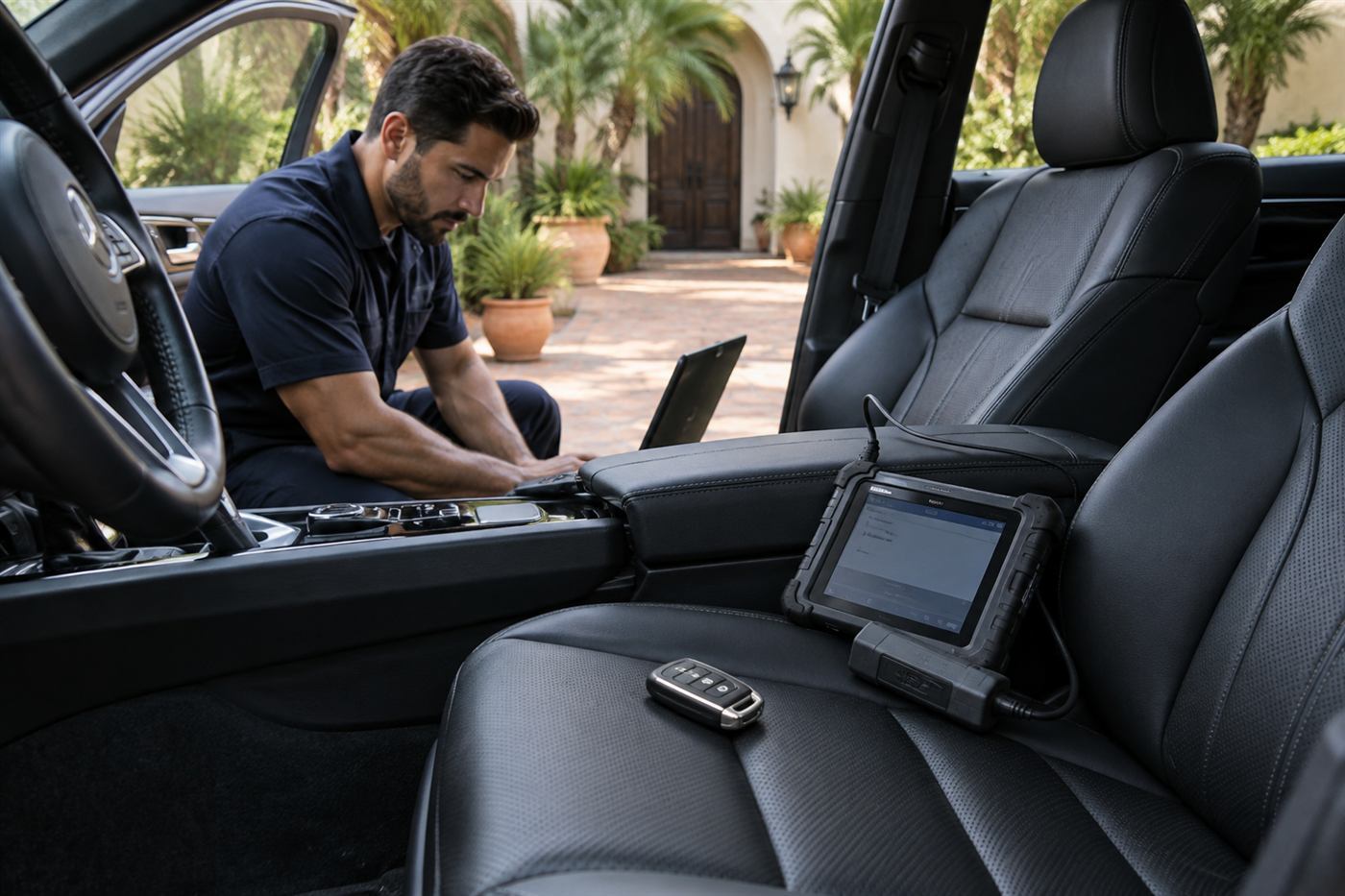
Most vehicles in the Salt Lake valley have electronic keys. Transponder keys contain a chip, laser-cut keys use a milled groove and smart keys allow push-button starts. A mobile technician identifies which one you have, cuts the blade if there is one and programs the electronics so the car accepts the new key. The work happens where the vehicle is parked.
The central question is whether you still have a working key. If you do, adding a spare is simpler. If you have none, the job is called all keys lost and involves more steps. All keys lost explains it, and smart keys and transponder keys describe each type.
A legitimate technician verifies ownership. Expect to show photo ID that matches the registration or title and to give the VIN. How to find your VIN lists the usual places. Proof of ownership explains what else can help.
Dealer or locksmith? Locksmith or dealer compares them honestly. Mobile service helps most when the car cannot be driven, and in a valley where winter weather can make travel difficult, having the work come to you is a real advantage.
Older bungalows and home calls
Salt Lake City has many older neighborhoods with brick bungalows, early-century cottages and mid-century homes. These houses often have original doors with older mortise or rim locks, and later owners have added deadbolts of varying quality. Frames have settled, paint has built up on strike plates and seasonal temperature swings cause wood to move.
A residential lockout begins with verification that you live at the address. A technician opens the door with as little damage as possible and then, if the lock has failed, can repair, rekey or replace it. Locked out of the house covers the first steps. In cold weather, a frozen or stiff lock is common, and locks sticking in cold explains what to do and what to avoid.
New to a home? Moving day checklist and rekeying are good next steps. A rekey makes old keys useless, which is important because you cannot know how many copies of them exist.
A garage entry door, especially one between a garage and a living space, deserves the same attention as a front door. Garage entry door problems explains common faults and fixes.
Dry heat, sun and keys in summer
Salt Lake summers are dry and sunny, and the heat inside a parked car climbs quickly. A fob left on a dashboard can warp or lose battery life. A plastic key head can become brittle over time. These effects build slowly, and then a fob fails on a day when you most need it.
Avoid leaving keys or fobs in direct sun. Keep a spare in a cool, dry place at home. If a key head is cracked or the casing is coming apart, replace it before it fails. Summer key safety describes simple habits, and how long fob batteries last explains what to expect.
Heat also raises the stakes for a lockout. A closed car can become dangerous in minutes. If a child or pet is inside, call 911 first. Do not wait for a locksmith, and do not worry about cost or embarrassment. Emergency responders can act faster.
For ordinary lockouts with no one inside, wait in shade, drink water and stay in contact with the dispatcher. Altitude and dry air dehydrate you faster than you might expect.
Avoiding scams
Dishonest operators look for people who are stranded or hurried. A skier with a dead fob at the end of a cold day, or a hiker with no signal until late in the afternoon, may accept the first offer. Warning signs include a low phone price that changes on site, an unmarked vehicle, a refusal to name the business and pressure to approve work immediately.
Ask questions before dispatch: the business name, how the quote is built, whether a service call charge applies and whether the price can change after the technician sees the vehicle. A genuine dispatcher answers calmly. Questions to ask before dispatch lists them in order.
When the technician arrives, confirm identity and check that it matches the company you called. Rules for locksmiths vary, so readers should confirm what applies. How to verify a locksmith and scam warning signs give specific steps.
Never sign anything blank and never hand over payment details before the work is explained and agreed. A service call charge may still apply once a technician has been dispatched, which is why it is explained in advance.
Calling for service in Salt Lake City
24/7 Locksmith USA takes calls for car keys, lockouts and related lock work in the Salt Lake City area. The name reflects the round-the-clock phone service concept, not a promise that a technician is waiting at every hour and place. What you can count on is a clear conversation, a quote given only by phone and an explanation of the service call charge before dispatch.
For more, see car key replacement, car lockout and key fob programming. The Utah page offers a state-level overview, and how to prepare for a locksmith visit helps you get ready.
If a child or pet is locked in a car, or anyone is in danger, call 911 first. Once everyone is safe and a key or lock problem remains, a dispatcher can help.
When you are ready, call the number on this page, say where you are and what happened, and listen to the quote and service call charge explanation.
Questions people ask
I lost my key at a ski area or trailhead. What should I do?
Get to shelter and a place with signal first. Tell the dispatcher the lot name, section and landmarks, whether the road is paved and whether it is passable for a work vehicle. A technician will decide whether the visit is practical. No arrival time is promised, but you will be told honestly what to expect.
How are quotes given for car key work in Salt Lake City?
Quotes are given only by phone after the dispatcher learns the vehicle, key type and situation. A service call charge applies to dispatching a technician and is explained before anyone is sent. Complicated jobs may need an on-site visit before a final number. Any change on site is explained before work begins.
Will cold weather stop my fob from working?
It can. Cold weakens small batteries, so a fob that was marginal may fail on a deep-freeze morning. Try a fresh battery first. If that does not help, the fob may need reprogramming or replacement. A wet fob should not be dried with heat, and its buttons should not be pressed repeatedly.
Is a magnet box under the bumper a good idea?
Not really. It can fall off on rough roads, and anyone who knows the trick can find it. A spare kept with a trusted person or at home is safer. If you need a key accessible during an outing, a zipped pocket or sturdy lanyard on your own body is a better choice than a hidden box on the vehicle.
Do I need to prove I own the car?
Yes. A legitimate technician asks for photo ID that matches the registration or title and for the VIN. This protects you and keeps keys from being made for vehicles that do not belong to the person asking. Be cautious with anyone who skips the check.
Can an older bungalow door be rekeyed?
Often yes. A technician looks at the lock type and the condition of the door and tells you what is practical. Original hardware can sometimes be rekeyed rather than replaced. Renters should check the lease and speak with the landlord first, since some leases restrict changes or require a copy of the new key.
Describe the situation by phone and we will tell you what the job involves. Quotes are given by phone. Jobs that cannot be quoted without seeing them need a technician on site, and the service call charge is explained on the phone before anyone is dispatched.
(844) 715-0800Related pages
Written by Claude (AI) (AI) for 24/7 Locksmith USA.