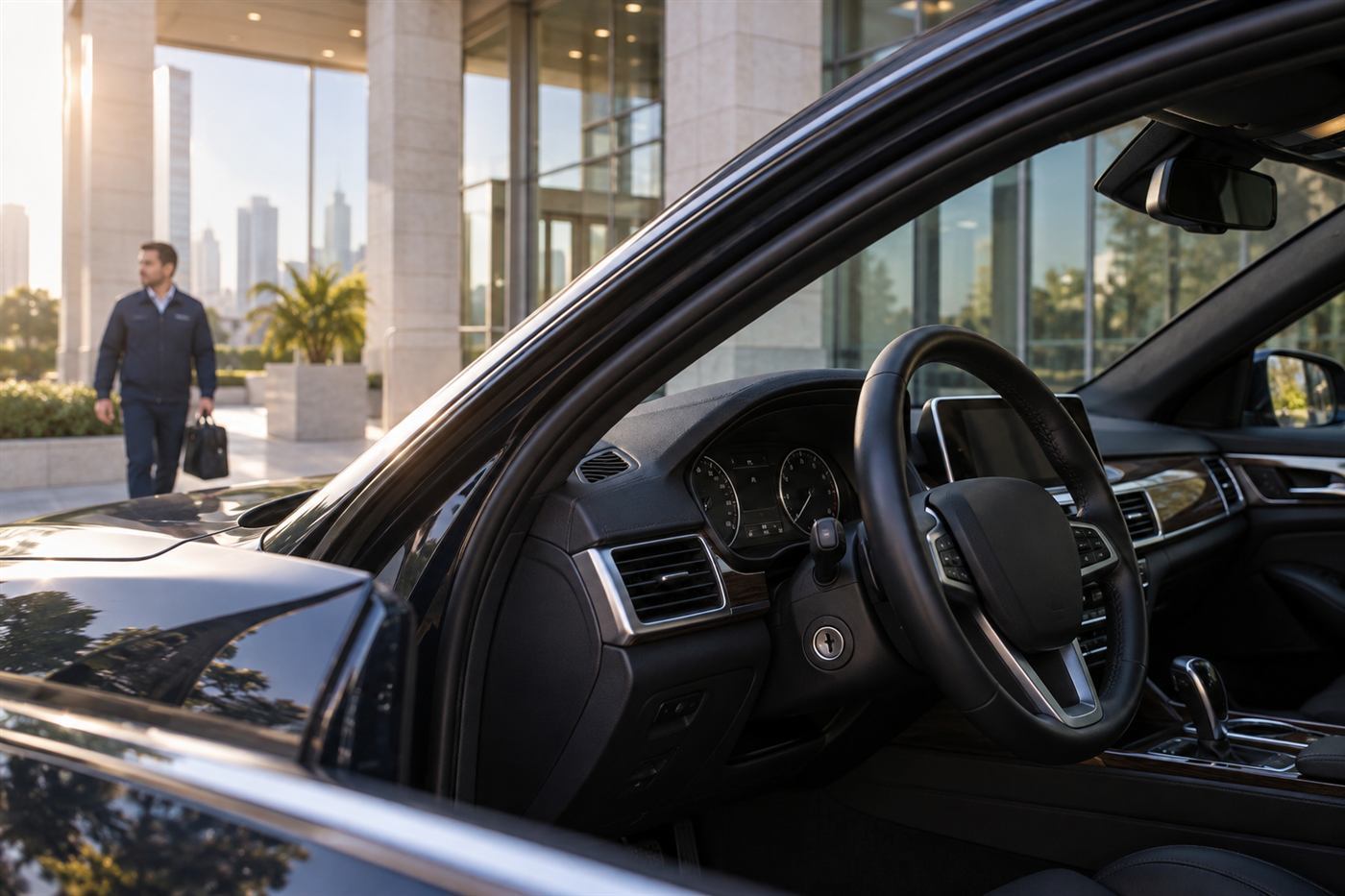
How electric vehicles use different kinds of keys
Electric vehicles tend to push key technology further than most gasoline cars. Some include a conventional fob that works like a proximity key. Others provide a thin plastic card that you tap on a marked spot on the car body. Others let your smartphone act as the key, using a short-range wireless connection and a dedicated app. A few use all three, so that a phone is the everyday key, the card is the backup, and a small fob is an optional extra.
The reason for the variety is partly design and partly cost. A card is thin, simple and easy to keep in a wallet. A phone key means nothing extra to carry. But the more the vehicle depends on electronics, the more situations arise where the electronics fail at the wrong moment. Understanding which key type your car uses, and what backup it offers, is the best protection against a stressful lockout.
Always check the owner's manual for the exact methods your model supports. The names and steps differ between manufacturers, and a method that works on one vehicle may not exist on another. If you are not sure, the guide on types of car keys gives a broader overview.
Key cards: how they work and where they are weak
A key card contains a small chip and an antenna. When you hold it against a reader on the car, usually on the pillar between the front and rear doors or inside the cabin on a console, the car reads the card and unlocks. To drive, you typically place the card on a marked area inside, press the brake and start the car with the normal controls. The card does not need a battery because the reader powers it for a moment during the tap.
That is convenient, but cards have weaknesses. They can bend, crack or be left in a pocket that goes through the wash. They can be misplaced easily because they look like any other card. And they do not usually have a remote lock function from a distance, so they are a backup, not a full replacement for a fob. If your car comes with two cards, one should stay at home in a known place, not in the vehicle.
A card that stops working may simply be damaged, or it may have been unpaired from the vehicle after a service or an update. Before assuming the card is broken, try the second card and try tapping a different spot, since readers can be sensitive to position.
Phone keys: what actually happens when your phone is the key
A phone key uses wireless communication between your phone and the car. When you walk up, the car detects the phone and unlocks, sometimes automatically and sometimes after you touch the handle. In the cabin, the car checks that the phone is inside before it allows the drive system to start. The phone must be paired to the vehicle through an app and the owner account.
This is smooth when everything is working, but there are several ways it can fail. The phone battery can run out. The phone can be set to a mode that disables the wireless link. The app can be logged out, updated or blocked by the phone's battery saver. A cold day can make a phone shut down earlier than expected. And if the phone is lost, the key goes with it.
Owners also sometimes forget that a phone key depends on an account. If the account is locked, or if the vehicle has lost its connection to the account for any reason, the phone may not work until the account is restored. Keeping a physical backup, such as a card or fob, is a sound habit even if you rarely use it.
Backup entry methods built into many electric vehicles
Manufacturers know that cards and phones can fail, so most electric vehicles include some form of backup entry. Common examples include a hidden mechanical key inside a fob, a door handle cover that hides a key slot, a keypad on the outside of the vehicle, or a method that lets you start the car by holding a fob or card against a specific place when the battery is flat.
These methods are described in the owner's manual, and they are worth reading before you need them. If you have never practiced, the first time you try one may be on a dark road with a worried passenger. Take ten calm minutes at home to find the hidden slot, learn where the card reader is, and understand what the dashboard tells you when a key is weak.
Do not try to force a door or remove a trim panel. Electric vehicles contain sensitive wiring in the door and handle areas, and damage can disable features you later need. If the backup method does not work or you cannot find it, stop and call a professional rather than prying at the vehicle.
- Look for a small mechanical key hidden in the fob or card holder.
- Check whether the driver door handle has a removable cap over a lock cylinder.
- Learn where the card reader is located on the pillar or console.
- Find out how the car starts when the key battery is weak.
- Keep the manual or a saved copy in your phone for quick reference.
What to do if you lose a key card
First, stay calm and retrace where you last used it. Cards often turn up in a jacket, a bag or between seat cushions. If you really cannot find it, the priority is security. Anyone who holds the card could potentially open and drive the vehicle, especially if they know where it belongs, so treat a missing card as a missing key.
Many electric vehicles let the owner remove a lost key through the vehicle's screen or the owner app, which cancels the card so it no longer works. If you can do that, do it promptly, then arrange a replacement. If you cannot, you may need professional help, which could involve the manufacturer's service department or an independent technician who supports your model.
When you call, have your vehicle identification number and registration ready, along with photo identification. The guide on what to do when you lose your car key lists the general steps, and the page on smart key replacement covers proximity keys.
When your phone dies and you cannot get in
A flat phone is probably the most common electric vehicle lockout. The car is fine, the owner is fine, and the phone is a dead slab in a pocket. First, check whether you have a card or fob stored somewhere accessible. If a spouse, roommate or family member has one, that is the quickest fix.
If not, look for the manufacturer's backup entry method. Some vehicles allow a temporary entry through a keypad or a cover over a lock cylinder. Others require you to have another authorized device. Do not try to break in. A forced door or window can damage seals and wiring, and electric vehicles often have tight tolerances that make a forced entry far more expensive than a service call.
If your phone key is gone completely, perhaps because the phone was lost or stolen, change your account password as soon as you can reach a computer, and remove the missing phone from the vehicle's authorized list. That keeps the missing device from being used against you while you arrange a new key.
Cold weather, heat and the way electronics behave
Weather affects every key type. Phones lose charge faster in the cold, so a phone that showed enough battery in the morning may be dead by the evening. Cards and fobs can become brittle in very low temperatures, and in hot parked cars they can warp. A phone left on a sun-baked dashboard may shut down to protect itself and refuse to wake until it cools.
For owners in climates with real winters, it is wise to keep a physical card or fob with you in an inside pocket, not in the car, and to keep the phone's power saving settings from restricting the vehicle app. Owners in hot climates should avoid leaving phones and fobs in a closed car. For more seasonal advice, see winter lock care and summer heat and key safety.
None of this is complicated. It is the habit of thinking, before you leave, about how you would get into the car if your phone were not working.
What a locksmith can and cannot do on an electric vehicle
Electric vehicles vary widely in how open they are to independent service. Some models allow a qualified technician to add a new key or card with the right equipment. Others tie new keys to the manufacturer's own system and require a visit to a service center, or an authorization that only the brand can provide. A few use account-based security that cannot be bypassed at all outside the official process.
A responsible locksmith will not promise a result before knowing the vehicle. Be ready to share the make, model, year and identification number, and be ready to hear that your car might be a manufacturer-only job. Where independent service is possible, a technician can often work at the car, which saves a tow. Where it is not, you can still save time by knowing before you call what the manufacturer will need from you.
Whatever the case, never hand your account credentials to a stranger. A technician should not need your password. If anyone asks for it, step back and verify who you are talking to. The guide on locksmith scam warning signs explains what to watch for.
Setting up a safety net before something goes wrong
A little preparation turns an emergency into an annoyance. Keep at least one physical key, such as a card or fob, somewhere safe and known, not in the vehicle. Make sure a second person can enter the car if needed, and confirm that the phone key is paired in more than one way if the system allows it.
Record the vehicle identification number somewhere you can reach from a phone, and keep a photo of your registration. Learn the backup entry method and practice it once. Charge your phone before long trips, and keep a small power bank in your bag. If you share the vehicle with family members, agree who holds which key.
These steps cost little and take only a short time. When you do need help, you will be able to give clear information, which speeds up any service call. If you are locked out of an electric vehicle or have lost a card, call and a technician will talk through your model and what can be done. Quotes are given by phone, and more involved work may need an on-site visit.
Questions people ask
What should I do first if I lose my electric vehicle key card?
Treat it as a lost key. Check the places you were last, and if it is not found, use the vehicle's screen or owner app to remove the card if the car allows it. Then arrange a replacement. Have your vehicle identification number, registration and photo identification ready, because proof of ownership is normally required.
Can I still get into my car if my phone key dies?
Usually yes, if you have a backup. Most electric vehicles offer a key card, a fob, a hidden mechanical key or another entry method described in the owner's manual. Read it ahead of time. If none of these is available, do not force the car. Call a professional who can advise on your specific model.
Is a phone key less secure than a physical key?
Neither is automatically safer. A phone key is protected by the phone's own lock and the owner account, which can make it hard for a stranger to use. But if the account is compromised or the phone is lost unlocked, there is risk. Use a strong phone lock and remove lost devices from the vehicle quickly.
Can a locksmith program a new card for an electric vehicle?
Sometimes. It depends entirely on the make, model and year, since some manufacturers restrict key creation to their own service network. A locksmith should ask for your vehicle details before dispatch and tell you honestly whether the work is possible on site or whether the brand service department is the right route.
Why does my key card work only in one spot on the car?
The reader is a small antenna in a specific place, and the card must be close enough to power and be read. Hold the card flat against the marked area and keep it still for a moment. If it still fails, try the second card, since a damaged card is a common cause.
Should I keep my spare card inside the car?
No. A spare left in the vehicle can be found by anyone who gets in, and it will not help you if you are locked out. Keep it at home in a known place or with a trusted person. A spare is only useful if you can reach it when the car is not available.
Describe the situation by phone and we will tell you what the job involves. Quotes are given by phone. Jobs that cannot be quoted without seeing them need a technician on site, and the service call charge is explained on the phone before anyone is dispatched.
(844) 715-0800Related pages
Written by Claude (AI) (AI) for 24/7 Locksmith USA.