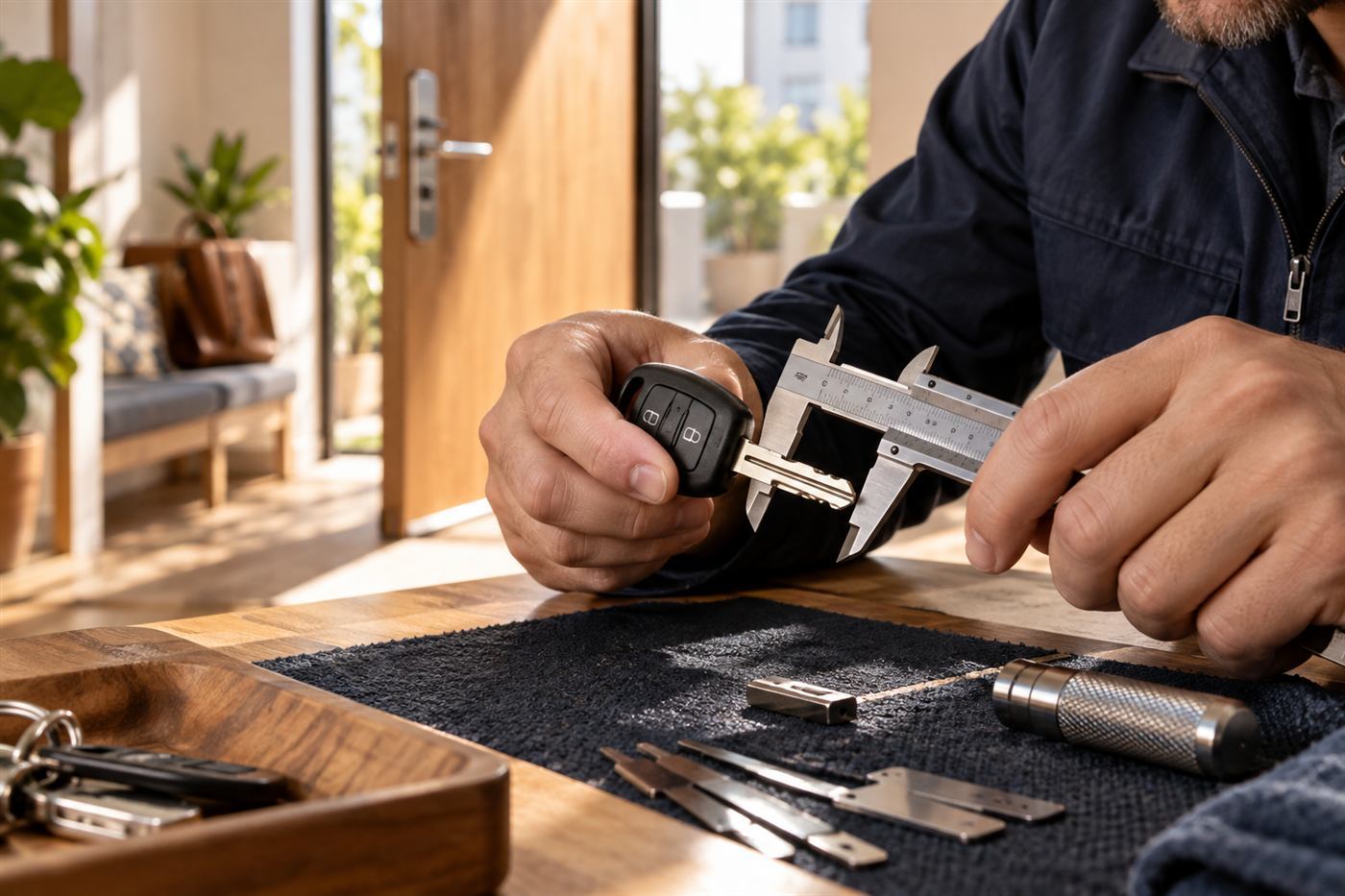
What a transponder key actually is
A transponder key looks like an ordinary key, but its plastic head holds a tiny electronic chip. The chip has no battery in most designs. When you turn the key in the ignition, a ring antenna around the lock sends out a short radio signal, and the chip answers with its own identity. The car's computer compares that answer with a list of approved identities. If the answer matches, the engine is allowed to start. If it does not, the car refuses.
This system is called an immobilizer. It was introduced to make theft harder, because a thief who cuts a copy of the blade cannot start the car without the matching chip. The idea worked well enough that it spread to nearly every manufacturer, and today it is simply part of how cars work. Our guide on how car key programming works gives a wider picture of the process.
For drivers, the important point is that the blade and the chip are two separate things. Both must be right. The blade has to turn the lock cylinders, and the chip has to satisfy the computer. A key that does one but not the other will either fail to turn or turn without starting the engine. Understanding that split explains most of the confusing symptoms owners describe.
Why a copied blade alone will not start the car
Many drivers have had the experience of getting a key cut at a hardware counter, finding that it opens the doors and turns in the ignition, and then watching the dashboard light flash while the engine refuses to run. That is the immobilizer doing its job. The blade is correct, but the chip inside the new key is either missing or has never been introduced to the car.
Some hardware counters sell keys with a blank or generic chip that has not been programmed. Others sell a key without any chip at all, which will open doors but never start a modern engine. The result is a key that looks fine and works only partly. Our problem page on the key that turns but the car will not start explains this symptom in more detail.
If you are not sure whether a key has a working chip, a locksmith can test it with a reader. A quick check shows whether the chip exists, what type it is, and whether it has been written with the right data. It is far better to learn that before relying on a key in a car park at night than after. Always test any new key by starting the engine, turning it off, and starting it again.
Cloning versus true programming
There are two common ways to make a working transponder key. The first is cloning. A technician reads the identity stored in your existing chip and writes the same identity into a new chip. The car cannot tell the difference between the two, because they present the same answer. Cloning does not require the car to be involved, and it can be done with the original key alone.
The second is true programming, sometimes called adding a key. In this method, the technician connects equipment to the car's data port and teaches the car's computer a brand new identity. The new key has its own identity, separate from the original, and the car now knows about both. This approach needs the car, but it can also work when no original key exists, which cloning cannot do.
Each method has trade-offs. Cloning is simpler when you have a working key, but it only works for chip types that can be copied, and the clone shares an identity with the original. Programming adds a truly separate key and often allows lost keys to be removed from the car's memory. Many newer vehicles can only be programmed, not cloned. A technician will choose based on your vehicle, and should explain why.
- Cloning copies the chip's identity from a working key and needs the original in hand.
- Programming teaches the car a new, separate identity and needs access to the vehicle.
- Only programming can help when every key is lost.
- Programming can usually remove a lost key from the car, while cloning generally cannot.
- Some modern chips cannot be cloned at all and require programming.
Chip families and why they matter
Transponder chips come in several families, and different manufacturers have used different types across the years. Early systems used a fixed identity that never changed. Later systems introduced changing, encrypted exchanges so that recorded signals could not be replayed. The more advanced the system, the more tightly it is tied to the car and the harder it is to copy.
You do not need to memorise any of this, but it explains why a technician asks for the make, model and year before quoting. The same brand can use different chip types in different years, and the right blank key and equipment depend on the exact combination. A key that works in a car from one year may be wrong for a nearly identical car a few years later.
This is also why buying a random key online can end badly. A key shell that fits the blade pattern may contain the wrong type of chip or no chip at all. Our problem page about aftermarket key problems describes the typical failures. When in doubt, ask the technician what kind of blank they plan to use, and why it suits your car.
How a technician programs a transponder key
The visit begins with identification and confirmation that the car is yours, then a check of the vehicle's details. The technician examines the ignition, the existing key if any, and the blade type, and selects an appropriate blank. If the blade needs cutting, it is cut on a portable machine to match your locks.
Next, the technician connects diagnostic equipment to the car's data port, usually located under the dashboard near the driver's knees. The equipment communicates with the car's immobilizer system. Depending on the make, the technician may need to enter a security sequence, wait through a timed delay, or use a working key to authorise the process. The car is then told to accept the new chip, which is written into its list of approved keys.
Once programmed, the key is tested. The technician starts the engine with the new key, turns it off, starts it again, and checks every other function. If a remote is built into the key, the buttons are tested as well. Take your time with this step. Operate the locks, the trunk and any other features while the technician is present, so any fault can be corrected immediately.
- Identity and ownership are confirmed, and the vehicle details recorded.
- The blade is cut and the correct chip blank is chosen.
- Diagnostic equipment is connected to the car's data port.
- The car is taught to accept the new key, with any required security steps.
- The key is tested through repeated starts and every remote function.
Battery, wiring and other things that can interfere
Programming relies on stable power and clear communication between the equipment and the car. A weak battery is a common cause of failed programming, because the car's computer may drop out part way through a procedure. If your car has been slow to crank, mention it when you call. The technician may use a power supply to keep voltage steady during the work.
Aftermarket additions can also interfere. Remote starters, alarm systems and tracking devices are often wired into the same circuits as the immobilizer. A poorly installed unit may block communication or cause the car to reject a new key. Read our page on remote start fob programming for more on how these systems interact.
Finally, physical damage matters. A key head that has been dropped, soaked or crushed may have a cracked chip even though the blade looks fine. Water damage is especially common, and our page on a car key that fell in water describes what to do. If a key behaves inconsistently, it may be failing and worth replacing before it stops altogether.
What can go wrong, and how an honest technician handles it
Not every key can be made on the spot. A few vehicles have security that requires manufacturer level access. Others need a specific blank that must be ordered. A technician who tells you this on the phone is being honest, not unhelpful. It is far better to hear it before a visit than to discover it after a technician has arrived and cannot proceed.
Another risk is a key that programs but fails over time. A poorly made blank may work for a week and then stop. Ask what kind of key blank is being used and whether it is suitable for your vehicle. Ask whether the technician tests the key before leaving, and whether the same key can be re-programmed if it needs attention later.
Be cautious with anyone who promises that every car can be done in every case, or who refuses to explain what they are doing. Our guide on locksmith scam warning signs lists patterns worth knowing before you book. Reasonable questions deserve straight answers, and a professional will welcome them.
Transponder keys for different types of drivers
A daily commuter needs a key that works every single morning. For that driver, a reliable chip and a well cut blade matter more than extra buttons. A spare kept at home protects against a sudden failure, and our page on spare car key programming explains how one is added.
A family with several drivers benefits from a key per person, because shared keys get lost. A parent buying a first car for a teenager may want one key for the new driver and one kept by the parent. If the car came from a private seller, it is wise to have the technician check how many keys the car recognises, and remove any that you cannot account for.
A small business running a van or pickup may want a plain, durable key for each worker, with one held in reserve at the office. Keys that are used on job sites get dropped, soaked and crushed more than most, so a spare is especially valuable. A simple transponder key without extra buttons is often enough, and it is easier to replace if lost.
Reading the warning signs on your dashboard
Many cars show a small light shaped like a key or a padlock when the immobilizer is involved. When the key is recognised, the light usually blinks briefly or goes out. When the key is not recognised, the light may stay on, flash steadily, or flash in a pattern after you turn the ignition. The engine may crank and stop, or not crank at all. Our page on the immobilizer light flashing explains the common meanings.
The pattern gives clues, but it does not give a diagnosis. A flashing light with a brand new key suggests the chip has not been learned. A flashing light with a key that worked yesterday may point to a weak battery in the car, a damaged chip, or a fault in the antenna ring around the ignition. Those are different repairs, and a technician can test each one.
If the light appears, resist the urge to try again and again. Some vehicles lock out further attempts for a short time after several failures. Stop, take the key out, wait a moment, and try your second key if you have one. If a second key works, the first is probably the problem. If neither works, the fault may be in the car rather than the keys, and you should say so when you call.
Planning ahead for a key that is wearing out
Transponder keys last a long time, but they are not permanent. The plastic head cracks, the blade wears, and the chip can be damaged by drops, heat and moisture. A key that has been carried loose with a bunch of heavy keys wears faster, because the weight pulls on the ignition and the chip inside suffers repeated knocks.
If your key has a visible crack, a loose joint between blade and head, or a start that works only when you wiggle it, plan a replacement before it fails. Our page on worn car key symptoms lists what to watch for. A planned visit costs you a little time, while a failure on a work morning can cost you a whole day.
Reduce the strain on the key as well. Keep the ring light, and avoid hanging heavy items from the ignition key. Keep the key away from strong magnets and from water. A modest change in habit can extend the life of a key considerably, and it protects the ignition cylinder too.
Ready to talk it through
If your key does not start the car, if a new key is flashing the security light, or if you simply want a spare that works, the next step is a phone call. Have the make, model and year of the car, the key you currently have, and the vehicle identification number if you can reach it. Our guide on finding your VIN shows where to look.
Quotes are given by phone only, and a service call charge is explained before any technician is dispatched. A complicated job may need an on-site visit before a final quote is given. You will hear that clearly in advance, with no surprises on arrival.
Call when you are ready, and describe what the car is doing. We will help you work out whether you need a clone, a programmed spare, or a replacement, and what the visit will involve.
Questions people ask
What is a transponder key?
It is a key with a small electronic chip in the head. When you turn it in the ignition, the car reads the chip and checks that its identity is approved. If it matches, the engine can start. If not, the car refuses. The system is designed to make theft harder, because a copied blade alone will not start the engine.
Why does my new key open the doors but not start the car?
The blade is cut correctly, but the chip inside has not been introduced to the car, or it is the wrong type. The car's immobilizer rejects it. A locksmith can test the key with a reader and program the car to accept a proper chip. Do not keep retrying the key, because repeated attempts can trigger additional security waiting periods.
What is the difference between cloning and programming a key?
Cloning copies the identity from a working key into a new chip, so the car sees two identical keys. Programming teaches the car a new, separate identity. Cloning needs the original key and only works for some chip types. Programming works at the car, can help when every key is lost, and can often remove a lost key from the car.
Can a transponder key be made if I have lost all my keys?
Usually yes, through programming rather than cloning. The technician confirms ownership, gets cutting information for the blade, and uses diagnostic equipment to teach the car a new key. A few vehicles need dealership level access. Describe your car when you call, and the dispatcher can tell you honestly which route is likely to apply.
Can I buy a key online and have it programmed?
Sometimes, but it carries risk. The online key may contain the wrong chip type or no chip at all, and a technician cannot always make it work. If you plan to supply your own key, discuss it by phone before booking so the technician can tell you whether the blank is suitable and what is likely to happen.
Will programming a new key erase my old ones?
Not unless you ask for it. Adding a key normally keeps the existing keys working. Removing a lost key is a separate step that many vehicles support. Tell the technician if a key was lost or stolen, so it can be removed from the car's memory when the new one is programmed.
Describe the situation by phone and we will tell you what the job involves. Quotes are given by phone. Jobs that cannot be quoted without seeing them need a technician on site, and the service call charge is explained on the phone before anyone is dispatched.
(844) 715-0800Related pages
Written by Claude (AI) (AI) for 24/7 Locksmith USA.