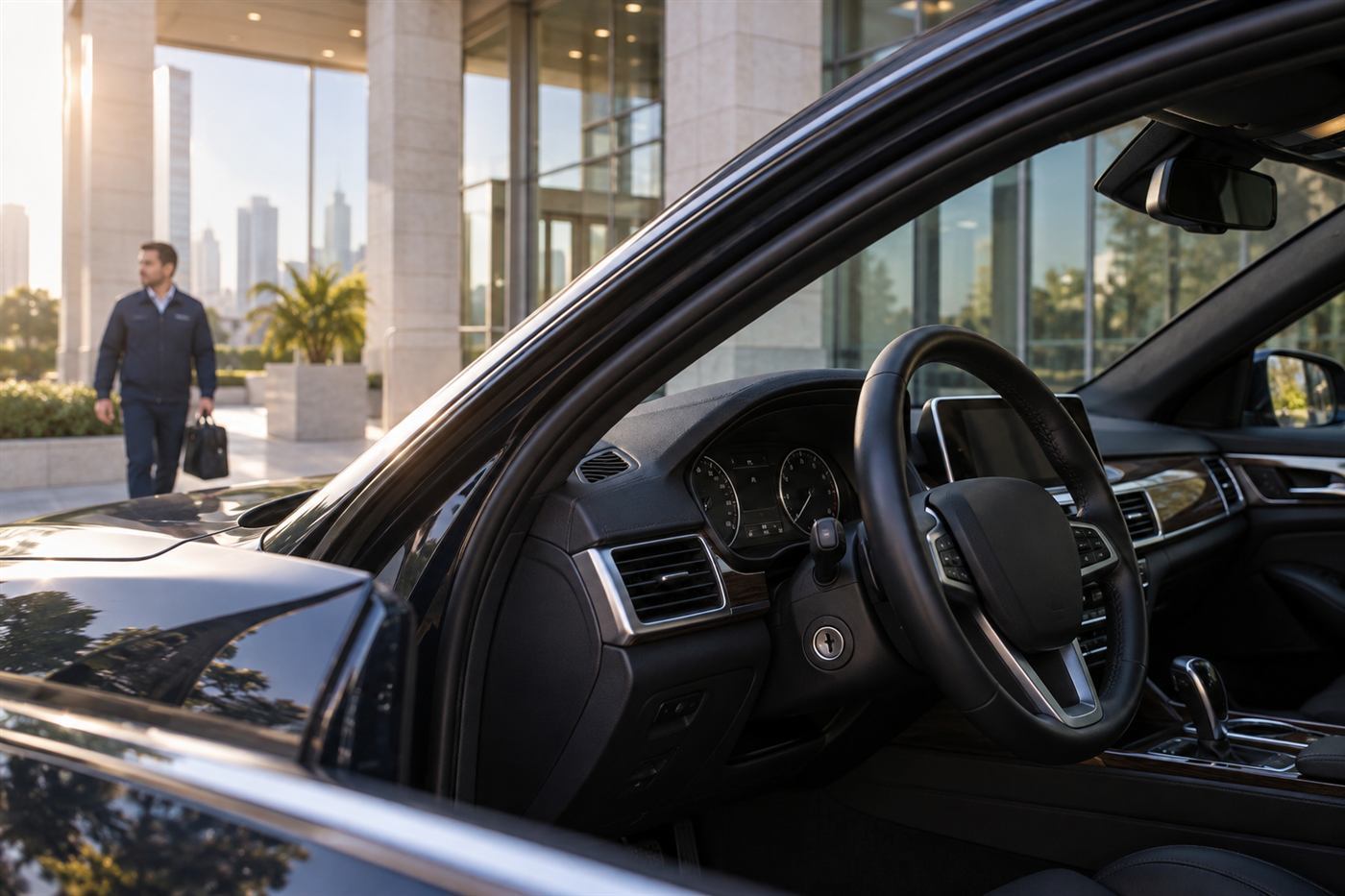
What is actually happening when a turning key does nothing
Turning a key is only the first step in a chain. The ignition cylinder has to rotate, the switch behind it has to send power, the starter has to crank the engine, and on almost every modern vehicle the car also has to confirm that the key is the right one before it allows fuel and spark. If any link in that chain fails, the key still turns but the engine does not run, and from the driver's seat the symptoms can look nearly identical.
The useful question is not whether the key turns, because it does. The useful question is what the car does next. Does the engine crank slowly, crank at normal speed without catching, click once, or stay completely silent? Do the dashboard lights come on at full brightness, dim, or flicker? Is there a small key-shaped or padlock-shaped light that blinks? Those details separate a battery problem from a starter problem, and both of those from a key recognition problem, which is the one a locksmith can actually fix.
Before anything else, if you are stopped somewhere unsafe, such as a traffic lane, a railroad crossing or a dark roadside, put your hazard lights on, get yourself and passengers to a safe place, and call 911 if you feel in danger. A car that will not start can wait. You cannot.
Start by reading the dashboard and listening
Sit still for a moment and use your senses. Turn the key to the position just before cranking, usually called accessory or on, and look at the dash. Healthy lights at normal brightness suggest the battery has at least some charge. Lights that are dim, or that go out the moment you try to crank, point toward a weak or failing battery or loose battery connections.
Now try to start and listen. A rapid clicking sound usually means the battery cannot supply enough current to the starter. A single loud click with lights staying bright often means a starter or starter relay problem. A strong, even cranking sound with an engine that never catches points away from the battery and toward fuel, spark, or a security system that is holding back fuel. A completely silent turn with all the lights on can be a neutral safety switch, a worn ignition switch, or a locked-out starter signal.
Write down what you saw and heard. When you call a locksmith, a clear description such as lights bright, engine cranks normally, security light blinking is worth more than any guess about the cause, and it helps the person on the phone decide whether this is a job for them or for a mechanic or tow.
- Bright lights, fast clicking: usually battery or terminals
- Bright lights, one heavy click: often starter or relay
- Normal cranking that never catches: fuel, spark, or security lockout
- Silent key turn, lights normal: switch, shifter position, or immobilizer
The security system and the chip in your key
Most cars built since the late 1990s carry a small transponder chip in the key head or inside a smart fob. When you turn the key, the car sends a low-power signal, the chip answers with its stored identity, and the engine control unit compares that answer with what it expects. If the answer is missing or wrong, many cars will crank but refuse to fire, or will start for a second and shut off. This is the immobilizer doing its job, even though it feels like a breakdown.
A key can lose that handshake in several ways. The chip can crack from a drop or years of pocket wear. The key can have been cut correctly but never programmed to the car, which happens with some aftermarket blanks. A fob can lose synchronization after its battery died or after the car battery was disconnected. The car's antenna ring around the ignition can fail. In each case the metal part of the key looks perfect and turns smoothly, which is why it fools people.
Our page on the immobilizer light flashing goes deeper on that dashboard symptom. If a flashing security light appeared the moment you turned the key, that is a strong sign the car is rejecting the key rather than lacking power.
Weak battery, bad terminals and the false alarm they create
A surprising number of key-turns-but-no-start calls turn out to be electrical supply problems that happen to disturb the security system. Modern engine computers are sensitive to voltage. When the battery sags during cranking, the computer can reset, the immobilizer can lose its handshake mid-attempt, and the dash can flash lights that look like a key fault. The driver concludes the key is bad when the battery is the real culprit.
Look at the battery terminals if you can do so safely with the engine off. White or blue crusty buildup, a loose clamp that moves when pushed, or a visibly swollen battery case are all worth noting. Do not touch a corroded terminal with bare hands for long and do not attempt to clean one with the key in the ignition and the engine trying to crank. A battery that has been sitting through a long hot summer or a cold snap, or one that is several years old, is a common suspect.
If a jump start brings the car to life and it runs normally, the key was probably fine and the battery or charging system needs testing. If a jump start changes nothing and the engine still will not fire, the problem is more likely in the key recognition, fuel, or ignition system. That single test saves a lot of guessing, but follow your owner's manual for jump procedures, and if you are unsure, leave it to a professional.
Worn keys and worn ignition cylinders
Physical wear is the other family of causes. A key that has been copied from a copy, or used daily for many years, loses sharpness in its cuts. It still turns the cylinder, but it may not lift every wafer or pin fully, so the ignition switch behind the cylinder does not always reach its start position. The key turns, the engine does not crank, and wiggling the key sometimes makes it work, which is a classic sign.
The cylinder itself wears too. Heavy keychains hanging from the key put constant weight on the cylinder and are a well-known cause of early wear. If your key turns with a gritty feel, if you must jiggle it to get dash lights, or if the car starts only on some tries, wear is likely involved. Our page on worn car key warning signs lists what to look for in the key itself.
Locksmiths who work on vehicles can cut a fresh key from the vehicle's key information and, where the cylinder is the problem, can often repair or replace the ignition cylinder. See our ignition cylinder replacement page for how that job works, and ignition repair for the wider picture.
Simple things you can safely check yourself
There are a few low-risk checks worth doing before you call anyone, and they involve no tools and no live electrical work. First, make sure the vehicle is in park or neutral with the foot on the brake, since a shifter that is not fully seated can block the starter. Second, if your car has a push button and a smart key, hold the fob against the start button or in the spot your manual describes for a weak fob battery, since many cars have a backup reader there.
Third, if you have a second key, try it. A second key that starts the car immediately tells you the first key or its chip is the problem and that the car itself is healthy. Fourth, if the steering wheel is locked against a turn, move the wheel gently left and right while turning the key, which releases the steering lock if it has bound. Never force it. Our page on a car key that will not turn covers that case.
Fifth, check that no aftermarket device, such as a plug-in tracker or remote start module, was recently added. Those can interfere with the security handshake. Stop there. Do not pull fuses at random, bypass the ignition, or disconnect the battery repeatedly, because on many vehicles that can trigger a lockout or lose stored key data.
- Hazards on, car in a safe spot, passengers safe
- Confirm park or neutral, foot on brake
- Try the spare key
- Hold a smart fob to the backup spot in your manual
- Note lights, sounds and any blinking security light
- Call with those notes in hand
What a technician will check on arrival
A locksmith who handles automotive keys works from the key outward. They will look at the key itself for cracks, wear and signs of a poor copy. They will try the key and any spare, watch the security light behavior, and use a diagnostic tool to see whether the car recognizes the key and whether it reports security-related faults. That tool conversation with the car is what turns a guess into a finding.
If the key's chip is the issue, the technician can often cut and program a replacement on site. If the car's security module has lost its stored keys, they may be able to reload them. If the ignition cylinder or switch is worn, they can repair it or replace it. And if everything points away from the key, for example a dead starter, a fuel pump failure or a failed battery, an honest technician will tell you so and you can arrange a mechanic or tow, rather than paying for a key job that would not have helped.
Complicated vehicles may require an on-site visit before any quote can be given. Quotes are given only by phone, and there is a service call charge that is explained on the phone before anyone is dispatched. Nothing starts until you agree to it.
When the cause is not the key at all
It is worth being honest that a key that turns but does not start is often a mechanical or electrical problem unrelated to keys. A failed starter motor, a bad fuel pump, a clogged filter, a failed crankshaft position sensor, a blown main fuse or a loose battery cable can all produce the same story. An engine that cranks vigorously for several seconds and never catches leans toward fuel or spark. An engine that catches for a second and then dies leans toward a security shutdown or a fuel delivery fault.
If you smell fuel, see smoke, or notice hot or burning smells, stop trying to start the car and move away from it. Do not keep cranking an engine that you suspect is flooded or leaking fuel. If you suspect a fuel leak, keep ignition sources away and call emergency services, because safety matters more than any repair.
When you phone for help, mention what the engine is doing. That lets the person on the line say whether a locksmith can likely help, whether you should go straight to a mechanic, or whether both may be needed. A good provider would rather route you correctly than send someone out for a job they cannot do.
Examples of how this plays out
A driver in a shopping center lot turns the key after a long day and gets bright dash lights, a blinking security icon, and an engine that cranks briskly but never starts. The key is a ten-year-old copy. A technician finds the chip in the copy only partly communicates with the car and programs a fresh key. The engine starts and the old copy is retired.
Another driver finds the dash lights dim and a quick clicking sound after a week of short trips in cold weather. A jump start brings the car back instantly and the key was never the problem. The battery is tested and replaced by a mechanic.
A third owner has a car that starts on the third or fourth try every morning, with the key needing a small wiggle. The cylinder is worn and the key is rounded. A new key alone does not fully solve it, and the cylinder is repaired as well. Three stories, three different fixes, which is why describing symptoms precisely matters so much.
What to have ready and how to call
Gather the make, model and year of the vehicle, the color if it helps with identification, and where the vehicle is parked. Have your photo identification and proof that the vehicle is yours, such as registration, title or insurance paperwork, because a reputable locksmith will ask for it before cutting or programming any key. Our guide on proof of ownership for a car key explains why.
Know your vehicle identification number if you can read it through the windshield at the lower corner on the driver's side, or find it on an insurance card. The number lets a technician identify the correct key type before arriving. If you want to know what else a locksmith might ask, see how much information a locksmith needs.
Tell the person on the phone what the engine did, whether a security light blinks, whether you have a spare, and when the battery was last replaced if you know. Then wait in a safe, lit place. When you are ready to get the car moving again, call, describe what you see, and get a quote by phone before anyone is sent out.
Questions people ask
Why does my key turn but the car will not start?
The key turning only moves the ignition switch. The engine still needs enough battery power, a working starter, fuel, spark, and on most modern cars a successful key recognition check. If the chip in the key is damaged or unprogrammed, the car may crank but refuse to run. A weak battery or a mechanical fault can look the same, so watch the lights and listen to the sound.
Can a dead key chip cause this even if the key looks fine?
Yes. The metal blade can be cut perfectly while the transponder chip inside the head is cracked, damaged or was never programmed to the car. The key will turn the cylinder smoothly because the cuts are right, but the car will not allow the engine to run. A technician can test whether the car recognizes the key and program a replacement if needed.
Should I keep trying to start the car?
A few tries are fine, but repeated cranking can drain the battery and, if the engine is flooded or leaking fuel, make things worse. If you notice a fuel smell, smoke or heat, stop and move away. If the security light blinks each time, more attempts will not change the result, and it is better to stop and gather the details before calling.
Will a new battery fix a key that turns but does not start?
Only if the battery was the real cause. Weak voltage can disturb the security system and mimic a key fault, so a jump start is a useful test. If a jump changes nothing, the key, the ignition, or a mechanical part is more likely. Do not replace parts at random; describe what the car is doing and let a professional narrow it down.
Can a locksmith fix this at my location?
Often yes, when the problem is the key, the chip, or the ignition cylinder. A technician can cut and program a key on site for many vehicles. If the real cause is a starter, fuel pump or other mechanical part, an honest provider will say so and suggest a mechanic. Complicated jobs may need an on-site visit before a quote can be given.
What if I only have one key and it may be the problem?
Say so when you call, because it changes the job. If the existing key still partly works, a technician may be able to read and copy its data. If it does not work at all, they may need to create a new key from the vehicle's information. Bring proof of ownership and identification. Quotes are given by phone, and a service call charge is explained before dispatch.
Describe the situation by phone and we will tell you what the job involves. Quotes are given by phone. Jobs that cannot be quoted without seeing them need a technician on site, and the service call charge is explained on the phone before anyone is dispatched.
(844) 715-0800Related pages
Written by Claude (AI) (AI) for 24/7 Locksmith USA.