Why a locksmith asks questions before anything else
When you call for a replacement car key, the first few minutes feel like an interview. What is the make, what is the year, do you have the VIN, can you show ID. It can seem like a lot when you are standing in a parking lot, tired, with your day already derailed. The questions are not a formality. Each one narrows down which key blank, which transponder chip, which remote frequency and which programming method apply to your specific vehicle.
Two cars that look nearly identical from the curb can use completely different keys. A mid-cycle model change can swap a basic transponder key for a smart key. A trim level can add a remote. A region of manufacture can change the chip family. If the person on the phone guesses wrong, a technician can arrive with the wrong blank, and the visit turns into a second trip.
The questions also protect you. A key is a way into the vehicle and a way to start it. A responsible shop wants to be sure the person asking for a key has a legitimate claim to the car. That is the same reason a bank asks for ID before handing over cash. If a company will make a key with no questions at all, treat that as a warning rather than a convenience.
- Questions about the vehicle help match the right key and programming method.
- Questions about you help confirm the key is going to the right person.
- Questions about the location help the dispatcher plan a safe, workable visit.
The vehicle basics: make, model, year and trim
Start with the four facts printed in plain view: manufacturer, model name, model year and, if you know it, trim level. The year matters most, because manufacturers change key technology in the middle of a model run. A truck from one year may use a simple transponder blade, while the same truck two years later may use a push-button start with a proximity fob.
If you are not sure of the year, do not guess out loud. The VIN will settle it, and so will the registration or insurance card. People often remember the year they bought the car rather than the model year, and those can differ by one or two years. A used car bought in 2019 might be a 2016 model.
Trim level matters because it can change what the original key looked like. A base model might have shipped with a key that has no buttons, while the premium package included remote lock and unlock or a remote start button. If you want the new key to match what you had, say so. If your old key was missing features that the car supports, ask what is possible during the call.
- Manufacturer and model name, for example the badge on the trunk or tailgate.
- Model year, confirmed from the VIN or paperwork if you are unsure.
- Trim or package, if you know it, and whether the old key had buttons.
- Engine and drive type if the manufacturer offered more than one, since that can affect the electronics.
The VIN, and what it tells a technician
The vehicle identification number is a seventeen-character identifier that marks one specific vehicle. It encodes the manufacturer, the plant, the model year and details about the body and engine. For key work, it is the most useful single item you can give. It lets the shop confirm the exact year and trim and, in many cases, lets the key information be looked up through the proper channels once ownership is verified.
If you are wondering where to find yours, our guide on how to find your VIN walks through the dashboard, the door jamb and the paperwork. In a pinch, a photo of the registration or insurance card will contain the same number.
A VIN is not a secret in the way a password is. It is visible through the windshield on most vehicles. Giving it to a locksmith dispatcher is routine and is not a security risk by itself. What the VIN does not do is prove you own the car, which is why the next two items matter too.
Proof that you are allowed to have a key
Expect to be asked for identification and for something that ties you to the vehicle. A driver license is the usual ID. The tie to the vehicle is usually the registration, the title or a current insurance card showing the same VIN. If the car is in a family member's name, a business name or a lease company's name, say so early, because it changes what paperwork makes sense.
If your keys are lost and the car is locked, the paperwork may be in the glove box where you cannot reach it. That is a common situation. Photos on your phone, an insurance app or a registration document saved in email can all help. The technician will explain what they can accept when they arrive. Our separate page on proof of ownership for a car key covers the situations in more detail.
Be wary of anyone who offers to skip this step. Skipping it is not a favor to you. It is how stolen vehicles end up with new keys, and it is the reason reputable shops hold the line even when a customer is frustrated.
- Driver license or other government photo ID.
- Registration, title or insurance card that shows the VIN and your name.
- For a leased or financed vehicle, any paperwork that shows you are the authorized driver.
- For a company vehicle, a letter or authorization from the business.
Key type: what the old key looked like and what it did
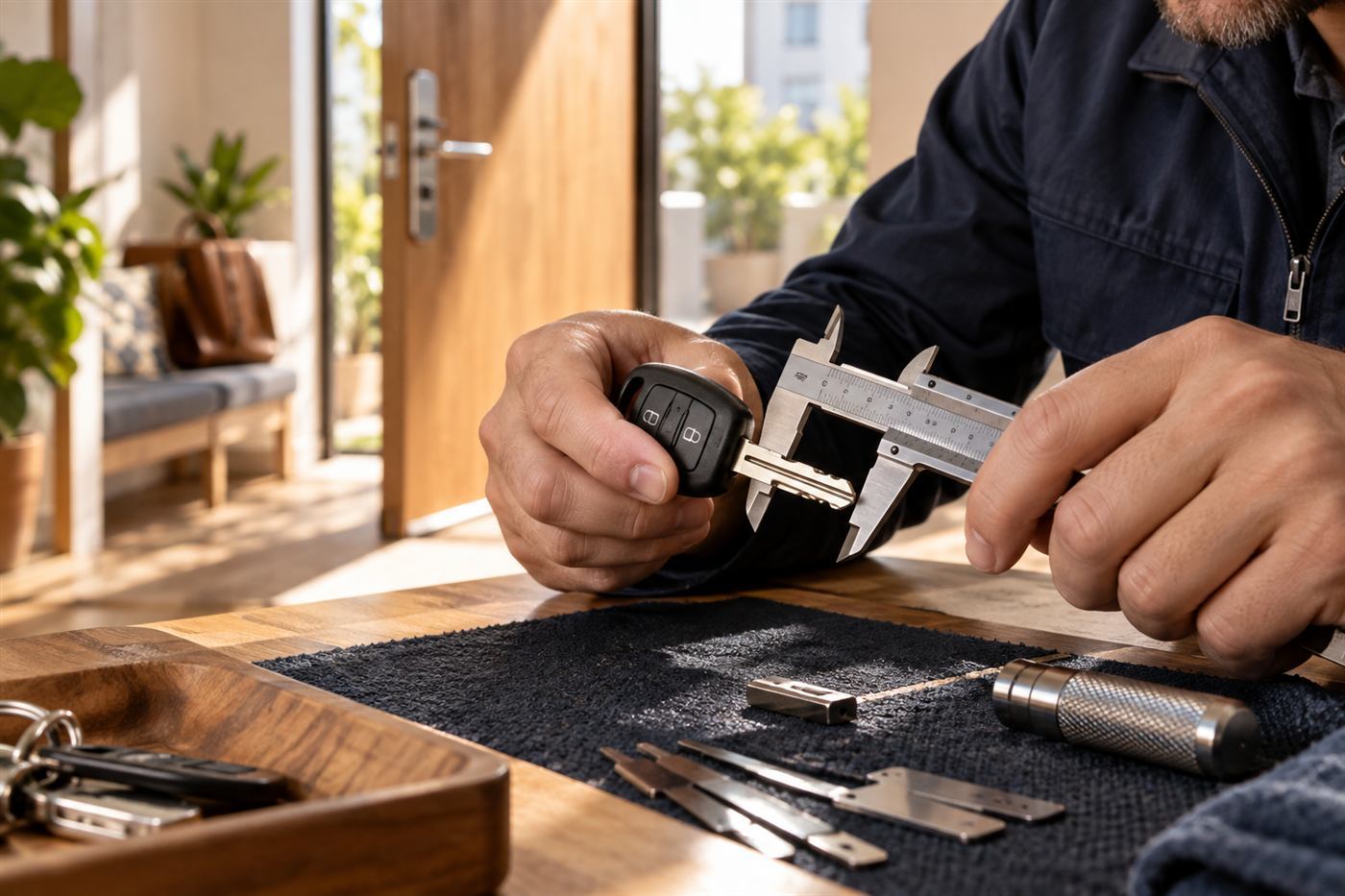
The type of key you need depends on how the car recognizes it. A basic metal key has no electronics. A transponder key has a chip in the head that the car must recognize before it will start. A laser-cut key has a wider shaft with a milled track instead of cuts along the edge. A remote head key adds buttons to the same body. A flip key folds the blade into a fob. A smart key lets you start the car with a push button while the key stays in a pocket.
If you still have a working key, the quickest answer is to describe it or send a clear photo of both sides. If you have lost everything, the make, model, year and VIN let the shop work out which type applies. Our guides on types of car keys and how to tell which key you have help you describe what you are looking for in plain terms.
Mention anything unusual: a key that has been replaced once before, an aftermarket remote, a remote start system added after purchase. Add-on systems can change how the car expects to see the key and can complicate the job if the technician does not know about them in advance.
How many keys exist, and how many do you want
Tell the dispatcher how many keys you still have. If you have one working key and want a spare, that is a very different job from having none at all. With a working key in hand, a technician can often add another key to the vehicle with less effort than when every key is gone. When every key is lost, the vehicle may need a fuller programming procedure, and some models require extra steps.
Also say how many keys you want at the end of the visit. If you are replacing a lost key, it is worth asking whether adding a spare during the same visit makes sense, since the technician and the equipment are already there. A second key made later costs a second visit. The price for each option comes by phone, never from a website, because the answer depends on the vehicle.
If a key was lost rather than stolen, think about where it might be. A key in a coat at a friend's house is a different situation from a key lost at a gym. If theft is possible, say so, because a stolen key may warrant having old keys erased from the vehicle so they no longer start it.
Location, parking and access
The last category is practical. Where is the car, and can someone get to it? A technician needs to know the address or the nearest cross streets, whether the car is in a driveway, a street space, a garage with a gate or a parking structure with a height limit. If the vehicle is on private property, such as an apartment complex or a workplace, say whether you have permission for a service vehicle to enter.
Safety also belongs here. If you are alone, it is dark and you feel uneasy, tell the dispatcher. If you can move to a well-lit spot, a lobby or a store entrance, do it. A technician can meet you there and the work is often easier in a flat, open place with room to open doors. Our guide on preparing for a locksmith visit covers the practical side in detail.
If anyone is inside the vehicle who cannot get out, such as a child or a pet, or if the car is running in a closed space, stop reading and call 911 first. That is an emergency, and emergency services can open a car faster than any scheduled visit.
What you do not need to prepare
People sometimes delay calling because they think they have to find a pile of paperwork first. You do not. A phone call can start with only what you know. Give the make, the model and the approximate year, say where the car is, and explain what happened. The dispatcher will tell you what else is useful and what can be sorted out when the technician arrives.
You also do not need to know a key cut number, an FCC number or a chip type. Those are the technician's concerns. If your old key has numbers stamped on it, you can read them out, but the VIN and the vehicle details are usually enough to identify the right parts.
And you do not need to agree to anything on the first call except to continue. You can ask questions, ask what the service call charge is and ask how the final quote works. A good dispatcher will explain the service call charge before anyone is sent, and will tell you when a job needs an on-site look before a firm number can be given. If the answers feel vague or rushed, you can hang up and call someone else.
If you are still deciding between a dealership and a mobile locksmith, our page on dealership versus locksmith keys lays out the trade-offs.
A short checklist to keep on your phone
The easiest way to be ready is to photograph the documents now, while you are not in a hurry. Registration, insurance card and the VIN plate on the dashboard can all be saved in one album. Then, if you ever lose a key, you have what you need even if the car is locked and the paperwork is inside.
- Write down or photograph the VIN.
- Save a photo of your registration and insurance card.
- Note the make, model, year and trim.
- Photograph both sides of any key you still have.
- Know exactly where the vehicle is parked and how a service vehicle can reach it.
- Have your photo ID within reach.
- Decide how many keys you want at the end of the visit.
- Write down any questions you want answered on the phone, such as the service call charge and how the quote works.
Ready to start? Call and we will walk through it
If you have some of this information, that is enough to begin. If you have none of it and just need to talk through your situation, that works too. Quotes are given only by phone, and the service call charge is explained before anyone is dispatched. If your job turns out to be complicated, a technician will need to see the vehicle before a final figure can be given.
Whenever you are ready, call the number on this page and tell us what happened. We will ask the questions above in a calm order, help you work out what you have and what you are missing, and explain the next step before you commit to anything.
Questions people ask
Do I need my VIN to get a replacement car key?
The VIN is the most helpful single item because it confirms the exact year, trim and equipment of your vehicle. If you do not have it memorized, you can usually read it through the lower corner of the windshield or find it on your registration or insurance card. A photo of any of those works. If you cannot get to any of them, tell the dispatcher and they will explain what else can be used.
What if my registration is locked inside the car?
This is common. Look for other proof you can reach, such as a photo of the registration on your phone, an insurance app, an email with the policy attached or a bill of sale. The technician will tell you what is acceptable when they arrive. If you have nothing at all that ties you to the vehicle, ask the dispatcher what options exist before you commit to a visit.
Can I just tell you the make and model without the year?
You can start the call that way, but the year usually matters because key technology changes within a model run. If you are unsure, check the VIN, the registration or the sticker in the driver door jamb. Guessing the year can lead to the wrong key blank being brought to the visit, which can mean a second trip.
Why do you need to know how many keys I have left?
Having a working key can change the programming method and the effort involved, compared with a situation where all keys are lost. It also affects whether adding a spare during the same visit makes sense. Knowing the count also helps decide whether older lost keys should be erased from the vehicle so they no longer start it.
Will you give me a price on the first call?
Quotes are given by phone only, and the answer depends on the vehicle and the key type. The service call charge is explained before anyone is dispatched. If the job is complicated, such as a model that needs extra steps, a technician may need to see the vehicle before giving a firm quote. Be cautious of any company that quotes a surprisingly low number without asking about your vehicle.
What if I am in an unsafe place when my key is lost?
Your safety comes first. Move to a well-lit, populated area if you can, such as a store entrance or lobby, and tell the dispatcher where you are. If you feel threatened or if anyone is trapped in a vehicle, call 911 before anything else. A technician can meet you in a safer spot, and most car key work does not need to happen at the exact place the key was lost.
Describe the situation by phone and we will tell you what the job involves. Quotes are given by phone. Jobs that cannot be quoted without seeing them need a technician on site, and the service call charge is explained on the phone before anyone is dispatched.
(844) 715-0800Related pages
Written by Claude (AI) (AI) for 24/7 Locksmith USA.