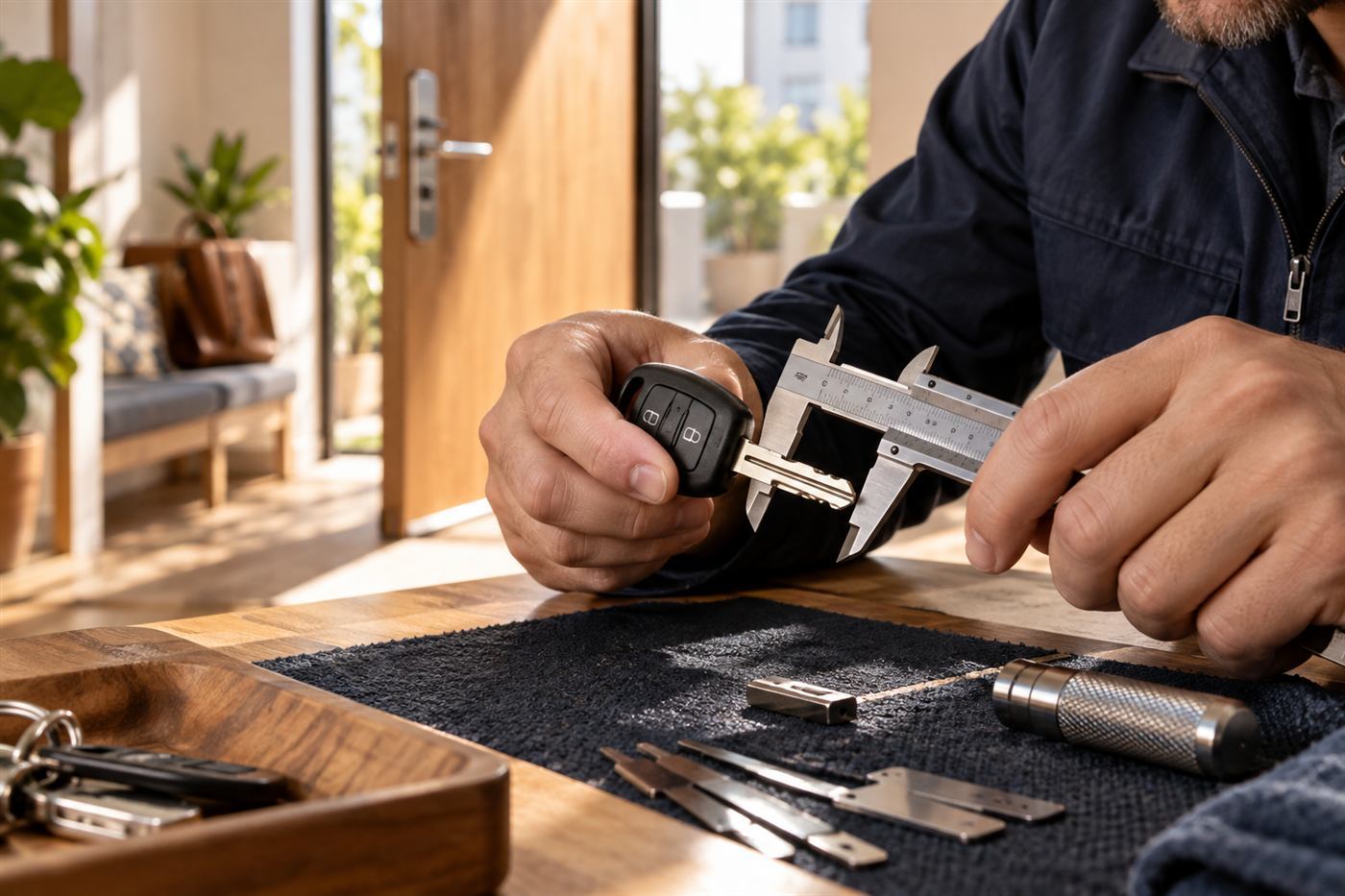
Why work vehicles are a different kind of job
A family car that loses its key is an inconvenience. A work truck that loses its key is a stopped business. The vehicle may carry tools, materials, ladders, and a crew waiting for a ride. A delay at eight in the morning can push back every appointment for the day. That changes the way you should think about keys, spares and who holds them.
Work vehicles also tend to be used harder. Keys are dropped in mud, left in pockets of dirty clothing, hung on heavy rings and carried by several people over a long period. They wear out faster than a commuter's key. Plastic heads crack, blades bend, and fobs get soaked or crushed. A key that fails is more likely than on a family car, and the need for a spare is stronger.
Many trucks and vans also have extra locks. There may be a cap or tonneau cover, a ladder rack lock, a toolbox, a rear cargo door lock, or an interior partition. Some use the same key as the ignition, and others use separate keys. Knowing which locks your vehicle has helps a technician plan the right visit.
Keys on trucks, vans and pickups
Pickups, cargo vans, box trucks and step vans come with a wide range of key types. Older models often use plain metal keys, easy to cut but with no electronic security. Many newer models use transponder keys, flip keys or smart keys with push-button start, much like passenger cars. Heavier duty trucks may use their own systems, with different rules.
The key type depends on make, model and year, and sometimes on the trim level. A work truck stripped to basics may have a simpler key than a luxury pickup from the same manufacturer. Fleet specification vehicles can differ from retail ones. The technician needs the exact details to bring the right blank and tools, and may ask for a photo of the key.
Our pages on transponder key programming and smart key replacement explain how these systems work. For a large or unusual vehicle, tell the dispatcher before the visit, since some trucks need equipment or access that a standard mobile technician may not carry.
- Plain keys on older or basic work trucks, quick to cut.
- Transponder keys on most modern pickups and vans.
- Flip keys and remote head keys on mid range models.
- Smart keys with push-button start on newer, higher trim vehicles.
- Different or additional keys for toolboxes, racks and cargo doors.
Ladder racks, toolboxes and cargo locks
Work vehicles often carry equipment that has its own locks. A ladder rack may have locking clamps that stop thieves taking ladders. A toolbox in the bed or on the side may use a key that is different from the ignition. A cargo van may have a locking partition between the cab and the load area, and a separate lock on the rear doors.
If you lose the key to one of these, the problem is smaller than a lost ignition key, but it can still stop work. A locked toolbox with essential tools inside is a serious problem on a job site. A technician can often open or re-key such locks and cut new keys, depending on the type. Describe the lock, the brand if it is marked, and the vehicle.
Consider matching locks across the vehicle where possible. Some owners have all locks changed to work on a single key, which reduces the ring of keys and the chance of losing one. That is a sensible step for a business with several vehicles. Our page on lock rekey service explains how re-keying works.
Planning around downtime
Because downtime is costly, planning matters. Keep spare keys for every work vehicle, in a safe place separate from the vehicle. A key lockbox at the office, a key cabinet with a sign out sheet, or a trusted manager who holds spares all work. The aim is that a lost key never stops a crew for more than the time it takes to fetch a spare.
If a key is lost and no spare exists, call as soon as you know. Give the technician the details of the vehicle, where it is, and how urgent the job is. Mention that a crew is waiting, since the technician may be able to plan the visit with that in mind. We do not promise arrival windows, but the dispatcher will explain what to expect when you call.
While you wait, think about how to keep work moving. Can the crew use another vehicle? Can tools be moved? Can the first job be rescheduled? A quick plan reduces the pressure on the technician and on you. Our page on fleet locksmith service explains how a business with several vehicles can organise this ahead of time.
Who can authorise a key for a work vehicle
A technician must confirm that the person asking is allowed to have a key made. For a personal truck, the registered owner is simple. For a business vehicle, the registration may be in the name of the company, a lessor or a lender. The person calling may be an employee, a manager or a bookkeeper, and the technician needs a way to confirm authority.
Typical items include photo identification, the registration or title, and a letter or document from the company confirming that the person may authorise key work. A call from the owner or an authorised manager can sometimes help. If the vehicle is leased or financed, the lessor may need to be told, and some leases have conditions about keys.
Our guide on leased and financed car keys explains what to check, and our guide on proof of ownership for a car key describes what is usually accepted. Have these ready before the technician arrives, because missing paperwork is the most common reason a work vehicle visit takes longer than planned.
Spare keys, key control and employee turnover
A business that gives keys to several workers needs a plan for control. Who holds each key? Who has copies? What happens when a worker leaves? A key that walks away with a former employee is a security risk, and with chip keys, the old key can be removed from the vehicle's memory so it no longer starts the engine.
Keep a simple record. Note which keys exist for each vehicle, who holds them, and when they were issued. A basic sign out sheet works. When an employee leaves, collect the key, and if it is not returned, ask a technician about removing it from the vehicle. Our guide on business owner key control basics covers the principles.
Avoid giving more keys than needed. Each additional key is another thing to lose. A shared key kept at the office, signed out for each use, is often better than a copy per worker. For smaller operations, a spare in a lockbox and a main key with the driver is usually enough.
What a technician checks on arrival
The technician will confirm the vehicle details and your authority, then inspect the ignition and locks. They will check the key type, the blank needed and the method of programming. If the vehicle has extra locks, they may ask which ones you want the key to operate, and test each. They will also check the vehicle battery, since a weak battery can disrupt programming.
Work vehicles often have aftermarket additions, such as remote starters, tracking devices, alarms and lighting. Some of these are wired into the ignition area and can interfere with key programming. Tell the technician about any such equipment, and if you have paperwork from the installer, bring it. Our page on remote start fob programming explains how add-ons interact with key systems.
After the work, test everything. Start the engine several times, operate the locks, and try any remote functions. Check that the key works in the toolbox, the rack and the cargo door if those were part of the job. It is easier to fix a small issue while the technician is there than to find it on the next job.
Common scenarios on the job
A contractor leaves the only key in the pocket of a jacket that stays on a job site across town. The truck is parked at the shop and a crew is waiting. With identification and the vehicle registration, a technician can program a new key to the truck while the crew uses a second vehicle. The contractor then asks for a spare, to keep at the office.
A delivery driver loses a fob in a parking lot. The van is a late model with push-button start. The fleet manager calls, confirms authority with a letter, and the technician explains that a smart key takes longer to program. The manager decides to have two spares made while the equipment is connected, and keeps one in a lockbox.
A landscaper breaks the blade of an ignition key in a pickup after years of heavy ring use. The broken piece is stuck in the ignition. Our page on broken key extraction explains how the fragment is removed, and a new key is then cut and programmed. The owner replaces the heavy ring with a light one to protect the new key.
Used trucks, auction vehicles and inherited keys
Many small businesses buy used trucks and vans, often from auctions or private sellers, and these vehicles frequently arrive with one key or none at all. The previous owner may also hold copies. Before putting the vehicle to work, have a technician check how many keys the vehicle recognises and remove any you cannot account for.
Auction vehicles can have odd histories. They may have been fleet vehicles with unusual key arrangements, or they may have aftermarket systems from earlier owners. Tell the technician what you know, and bring any paperwork that came with the sale. A clear picture of the vehicle's key system makes the visit faster and the result more reliable.
If the vehicle came with no key at all, the job follows the all keys lost route, with proof of ownership and vehicle data. Our page on all keys lost car key service explains the process. Have the bill of sale, title or registration in your name before calling, since a technician cannot make a key for a vehicle without evidence that it is yours.
Heavy use, weather and key wear on the job
Work vehicles live a hard life, and their keys suffer. Mud, dust, rain and sweat get into fobs and key heads. A key dropped from a ladder or a truck bed lands on concrete. A heavy ring with tools, tags and other keys drags on the ignition cylinder, wearing both the key and the lock. Over time, small signs appear: a key that sticks, a fob that needs several presses, a case with a hairline crack.
Treat those signs as a prompt to act. A key that is failing will fail at the worst moment, and on a work truck that moment is usually before the day's first job. Replace the key or add a spare before it fails completely. Our page on worn car key symptoms describes what to look for, and our page on key fob repair and battery help explains when a repair is enough.
A few habits reduce wear. Use a light ring and keep work keys on a separate clip, so the ignition key carries little weight. Use a rugged cover on a fob, as long as it does not press the buttons. Keep keys out of wet pockets where possible. And store spare keys somewhere dry and secure, away from the job site, so they are not exposed to the same damage as the main key.
Questions to ask before booking key service for a work vehicle
A work vehicle visit goes best when you know what to ask. Can the technician cut and program the key at the vehicle? Is the blank for this vehicle on hand, or must it be ordered? Does the vehicle need dealership level access, and if so, can that be arranged? Will the technician test every lock the key is meant to operate, including the toolbox and the rack?
Ask also about the charges. A service call charge applies and is explained before dispatch, and the quote is given by phone. A complicated vehicle may need an on-site visit before a final quote. A reputable company is open about this. Our guide on questions to ask a locksmith before dispatch lists more, and our guide on how to verify a locksmith shows what to check when the technician arrives.
Finally, ask about spares. If the technician is already programming a key, adding a second is usually a small extra step compared with another visit. For a business, that spare is often the simplest protection against a stopped crew. Decide before the call how many spares you want, and who will hold them.
Call with your vehicle details
When you call, give the make, model and year, and describe the vehicle: pickup, cargo van, box truck or other. Say what has been lost and what you want, whether a spare, a replacement or a lock key. Have the vehicle identification number, registration and identification ready, and say who is authorising the work.
Quotes are given by phone only. A service call charge is explained before dispatch, and a complicated vehicle may need an on-site visit before a final quote is given. We do not promise arrival windows, but the dispatcher will tell you what to expect and what is needed.
Call when you are ready, and we will talk through your vehicle and how to keep your work moving.
Questions people ask
Can a locksmith make keys for work trucks and vans?
In most cases, yes. Pickups and vans use plain, transponder, flip or smart keys, much like passenger cars, and a mobile technician can usually cut and program them at the vehicle. Heavy duty or unusual trucks may need different equipment. Describe the vehicle when you call, and the dispatcher can tell you what to expect.
What proof is needed for a company vehicle?
Usually photo identification, the registration or title, and a way to confirm that you may authorise key work, such as a letter from the company or a call from the owner. If the vehicle is leased or financed, the lessor may need to be informed. Have paperwork ready, since missing documents are the main cause of delays.
Can my toolbox or ladder rack lock be fixed too?
Often, yes. A technician can sometimes open, re-key or replace these locks and cut new keys. Describe the lock, any brand marked on it, and the vehicle. Many owners choose to have all locks on a vehicle matched to one key to simplify the ring and reduce the chance of losing one.
How can I keep downtime short when a key is lost?
Keep spare keys for every work vehicle in a safe place separate from the vehicle, such as a lockbox at the office. If a key is lost and no spare exists, call as soon as you know and give the vehicle details and location. Plan to move the crew or tools to another vehicle in the meantime.
Can a former employee's key be blocked from starting the vehicle?
On many vehicles with chip keys, a technician can remove a missing key from the vehicle's memory during programming, so it no longer starts the engine. Not every model supports this. Ask when you book, and collect keys from workers who leave, so fewer unaccounted keys exist.
Do you promise an arrival time for a work truck?
No. Arrival depends on location, demand and the job. The dispatcher will explain what to expect when you call and tell you what is needed. Quotes are given only by phone, a service call charge is explained before dispatch, and a complicated vehicle may need an on-site visit before a final quote is given.
Describe the situation by phone and we will tell you what the job involves. Quotes are given by phone. Jobs that cannot be quoted without seeing them need a technician on site, and the service call charge is explained on the phone before anyone is dispatched.
(844) 715-0800Related pages
Written by Claude (AI) (AI) for 24/7 Locksmith USA.