
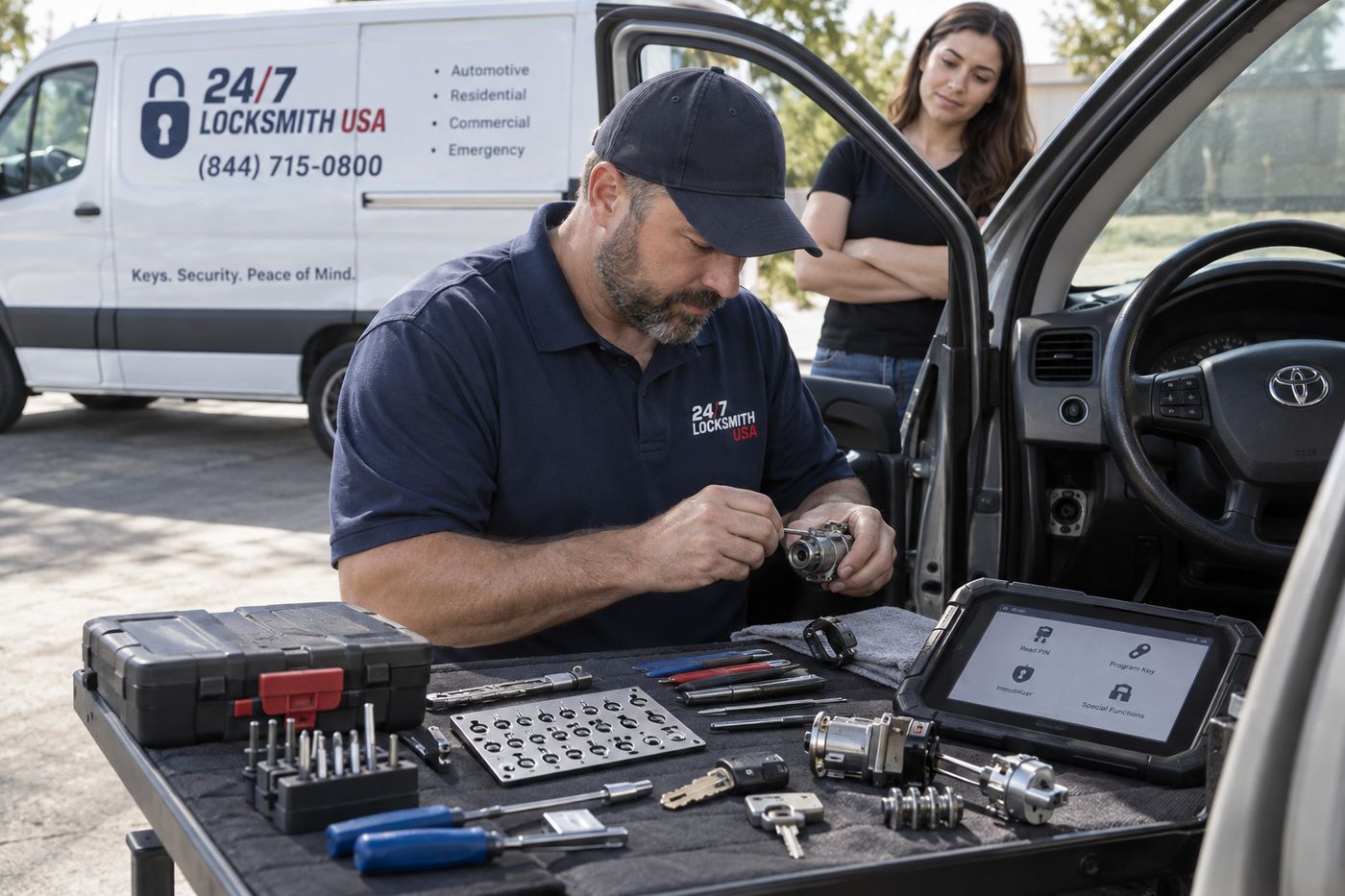
Car keys, lockouts, ignitions and rekeys across Naperville and the surrounding Illinois metro. Call (844) 926-0400.
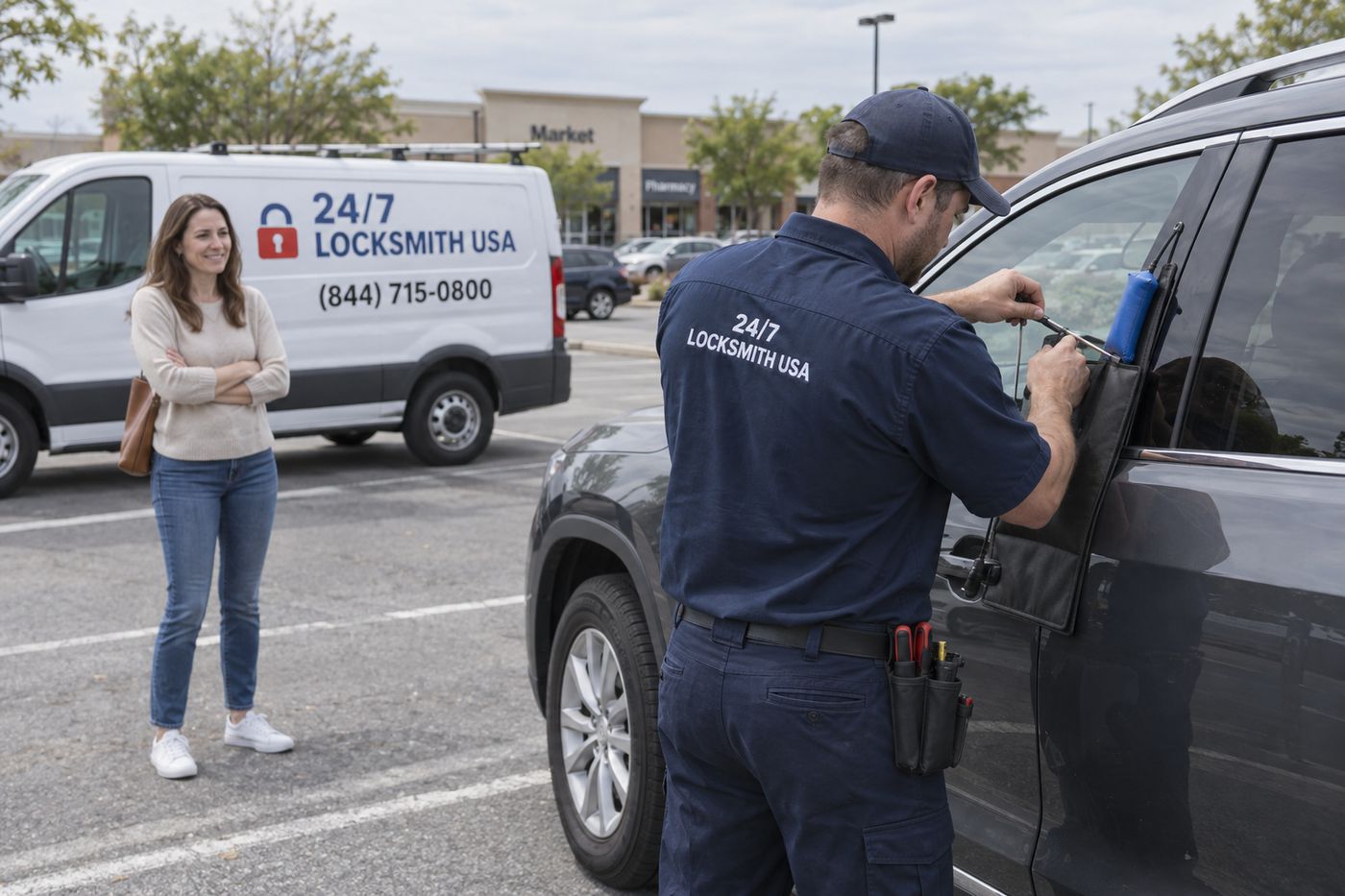
24/7 Locksmith USA covers Naperville for automotive, residential and commercial lock work. Lost car keys and fobs, cars and homes opened without damage, broken keys pulled out of ignitions and cylinders, locks rekeyed after a move, and commercial hardware for storefronts and offices. Everything is done at your address. Call (844) 926-0400.
People searching 247 locksmith naperville land here for the same reason everyone does: they want one number, a real technician, and a price agreed before anybody drives out. That is how we run it. You describe the situation on the phone, you get a number, and if what we find on site is different from what was described you hear the revised figure before any work starts.
What We Handle in Naperville
Naperville ZIP codes covered: 60540, 60563, 60564, 60565
- Car key replacement, cut and programmed on site from the VIN and proof of ownership, including push-to-start systems
- Key fob programming, added to a vehicle that still has a working key, or programmed from scratch when every key is gone
- Car and home lockouts, opened without damage to the door, the seal or the latch
- Broken key extraction, blades snapped in ignitions, door locks and deadbolts
- Ignition repair, keys that will not turn, cylinders that turn but will not start
- Rekeying, after a move, a tenant change, a breakup or a contractor handover
- Commercial hardware, storefronts, offices, mailboxes, file cabinets and master key systems
What Naperville Actually Calls About
Newer, larger homes with smart locks and keypad entries, plus a steady run of car key work in commuter parking.
Illinois Conditions
Cold is the variable that separates Illinois from the sunbelt. A marginal ignition cylinder, a worn key or a dying fob battery will run all summer and fail on the first hard freeze, which is why January is the busiest month.
Arrival Time, Honestly
Nobody can hand you an honest countdown before they know where you are sitting in DuPage County traffic. Naperville pulls calls from both sides of the Metra line and out along the I-88 corridor, and the drive from one side of town to the other at rush hour is nothing like the drive at midnight. Give us your cross streets and we will tell you a real window based on where the nearest technician actually is, not a number picked to keep you from dialing a competitor. If the wait looks longer than it should, we tell you that up front instead of letting you sit wondering.
What to Have Ready
For a vehicle: your driver licence or photo ID and something showing you own the car, registration, insurance card or title. Photograph both now and keep them on your phone; it saves twenty minutes on the roadside. For a home or business: photo ID with the address, or a lease, or another way of showing the property is yours. A legitimate locksmith will always ask. One that does not is a warning sign.
How to Tell a Real Locksmith From a Scam Listing
The pattern is consistent: a listing with no verifiable address, a phone quote of fifteen or nineteen dollars, an unmarked car, and a technician who says the lock has to be drilled. Most residential and automotive locks do not need drilling. Ask for the company name, get an estimate before dispatch, and confirm the technician is insured. Read how to spot a fake locksmith before you call anyone.
Other Cities We Cover
Chicago, ILAurora, ILJoliet, ILAll of IllinoisFull coverage
Start with the cold: what winter does to locks and keys
Anyone who has lived through an Illinois winter knows how much metal and plastic change when the temperature drops. Lock cylinders stiffen, keys feel brittle in gloved fingers, and a car door that opened fine yesterday may suddenly refuse to give. Moisture is usually the culprit. Water gets into a lock on a mild afternoon, then freezes overnight, and in the morning the key will not enter or will not turn.
This page is general guidance for people in Naperville and the surrounding suburbs. It does not describe particular neighborhoods, streets or developments, and it makes no claim that the company has worked at any specific address. It offers the sort of practical advice that applies to most households in a cold climate with lots of driveways and attached garages.
The most important rule is simple: do not force a key that will not turn. A key bent or snapped inside a frozen lock turns a small nuisance into a repair job. Stop, step back, and think. If the lock is on a car, is there a second door that works? If it is on your house, is there another entrance you control? Calm choices beat strength in the cold.
It also helps to carry the right small things in winter. A soft cloth to wipe a key dry, a pair of gloves thin enough to feel the key, and a charged phone make an enormous difference when something goes wrong in a parking lot at dusk. Keep a hat and a warm layer in the car as well, since waiting for help in freezing air is far more unpleasant if you are underdressed.
Frozen locks and doors that stick when it is freezing
A frozen lock is not always a broken one. Often the mechanism is sound but coated with ice or stiffened by thickened lubricant. People reach for hot water, and that is usually a mistake, because the water refreezes in the cylinder and can crack paint or glass around it. Likewise, pouring antifreeze or oil into a lock without knowing what the product is can leave residue that attracts dirt for months.
Our page on a door lock sticking in the cold explains the typical causes and what is sensible to try, such as warming the area gently and keeping the key clean and dry. It also explains when to stop trying and ask for help, since a stubborn lock may have a worn part rather than a bit of ice.
Rubber door seals can freeze to the frame on cars, and pulling hard on the handle may tear the seal or damage the handle linkage. If the door seems stuck rather than locked, press gently on the door near the latch before pulling, which can break a thin ice bond. If you smell fuel, hear something unusual or have a child inside, treat it as an emergency and call for help immediately.
Fobs and push button starts have their own winter quirks. A weak battery in a key fob may still unlock the doors from a few feet away yet fail to start the car, or the dashboard may display a message that the key is not detected. Hold the fob close to the start button or the spot the manual suggests, and replace the battery before the weather turns cold, rather than waiting for a failure in a snowy driveway.
Planning ahead so winter lockouts happen less often
A few habits cut the number of winter calls dramatically. Keep a spare key in a safe place that is not on the car, ideally inside your home where everyone who drives knows to look. Do not leave the engine running while you scrape the windshield unless you have an alternative way in, because a running car with the doors shut and the keys inside is one of the most common lockout stories. Check your pockets before you close the door, every time, even when you are tired or carrying bags.
Our guide on winter lockout prevention collects practical steps like these in one list, including simple lubricant advice for door locks and reminders about fob batteries, which lose strength in cold weather.
If you do end up locked out with the engine running, read about locked keys in a running car. The key thing to remember is that a running engine in a closed garage is dangerous, while a running engine on a driveway is mainly an inconvenience. Describe the setting honestly to the dispatcher, including where the car is parked and whether anyone is waiting in it, so that the right steps can be taken.
Lots, commuter parking and the car left all day
Naperville is a commuter suburb in the broad sense that many people drive to a station, an office park or a shopping area and leave a car for hours. A lockout in that situation has a particular shape. You may be late, out of sight of your own vehicle, or standing in a wide lot with wind and snow around you. The person on the phone needs a clear description of where the car is, such as a section of the lot, a nearby entrance or a building name.
Come prepared with the make, model and year, and be ready to show the registration and a government photo ID when the technician arrives. Ownership or authority is checked before the car is opened, and in a public lot it helps to stand with the vehicle so there is no confusion about whose it is.
The page on car lockout service describes how the process works and what the technician needs from you. If the keys are not locked inside but missing entirely, the situation is different and may call for a new key to be made from the vehicle identification number. Either way, decide whether you can safely wait in the cold, and if you cannot, find a warm indoor spot and tell the dispatcher where to meet you.
If a family member is the one stranded, stay on the phone with them. A teenager or an older relative may not describe the surroundings well, and a calm voice that asks for a sign, a nearby entrance or the color of a building can make all the difference. Ask them to stay in a visible, well lit place and not to accept offers of help from people they do not know.
Teen drivers, shared cars and the problem of spare keys
Households with several drivers lose keys more often than single person ones. A teenager who just started driving, a spouse who borrows the car, and a parent who keeps a spare in a coat pocket together create plenty of chances for a key to vanish. The fix is not to scold anyone but to build a simple system that works even when someone forgets.
A properly made spare is part of that system. Many modern keys cannot simply be copied at a hardware counter, because the chip inside must be matched to the car. A locksmith can create a spare from the vehicle identification number with proof of ownership, as described on the spare car key programming page. It costs time and money up front, but it is far calmer than an all keys lost situation, where nothing can be copied and everything must be created from scratch.
Decide where spares live. A spare in a kitchen drawer is fine. A spare in a magnet box under the bumper is a poor idea, since it can fall off or be found by someone else. Teach everyone in the house what to do if a key is lost, including calling you first, staying with the car and not accepting help from strangers who appear offering a bargain fix.
Attached garages, entry doors and the deadbolt that matters
Many homes in the area have an attached garage with a door leading inside. That door is often the weakest link in a family's security, because people treat it as an interior door and leave it unlocked. It deserves a proper deadbolt, a solid frame and a lock that works smoothly in cold weather. Problems with the lock often begin with a door that has shifted slightly due to temperature, so that the bolt no longer lines up with the strike plate.
Our page on garage entry door lock problems lists common symptoms, from a bolt that catches to a handle that spins freely. It is useful to read before you call because it helps you describe what you see and feel. Do not attempt to adjust or repair the garage door opener, springs or cables, which store dangerous energy and need a trained technician.
If you are choosing new hardware, how to choose a deadbolt explains the main differences: single or double cylinder, the quality of the bolt, and the screws that secure the strike plate. Longer screws that reach the framing make a real difference when someone leans on the door. Ask the technician to check the frame at the same time as the lock, since even a strong bolt cannot help a weak door jamb.
Seasonal movement is worth watching. As a house swells in humid summer weather and shrinks again in dry winter air, a door can rub in one season and rattle in the next. If you notice a lock that works only when you lift the handle, or a bolt that only slides when the door is pulled toward you, treat that as a request from the door to be looked at before it fails completely.
Keypads and smart locks in newer homes
Newer homes in the suburbs increasingly use keypad locks, app controlled deadbolts and garage keypads. They are convenient, and they remove the worry about carrying a key. They also add things that can fail: batteries, wireless connections, apps that need updates and phones that run out of power. Cold weather is hard on batteries, so a smart lock that worked all summer may start misbehaving in January.
If you are thinking about installing one, see smart lock installation for what to consider. Choose a model that also has a physical key override, keep spare batteries on hand, and learn how to enter the home if the lock goes offline. A good installation also checks that the door is aligned, because a keypad lock cannot compensate for a bolt that drags.
If your smart lock is already misbehaving, our smart lock not working page walks through the usual causes in plain language. Start with the battery, then the alignment of the door, then the connection. Do not repeatedly reset the lock without knowing what it will erase, since you could lock yourself out of a code you cannot recover. When in doubt, describe the lock model on the phone.
Think about guests and service people as well. Many smart locks let you create temporary codes for a cleaner, a contractor or a visiting relative, and then delete them afterward. That is a real security advantage over handing out keys, provided you actually remember to remove the codes. Go over the list of active codes every few months and delete any that are no longer needed.
Buying a house: the first week checklist
The days after you take possession are the ideal time to deal with keys. You do not know how many copies of the old keys exist. Previous owners, real estate agents, contractors and neighbors may all have held one, and nothing about the lock tells you who. Rekeying the exterior doors is a sensible first step, and it costs less than replacing every lock in the house.
Walk around the property with a notebook. List every exterior door, the garage entry, any side gates, the shed, the mailbox and any storage area, and note which key opens which lock. The home security checklist for new homeowners covers these items and a few others, such as window locks and door frames. Do not forget the garage opener codes, which may also have been shared.
Finally, decide how many keys the household needs and who gets them. Give each person their own key rather than passing one set around, and store spares in a safe place indoors. If a lock is old, stiff or damaged, replacing it during the same visit saves a second trip. A technician can explain the options on the phone and tell you what information is needed before the visit.
Small businesses, offices and light industrial doors
Naperville has plenty of small businesses, from offices and clinics to workshops and retail units. Their locks need to handle heavy daily use. A commercial door may open several hundred times a day, and the hardware wears accordingly. Closers, push bars, cylinders and strikes all age, and a door that begins to drag or latch poorly is telling you something.
If a door is failing, it is better to deal with it before it locks you out at opening time. Commercial door hardware explains the main components and what a technician looks at during an inspection. Owners should also think about key control, such as who holds keys, how they are tracked and when the locks were last rekeyed after a staff change.
Remember that requirements for fire exits, accessibility and alarm systems differ by building and by jurisdiction. Do not assume that a lock change is allowed just because the hardware fits. Ask your landlord, your insurer or the local authority which rules apply to your space before ordering work, and give the technician that information when you call.
If you are an employee rather than an owner, report a failing lock to whoever manages the building instead of improvising. Wedging a door open with a mat or a box overnight is the sort of workaround that leaves a business exposed. A short, clear message describing which door, what it does and when it started helps the manager decide whether to call for service promptly.
What a good call and a good visit feel like
A reliable locksmith call is clear and unhurried. You describe the problem and the location, the dispatcher asks about the vehicle or the lock, and you are told how the service call charge works before anyone is sent. Quotes are given by phone, and the final work should match the discussion. Ownership or authority is confirmed before opening, rekeying or programming, which protects you as much as anyone.
To get the most out of the visit, read how to prepare for a locksmith visit. It explains what to have ready, from ID and registration to a clear path to the door, and it suggests simple ways to keep the visit short and calm, such as clearing the area and making sure pets are secured.
For more general background and nearby areas, the Illinois page gathers information for the state. Whichever place you are in, treat the call as a conversation rather than a transaction. Ask questions, listen to the answers and trust your instincts. A professional will welcome questions, explain each step and never pressure you into work you do not understand or need.
Common questions
What should I do when a car lock is frozen shut?
Do not force the key or pour hot water on the lock, since the water can refreeze and cause more damage. Try another door, gently press near the door edge to break a thin ice bond, and keep the key dry. If nothing works, call for help and describe exactly what the lock and door are doing.
Is it safe to leave a car running while I scrape ice?
It is risky if the doors lock automatically or if you might shut a door with the keys inside. Many winter lockouts start this way. If you must warm the car, keep the key or fob on you, and never run an engine inside a closed garage because exhaust gas is dangerous.
Can a locksmith make a spare key for my modern car?
In most cases yes. A spare is usually created from the VIN with proof of ownership, and the chip inside the key is matched to the car. This is less stressful than waiting until every key is lost, because an existing key makes the process simpler.
Do I need a new lock after buying a house?
Not always. Rekeying the exterior locks is often enough to make old keys useless while keeping the hardware. If the locks are worn, damaged or too basic, replacement may be better. A technician can look at the doors and explain the choices before you decide.
Why does my smart lock act up in cold weather?
Batteries weaken in the cold, and that can cause slow response, lost connections or false error messages. Replace the batteries first, check that the door is aligned so the bolt moves freely, and keep a physical key available. If problems continue, describe the lock model to a technician.
What proof will a locksmith ask me for?
Expect to show a government photo ID and something that ties you to the property or vehicle, such as a registration, a lease or a utility bill. This protects owners by making sure no stranger can open, rekey or program a key for something that does not belong to them.