
What we handle in Cape Coral.
One mobile team across Cape Coral, residential, automotive and commercial.
Marine & Dock Hardware
Corrosion-resistant cylinders and padlocks for boats, dock boxes and waterfront storage.
Historic & Period Hardware
Mortise locks and original hardware serviced rather than ripped out of a period door.
Impact Door & Storm Hardware
Multipoint locks and hardware on impact-rated doors adjusted, repaired or replaced.
Commercial Door Hardware
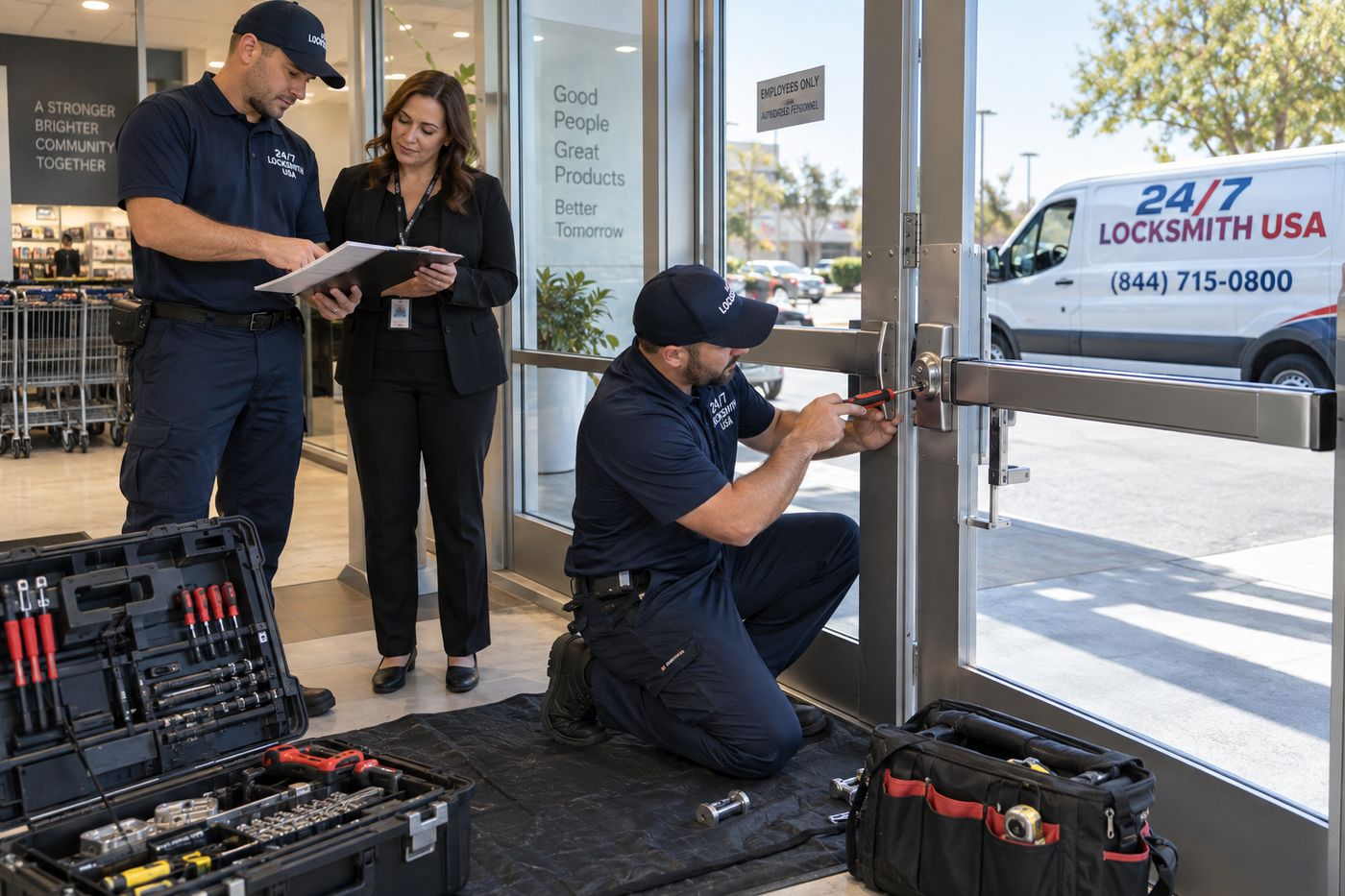
Storefront locks, exit devices, closers and mortise cylinders serviced or replaced.
High-Security Cylinders
Medeco and Mul-T-Lock cylinders for doors that need genuine key control rather than hardware-store pins.
Safe Opening & Servicing
Locked-out safes opened, and re-combinated where the model allows it.
Locks in Cape Coral: what actually goes wrong.
Cape Coral is a canal city - more than 400 miles of them - and Hurricane Ian showed what that means for hardware: Lee County's after-action report counts 24,585 damaged residential structures, 5,076 homes destroyed and severe property loss across the county, with mobile homes destroyed in North Cape Coral. Combined with the region's 90% morning relative humidity, waterfront and rear canal-side doors on this street grid see salt exposure that inland Florida hardware does not. Cape Coral was founded in 1957 by the Rosen brothers' Gulf American Land Corporation, its first four homes were completed in May 1958 and it incorporated in 1970. Near the water, standard plated cylinders corrode from the inside out; solid brass or marine-grade hardware lasts several times longer for a small difference in price. Cape Coral is built around more than 400 miles of canals, so most of the city is close to brackish or salt water; FEMA documents salt-driven corrosion of metal hardware declining over the first 300 to 3,000 feet from shore but measurable 5 to 10 miles inland. That combination attacks lock cylinders, deadbolt bolts, strike screws and electronic access hardware, which is what ANSI/BHMA A156.18 salt-spray finish testing is meant to screen for. Census 2000 recorded the 1980s as the dominant build decade at 39.8% of units, with 19.8% in the 1970s, 13.4% in 1990-1994 and only 1.3% built before 1960; the city's five-year consolidated plan (2011-2015 CHAS data) reports 42% of owner-occupied units built in 2000 or later and 41% built 1980-1999. The stock is therefore overwhelmingly post-1970 single-family houses on platted canal lots rather than historic housing, so hardware is mass-market residential rather than period-specific.
What lock trouble looks like in a waterside city
Cape Coral has a lot of single family homes, many with sliding glass doors that open toward patios, pools or backyards. That style of living shapes the lock calls people make. Sliding door latches wear out, garage entry doors go unlocked, and keys get dropped in places where a pool, a canal or a patch of wet grass is nearby.
Humidity and salt in the air are hard on hardware. Metal parts corrode, finishes dull, and screws loosen as wood swells and shrinks with the seasons. A lock that felt solid when you moved in may start to wobble, and a key that once turned smoothly may begin to stick. These are slow changes that sneak up on you.
This page is general guidance for people in Cape Coral. It does not describe particular streets or neighborhoods, and it makes no claims about local history or about any company having worked in the area. It is here to help you understand common situations and prepare for a phone call.
Locked out of a single family home
When you are locked out of a house, your options depend on how the home is set up. If you have a keypad or smart lock, check whether a code, an app or a spare key hidden with a trusted person can open the door. If you have a garage door opener keypad, remember that the entry door inside the garage may be locked too.
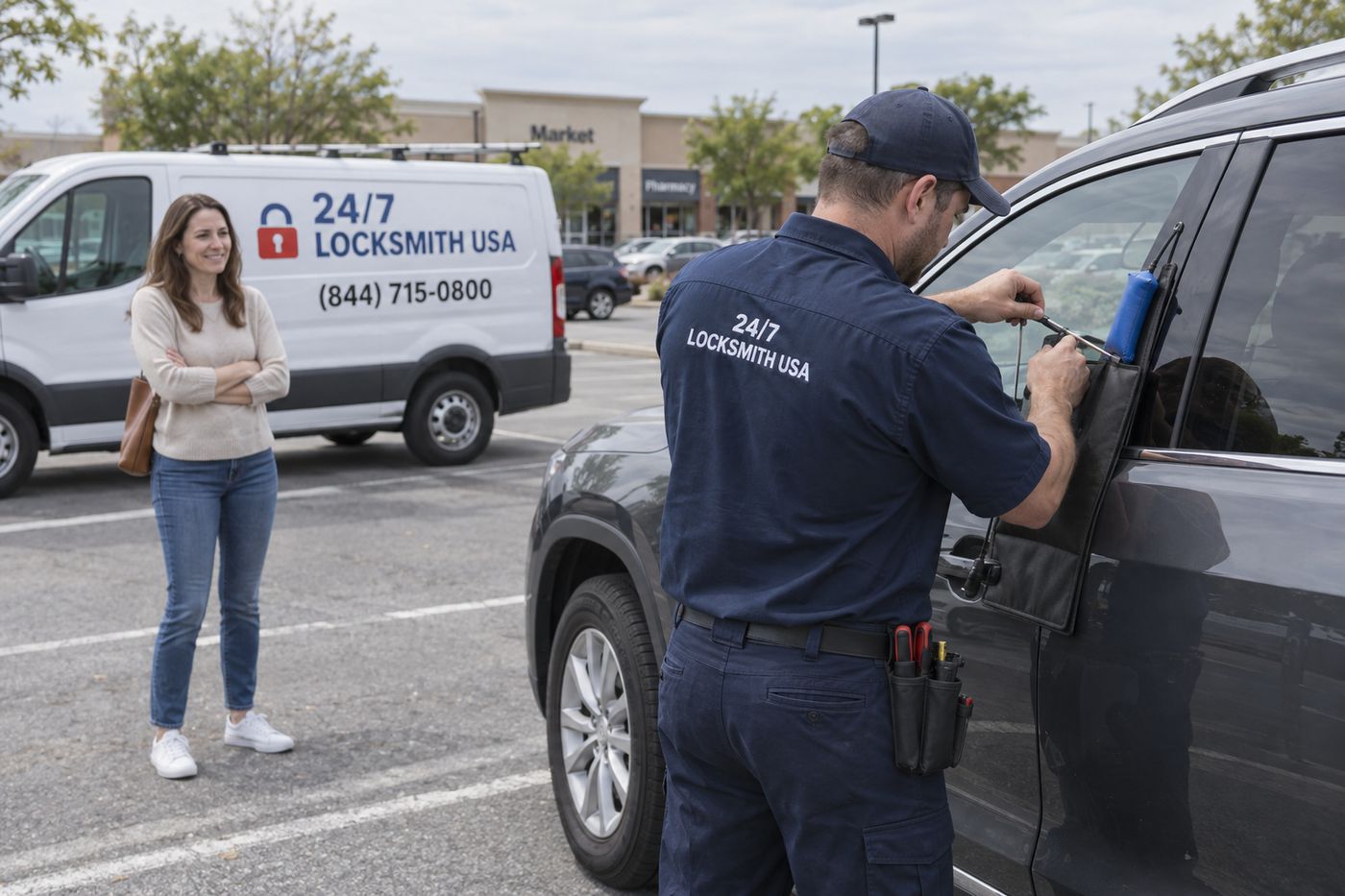
Resist the urge to climb in through a window or break the glass of a slider. Impact resistant or tempered glass can be costly to replace, and you can be hurt. A professional can usually open a residential door without damage. Before they do, they will ask you to show that you live there, such as a photo ID with a matching address or a utility bill.
If you are away from home and a relative or house sitter is locked out, the same rule applies, and the technician must be able to confirm that the person has the right to enter. Call from the location if you can, or have the owner call and explain the arrangement. Our page about residential locksmith service covers the usual work.
- Check whether a keypad code, app or hidden spare with a trusted person can open the door.
- Do not climb through windows or break the glass of a slider.
- Have a photo ID and proof of address ready.
- Tell the dispatcher about the lock type and whether a deadbolt is engaged.
Sliding doors and garage entries
Sliding glass doors are among the most common weak points in a house. The built in latch is often a simple hook that can be lifted or jarred loose, and the track can collect dirt that keeps the door from closing fully. A security bar or a pin in the track adds protection without complicated work, and cleaning the track keeps the door moving smoothly.
The door between a garage and the house is often overlooked. Many people leave it unlocked because they pass through it all day, but it is an entrance like any other. If it has only a basic knob lock, consider adding a deadbolt. Our page on deadbolt installation explains what the work involves.
As for the overhead garage door itself, leave its springs, cables and brackets to a trained technician, because they hold dangerous tension. A lock specialist can help with the entry door and its hardware, but should not be asked to adjust garage door parts unless that is their trade. If something seems wrong with the overhead door, keep clear of it and call the right professional.
Rekeying, replacing and what to choose
When a key is lost, or you buy a home that has seen many owners, rekeying is often the sensible choice. It changes the inside of the lock so the old keys no longer work, while the hardware stays on the door. This is usually less work and less expense than replacing all the locks, and you keep the look you already have.
Replacement is the better option when the lock is corroded, damaged, loose or too weak for the door. Salt air can eat through finishes, and a lock that has turned green or crusty at the edges has little life left. If your lock wobbles in the door, our page on a lock that feels loose or wobbly explains what may be happening.
To understand how often to do either, read the guide on how often to rekey or change locks. There is no single schedule. The right time is after a move, after a key goes missing, after a tenant or contractor leaves, or when the hardware shows its age. Tell the dispatcher what has happened and ask for advice.
Another point worth knowing is that rekeying can also unify your keys. If you carry separate keys for the front door, the back door, the garage entry and a shed, a technician can often key them alike so that one key does everything. That convenience comes with a tradeoff, because losing that key affects every lock, so weigh it against your habits.
Smart locks and keypads in a damp climate
Electronic locks suit a household where several people come and go, or where a rental or house sitter needs temporary access. They also bring pitfalls. Batteries die, circuit boards dislike moisture, and a lock that relies entirely on a phone can leave you stuck if the phone is lost or discharged.
Choose a model with a backup key or an external power contact, and keep that key where you can find it. Change batteries on a schedule rather than waiting for a warning. After a storm or a long power outage, test the lock before you rely on it. If it behaves strangely, ask a technician to check it.
Our page on smart lock installation describes how a new lock is fitted. If you rent out your home, remember that codes need to be changed between guests, otherwise old codes continue to work. A simple log of who has which code keeps things orderly.
Think about the whole system too. A smart lock on a weak door is still on a weak door, and a bright keypad draws attention to an entrance that might otherwise go unnoticed. A technician can look at the frame, the strike and the hinges and tell you whether the door is strong enough to deserve an upgrade, or whether reinforcement should come first.
Car keys, fobs and wet pockets
Life near the water means keys get wet. A fob dropped in a canal, a pool or the ocean can corrode within days, and salt water is especially unkind. If your fob gets wet, do not press its buttons. Remove the battery if possible, dry the outside and leave it in a dry spot away from heat. Even if it starts working again, have it checked.
If a car key is lost or broken, a technician can often cut and program a replacement when you can prove the car is yours. Photo ID and a registration or title are the usual documents, and the vehicle identification number is required for cutting and programming. Our page on car lockout service covers the case of a locked car with the key inside.
Think about a spare key before you need one. If you boat, fish or walk the beach often, keep a spare somewhere dry and away from the water, not in a magnet box on the bumper. A trusted neighbor or a secure spot at home is better. Test the spare once in a while to make sure the battery and programming are fine.
If you have no spare at all and the key is lost, the job is a replacement from scratch, which takes more steps than a copy. The technician cuts a key to the vehicle code and programs it to the car. Tell the dispatcher the make, model and year, and have the vehicle identification number ready, so that the quote is based on facts rather than guesses.
Trailers, boats and storage
Trailers, boat hitches, storage sheds and toolboxes all use locks, and many are exposed to weather. Low grade padlocks left outside seize up within a season, and cut keys for hitch locks are easy to lose. If a trailer lock is stuck or the key is gone, a technician may help, subject to proof that you own the item.
Our page on RV and trailer locks describes the range of work. Be ready to explain what kind of lock it is, where it sits and what has gone wrong. A photo of the lock helps if you can send one or describe it well.
If the lock is on equipment you use for work, such as a toolbox on a truck or a trailer with tools inside, explain that, because the urgency and the tools needed may differ. Keep any receipts or serial numbers, which help show that the item is yours.
Do not hammer, drill or pry a stuck lock yourself, because you may damage the item it protects. Also think about corrosion prevention. A lock cover, a graphite lubricant suited to locks and an occasional check keep exposed hardware working longer.
Mailboxes, cabinets and small locks
Not every lock call concerns a door. Mailbox locks, cabinet locks, desk locks and filing cabinet locks all fail now and then, and the problem is usually a lost key or a worn cylinder. The fix is often modest, but the person asking must still show they have authority over the item.
Community mailbox units are managed by the postal service or the property, and you should not tamper with them. For a private mailbox or cabinet on your own property, a technician can often rekey or replace the cylinder. Our page on mailbox and cabinet locks explains the details.
If you manage a home office or a workshop, think about what is stored in locked cabinets and who has keys. A small log of keys and holders prevents confusion, and a spare stored securely away from the cabinet itself helps if the main key is lost.
Be honest on the phone about what the lock protects. A technician is more comfortable helping when the request is clear and the ownership is plain, and may politely decline if something seems off. That caution is a good sign, since it shows the company takes the ownership check seriously.
Preparing for storm season
The annual storm season is a reminder to check your locks and keys. Doors swell, shutters need to be latched, and in a hurry it is easy to leave a key behind. Before the season, test every lock, make sure each household member has a key and place a spare with someone outside your home.
Photograph your registration, insurance and ID so the information is safe if papers are lost. Our guide on lock and key preparation for hurricane season includes a checklist. If you leave town, lock up carefully and write down where the car keys are.
After a storm, inspect your locks before you trust them. A door that was forced, flooded or jammed may not secure properly. Photograph any damage for your insurer and have a technician look at the hardware. Do not assume that a lock which still turns is still secure.
When you return to a house after an evacuation, walk around it first. Look at the doors, the garage entry and any windows, and note anything out of place. If a door was left open or a lock seems damaged, do not enter until you are sure it is safe, and consider asking the authorities to check. Your safety matters more than any belongings inside.
Seasonal residents and rental homes
Many homes here are occupied only part of the year, or are rented out. That brings special lock needs. A home that sits empty for months should have locks that are in good order, with a spare key held by someone trustworthy. Check them before you leave and after you return.
Owners of rental properties should rekey between tenants or guests. It is routine and prudent, and it ends the question of who still has a key. A written log of keys and codes, updated each time, saves headaches. If you manage several properties, ask about keying them alike to reduce the bunch of keys you must carry.
Property managers and landlords should check their lease and management agreements for requirements. Rules about lock changes and notice differ, so ask the right party rather than guessing. A technician can do the work, but only you and your documents can say what is allowed.
Finally, think about training the people who use your property. Guests and tenants should know how to lock a door correctly, how to use a keypad and who to call if something fails. A short sheet of instructions left on the counter prevents many small emergencies and helps keep the locks in good working order for longer.
Nearby cities and the Florida overview
Cape Coral sits close to other cities that residents visit often. If you are in Fort Myers or Naples, the guidance on those pages applies in similar ways.
For a wider look, see the Florida state page. Rules for rentals, associations, vehicles and permits vary, and you should ask the proper office, your association or your insurer about anything specific to your case.
When you call, have your location, the type of lock or vehicle and your ID ready. Describe what happened in order, ask for a quote and make sure the service call charge is explained before anyone is dispatched.
It helps to remember that you are in charge of the conversation. You may ask the dispatcher to repeat anything, to explain a term you do not know, or to wait while you find a document. A calm, unhurried exchange almost always leads to a better outcome than a hurried one, and any company worth hiring will understand that.
Common questions
What proof do I need if I am locked out of my house?
A photo ID plus something connecting you to the address, such as a utility bill, mail or a lease, is the usual check. The point is to be sure the person asking lives there. If you are acting for the owner, have the owner explain the arrangement when the call is placed.
Should I rekey or replace the locks after buying a house?
Rekeying is often enough when the hardware is in good shape, because it makes old keys useless while keeping the same locks. If locks are corroded, loose or weak, replacement is better. A technician can look at each exterior door and explain what fits.
My sliding door will not stay locked. What can be done?
Sliding door latches wear out and tracks fill with grit. Clean the track first and check that the door closes fully. If the latch still fails, a technician can replace it or suggest a secondary lock. Do not force the door, since the glass is costly to replace.
What if my car fob fell into water?
Do not press any buttons. Remove the battery if you can, dry the outside gently and let it sit somewhere dry and not hot. Salt water leaves residue, so have the fob checked even if it seems fine. A replacement can often be programmed to the car.
Can a locksmith help with a trailer or boat lock?
In many cases yes, if you can show that the item belongs to you. Explain what type of lock it is and what happened. Some hitch locks and cabinet locks can be rekeyed or replaced. A photo of the lock helps the dispatcher understand the job.
How does the quote work?
A quote is given by phone based on the lock or vehicle, the work involved and the location. The service call charge is explained before dispatch. Details found on site can change the job, so ask what might affect the number and get that answer before agreeing to proceed.