
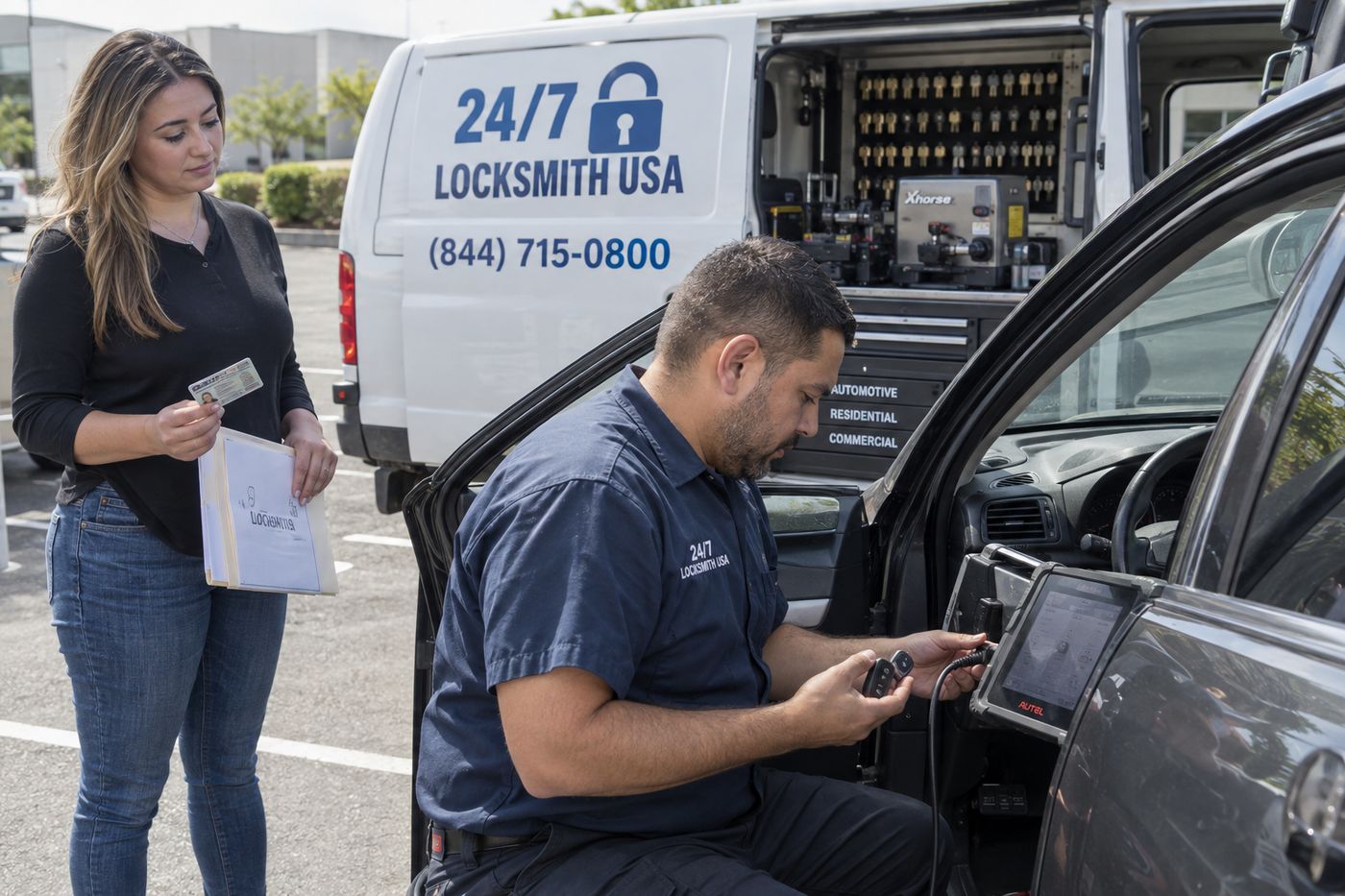
Built for the way Memphis actually drives.
One technician, one visit, and the tooling to originate a key for almost anything parked in Shelby County.
Lost Car Key Replacement
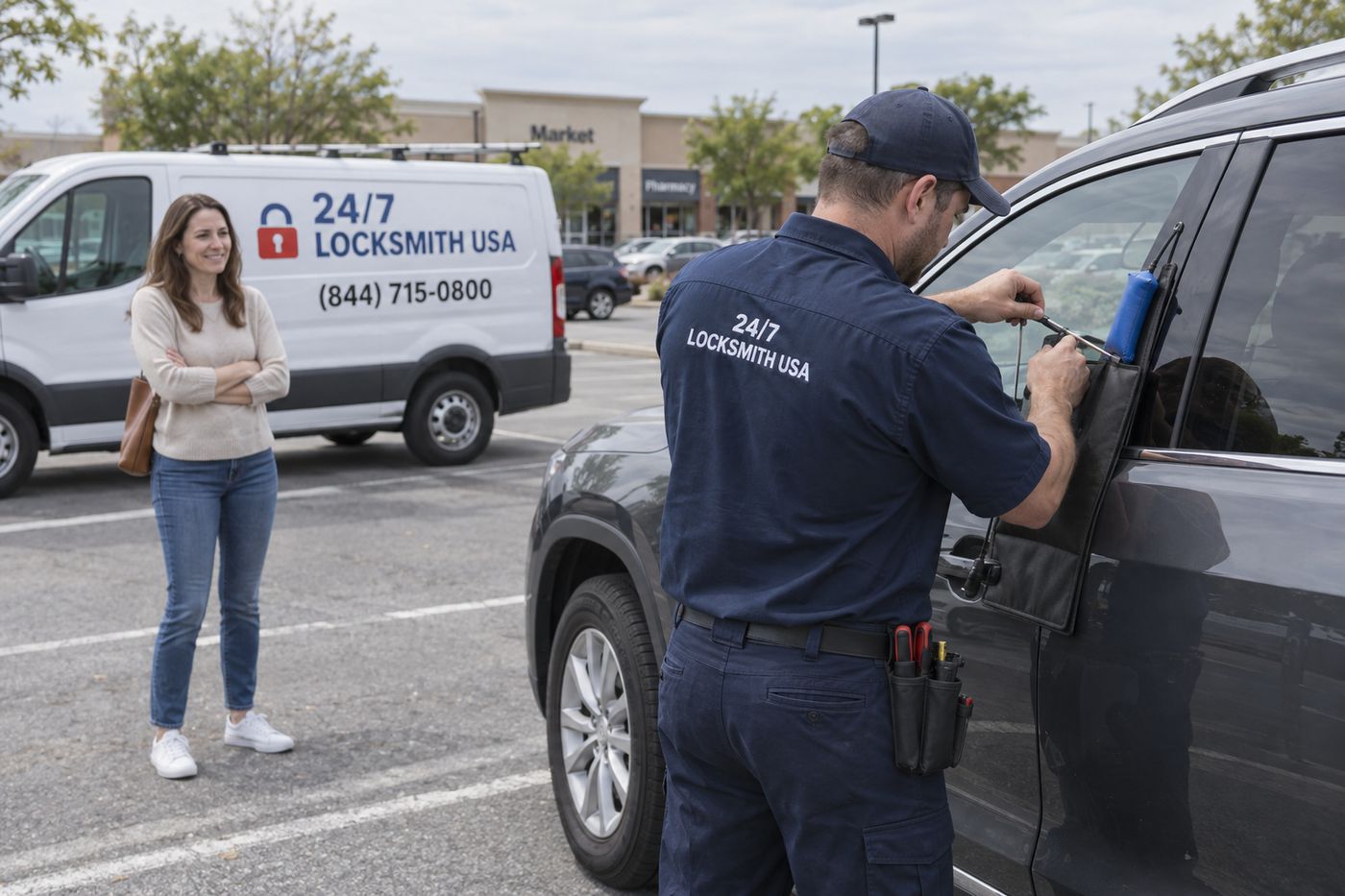
No key at all, in a hub employee row or a Whitehaven driveway, a new one gets originated and programmed at the vehicle.
Fleet & Commercial Van Keys
Box trucks, cargo vans and delivery units that cannot sit idle while a route goes uncovered.
Key Fob Replacement & Programming
Remotes that live through night shifts wear out early; yours gets replaced and programmed in the parking lot.
Push-to-Start Smart Keys
Proximity keys for late-model vehicles, programmed on the spot instead of hauled across town.
Ignition Cylinder Repair
Delta humidity and airborne grit corrode ignitions until the key drags, we repair or replace so it turns clean.
High-Security & Laser-Cut Keys
Sidewinder and laser-track blades for trucks and imports, cut on site with the right equipment on the van.
Why car keys fail in Memphis.
The superhub shapes key work here more than anything else. Sort shifts run overnight, employees leave vehicles in enormous open lots for the length of a shift, and a fob that rides around in a work pocket every night takes punishment no garage-kept car's remote ever sees. The same economy generates the fleet side of the problem: box trucks, cargo vans and yard tractors along Lamar, Airways and Shelby Drive, where one lost key idles an entire route. Downtown produces a different call altogether, out-of-state visitors leave a car in a public lot around Beale Street or South Main, the key disappears somewhere between a barbecue joint and a blues club, and there is no backup key within several states. River humidity is relentless nine months a year, and moisture working into a cracked fob case or a tired ignition cylinder corrodes contacts long before anybody notices a symptom. The couple of freezing-rain events a winter finish off locks that were already stiff. Our technician meets the vehicle in the lot, whether that is an employee row at midnight or a driveway in Cordova.
Heat, humidity and the hard life of a key
Summers in the mid South are long, hot and sticky, and a car key lives through all of it. A fob rides in a pocket against a sweaty leg, sits on a dashboard in direct sun, or lies in a cup holder in a car that has been baking for hours. Plastic softens, adhesive loosens, and the little battery inside works harder than it was designed to. None of this is dramatic, but it adds up over seasons.
This page is general guidance for people in Memphis and makes no claims about particular streets, neighborhoods or landmarks. What it offers is a practical way to think about a key problem, starting with the fact that keys are consumables. They wear, they weaken and they eventually fail, usually at a moment you did not choose. Understanding that makes it easier to plan for the day instead of being surprised by it.
If your key or fob has begun to behave oddly, take that as an early notice. Buttons that stick, a case that has started to split, a blade that drags in the lock, a remote that works only when you stand beside the car: each is a small sign that a larger failure is on the way. Dealing with the sign now, while you still hold a working key, costs less in time and stress than waiting for a total failure.
Heat also affects what you carry with the key. Hand sanitizer, sunscreen and sweat leave residue that can work into the seams of a fob. A small cloth wipe now and then keeps buttons from sticking, and a pouch keeps the fob from rubbing against coins and house keys. Treat the fob more like a phone than like a piece of hardware, and it will usually reward you with years of service.
Night, weather and the decision to wait or call
Many key emergencies happen after dark, after work or in the middle of a storm. A summer thunderstorm can roll in with little warning, and rain on a parking lot makes everything feel urgent. In those moments the question is whether to wait where you are, find shelter, or call for help immediately. The safest answer is to protect yourself first.
If you are outside in bad weather, move to cover and call from there. Tell the provider where the car is, but also tell them where you are waiting, since you may not be standing next to it. If it is late and you are alone, let a friend or family member know your location and keep your phone charged. Trust your sense of comfort and decline any arrangement that feels unsafe.
Do not attempt to break into your own car in a storm. Wet doors, slippery tools and poor light lead to injuries and damage. If a child, a pet or a person needing medical attention is inside the vehicle, call emergency services right away. For everyone else, a short wait for a trained technician is far better than a broken window or a scratched door.
What is being checked before work begins
A responsible provider will confirm your right to deal with the vehicle before they open it, cut a key or program anything. That is a simple safeguard, not an insult. It protects you from the situation where a stranger acquires a key to your car. Expect to be asked for photo identification and a document that ties you to the vehicle, such as a registration, a title or a lease.
The exact items accepted can vary, so ask on the phone. If your papers are in the glove box of the car you cannot open, discuss alternatives: a photo of the registration on your phone, an insurance card, or a message from your lender or leasing company. Our guide to proof of ownership for a car key lays out the usual possibilities in detail.
Be patient if the technician takes a moment to check details. They may compare the VIN on the car with your documents, or ask you to confirm the address on the registration. A provider who asks no questions at all is more worrying than one who asks several. The questions are what make the whole system safer for vehicle owners, including you.
How the vehicle number turns into a key
The VIN is the thread that connects your car to its key. It is a seventeen character code found on the dashboard plate by the windshield, on the door frame sticker and on your insurance and registration documents. From that number, a technician can find the key blank, the cut pattern and the type of chip the car expects.
If you cannot read the number through the glass, a photo of your registration will serve. Read it back slowly, because letters like B and 8 or O and 0 look alike. If you are unsure of a character, say so. The guide on how to find your VIN shows more places to look, including the engine bay and the title.
With the code in hand, the blade is cut and the chip, if there is one, is programmed. That process is explained in the guide to how car key programming works. Programming means teaching the car to accept the new key, and without it a cut key turns the ignition but does not start the engine. Knowing this helps you understand why a quote includes two kinds of work.
Pick the right description of your key
Not every key needs the same treatment, and describing yours accurately will help. A metal key with no plastic head is usually a cutting job. A key with a thick head probably holds a chip. A key with buttons might also need remote pairing. A push button start vehicle uses a smart key, which is a different system again.
Smart keys are more than a button and a battery. They carry encrypted codes and communicate with the car at short range. The service page on smart key replacement explains what is involved, and the page on key fob programming describes remote pairing for keys that have buttons.
If you are unsure what you have, describe it in simple terms. Say whether there is a blade, whether it folds out, whether there are buttons, and whether your car starts with a button or a turn. Add the year, make and model. This is all the technician needs to start. They would rather hear a plain description than a guess at a technical term.
Trucks, vans and vehicles that work for a living
Many people in a busy distribution city rely on trucks and vans for work. A delivery driver who loses a key loses income, and a contractor who loses a key may lose a job site. Commercial vehicles often use different key systems from passenger cars, and some come with additional locks on cargo areas or toolboxes.
If this describes you, say so on the first call. Explain whether the vehicle belongs to you or to a company, how many keys exist and whether any other locks are involved. The page about truck and van keys describes what is different. A company vehicle will also need a person on site who can show authority to act on the company's behalf.
If you manage several vehicles, keep a simple key log. Record who holds each key, where spares are stored and when keys were last checked. That small habit prevents the confusion that turns a single lost key into a long delay. The fleet locksmith service page describes how a more organized program works for larger groups of vehicles.
The ignition that fights back
Sometimes the key is fine and the car is the problem. A key that goes in but will not turn, or a car that starts only after you wiggle the key, often points to a worn ignition cylinder. Replacing the key in that case will not help, and a sensible provider will tell you so.
The ignition is the lock that the key actually turns inside the steering column. Years of use, heavy key rings and dirt can wear it down. You can reduce wear by keeping your key ring light. A heavy bunch of keys hanging from the ignition pulls on the cylinder every time the car moves. The page on ignition repair describes the work.
If the steering wheel is locked and the key will not turn, try turning the wheel gently left and right while you apply light pressure to the key. This is a normal feature of the steering lock and sometimes releases it. If it does not, stop and call. Forcing the key can break it, and a broken key in an ignition is a bigger problem than a stuck one.
A short checklist for the moment it happens
Because key trouble tends to strike when your mind is elsewhere, a short checklist is worth more than a long article. Keep it in your phone notes, where you can open it from any place. The first item is safety: where are you standing, are you in traffic, is anyone inside the car, and is the weather a risk? Handle that before anything else, and move people and pets to a safe spot.
The second item is facts. Write down the vehicle year, make and model, the color, the exact place, the VIN if you can reach it, and what you know about the key. Is it metal only, does it have buttons, is it a push button car? The third item is documents. Find your identification and a photo of the registration, or note who can send one. The fourth is the call itself, where you ask for the quote, the service call charge and what could change the total.
The last item is the aftermath. After the work, test everything, ask about old keys, keep the receipt and plan your spare. Running through a list like this takes a few minutes, but it lifts a heavy load from your memory when you are tired or upset. It also makes you a more effective caller, because you give clear information and get clear answers in return, which is what everyone on the other end of the line wants.
Spare keys and where they really belong
A spare key is only useful if you can reach it when you need it. A spare in the same bag as the main key is no spare at all. A spare in a drawer at home is reachable if you can get home. A spare held by a trusted relative across town may be the strongest safety net, as long as you can reach them.
Avoid hiding a key on the car. Magnetic boxes under bumpers are well known, and they can fall off or be found by someone who should not have the key. The page on spare car key programming explains how a real programmed spare is made, which is a better solution than a hidden blade.
Test your spare once in a while. Make sure it still starts the car and that the remote still works. Replace its battery with the main fob. A spare that has been sitting untested for years may have a dead battery or a case that has cracked. It is better to find that out in your driveway than in a parking lot at night.
Judging a provider calmly
Whenever people are in a hurry, a few sellers take advantage. They advertise a startlingly low price and then add charges on arrival. They give no clear business identity. They refuse to explain the service call charge. They press you to commit at once. None of this proves wrongdoing, but the pattern is a reason to pause.
Ask who is coming and what the quote includes. Ask what could change the final total. Ask how ownership will be checked. Honest businesses answer these questions without fuss. Our guide to spotting a fake locksmith lists more warning signs, and the explanation of the service call charge shows what a normal answer sounds like.
If you decide not to go ahead, say so politely. If someone arrives and the situation differs from what you were told, you may decline before any work begins. Keep your documents and your keys in your hands until you are comfortable. You are the customer, and a clear, calm refusal is always an option.
It also helps to remember that price is only one part of a good decision. A clear explanation, a named person, a straightforward description of the work and respect for your questions are all signs of a provider worth trusting. When you hang up the phone, you should feel that you understand what will happen, in what order and for what reason. If you do not, call again and ask until you do, or call someone else.
Wrapping up and looking ahead
When the work is complete, test every function: door, trunk, ignition and remote. Ask whether the older keys have been removed from the car's memory, which matters if a lost key might be found by someone else. Keep any paperwork and write down the name of the person who did the job.
Then take a few minutes to prepare for next time. Make a second key if you only have one. Photograph your registration and VIN. Set a reminder to check the fob battery twice a year. Look at your auto insurance and any roadside plan too, since some include lockout help.
If your travels take you across the state, you may also find the pages for Nashville and the Tennessee overview helpful. A key problem is a solvable problem, and most of the work lies in staying calm, gathering facts and asking clear questions. Do those three things and the rest tends to follow.
Common questions
Can hot weather damage a key fob?
Yes, heat can soften plastic, loosen the case and weaken the battery. A fob left on a dashboard in summer is especially exposed. Keep it in a pocket or bag, and replace the battery when the range shrinks. A split case should be replaced before moisture reaches the circuit.
My key goes in the ignition but will not turn. Is the key broken?
Not necessarily. The ignition cylinder may be worn, or the steering lock may be binding. Try turning the wheel gently in both directions while applying light pressure to the key. If that fails, stop and call. Forcing it can break the key and turn a small problem into a larger one.
What do I do about a delivery van that has lost its key?
Tell the provider that it is a work vehicle, who owns it and how many keys exist. Someone on site must show authority to act for the owner. Expect to provide identification and a document connected to the vehicle. Commercial vehicles can use different systems, so describe the exact make and year.
Is a hidden magnetic key box a good spare plan?
It is not a good plan. Such boxes are well known to thieves, can fall off on the road and cannot start a car with a chip anyway. A programmed spare stored at home or with a trusted person is much more reliable and safer for your vehicle.
Can the old key be blocked after a new one is programmed?
On many vehicles the technician can erase lost keys from the car's memory during programming, so a lost key can no longer start the engine. The details depend on the make and model. Ask about it before work begins, especially if you suspect the key was taken.
How do I avoid an unfair charge when I call?
Ask for a quote by phone, ask what the service call charge covers and ask what could change the total. Confirm the number and type of keys. If the price changes at the door without a clear reason, you may decline before work starts. Keep notes of the conversation.