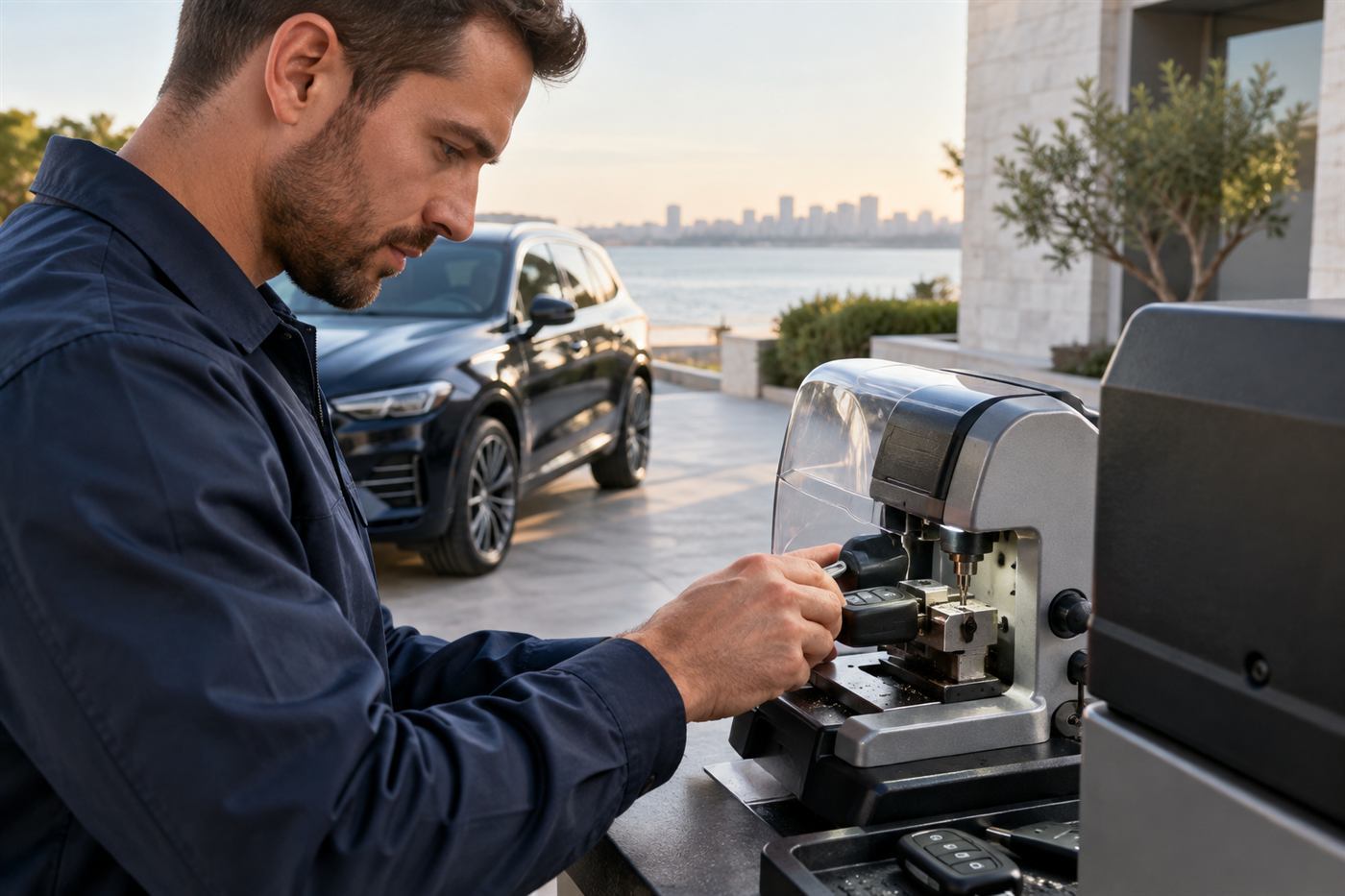
The short answer: yes, and it protects you
A working car key is the easiest way to take a vehicle without breaking anything. Once a key is cut and programmed, the car treats the person holding it as the owner. It will not set off an alarm, it will not leave broken glass, and it will often not raise suspicion with a passing neighbor or police officer. That is exactly why a responsible locksmith will not make a key for a vehicle until they have reasonable confidence that the person asking has the right to drive it away.
So when a technician asks for proof of ownership, they are not accusing you of anything. They are doing the same thing a bank does when it asks for identification before handing over cash. The request is routine, it takes a minute, and it is the reason a stranger cannot walk up to your car in a parking lot, claim they lost the key, and have a copy made.
Most people are asked for two things: proof of who they are, and proof of what vehicle they are standing next to. Together those two items tie a real person to a real car. If both line up, the job usually moves forward quickly. If something does not line up, a good technician will explain what is missing and what you can bring to resolve it instead of simply refusing and leaving you with no options.
What proof of ownership actually means
Proof of ownership is not one single document. In everyday practice it is a combination of papers that show the vehicle is registered to you, or that you have legal authority to use it. The goal is to connect your name to the vehicle identification number, usually shortened to VIN, which is the unique number stamped on the car and printed on its paperwork.
The technician will compare the VIN on your documents with the VIN physically on the vehicle, typically visible through the windshield at the base of the driver's side or on a label in the door jamb. They will also compare the name on your photo identification with the name on the registration or title. When those three things agree, the job can proceed with confidence.
If you are not sure how to find that number, our guide on how to find your VIN shows the common places it is printed. It helps to have it written down before you call, because the person on the phone may ask for it to look up the key type for your model.
Documents that are usually accepted
Different situations call for different paperwork, but the list of commonly accepted items is fairly consistent. You do not need every item below. You need enough to show your identity and your connection to the car.
Photo identification comes first. A driver's license or state identification card with a clear photo is the standard choice. A passport also works for most purposes, though it does not carry an address, so it is often paired with another document.
- Current vehicle registration showing your name and the VIN
- Certificate of title in your name, if you have it on hand
- A current insurance card or declaration page that lists the vehicle and its VIN
- A bill of sale for a recent purchase, along with photo identification, when the registration has not arrived yet
- A purchase contract or finance paperwork that names you and the car
- A lease agreement or rental agreement for vehicles you do not own outright
What if the documents are in the car
This is one of the most common snags. Many people keep the registration and insurance card in the glove box, and the glove box is locked inside the car they cannot open. It sounds like a trap, but there are usually ways around it that do not weaken the safeguard.
First, check your phone. Many insurers and state motor vehicle agencies offer electronic copies of insurance cards and registrations in an app or an email. A photo of the paperwork you took months ago may also be sitting in your camera roll. A technician can often accept a clear digital copy, especially when it is paired with a matching photo identification.
Second, think about who else can help. A family member may be able to photograph the title from a home file cabinet and send it to you. Your insurance company can often email a proof of coverage document within minutes. If the vehicle is financed, the lender portal may have a copy of the registration you can display on your screen.
If you truly cannot produce anything, say so plainly on the phone. Dispatch can explain what the technician will need and whether the work can be done once you retrieve the documents. Do not offer to sign a statement in place of paperwork and expect it to be enough, and do not be offended if a technician declines to proceed on your word alone. That firmness is what protects every other owner, including you.
Rental, leased and financed cars
When your name is not on the title, ownership looks different. A rental car belongs to the rental company, and the paperwork you hold is a rental agreement, not a registration. In that situation a locksmith will generally want the agreement and photo identification, and in many cases the rental company itself is the right first call because it can authorize a key, send a replacement vehicle or arrange its own roadside service. Our rental car lockout guide walks through that conversation.
Leased and financed vehicles are a middle case. You are the registered driver, but another company holds the title until the contract ends. The lease agreement or finance paperwork, along with your photo identification and the registration, usually satisfies the requirement. Some leases include terms about who may replace keys or what happens to a lost key at the end of the term, so it is wise to read yours. We cover the details in keys for leased and financed cars.
Company vehicles add one more layer. If you drive a work van or a fleet car, the technician may need an authorization from the business, such as a letter or a call from a manager, in addition to your own identification. Having that person reachable by phone while the technician is on site can save a lot of time.
Situations that need extra care
Some situations trigger more questions, and it helps to understand why. A key requested for a car that was just purchased from a private seller is a classic example. The registration may still list the previous owner, and the title may not have been transferred yet. A bill of sale signed by both parties, plus your identification, is the usual way to show a legitimate handoff.
Inherited vehicles, vehicles belonging to a relative who is unwell, and cars owned by a spouse also raise questions because your name is not on the paperwork. In those cases, a letter of authorization or the owner being present or reachable by phone makes a real difference. Estate paperwork or a court document may be needed if the owner has passed away.
Vehicles that appear abandoned, vehicles with mismatched plates, and cars where the VIN plate looks altered will draw real caution. A technician who declines in those cases is following the rules that keep locksmiths out of trouble and keep stolen vehicles from being driven off.
What a technician will and will not do
A professional will check your identification, compare it with the vehicle paperwork and the VIN on the car, and note what they saw. Many keep a record of the job for their own protection. They will explain why they are asking if you are unsure, and they will tell you plainly if the paperwork is not sufficient yet.
They will not make a key for a car that appears to belong to someone else, they will not accept a story in place of documents, and they will not rush you past the check because you are in a hurry. They also will not suggest shortcuts around the safeguard, and you should be wary of any company that does.
That last point matters. A business willing to program a key with no questions asked is also willing to program one for a thief. It is one of the warning signs we describe in our locksmith scams warning signs guide, and it is a reason to choose a provider who verifies. Our guide on how much information a locksmith needs for a car key lists the other details they will collect and why.
How to get ready before you call
A little preparation turns a stressful check into a quick one. Gather what you can before the technician arrives, and keep it somewhere you can reach even if you are standing outside the car.
Start with the basics: your photo identification, the VIN, and the year, make and model of the vehicle. Then look for the registration or insurance card in your phone, your email or your wallet. If the car is financed or leased, find the agreement or the lender portal. If you recently bought the car, look for the bill of sale and any temporary registration paper.
It also helps to know how many keys you have, whether the car uses a metal blade key, a transponder key or a push-button smart key, and whether any spare is still available. Our article on how to prepare for a locksmith visit covers the full checklist, including where to wait and how to keep the vehicle accessible.
- Photo identification that matches the registered name
- The VIN written down or photographed
- Registration, title or an electronic copy on your phone
- Insurance card or declaration page
- Lease, finance or rental agreement if the car is not owned outright
- A contact number for anyone who must authorize the work
Keeping your own proof easy to find
The best time to solve the paperwork problem is long before you are locked out. Take a photo of your registration and insurance card and store them in a folder on your phone that you can open without unlocking other apps. Save a copy of the title scan or the lender portal link in your email under an obvious label.
Write down the VIN and keep it in a note on your phone. Do not leave the title in the vehicle. A title in the glove box is a gift to a thief, because it provides both a VIN match and a document that makes a stolen car look sellable. Keep it with your other important papers at home.
If you own more than one vehicle, keep a short list of each one with its VIN and the key type. That list will also be helpful for insurance, for resale and for the day a spare key is needed. A few minutes of organization now turns a stressful afternoon into a simple conversation later.
If you have lost the key and everything else
Sometimes the key, the wallet and the phone are all gone at once, perhaps after a theft or a trip. That is the hardest version of this problem, and it is where patience and good records matter most. Start by replacing your identification, because without it there is little a technician can do. Contact your insurer for a digital proof of coverage, and your state motor vehicle agency for a registration copy.
If the keys were stolen along with other items, report the theft and keep the report number. A stolen key means someone has the ability to unlock and start your car, so a replacement should not be treated as a convenience. Read our guide on what to do when car keys are stolen for the steps in order.
When your papers are back in order, call and describe the situation honestly. Explain what you have and what you are missing. A reputable provider will tell you what is workable and what is not, and the call will end with a plan instead of a dead end. When you are ready, call the number on this page and tell dispatch which documents you can show.
Questions people ask
Why do I need proof of ownership when I am standing next to my own car?
The technician has no way to know the car is yours just because you are standing beside it. A thief can stand there too. The check connects a real identification to a real vehicle, and it is the same safeguard that stops a stranger from getting a key made for your car while you are at work. It is routine, it is quick when you have documents ready, and it works in your favor.
Can I use a photo of my registration on my phone?
Often yes. Many technicians accept a clear digital copy of a registration or an insurance card, especially when it is paired with matching photo identification and the VIN on the car. The image should be readable and show your name and the VIN. If you are unsure, mention it when you call so dispatch can tell you what the technician will accept.
What if the car is registered to someone else, like a parent or a spouse?
You will usually need the owner to authorize the work, either in person or by being reachable by phone, and a written authorization helps. Your own identification will still be checked. Bring whatever shows your connection to the vehicle. If the owner cannot be reached, the technician may have to decline until the paperwork can be sorted out.
Do I need proof for a rental car?
You will need the rental agreement and photo identification, and in many cases the rental company should be your first call because it owns the vehicle and may handle the problem directly. A locksmith can sometimes help with a rental, but only with the right authorization, and the rental company may have rules about outside service that you should check first.
Will I be turned away if I cannot find any paperwork?
It depends on what you can produce. Explain your situation when you call. Dispatch can tell you which documents might be reachable, such as a digital insurance card, a lender portal or a family member with a copy. A technician will not make a key on your word alone, but there is usually a way to gather something acceptable.
Describe the situation by phone and we will tell you what the job involves. Quotes are given by phone. Jobs that cannot be quoted without seeing them need a technician on site, and the service call charge is explained on the phone before anyone is dispatched.
(844) 715-0800Related pages
Written by Claude (AI) (AI) for 24/7 Locksmith USA.