
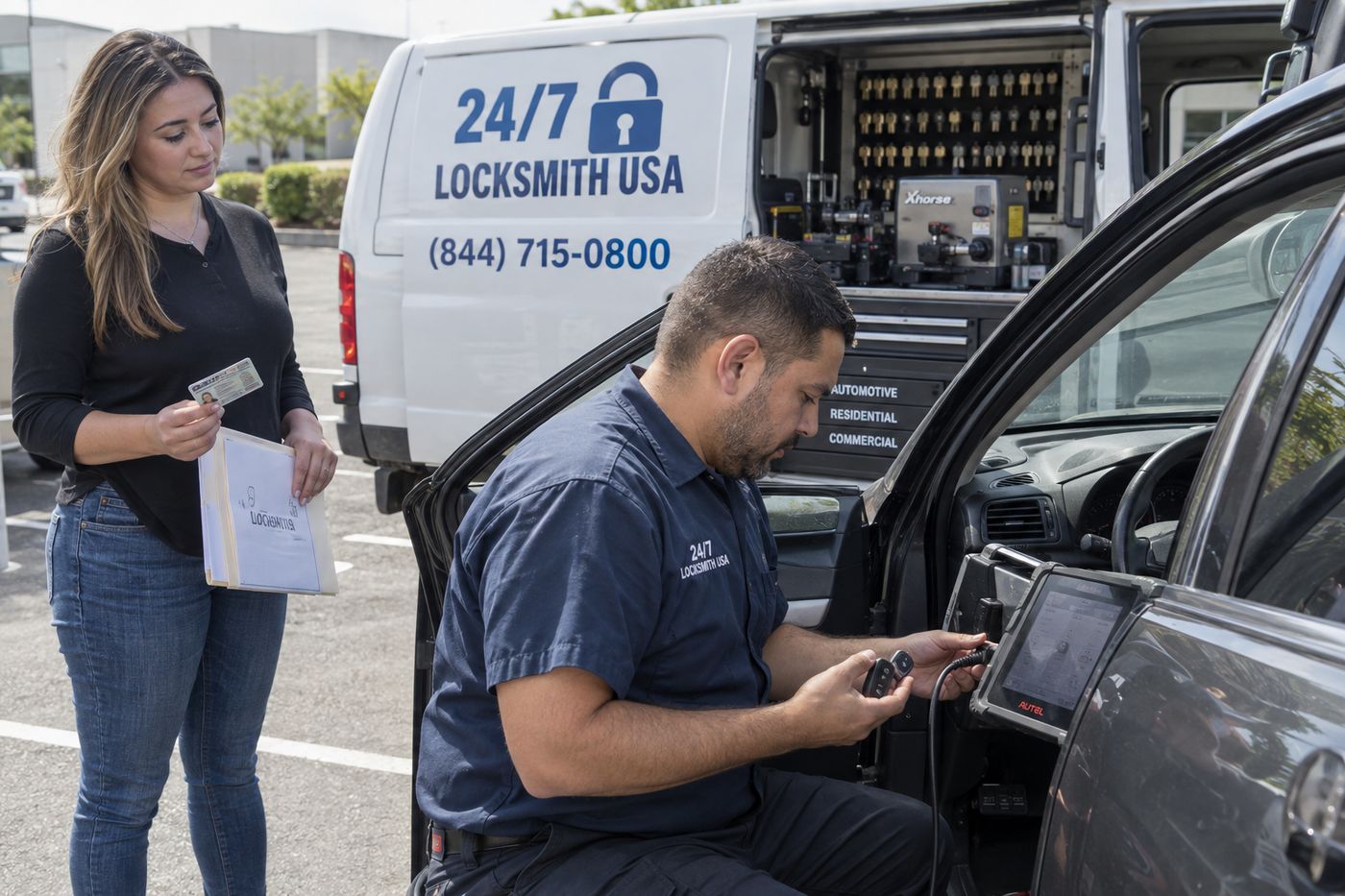
Keys handled across the CSRA.
One technician, one visit, and the vehicle leaves under its own power instead of on a flatbed.
All Keys Lost Replacement
Nothing left after a move or a deployment? We originate a new key at your Augusta parking spot.
Second Key Before PCS Orders
A backup key cut and programmed before you leave Georgia, so a spouse is not down to one.
Transponder Key Programming
Chipped keys matched to your immobilizer curbside in Evans, Martinez or downtown Augusta.
Ignition Switch Repair
High-mileage cylinders along the Gordon Highway corridor rebuilt or replaced where the car sits.
Corroded Remote Replacement
River-valley humidity eats fob contacts; we fit a new remote and code it to your vehicle.
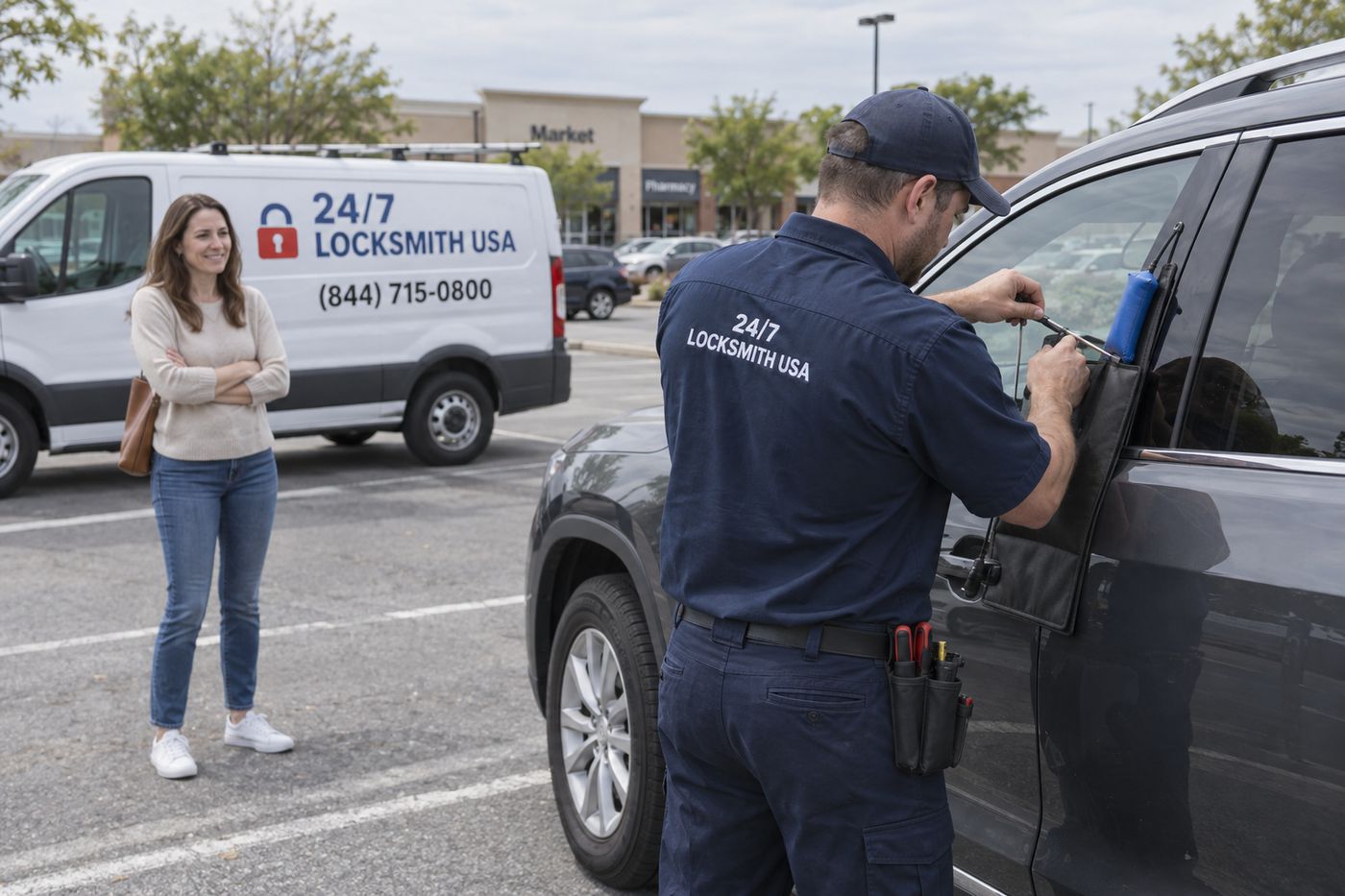
Emergency Lockout Entry
Locked out at a medical-district deck during shift change, opened without prying the door frame.
What kills car keys in Augusta.
Fort Eisenhower drives more of this work than anything else in the CSRA. Cyber and signal soldiers rotate through on PCS orders constantly, and a vehicle left on a storage lot off Gordon Highway through a nine-month deployment comes back with a fob that quietly drained itself and a spare key that stayed in a relative's kitchen drawer in another state. Spouses call from Grovetown and Evans running two vehicles on one key with no way to reach a dealership during duty hours. Every April, Washington Road and the streets around Augusta National fill with visitors parking on grass and in temporary lots, and a patron who loses a smart key here is several hundred miles from the dealer who sold it. Year-round, the Savannah River keeps this end of the state humid enough that remote contacts corrode and blades pick up rust in the seams where they meet the head. Older sedans around Harrisburg and south Augusta carry keys worn round at the tip until the wafers stop reading them. Downtown, medical-district shift workers park in the decks off Laney-Walker and 15th, and a key shut inside a car mid-shift is a weekly occurrence.
Older cars, newer cars and the keys in between
On any busy street in a mid sized Georgia city you will see vehicles of every age. A pickup that has been in the family for decades sits beside a crossover with a push button start, and the keys in their pockets could hardly be more different. One is a simple cut piece of metal. The other is a small computer in a plastic shell. When something goes wrong, the right fix depends entirely on which one you hold.
This page is general guidance for people in Augusta. It does not describe local streets, businesses or neighborhoods, and it makes no claims about particular places. What it offers is a practical walk through the kinds of key you may own, the ways they fail and the steps that lead to a working replacement without wasted effort.
Start by looking at your key honestly. Is it all metal, or does it have a thick plastic head? Does it have buttons? Does it ride in your pocket while the car starts at the touch of a button? Your answers tell you most of what you need to know, and they are the first things a dispatcher will ask. The guide on how to tell which car key you have goes through each type.
It also helps to remember where the key came from. A key that came with the car when it was new is likely the pattern the factory intended. A key made later at a shop, by a friend or by a machine in a store may be a looser copy. If you bought the car used, you may not know the history of either. Mention that on the call, since it affects whether the existing keys can be trusted as a starting point.
What the plastic head hides
A thick plastic head on a car key usually means a chip lives inside. That chip carries a code the car checks before it allows the engine to run. A copy that matches the blade perfectly will still not start the car if the code is missing. This surprises many people who assumed a hardware store copy was all they needed.
If your car was built in the late nineties or after, there is a good chance it uses this kind of security. The guide to types of car keys explained shows how the families differ, from simple metal keys to transponder keys, laser cut keys and smart keys. Knowing which one you have prevents a lot of misunderstanding on the phone.
Newer keys are more capable but less forgiving. Water damage, a hard drop or a worn battery can each end a fob's usefulness. Older keys are more forgiving but wear out in a different way. Their cut edges round off, the key begins to catch in the lock, and eventually the lock itself pays the price.
Worn keys that are quietly failing
Wear rarely announces itself. A key that has been used daily for years gradually loses the sharp edges that line up the lock pins. It may start to stick, require a little jiggle or turn only on the second try. Those are signs that the key and the lock have worn together, and a failure is likely not far off.
The page on worn car key symptoms lists the warning signs. If you notice them, act before the day the key snaps or refuses to turn. A fresh key made to the original specification often cures the problem, because the new cuts line up with the pins the way the factory intended.
Do not keep making copies of copies. Each generation of duplicate drifts slightly from the original, and a copy of a worn key inherits the wear. When a key is cut from the VIN or from a good original code, it starts from a clean slate. That is a much better foundation for a spare that has to work in a lock that has seen better days.
Cutting a new key properly
Cutting is the mechanical half of making a key. A blank of the right type is selected, and a machine reproduces the pattern of cuts, whether they are traditional edge cuts or the milled track of a laser cut key. The accuracy of this step determines how smoothly the key turns. A key cut a hair off will still enter the lock, but it will drag, and it will wear both itself and the lock sooner than a clean cut would. That is why the quality of the machine and the care of the person running it matter more than the speed of the process.
Read about car key cutting to see what is involved. A mobile technician carries blanks for many vehicles and can cut on site, but not every key type can be made from nothing. The vehicle make, model and year tell the technician which blanks and code methods apply.
Programming, the electronic half, comes after cutting when the key has a chip or remote. The technician pairs the new key with the car and then tests it. A key that turns but does not start the engine is only half finished. Always insist on a complete test before you consider the work done.
A good test includes more than starting the engine once. Turn the key in the door, the trunk and the glove box if they use the same key. Press every remote button. Start the car, turn it off and start it again. Try the key a few minutes later, when the technician is still on site, in case a connection needs another look. Thirty seconds of testing now prevents a second call later.
Classic and older vehicles
Older vehicles carry their own charm and their own challenges. Some use keys that are no longer common, and the locks may have been worn by decades of use. Others have been through several previous owners, and nobody is certain which keys still match which locks. Sorting out those questions is a job for patience.
The guide on classic and older car keys explains what can and cannot be done. In some cases a key can be made from the lock itself. In others, a part of the system may need to be rebuilt or replaced. Ask early and be prepared for a longer conversation than a modern car would need. Parts for older systems can be scarce, and a technician may need to confirm what is possible before promising anything. That honesty is a good sign. A vague answer to a hard question deserves a follow up, while a clear answer, even a disappointing one, lets you plan.
If an older car has an ignition that feels loose, grinds or lets the key turn without engaging, the problem may be in the cylinder rather than in the key. The service for ignition repair covers that situation. Replacing a key does not cure a worn ignition, and the two problems often travel together.
Lockouts at home, at work and on the road
Lockouts happen in routine places. You step out of the car to put gas in, to grab a package or to chat with a neighbor, and the door closes behind you with the keys on the seat. It takes seconds, and the feeling afterward is sharp. The service page for car lockout explains how these calls are handled.
Resist the urge to force the door or reach in with a tool. You can damage the weather stripping, the window or the electronics inside the door, and the repair will cost more than the opening would have. Wait for a trained technician who has the right tools and the experience to avoid harm.
Take a quiet moment to think about what you still have. Is a spare key at home? Is there another driver in the household? Can someone bring the key to you? Sometimes the simplest solution is a short drive by a family member. If not, the phone call starts the process, and ownership is checked before opening.
If you are alone and the lot is quiet, keep your phone in hand and stay near a light or an open business. Tell the dispatcher how the car is parked, whether it blocks a lane and whether the surface is level, because those facts affect where a technician can stand and work. A calm, specific description is the most useful thing you can offer while you wait.
Heat, humidity and a car that stands in the sun
Summers in this part of Georgia are hot and humid. A car parked in the sun reaches temperatures that stress plastic, rubber and batteries. A fob left on the dash may fail sooner than one kept in a bag, and the rubber seals around doors may stiffen and make a lockout harder to resolve without care.
Heat is also a safety issue. Never leave a child or a pet in a closed car, and if someone is trapped inside, say so immediately when you call. Contact emergency services first if anyone seems in distress. A lockout where the car is empty is an inconvenience. A lockout with a person inside is an emergency.
Humidity affects locks over time. Moisture and grit work into cylinders, especially in cars that sit outdoors, and a lock that has been sticky for months may finally fail. A little attention, such as noticing when a door becomes harder to open, helps you catch problems before they strand you.
When a lock does feel rough, resist the urge to spray oil into it. Many household lubricants attract dust and turn gummy, and a gummy lock is harder to service than a dry one. A technician can recommend a suitable lubricant, or can service the cylinder if it has worn past the point where lubrication helps.
Avoiding the lockout in the first place
Most lockouts are preventable with a few habits. Make a point of touching your pocket for the key before you shut the door. Keep the key in the same place every time. If you have a smart key, learn how your particular car handles the key being left inside, because some models lock anyway and others warn you.
The guide on how to avoid locking keys in your car goes into more detail. It also covers the temptation to hide a spare on the vehicle, which trades one risk for another. A hidden key can be found by anyone, and a car that can be opened by a stranger offers little comfort.
A better answer is a programmed spare that lives at home or with a trusted person. If a household has more than one driver, give each a key. When the family is busy and the schedule is unpredictable, that second key often turns a stressful afternoon into a short errand.
Think about where the spare sleeps. A drawer at home is safe from heat and weather. A coat pocket is not, since coats get lost. A spouse's bag may be fine until the day both of you are out together. The right place is the one that stays reachable when the main key is gone, and that you will remember when you are stressed. Choose it once, tell the household and write it down.
- Check your pocket or bag for the key before you close the door.
- Keep one routine spot for the key at home and in the car.
- Store a spare somewhere you can reach without the vehicle.
- Replace fob batteries on a schedule, not after they die.
- Retire a visibly worn key before it breaks.
Spares and the household with several drivers
A single key is a single point of failure. In a household where one car is shared by two or three people, the stakes are higher, since one lost key can leave several people stranded at once. A spare is the simplest protection. The service for spare car key programming explains how it works when a working key is available.
Teenagers and new drivers are a special case. A first car often arrives with only one key, and a first year of driving is a good time to lose it. Consider a spare kept by a parent, and talk through what to do if a key goes missing at night. A plan made ahead of time is a gift to everyone.
Whenever a new key is programmed, ask whether older or lost keys can be removed from the vehicle memory. A key that disappeared months ago is a key that someone else might still hold. Taking it out of the system closes the gap.
Keep records of what you have. A simple note listing how many keys exist for each vehicle, who holds them and when batteries were last replaced is more useful than it sounds. When something goes wrong, a clear list lets you rule out a missing key in minutes, and it gives the technician an accurate picture. It also helps if a vehicle is ever sold, because you can hand over every key with confidence.
Nearby cities, quotes and the first call
If your trip takes you beyond Augusta, the same guidance applies elsewhere in the state. Pages for Atlanta and Savannah follow a similar approach, and the Georgia state page adds a wider view of how the service works across the region.
On the first call, you describe your location, the vehicle and what has happened. Ownership or authority is checked before opening, cutting or programming. Quotes are given by phone, and the service call charge is explained before a technician is dispatched. If the quote seems unclear, ask more questions until it makes sense.
On arrival, expect a short identification check and a confirmation of the work. Try every function of the key before you accept the result. If something does not match what you were told, say so politely. A thorough, honest technician will not mind. Keep the receipt or written summary of what was done, along with the quote you were given, so that you have a record if a question comes up later about the key, the programming or the lock.
Common questions
How do I know what kind of key my car uses?
Look at the key. A thick plastic head often means a chip, buttons point to a remote, and a key that stays in your pocket points to a smart key. Your vehicle make, model and year help too. Describe the key plainly on the call, and the dispatcher can help narrow it down.
Can a worn key be copied?
It can, but a copy of a worn key inherits the wear. A key made from the VIN or a good original code starts cleanly and usually works better. If your key sticks or needs jiggling, mention it, because the lock may also need attention.
Will a hardware store copy start my car?
If the car uses a chip in the key, a plain copy of the blade may turn the lock but will not start the engine. The chip has to be recognized by the car. Ask about programming before you spend time on a blade only copy.
What if my older car has a loose ignition?
A loose or grinding ignition suggests a worn cylinder, and a new key alone may not fix it. Describe how it behaves and ask about ignition repair. A technician can tell whether the key, the cylinder or both need attention.
Is a lockout urgent if only bags are inside?
Not in the same way as a trapped child or pet, but it still disrupts your day. Stay in a safe spot and call with your location and vehicle details. Ownership is checked before opening. If anyone is inside and in distress, contact emergency services first.
What should I ask about the quote?
Ask what the quote includes, such as the visit, the cutting and the programming, and how the service call charge is handled. A quote is given by phone and the call charge is explained before dispatch. If terms change on arrival, ask the reason before agreeing.